J.G. Ballard: The Drowned World (1962)

The Drowned World

Ballard is an author I’ve always wanted to read, but I was never sure which novel to pick first, so I postponed reading him again and again. Why I finally picked  The Drowned World is an interesting story because it mirrors the content of the book in an uncanny way.

I keep on dreaming about the city I’m living in. In my dreams it doesn’t look like the actual city but is completely overgrown, drowning in vegetation, all the streets look like rivers of grass. It’s not hot in this city and it’s not necessarily a post-apocalyptic setting, but it’s a completely altered landscape. Curious to see whether anyone ever wrote something like this, I googled a few key words, which eventually led me to Ballard’s The Drowned World. What an amazing experience to find an echo of my own dreams and imagination in this book. Furthermore I have always been very fond of  surrealist paintings and the idea of archetypes makes sense to me; both are important elements in this novel.

The Drowned World is set in a post-apocalyptic world, or, to be more precise, in a submerged, overgrown, tropical lagoon that once used to be the city of London. Solar radiation melted the ice-caps; the land was flooded. The heat and the floods have changed the climate completely.

Dr Robert Kerans, a team of researchers and an army unit map the flora and fauna of the different lagoons. While the team wants to move north, Kerans and a few others want to remain south. They have begun to dream strange dreams, which are a sign of their devolution. It seems as if they were regressing; the changing landscape has affected their psychology.

As Bodkin, one character, says:

“Well, one could simply say that in response to the rises in temperature, humidity and radiation levels the flora and fauna of this planet are beginning to assume once again the forms they displayed the last time such conditions were present – roughly speaking the Triassic period.”

Because the landscape once used to look like it does now, the subconscious of the people reacts:

“But I’m really thinking of something else. Is it only the external landscape which is altering? How often recently most of us have had the feeling of déjà vu?, of having seen all this before, in fact of remembering these swamps and lagoons all too well.”

The premise is that everything the species has ever experienced is stored in the subconscious of each one of us and with the devolution, the memories are triggered:

“The brief span of an individual life is misleading. Each one of us is as old as the entire biological kingdom, and our bloodstreams are tributaries of the great sea of its total memory.”

I thought this was highly fascinating and it does make sense. Maybe not as literally as Ballard states it, but it’s sure that landscape influences us, it even influences our deep psychology, and it’s entirely possible that the memories of the species are stored in our subconscious as well.

The novel is not very action-driven but there is conflict. At first the army wants everyone to leave and move up north, but they finally give in and depart. Kerans, Bodkin and Beatrice Dahl – Kerans enigmatic lover – stay behind. They know they will not be able to survive for long but before they can decide on their future Strangman and a group of pirate-like characters appear. They are looters. They travel from lagoon to lagoon and rob all the submerged buildings of their riches. What nobody knows at first is that they dry up the lagoons and towards the end of the novel, we see the silt- and algae-covered London emerge from the waters. Another uncanny moment.

The end is predictable, but that doesn’t make it any less powerful. It reminded me a lot of Joseph Conrad’s Almayer’s Folly.

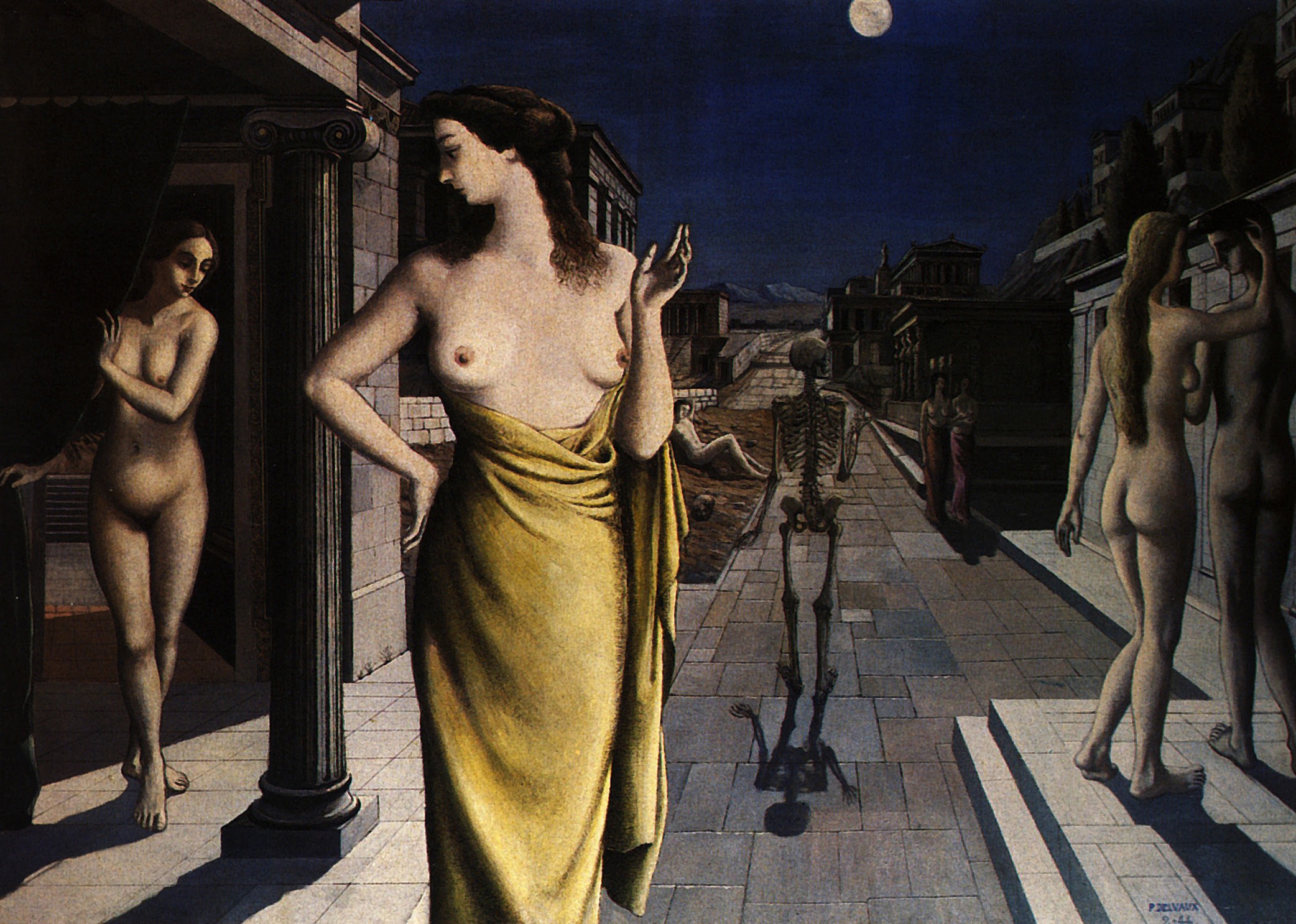
My edition of the novel contains an interview with Ballard and a short essay by him. In these two texts he underlines that surrealism, dreams and the fact that he grew up in Shanghai were important in the writing of this book. Max Ernst and Paul Delvaux are mentioned in the novel and have influenced Ballard’s imagery. As a child he witnessed how Shanghai was flooded every summer and that as well has contributed to create the images in the novel.
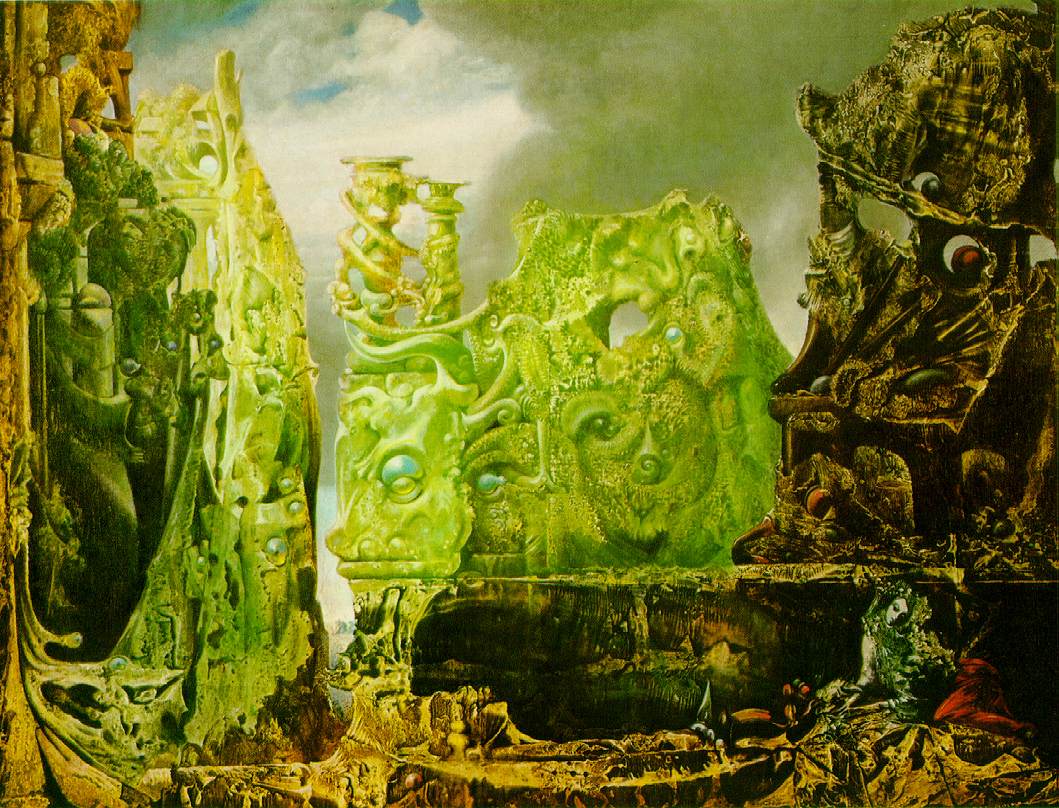
Eye of Silence

Max Ernst

Lunar City

Paul Delvaux

The Drowned World is not an easy book because it’s heavy on descriptions. As a lot of what he describes felt familiar from my dreams and my travels to Asia, it was easy for me to see what he painted with words, but I suppose it could be a challenge if you prefer action driven books. If you have never experienced the humid heat of the tropics it’s equally hard to imagine how that climate could affect you. That’s why I compared it to Conrad. The way Westerners are affected by the tropics is quite explicit in Conrad’s work, while it is much more implicit in Ballard’s book. Comparing the two is interesting.

I know that I wasn’t able to do this book justice. I think that is because I liked it too much. That may sound weird but that’s how it is. The Drowned World is one of the most fascinating books I’ve ever read. I loved the premise and the imagery; it was so powerful, reading it felt like lucid dreaming. It’s making my best of this year list, and maybe even my all-time favourite list.
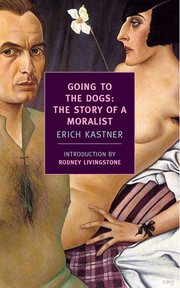
Erich Kästner: Going to the Dogs. The Story of a Moralist – Fabian. Die Geschichte eines Moralisten (1931)

Going to the Dogs

Going to the Dogs: The Story of a Moralist is set in Berlin after the Wall Street crash of 1929 and before the Nazi takeover, years of relentlessly rising unemployment when major banks and companies were in collapse. The moralist in question is Jakob Fabian, “aged thirty-two, profession variable, at present advertising copywriter, 17 Schaperstrasse, weak heart, brown hair,” a young man with an excellent education but, at least in the current economy, no prospects-permanently condemned, so far as anyone can see, to a low-paid job without security in the short or the long run. What’s to be done? Fabian and friends make the best of it-they go to work every day even though they may be laid off at any time, and in the evenings they head out to the cabarets.

Erich Kästner is famous for his children’s books like Emil and the Detectives but he was also a highly regarded author for grown ups and one of the first whose books were burnt by the Nazis. His harsh portrayal of Berlin between the wars Going to the Dogs. The Story of a Moralist or Fabian. Die Geschichte eines Moralisten is still widely read and considered a classic of German 20th Century literature and has been made into two movies. It’s a pessimistic and satirical but clear-sighted depiction of a society in collapse and the “waiting room”- feeling that was so typical then. Another world war seemed impending, Germany was heading towards disaster; the Nazi party which had already been rearing its ugly head for a while, showed that it had come to stay and would eventually take over Germany. It’s a world of depravity and unemployment. People have two possibilities; either they go under or they make the most of it. Making the most of it, means that morals are loose to the extreme. In this book people jump into beds and change partners as easily as the Hippies during the 60s, only this is a very different society and the implications are different. These are not free young people jumping into bed with each other but mostly married men and women who do it behind the back of their partners. Women who sell their bodies because there is no other way to make money; men who try to fight their depression with promiscuity and alcohol.

The novel is told from the point of view of Fabian an unemployed academic. He and his best friend Labude try to stay true to their ideals despite their own misery. Labude is waiting for news about his habilitation while Fabian has just lost his job. Fabian and Labude try to survive somehow. During the day Fabian is looking for work; at night they hit the cabarets, dance clubs, sex clubs and brothels. At the beginning of the novel, they drift but are still having fun. After a while things turn darker and what started like an amusing tale turns into a terrible tragedy.

I expected this to be a good book but I didn’t expect it to be so funny and witty. The end is sad but the beginng is hilarious.  Fabian is a very attractive man, sarcastic but fundamentally good, compassionate and highly educated. Women throw themselves at him. All sorts of women from every possible background. Young unemployed academics, wives of rich industrialists, little housewives whose husband are travelling salesmen, prostitutes and addicts.

Fabian doesn’t judge but the way the story is told clearly indicates that it’s satirical.

Kästner also manages to show how these transitions came to be. A whole generation grew up with a fear of the father induced by black pedagogy. These young men were then sent to the trenches and those, like Fabian, who came back alive and unharmed had lost all of their beliefs. Fabian is happy he’s not one of those hidden away in a hospital because his face was destroyed but inside he’s destroyed as well.

I have always been fascinated by this time period and this place. Berlin between the wars. While certainly overdrawn in places, Kästner manages an uncannily realistic portrait. We, with our knowledge of everything that came later, don’t even find it all that satirical. I was amazed that a book that was published in 1931 was this clear-sighted. There is not doubt about Germany’s future development, no doubt that there are parties fighting for supremacy and no doubt who will win. This is a society that is dancing on its own grave. Laughing, singing but crying as well. Sexuality and money are the major currencies. Everyone tries to snatch a bit of both and many go too far for that. It made me realise what fertile ground Hitler found.

If you’re looking for a second opinion – here’s a review by Guy (His Futile Preaoccupations)

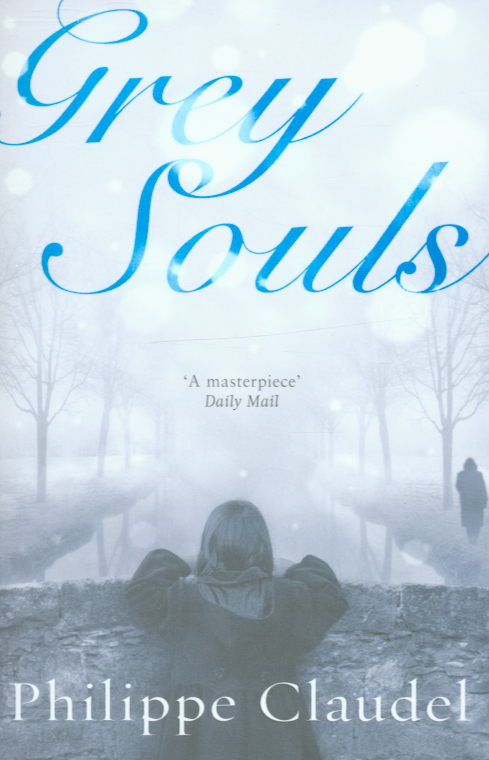
Literature and War Readalong August 30 2013: Grey Souls by Philippe Claudel

Grey Souls

I wanted to read Philippe Claudel since years and looking for a WWI novel I came across his Grey SoulsLes âmes grises. Like most of his other books the novel has been translated into 25 languages and was generally liked by readers and critics. From what I know so far, the war is not predominant in the novel. It’s more like the starting point to a crime which is solved much later. From some of the reviews I got that it’s quite heavy and brooding.

Here is the blurb

This is ostensibly a detective story, about a crime that is committed in 1917, and solved 20 years later. The location is a small town in Northern France. The war is still being fought in the trenches, within sight and sound of the town, but the men of the town have been spared the slaughter because they are needed in the local factory. One freezing cold morning in the dead of winter, a beautiful ten year old girl, one of three daughters of the local innkeeper, is found strangled and dumped in the canal. Suspicion falls on two deserters who are picked up near the town. Their interrogation and sentencing is brutal and swift.

Twenty years later, the narrator, a local policeman, puts together what actually happened. On the night the deserters were arrested and interrogated, he was sitting by the bedside of his dying wife. He believes that justice was not done and wants to set the record straight. But the death of the child was not the only crime committed in the town during those weeks.

The first sentences:

I don’t really know where to start. It’s quite difficult. All this time that has gone by, which words will never bring back, the faces too, and the smiles, the wounds. Still I need to try to say it. Say what’s been bothering me for twenty years. The remorse and the big questions. I have to cut open the mystery with a knife, just like a belly, and sink my hands in, even if that’s not going to change a thing.

The book has been made into a movie but I don’t know whether it’s available in English

*******

The discussion starts on Friday, 30 August 2013.

Further information on the Literature and War Readalong 2013, including all the book blurbs, can be found here.

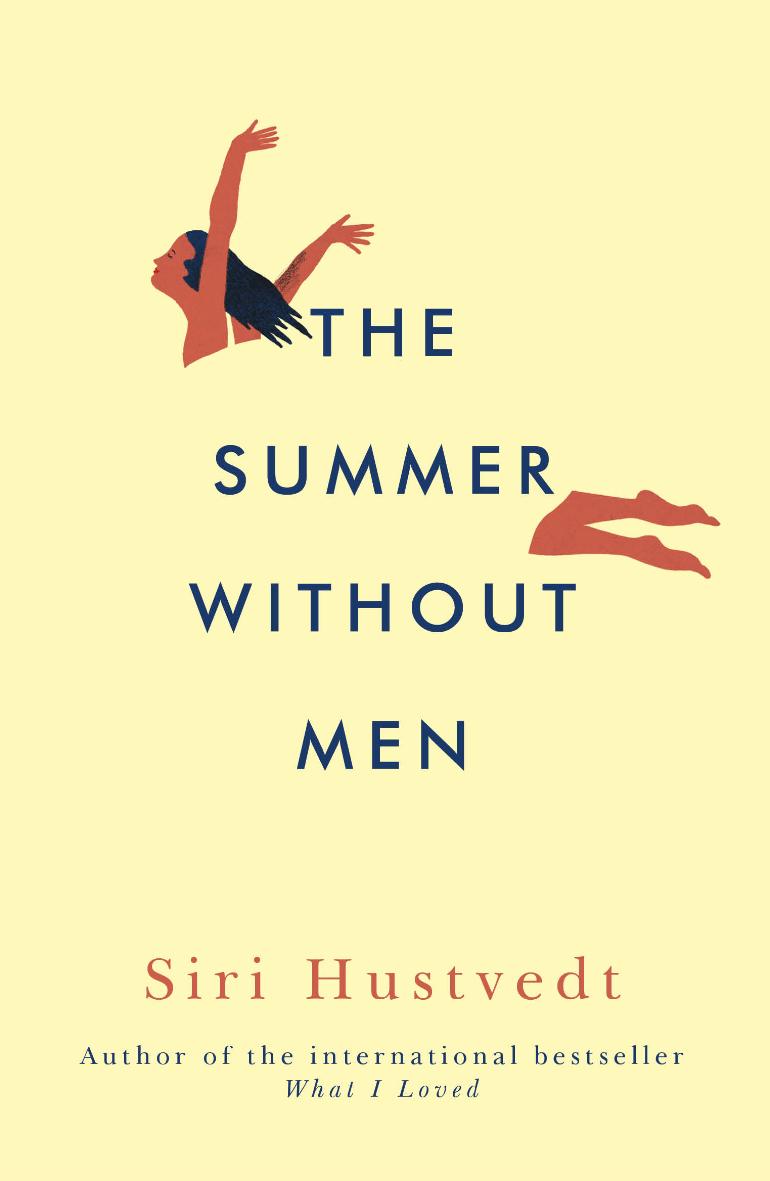
Siri Hustvedt: The Summer Without Men (2011)

The Summer Without Men

I’ve read three of Hustvedt’s novels so far, The Blindfold, The Enchantment of Lily Dahl, What I Loved, the memoir The Shaking Woman and some of the essays in A Plea for Eros. The novels are among my favourites, the essays are thought-provoking and so was her memoir. After finishing The Summer Without Men all I can do is wonder – What happened to Siri Hustvedt?

Not every writer is an academic, I’d say among the great it’s probably a minority and when you read a book like The Summer Without Men, it becomes apparent, that there may be a good reason. The intellectual baggage can enrich a book but it can also turn into a hindrance and in this case, what meager story Hustvedt had, she pumped up with theory. Derrida, Kierkegaard, Samuel Johnson, Jane Austen, and many more are mentioned and interpreted by Mia, the main protagonist. That could have been done well, but here it felt like a lecture. And to some extent it felt like she was talking down to the reader. Readers with no knowledge whatsoever of the theories and people behind them, will feel alienated, the others slightly bored as there are only snippets. The history of gender theory is an especially pertinent example. Everyone who’s ever been interested in that, will know as much as Mia but reading about it as if she’d just invented the wheel is jarring.

These were the theoretical parts of the novel. The novel has also a more story driven part. Funny enough however that read like pure chick lit for women over 50.

Mia, a 54-year-old poet is left by her husband a 65-year-old for a woman who is 20 years younger than Mia and French (yes it’s very original). Her reaction is intense. She has a psychotic episode and ends in a psychiatric hospital. That beginnning, I must say, was powerful and the pain, shock and horror behind it was palpable. After this Mia decides to spend her summer in Minnesota where her elderly mother lives in a nursing home. She meets the Swans, a group of elderly friends, Lola, her 20 something neighbour with two kids, and a group of pubescent girls who take a poetry course with her. If you think of the triad virgin-mother-crone then you are spot on as the whole story is meant to illustrate the various stages of womanhood. Some of this is arresting, some of it, notably the description of bullying among the very young, is touching, but overall it was nothing new.

Chosing a very intellectual protagonist would allow that theory is included, but that should have been done in a more subtle way. On top of that Mia often talks directly to the reader, which feels artificial.

It’s the first time, while reading this, that I noticed how bland Hustvedt’s writing is. Hustvedt uses only the most common words and the most simple sentence structures.  Her strength lies in her ideas, but they must be wrapped up better.

I wonder why this book has received such a lot of very good reviews by critics. Were they afraid they would come across as not savvy if they criticized it? I suspect so.

The end was a let down as well. In essence the book consists of parts which I’ve seen done better elsewhere. There are excellent YA books on bullying, amazing books about being a middle-aged woman like Lisa Moore’s February, and a few who look at old age, loss and grief.

As for the title, it’s not well-chosen. The Summer Without My Husband would have captured it far better.

I’ve still got Sorrows of an American here, but I think that is far better than this one. Hustvedt used to be a writer whose every book I bought without even thinking about it. That has changed radically.

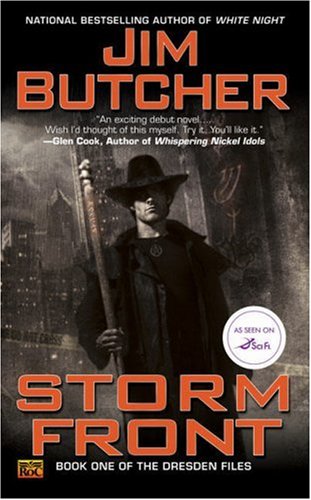
Jim Butcher: Strom Front (2000) Book One of the Dresden Files

aa-stormfront

I didn’t see this coming. A while back I reviewed Simon R. Green’s Something From the Nightside. A so-called Paranormal-Noir or Paranormal hard-boiled detective novel. I enjoyed Green’s book although I knew that his Nightside novels  were often compared to Jim Butcher’s Dresden Files and that most people thought Butcher’s series was superior. I was very keen on trying Storm Front, the first Book of the Dresden Files and see what I would think. I was convinced I would like the Dresden Files much better.  Well . . .  I didn’t. And that for a simple reason: I found it too silly. It’s not without merits, I can see the appeal because, even more than Green’s Nightside novels, this is classic hardboiled detective terrain. Only the detective is a wizard. Even that would be OK but the magic that is used in this book did just not work for me. Dresden often conjures up things, and casts spells, and to do so he uses some fake Latin which was really painful to read. Ventas! Fuego! Scorpis!  . . .  Most of it sounded like some kind of Esperanto. I can’t help it but I’ve had a classic upbringing, I had to learn Latin and some old Greek at school, sloppy fake Latin conjuring is just not going to do it for me. I see that part of it is meant as a parody (or at least I hope so) but that didn’t make it any better.

The story as such was interesting enough. Harry is called by the police to help in the investigation of a grisly double murder. Two people have literally been turned inside out and it is obvious that the perpetrator used powerful black magic. At the same time Harry is  hired to look into the disappearance of someone’s husband who has been dabbling in magic.

In typical hardboiled style, women are after Harry, he gets beaten up more than once, the mob takes an interest in him, the Council of the white mages suspects he is the killer and so on and so forth. Some of it is quite amusing. Harry has a ghostly assistant who resides in a skull and who likes to chase girls. Some of the repartee with clients, journalists, police is amusing too.

Some people complained that Green squeezed the same amount of story that takes up 350 pages in the Dresden Files into barely 200 pages. I must say, I liked the condensed  approach much better. After I finished Something From the Nightside, I felt compelled to read the next in the series. I don’t think I’m going to read Book Two of the Dresden Files.

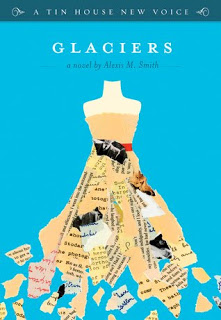
Alexis M. Smith: Glaciers (2012)

Glaciers

The books I enjoy the most connect me to something inside of me which is elusive and hard to reach because it deals with those fleeting feelings that are hard to put into words, those emotions which escape before we can describe them. Glaciers is a book like that. It has a dreamlike quality but at the same time the descriptions are crispy-fresh, delicate but with sharp contours; the writing is cool but never cold, fragrant but not overpowering.

I hadn’t heard of Alexis M Smith before reading the review of Glaciers on Litlove’s blog (here). Smith is one of the Tin House New Voices and since Tin House is the only magazine I read regularly I was particularly keen to discover this author.

Summarizing this book isn’t doing it any justice. Not much happens. It’s pure slice of life writing. The book describes a day in the life of library worker Isabelle.  She was born in Alaska, dreams of going to Amsterdam but lives in Portland of which she says

“Walking home, she thinks Amsterdam must be a lot like Portland. A slick fog of a city in the winter, drenched in itself. In the spring and summer; leafy undulating green, humming with bicycles, breeze-borne seeds whirling by like galaxies. And in the early glorious days of fall, she thinks, looking around her, chill mist in the mornings, bright sunshine and halos of gold and amber for every tree.”

We follow her through a whole day, see her small rituals at work, her love for vintage clothes and postcards, her dreamlike states in which she imagines another life for herself and for other people. She’s in love with Stoke but he doesn’t seem to love her back. She meets her best friend Leo and they spend an evening at a party with quirky artists and actors and they all tell each other stories.

In a few flashbacks we learn about Isabelle’s past, her family, her passions, her fears. In only one day Isabelle experiences more emotions than many people in months. There is happiness and love, despair and disappointment, hope and elation, fun and routine. And stories, stories, stories.

I’ve read similar stories but what really makes Glaciers stand out is the writing. Smith uses almost no conjunctions, the sentences are stripped of anything superfluous but it still feels colourful, albeit in a gauzy kind of way. It’s the bookish equivalent of cherry blossoms. Am I making any sense? Be it as it may,  I really hope many of you are going to read this little marvel and will enjoy it as much as I did.

Daniela Krien: Someday We’ll Tell Each Other Everything – Irgendwann werden wir uns alles erzählen (2011)

Someday

Daniela Krien’s debut novel Someday We’ll Tell Each Other Everything (German title: Irgendwann werden wir uns alles erzählen) was a success in Germany and has already been translated into 15 languages, one of which English. That’s why I thought I’d like to see for myself if it’s really that good. I’m not sure the book won me over as a whole, but I liked a lot of the elements and the end packs a real punch.

The narrator Maria is a young woman of 16 who is living with her boyfriend Johannes on his family’s farm. It’s 1990 and the Berlin wall has just fallen. The novel begins shortly before the reunification of Germany. What makes the story interesting is that it’s set in Eastern Germany and that we see the end of the former Democratic Republic through the eyes of the people who lived there. The author grew up in the country, in the former DDR, so she knows what she’s writing about.

It’s odd that Maria is living with her boyfriend’s family and not with her own but we learn later that the mother has been left and that Maria can’t stand her sadness anymore. It’s far livelier on the Brendel’s farm. But even though it’s livelier, there are tensions as well, and just like in her own family, there are family secrets.

Maria and Johannes are still going to school but Maria stays at home most of the time, hiding somewhere, reading Dostoevsky. She’s often sad as well, prone to mood swings, but she is a keen observer and a kind girl. She want’s to help and make her stay worthwhile for everyone.

Not far from the Brendel’s farm is the farm of the Henners. Henner is a forty-year old guy, a brute, as they say, a man whose wife couldn’t stand his company anymore and who has left him. He’s said to be violent and drinks like a fish. He comes to the Brendel farm occasionally because they have a small farm shop. Maria watches him and Marianne, Johannes’ mother. Marianne seems to have a bit of a crush on him. Maria herself is fascinated and before long, without thinking of the consequences, she’s having an affair with him.

Their love affair is one of those dark maelstrom passions. They try to fight it but to no avail. Maria feels extremely guilty, but at the same time she cannot let go. What they share is too deep. It’s passionate, violent, but it’s also more than that. Henner opens up, tells her his life story.

At first their affair is all about sex but later they are content to just read Dostoevsky and Trakl together. Henner even tries to get sober.

They way this is told is quite appealing. The beginning is strange but after a while, you feel sucked in and read more and more quickly.

I have never read a novel about the end of the former Democratic Republic from the point of view of someone who lived “over there”. I really liked how Daniela Krien captured this. Just imagine: one day the authorities decide that your country will not exist anymore. Even though it might be for the better, it would still be a shock. There are many small details which show that and they are well rendered.

I was surprised that Maria was allowed to live with her boyfriend’s parents and that they shared a room and a bed, but then I remembered that the attitude towards sexuality is said to have been much more liberal in the former Democratic Republic. I watched a talk show on German TV a few years ago with athletes from the ex-DDR and they mentioned that for them one of the strangest things was how sex was handled in Germany. They said they preferred partenrs who came from the former Democratic Republic because they were more liberated. Judging from this novel it certainly seems as if there had been quite a difference.

The title is a Dostoevsky quote taken from the Brothers Karamazov. The book contains a few quotes from Dostoevsky, others are taken from Hamsun. Henner repeatedly quotes Trakl’s poem Song in the Night. Trakl is an Austrian poet. His poems are beautiful but gloomy.

If you like dark love stories you’d like Someday We’ll Tell Each Other Everything. You might equally like it if you have an interest in country life or life in the former Democratic Republic of Germany. The style is quite simple, most sentences are short. It’s not subtle but it works. The whole story is carried by the narrative voice, which I found haunting. The end alone makes it worth to read the book.