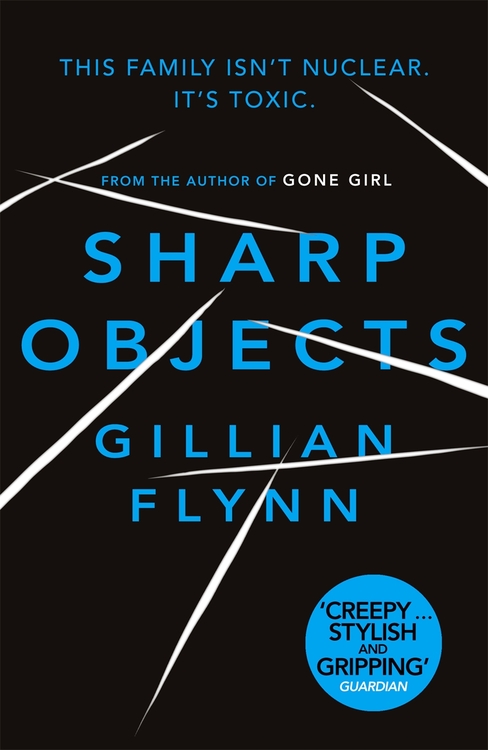
Gillian Flynn: Sharp Objects (2006)

Sharp Objects

When two girls are abducted and killed in Missouri, journalist Camille Preaker is sent back to her home town to report on the crimes. Long-haunted by a childhood tragedy and estranged from her mother for years, Camille suddenly finds herself installed once again in her family’s mansion, reacquainting herself with her distant mother and the half-sister she barely knows – a precocious 13-year-old who holds a disquieting grip on the town. As Camille works to uncover the truth about these violent crimes, she finds herself identifying with the young victims – a bit too strongly. Clues keep leading to dead ends, forcing Camille to unravel the psychological puzzle of her own past to get at the story. Dogged by her own demons, Camille will have to confront what happened to her years before if she wants to survive this homecoming.

I had a feeling I might like Gillian Flynn very much that’s why I decided not to start with her latest novel, Gone Girl, but with her first,Sharp Objects That I went out to get the second, Dark Places, right after finishing this might tell you how much I liked it. She’s an author to my taste, but I have to admit I had a few “Ew!” moments while reading it. She’s not one to shy away from describing very sick things. What I liked was the voice, the taut writing and the story as such. While I had a feeling where this was going, I was still captivated.

Two girls are abducted in Camille’s hometown. One was found dead, her teeth missing, the other is still being searched for. Camille is a journalist for a very unglamorous newspaper in Chicago and her boss thinks it might be a good idea to send her home to investigate and write a few articles that might help the paper get out of its slump and Camille to improve her career. Knowing Camille her boss may have thought that going back to the place that hurt her and face her demons might be a healing experience. It isn’t. Camille is badly equipped to deal with her past and exposing herself to her toxic family and diving deep into the shadow aspects of her hometown take their toll. The sharp objects of the title refer to many different things and one is tied to Camille’s illness. If you have seen the US cover, you know already what I’m talking about. Camille is a cutter, only she’s not happy with slicing her body, she carves words into it. Meaningful words.

Right after Camille’s arrival, the second girl is found. Her teeth are missing too. What a bizarre, yet gruesome crime. Slowly the book reveals the truth behind the crimes and the hidden secrets of Camille’s family.

I don’t read in order to find “likable characters”. Or to say it in other words – I don’t need to bond with characters at all, but I think, I liked Camille, and was, once more, surprised how many people who reviewed this mentioned how much they hated her. Why? I don’t get it. Or maybe I do. It is as if there were some mental afflictions people are more hostile towards. If you’d like to label Camille, I’d say she’s suffering from Borderline Personality Disorder, one of a few afflictions, which get a lot of negative reactions. I thought Flynn drew a very believable character and I was rooting for her. I was hoping she might be able to come out of all of this healthier and stronger.

Sharp Objects is gripping and compelling and does a few daring things, one of which is showing that perpetrators come in many different forms.

This is my fourth contribution to Carl’s RIP challenge. Don’t miss visiting the RIP review site for other Mystery/Crime/Thriller/Ghost/Dark Fantasy related reviews.

Literature and War Readalong October 28 2013: Everything Flows by Vasily Grossman

Everything Flows

I’m very late in announcing this month’s readalong title. Vasily Grossman’s Everything Flows isn’t a war novel per se. It’s a post war novel. I found it’s about time to have a look what state countries, which had participated in WWII, were left in after the war. Russia is decidedly one of the most interesting places when it comes to the post-war era and Grossman is famous for the way he captures this time. Like many other Russian authors Grossman’s novels were forbidden during the Soviet era. Everything Flows was written after his major work Life and Fate.  I have seen a few of his books reviewed on various blogs ( Silver Threads on Life and Fate –  A Work in Progress on Armenian Sketchbook –  Caravana de Recuerdos on Life and Fate) and the feedback was always more than favorable.

I’ll leave you with the b blurb and the first sentences.

Ivan Grigoryevich has been in the Gulag for thirty years. Released after Stalin’s death, he finds that the years of terror have imposed a collective moral slavery. He must struggle to find a place for himself in an unfamiliar world. Grossman tells the stories of those people entwined with Ivan’s fate: his cousin Nikolay, a scientist who never let his conscience interfere with his career, Pinegin, the informer who had Ivan sent to the camps and Anna

Here are the first sentences

The Khabarovsk express was due to arrive in Moscow by 9 a.m.. A young man in pyjamas scratched his shaggy head and looked out of the window into the half-light of the autumn morning. He yawned, turned to the people standing in the corridor with their soap boxes and towels and said, “Well, citizens, who’s last in line?”

I will be reading the German translation Alles fliesst. I have this idea that Russian works better translated into German.

Alles fliesst


*******

The discussion starts on Monday, 28 October 2013.

Further information on the Literature and War Readalong 2013, including all the book blurbs, can be found here.

Jane Austen: Persuasion (1818)

Persuasion

After having read Mansfield Park and liking it so much (as you can see here) I decided to read Persuasion, which has been mentioned by so many in the comments as their favorite Jane Austen novel. The two books couldn’t be more different. I found Persuasion much more mature, more subtle, less witty, more elegant and a bit melancholic. It’s a perfect novel, there is nothing superfluous in it; the story and the characters are rounded and the way their emotions are shown is believable and very touching. There is a lot of sadness and heartache in this novel, but, since it’s an Austen novel, the good characters are rewarded. Despite of all of this, I’m not sure I prefer it to Pride and Prejudice or Mansfield Park. The earlier novels have some imperfections, but they also show an exuberance and wit, which I enjoy. From the point of view of the love story, I think Persuasion is my favourite and I like Anne Elliot and Captain Wentworth as much or even more as Elizabeth Bennet and Mr Darcy, but I missed some of the irony and playfulness of the earlier novels. On the other hand Persuasion is very subtle and I love the more urban settings, Lyme Regis and Bath, which add to its appeal.

Anne Elliot is one of three sisters who lost their mother at an early age and grew up with a silly and vain father who, on top of that, is a spendthrift. The most important things to him and his eldest daughter, Elizabeth, who is his female counterpart, are looks and titles. Being a baronet is of the utmost importance to him. The gentle and sensible Anne suffers a great deal through their coldness and superficiality and if it wasn’t for her mother’s old friend Lady Russell, who has become her mentor, she’d be bad off in a family of self-centred, pompous fools. Her younger sister Mary is not much better and at that a hypochondriac. When the novel starts the Elliots are forced to leave Kellynch Hall and find cheaper lodgings in Bath because Sir Elliot and Elizabeth have been spending far too much. The estate will be let to Admiral Croft and his wife. Mrs Croft is the sister of Captain Wentworth, the man Anne Elliot once loved and – persuaded by Lady Russell – refused to marry because he had no money and no status yet.

Eight years later Captain Wentworth is still as handsome and likable as he used to be, but he’s also very rich. Anne who has refused every suitor, soon regrets bitterly that she refused him. Captain Wentworth on his side is still hurt and resentful. He hasn’t forgotten Anne but cannot forgive her.

Persuasion is often called a “novel of second chances”, and that’s what the love story is all about, but Austen novels are always about much more than just love and marriage. Money and the criticism of a superficial society which attached too much worth to it are central themes. In Persuasion we find a similar situation as in Pride and Prejudice: a rich man with no male heir. The way this is handled is central to the society and the times in which Jane Austen lived but, thankfully, so different from now. Should Sir Elliot die, the estate would go to a distant male relative and not to one of his daughters. It seems as if the property was tied to the name only and not so much to the family. Someone who may never even have seen a house, may be living in it, while those who spent there all their lives have to move out.This is so incomprehensible for us, feels so incredibly unjust that whole series, like Downton Abbey, illustrating this practice, are sure to generate our interest.

A large part of the second story line in Persuasion focusses on this aspect. There is an heir, but he is proud and arrogant, and it is very painful for everyone to imagine he will be living in Kellynch Hall. However, since Sir Elliot is still a good-looking man, it’s not impossible that he remarries. If a younger wife would give birth to a son, the whole situation would look entirely different. While the love story is central the “hunt” for the estate and the ensuing complications are no less important.

I’ve read all of Jane Austen’s longer novels now and it’s quite fascinating to look back, to compare, find similarities, spot differences. I’m currently reading Claire Tomalin’s Jane Austen biography and it adds another layer. So much that is mentioned in Tomalin’s book can be found in the novels. I noticed that Jane Austen never describes London, but I didn’t know she’d never been there.

Nowadays I tend to jump from one author to the next, but it has a special appeal to read everything of one writer because the books are always linked and when you’ve read them all, you can see, that despite the differences, the individual books together form a whole. In Jane Austen’s case, reading all of her books, showed all of her novels are full of vivid portraits and character sketches, full of well-observed behaviour and show the many facets of romantic attachment. But while there are similarities in the themes, there is a huge difference in mood.

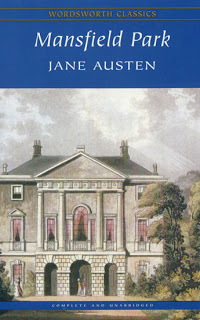
Jane Austen: Mansfield Park (1814)

Mansfield Park

I’m nearing the end of my Austen journey. Now that I have read Mansfield Park, I’ve only got Persuasion and her short fiction left. I was surprised to like Mansfield Park so much as I know it’s not a favourite of many. The reason for this is to some extent its heroine Fanny Price. I wouldn’t go as far as saying I liked Mansfield Park better than Pride and Prejudice, but it may come in second, before Emma.

The story can be summarized briefly. Three women make three very different marriages. Mrs Price gets married to a poor man who likes his drink too much. She bears him some 12 children, one of them is Fanny. Lady Bertram marries a very rich man, owner of an impressive country estate, Mansfield Park. The third, Mrs Norris, lives near Mansfield Park with her husband in a small parsonage. The two ladies often speak about their unfortunate third sister who lives in Portsmouth in squalor and one day Mrs Norris urges the Bertrams to send for Fanny, who is about ten years old, and suggests they raise her at Mansfield Park, together with her four older cousins, Tom, Edmund, Maria and Julia.

Fanny is extremely timid but over the years she is doing well. She grows up to be an educated and very pretty young woman. She’s secretly in love with her cousin Edmund who was the only one who was nice to her. Edmund has decided to join the clergy as being the younger brother he will not have a lot of money to live on. A lot of the Bertram’s money comes from the colonies and when the plantations don’t do so well, Sir Bertram travels to Antigua with his older son.

Mrs Norris who is a widow by now had to vacate the cottage for the new pastor, Mr Grant, and while Sir Bertram travels to Antigua, Mary and Henry Crawford, the younger brother and sister of Mrs Grant, arrive and set in motion a series of dramatic events.

If you know Austen well, you know that all of her heroines are tested. Some more, some less, but in the end they are always rewarded and the reward is a happy marriage.

Fanny Price is a unusual heroine because she comes from a very poor family and the way she is treated by the Bertram’s is often quite shocking. Especially the unlikable Mrs Norris lets her feel daily that she is an inferior. Fanny reminded me much more of a Dickens character and when she is sent back to Portsmouth, as a form of punishment, towards the end of the book, it’s even more Dickensian. I don’t think we find such a close up of a poor family in any other of Austen’s novels. But Fanny Price is unusual for other reasons. She is so timid and fearful and very frail as well. I was surprised to find the portrait of a highly sensitive person who even shows some signs of what used to be called neurasthenia. She has to be careful at all times; she catches colds more easily than others, she’s more easily exhausted. Her symptoms are never as pertinent as when she stays in Portsmouth. She suffers from the noise, the dirt and the smells far more than anyone else would. I have seen her called passive by people but I would say she is quiet and withdrawn, she’s not so much a dreamer as a thinker. Sure, to some extent she is passive, but if you are told daily that you are nothing, that you have to be grateful, that you have to stay in the shadow, then it’s hard to be any other way. Even if she is passive, I don’t think she has a weak mind at all. When they want to force her to marry Henry, she opposes this strongly.

I think a lot of the dislike of Fanny Price stems from her opponent Mary Crawford. I saw people mention that they like her far better than Fanny. When the book was written, she was clearly one of the negative people but we, with our 21st Century mentalities, can’t help but like her and find a lot of what she says quite reasonable. I don’t think I spoil the novel if I mention that it is also about adultery. From our point of view Mary’s reaction to this event is understandable, but when the book was written it was quite shocking. I think small elements like this show very well why many people prefer a historical novel set in 1814 than the real thing because a writer of historical novels would take our mindset into consideration.

Mansfield Park has one of my favourite villains Mrs Norris. She’s a self-centered, selfish and cruel person and tries to exclude Fanny from every little bit of joy, denies her a fire in her room and reminds her constantly that she is an outsider. I loved to hate her and the end is so rewarding.

Mansfield Park has a minor flaw. It is Austen’s longest novel but it’s not long enough. I felt the end was rushed. Many of the most important scenes happen offstage and the final emotional developments happen too quickly. I wasn’t surprised when I watched the ITV production right after finishing the book to see, that those elements were shown in the film while the first parts were compressed. I can’t remember if Austen rushes all of her endings like this. I found it a bit disappointing, which doesn’t mean I preferred the movie version. Not at all. It’s OK but not great and it contains a lot of major changes.

I think that when people write unkindly about Fanny Price, they seem to forget that being adopted into a rich family, means that you are leaving your family behind. Being cut off from what you know, not seeing your beloved brother for years, must be a terrible shock, no matter how stately a home you get in exchange. The story of the little girl Fanny Price who became a delicate but strong heroine has moved me. It’s a rags to riches story that I wouldn’t have expected from Austen. Most of her heroines marry well and improve economically through their marriage, but they don’t start out being as destitute as Fanny.

Literature and War Readalong September 30 2013: There’s No Home by Alexander Baron

There Is No Time

I discovered Alexander Baron’s There’s No Home  thanks to Guy who read an article about this forgotten author a while back.

Reading the beginning of the afterword I’m astonished he was forgotten. John L. Williams writes the following.

Alexander Baron was, arguably, the great British novelist of the Second World War, and for a while he was also the most popular. The three books in which he covered the conflict  –There’s No Home, From the City, From the Plough, and The Human Kind– received glowing reviews and sold in vast numbers on their first appearance on the bookstands and in book club editions.

That these titles have receded from view, rather than becoming established classics – on a par with, say, the wartime books of Evelyn Waugh, Graham Green e or Olivia Manning – seems as mysterious as it is unjust. Perhaps it is due with Baron’s concern with the infantryman’s point of view, rather than the officer class. Or perhaps it is that Baron’s style is so effortlessly simple and unsensational that it is easy to overlook the virtuosity of the writing.

This certainly puts me in the mood to pick up the book and discover this author for myself.

Here are the first sentences

This is not a story of war but of one of those brief interludes in war when the almost-forgotten rhythms of normal living are permitted to emerge again, and when it seeps back into the consciousness of human b wings – painfully, sometimes heartbreakingly – that they are, after all human.

*******

The discussion starts on Monday, 30 September 2013.

Further information on the Literature and War Readalong 2013, including all the book blurbs, can be found here.

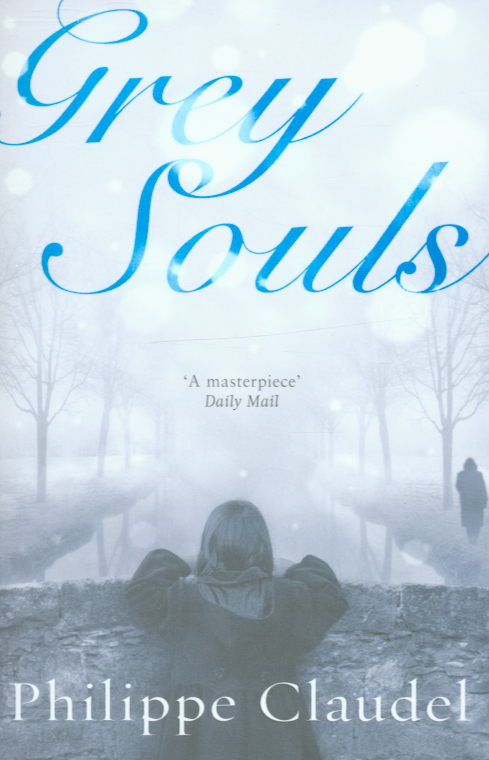
Philippe Claudel: Grey Souls – Les Âmes grises (2003) Literature and War Readalong August 2013

Grey Souls

Philippe Claudel’s Les Âmes grisesGrey Souls is a crime novel set during WWI and a few years later. The narrator whose identity we do not know for a very long time, has decided, some twenty years later,  to write the account of a few tragedies that have happened during the war. He writes for his late wife who died in childbed. He could never let go of his grief and, as he says towards the end of the novel, he never really lived, he merely survived.

In a way, this survival, makes him feel his guilt even more deeply, guilt because he didn’t fight during the war. While so many men died, returned mutilated or went missing, he led a comfortable sheltered life but after his wife died, he didn’t really enjoy it anymore. He’s not the only one however to lead a sheltered life. While the war in the trenches rages and goes on for far longer than anyone suspected, the little town he lives in is spared because there is a factory and the men are needed as workers. And there are the many officials, who are spared as well.

At the beginning and at the heart of the novel lies a murder. An eight year old girl, called Belle de Jour, beautiful as a flower, is found murdered in a canal.

It’s a cold winter morning when the police and officials arrive and the girl’s body lies on a river bank, in the mud. The judge, who has been called to investigate, first eats his breakfast, without being the least bothered by the presence of the corpse. This initial scene sets the tone of the book. It’s grey and bleak. The good people die or despair, the bad go on living their unfeeling lives.

The narrative goes back and forth in time. Bit by bit, the story is unfolded. While Belle de Jour’s murder is at the heart, there are other violent deaths like the suicide of the beautiful school teacher, the narrator’s wife’s death and, much earlier than the story, the premature death of the prosecutor’s young wife.

In the beginning of the book the question “Who killed Belle de Jour?” is important, but once we know who it was the second half concentrates on the “Why?”.  At the time, a murderer was found and executed, but the narrator never believed that he was really the one. Twenty years later. still grieving and full of guilt, he starts another investigation and, this time, he finds the real culprit and his reason.

The book is dismal in tone and topic,  but highly readable and beautiful as well. I liked how the war was blended in as if it colored every aspect of the life. It is as if the novel has two layers, the people’s lives, the tragedies they encounter, the murder and beneath all that the raging war.

I read Belle de Jour’s murder and the way the little girl was discovered as a microscopic description of the war that captured, the ugliness, the absurdity, cruelty and utter senselessness.

The book also contains a profound and melancholic meditation on life and loneliness and how one single tragedy can turn a person into a living shell and lead to crime.

It takes quite a while until the reader understands that more than one murder has been committed in this book.

This was the first novel by Claudel I’ve read, but it will not be the last. It’s not cheerful but it has a strange, arresting beauty that I found wonderful.

Other reviews

Danielle (A Work in Progress)

*******

Grey Souls – Les Âmes grises was the 8th book in the Literature and War Readalong 2013. The next is the WWII novel There’s No Home by Alexander Baron. Discussion starts on Monday 30 September, 2013. Further information on the Literature and War Readalong, including the book blurbs can be found here.

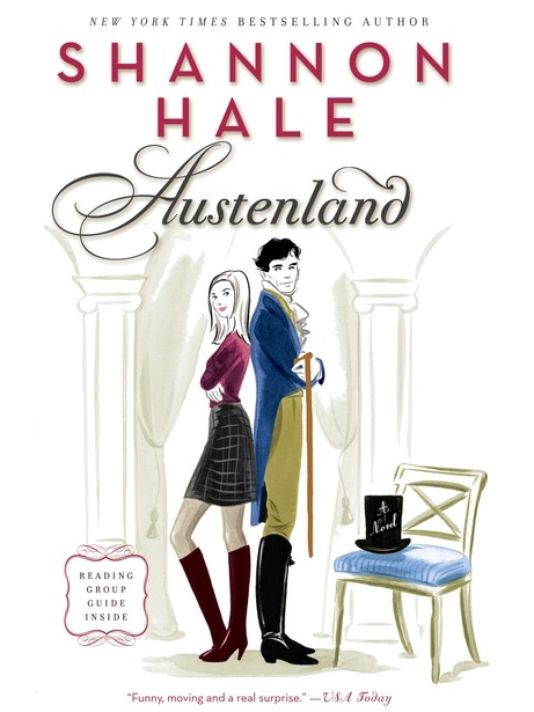
Shannon Hale: Austenland (2007)

Austenland

I’m in an Jane Austen mood these days. I started Mansfield Park a week ago and really like it. Much better than most of the other Austen novels I’ve read so far, with the exception of Pride and Prejudice (I haven’t read Persuasion yet). When I came across a review of Shannon Hale’s Austenland on Anna’s blog  (Diary of an Eccentric), I knew it would be just the thing I’d enjoy right now. I wasn’t wrong. Austenland is absolutely charming. A fun, fluffy read, with which I spent a few pleasant hours.

I’m very wary when it comes to Austen fan-fiction and other than The Jane Austen Book Club, I’ve never been tempted. It’s maybe not surprising that the only other book of that type which tempted me, has also been made into a movie. Now that I read the book, I’m sure I’ll watch the movie Austenland as well.

Jane is a 30 something graphic designer from New York, who never seems to find the right man. Possibly because she is obsessed with Mr Darcy. Not the Mr Darcy from the book but the one from the BBC production starring Colin Firth.

When her rich great-aunt dies she leaves Jane a trip to an expensive English resort that caters to the Jane Austen obsessed. Here Jane will have the opportunity to live exactly as they did in Regency England. She will have to wear the proper clothes, behave and talk like a Regency woman. To make the experience authentic, they live on an estate and are surrounded by actors who behave like authentic Regency people and pretend to fall in love with them.

It seems only women book a holiday at this resort and besides Jane there are other American women. Jane hopes that after immersing herself fully in Austenland, she’ll be able to abandon her Darcy obsession and move on.

Although Jane has read all the Austen novels many times, she isn’t very familiar with Regency England and has to learn a lot. If she doesn’t behave properly or disregards the rules, she could end up being thrown out. Reading about Jane’s  many faux pas and slow progress isn’t only fun but it’s instructive as well. While I know a few things about Regency England, I don’t know enough and reading Austenland made me understand quite a few aspects in Mansfield Park much better.

Austenland is also a romance and  it’s fun for the reader to guess which man is an actor and who might be a real person and with whom Jane will end up.

I also enjoyed the way the book showed how easily the lines between reality and imagination are blurred and that re-enactment must be a powerful. experience

The end is a bit over the top but I liked it anyway.

If you love Jane Austen and want to try one of the many books inspired by her, this is an ideal choice. It’s short and entertaining.

Have you read and liked any books inspired by Jane Austen other than this and The Jane Austen Book Club? Recommendations are welcome. I wouldn’t mind reading another one some day.