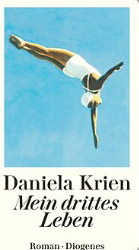
Daniela Krien’s My Third Life (Mein drittes Leben)

German author Daniela Krien who was born in the former G.D.R. published her first novel We Will Tell Each Other Everything (Wir werden uns alles erzählen) in 2011. Long before Kairos she told the story of a passionate love story between a very young woman and a much older man during the final months of the DDR. I found the book a little mawkish but not bad at all, especially in the parts that introduced us to a world that had already been long gone by then. Sure, Erpenbeck is the better writer but if I had to pick one of the two, I’d say I liked Krien’s novel better.

Since then, she’s published four more novels, two of which were translated – The Fire and Love in Case of Emergency (aka Love in Five Acts). While I got the latter on my piles, I haven’t read the others. When I was at the bookshop the other week, I discovered her latest Mein drittes Leben. It hasn’t been translated yet but given the success of some of her other books in translation, I wouldn’t be surprised if a UK or US publisher picked it up.

The book begins after Linda has moved away from Leipzig to the country, while her husband stayed in their flat in Leipzig. They aren’t divorced, nor are they theoretically separated but Linda needs some time on her own. The village and the house she’s staying in aren’t very appealing. But Linda doesn’t care. She’s looking after the chicken of the former owner and her dog and that’s all she seems to need. Her husband, Richard, visits her every other week and she makes a few friends, but mostly she stays on her own.

Bit by bit the reader discovers that Linda once had what she would have called the perfect life: a kind daughter, a husband she’s still in love with after almost twenty years, and a job as a curator of an art foundation that gave her a great deal of satisfaction. But then a tragedy happens. Her seventeen-year-old daughter is run over by a lorry. Linda and Richard grieve deeply but while Richard gets better, Linda doesn’t. On the contrary. It seems to get worse. When she’s diagnosed with cancer on top of that, she knows she can’t go on like before. Once the chemo is over, she moves.

I’ve read a few books about grief, fiction and nonfiction. Guilt is so often part of the grieving process. Here as well. Linda feels particularly guilty because her daughter did something that morning, she wouldn’t have done if Linda had told her not to. But the guilt runs much deeper and that’s where the strength of this book lies. It is tied into her motherhood and the way she became a mother. Richard had been married before and had two beautiful, intelligent children. He didn’t want another child and Linda had to fight very hard for him to give in. Once her daughter is born, Linda wants another child but Richard refuses. Years later, when he finally agrees, it’s too late. One of the things that weighs heavily on Linda’s consciences is the fact that she often compared her daughter to Richard’s first children or to other young people and found her lacking. She seemed too normal, too kind, not particularly beautiful, not fascinating.

Linda has a lot to come to terms with. Her struggles are intense. At times the reader fears she’s going to end it all. And then Richard loses patience. He’s been waiting two years and there is still no sign that Linda will return to Leipzig. The marriage ends when he meets another woman

It may sound like My Third Life is a very depressing book but it’s not. I found it engaging and enjoyable. The way Linda evolves after her marriage ends is uplifting and very relatable. Ultimately, My Third Life is much more than a story about grief, it’s also the story of a marriage. And an exploration of what makes life meaningful. I wouldn’t exactly call My Third Life great literature but it’s very readable. It would make an amazing book club read as it offers so many discussion points. How long should a person grieve? What is the right way to grieve? How do partners survive the loss of a child, especially when they don’t grieve the same way? What about friendships? How do friendships survive something like this?
 

Whatever Happened to My 20 Books of Summer?

Goodness did I fail spectacularly at Cathy’s 20 Books of Summer. My intentions were good, my choices were excellent, and, for a while, I read one book after the other until I realized my pile had one major flaw – there were no crime novels. And once I strayed from the path, it was hard getting back to it. That said, I read seven and a half of the books on my pile before going off course.

Olivier Adam’s Passer l’hiver is a collection of short stories that hasn’t been translated which is too bad. They were outstanding. Melancholy, poignant and so evocative. They show people at their loneliest but mange not to be depressing.

Hilary Mantel’s Learning to Talk is another short story collection and my first introduction to Hilary Mantel. I liked it very much. Especially the first story in the book which reminded me a little of Joyce’s Araby.

Jenny Erpenbeck‘s Kairos. What to say about this? The writing is impressive. If it hadn’t been so great, I wouldn’t have finished it. It’s actually interesting that before this got The International Booker, it wasn’t praised much in Germany. Maybe because of the very toxic nature of the relationship of the two main characters? Or simply because the depiction of the former DDR is anything but convincing.

Willa Cather‘s A Lost Lady. Now this is a novel that will make my best of the year. I liked it so much.

Elizabeth Taylor’s The Wedding Group. I have read a lot of Elizabeth Taylor’s novels and didn’t think I’d ever read one that I didn’t find convincing. Unfortunately, The Wedding Group is not her best. There are things to admire here but overall, it felt disjointed.

Kaye Gibbons‘ Charms for the Easy Life. This is a historical novel, set after WWII. It’s very well written and entertaining but not a favourite.

Kate Zambreno‘s The Light Room is a memoir and I liked it a great deal. She describes the year after her second child is born, which is right at the beginning of Corona. The title The Light Room is an allusion to the Japanese novel Territory of Light, which I’ve read earlier this year. They both have a lot to say about motherhood.

Patricia Lockwood‘ Nobody is Talking About This was praised by so many people, but I found it annoying. It’s uncanny how well she describes Twitter or X but for some reason, it wasn’t for me.

I’m not too bothered that I didn’t manage to finish reading my pile, I’m more annoyed that I didn’t review them. Or any other of the books I read and really enjoyed this summer like Hollinghurst’s The Line of Beauty which has been on my shelves since 2005. Definitely another novel that will make my Top 10 this year.

20 Books of Summer

I just realized, I’m late to Cathy’s 20 Books of Summer. It’s my first time participating and I had no idea it didn’t start at the beginning of summer but at the beginning of June.

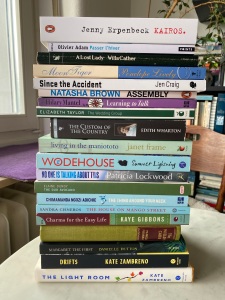
I was always tempted to participate but for some reason never could come up with a list of books. The other day, I was looking at a pile of unread books  on one of the shelves of my newest bookcase and noticed that there were almost 20 very tempting books. I added a few more to have at least one German and one French title, plus one memoir.

Normally, I don’t like to plan my reading but recently decision fatigue has kept me from actually reading and so, having a smaller pile to choose from, sounded like a great idea. It’s a bit like the capsule wardrobes that many people with too many clothes resort to.

Most of the books are rather slim with the exception of Erpenbeck’s Kairos and Edith Wharton’s The Custom of the Country. I’ve already read one book, Willa Cather’s A Lost Lady and am about halfway through Kate Zambreno’s The Light Room.

There are three books of short stories:

Olivier Adam’s – Passer l’hiver

Hilary Mantel’s – Learning to Talk

Chimamanda Ngozi Adichie’s The Thing Around Your Neck

The rest are all novels:

Jenny Erpenbecck – Kairos

Edith Wharton – The Custom of the Country

Willa Cather – A Lost Lady

Elizabeth Taylor – The Wedding Group

P. G Wodehouse – Summer Lightning

Pamela Frankau – The Willow Cabin

Janet Frame – Living in the Maniototo

Penelope Lively – Moon Tiger

Sandra Cisneros – The House on Mango Street

Kaye Gibbons – Charms for the Easy Life

Elaine Dundy – The Dud Avocado

Patricia Lockwood – Nobody is Talking About This

Natasha Brown – Assembly

Jen Craig – Since the Accident

Danielle Dutton – Margaret the First

Kate Zambreno – Drifts

One memoir

Kate Zambreno – The Light Room

I’m very pleased with my choices. There are so many books on this pile that I had wanted to read for ages like The Custom of the Country and Moon Tiger and A Lost Lady that I think, I might actually manage to stick to them.

The Calligraphers’ Night – La nuit des calligraphes by Yasmine Ghata – A French/Turkish Novel – A Post a Day in May

Yasmine Ghata was born in France to a Turkish father and a Lebanese mother, the famous poet Vénus Khoury-Ghata. Yasmine Ghata studied Islamic Art. The Calligraphers’ Night – La nuit des calligraphes was her first novel. It was published in French in 2004, the Hesperus edition is from 2007. It’s currently sold out but used copies can be found very easily.

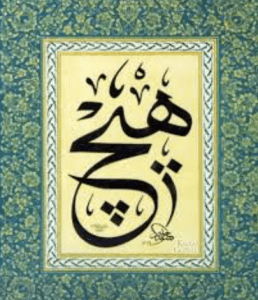
The Calligraphers’ Night tells a very poetic version of the story of Yasmine Ghata’s grandmother, the first female Turkish master calligrapher Rikkat Kunt. The book is told in first person, from the point of view of Rikkat. Rikkat Kunt was born in 1903 in Istanbul, where she also died in 1986. She was always drawn to calligraphy, the art that captures Allah’s breath, but at first she was married to a man she didn’t love. It wasn’t easy being a calligrapher for a woman but especially difficult at the time because calligraphy was on the way to extinction. Calligraphy and book illustrations were predominately Islamic art forms. But in 1928, attempting to modernize Turkey, Atatürk abolished the use of the Arabic alphabet in favour of a new Europeanized alphabet. The calligrapher’s work was threatened not only because it would lose meaning but also because Atatürk was not in favour of Islam.

Caught between a loveless marriage and those radical changes, Rikkat Kunt had to fight hard to pursue her calling. She finally got a divorce and worked as a calligraphy teacher at a university. Later, she met another man and another unhappy marriage followed. The son of that marriage would be the father of the author of this book.

This is such a beautiful book. The way it’s told is poetic. We really get a sense for this beautiful art and a better understanding for the religion. Everything has meaning in this art. Not only the finished product but the act of drawing the words or decorative borders of the books. The narrator explains, for example that the time the ink needs to dry, less than a minute in winter, several seconds in summer, corresponds to the presence of God.

Calligraphy is not only described as art but as magic. It is holy and without religion meaningless. Later however, Rikkat Kunt, too, began to modernize her calligraphy and strayed from the path of religion.

I mentioned before that Rikkat Kunt is the narrator, but I also need to mention that she begins her story after her death. The pages are populated with the ghosts of her predecessors. The ghosts of famous calligraphers are always presents and guide her. I think this symbolizes the tradition of this art. They all contribute to praise Allah and his prophet and one influences the next.

I loved this book so much. Not only is the writing beautiful and the story fascinating, but I feel like I learned so much about Turkish culture, language, history, and religion. The way this is presented is informative but never dry and fits into the story seamlessly. And I’ve always been fascinated by calligraphy. I also find Arabic so beautiful to look at that I wanted to learn it once.

Because being a calligrapher was so unusual for a women and because women at the time didn’t have a lot of freedom, the book is also about the role and position of women in Turkish culture.

I’ve been to Turkey but not to Istanbul. I always wanted to see it, now more so than ever.

Best Books I Read in 2019

There hasn’t been a year since I started blogging in which I reviewed as little as in 2019. I also read less, or rather, I finished less books. I have two huge stacks of almost finished and half-finished books next to my bed. I’ve never done this before, given up on a book twenty to thirty pages before its ending but I did this year. Some of them will still be finished someday but many, I guess, won’t. Not sure why this happened. Did I make bad choices? Was I in a reading slump? A bit of both, I suppose.

That said, I have read some wonderful books this year.

And here they are, in no particular order.

Fiction

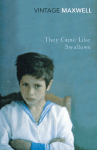
William Maxwell – They Came Like Swallows

Tragic and beautiful, Maxwell’s book is one of the few I reviewed. Here’s what I said:

I’m full of admiration for the craft and looking forward to reading The Château next. And I think it’s an outstanding portrayal of grief and the awkward ways people treat the bereaved. It also shows very well how devastating the influenza pandemic was.

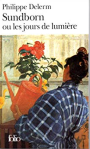
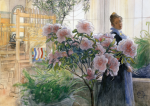
Philippe Delerm Sundborn ou les jours de lumière

Anglophone readers might not be familiar with Philippe Delerm, but let me just tell you – it’s an absolute shame. He’s one of my favourite French writers. After having read Autumn, his book on the Pre-Raphaelites, I chose to read Sundborn last year. Sundborn focusses on the Scandinavian artists surrounding Swedish painter Carl Larsson. Delerm is outstanding at capturing colours, landscapes moods, and this book is no exception. Anyone who loves Carl Larsson or Soren Kroyer would love this book. It needs to be translated.

Carl Larsson

Soren Kroyer

Barbara Pym – Excellent Women and Some Tame Gazelle

No need to introduce Barbara Pym to the readers of this blog. She’s a favourite of many. These were two excellent, witty, sharp, and at times amusing books. I couldn’t say which one l liked better. Possibly, Some Tame Gazelle, as it is a bit gentler. I’m a bit mad at myself for not reviewing them but when I read them, I was still in too much back pain to sit at my desk.

E.F. Benson Mapp and Lucia

While I didn’t review Barbara Pym, I did write a post on E. F. Benson’s famous Mapp and Lucia. What a delightful book. One that left me with a serious “book hangover”. It took weeks until I was able to move on and properly enjoy something else.

Here’s a bit from the review:

And there’s life at Tilling. A carefree life that’s so different from most of our lives nowadays. Not only because it’s set before WWII, but because it’s set among the British upper middleclass. Nobody works in this book. All the main characters own beautiful houses. All they think about is where they will dine next, who gives the best tea party. Gossip and petty quarrels aside, it’s a peaceful world. The conflicts are entirely the character’s own making. Nothing dramatic ever comes from outside. At least not until the end. After a while, I found spending time in this world very comforting. And funny. It’s a terrific social comedy. Lucia’s pretence to know Italian is hilarious and so is the way they constantly try to outsmart each other.

Joseph Roth Der Radetzkymarsch

Death, dying, and the end of an era are all themes in this marvellous novel. Sometimes you wonder why a book is a classic. Not in this case.

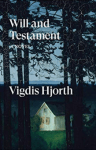
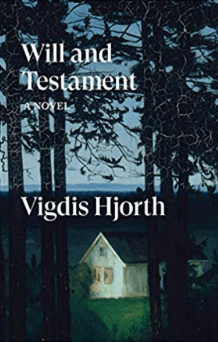
Vigdis Hjorth Will and Testament

This novel by Norwegian writer Vigdis Hjorth was so good and I did review it.  Here’s a bit from the review:

Will and Testament was a huge success in Norway, and I can see why. It’s highly literary but nonetheless as captivating as a thriller. The plot is moving back and forth in time, slowly revealing the dark secrets at the heart of the dysfunctional family depicted in the novel.

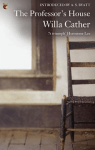
Willa Cather – The Professor’s House

Since I’ve started blogging, almost tens year go, I came across so many raving reviews of Willa Cather’s work. Every year I said the same – I need to read her but then I didn’t. Last year, finally, I read my first Willa Cather and the only thing I regret is that I didn’t review it. What a wonderful book. One could say it’s almost two books in one, something I’m usually not keen on but it really worked. First we have the more interior parts, told from the point of view of Professor St. Peter. Anyone who has ever tried to carve out some time for her/himself, will know how hard it can be to work either creatively or do research when there are many demands from friends, family,  . . . Professor St. Peter tries very hard and succeeds and the time he spends on his own turns into a trip down memory lane. He thinks about his former student and friend, Tom Outland, who died in the Great war. His death brought great wealth to St. Peter’s family but also complexity and animosity. The second book inside of the book is Tom Outland’s story. And in that part we see what Willa Cather was so famous for – her landscape descriptions. It’s quite magical.

Crime

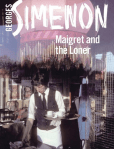
Simenon – Maigret et l’Homme tout seul – Maigret and the Loner

It’s been a while since I’ve last read a Maigret. They are a bit hit or miss, but this one was fabulous. A homeless man has been killed and it seems so absurd. He kept to himself, had no possessions. What could anyone gain from killing him? Maigret’s in the dark for a long time. The end is surprising.

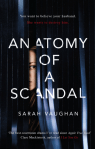
Sarah Vaughan Anatomy of a Scandal

This is embarrassing. I read this last January, didn’t review it and have practically forgotten everything about it. I just remember I LOVED it.

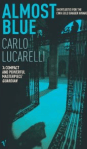
Carlo Lucarelli Almost Blue

I love a good noir. The mood, the atmosphere. This has all that and more. It’s a rare beast as it’s a genre blend. A serial killer noir. Don’t let that put you off. It really is good.

Nonfiction

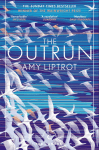
Amy Liptrot – The Outrun

Another one of the very few I’ve reviewed. Such an amazing memoir about the way nature can help us heal.

Here’s a bit from the review:

I can’t recommend this highly enough. It’s an amazing insight into someone’s addiction and recovery and a fabulous account of life on Orkney. I could see the many migratory birds, feel the icy cold of the water, the force of the gales, and the beauty of the constellations in the night sky.

In defiance of this dissatisfaction, I’m conducting my own form of therapy through long walks, cold swims and methodically reading old journals. I’m learning to identify and savour freedom: freedom of place, freedom of damaging compulsion. I’m filling the void with new knowledge and moments of beauty. (p.180)

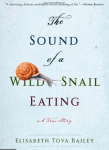
Elizabeth Tova Bailey – The Sound of a Wild Snail Eating

If I had to pick one favourite of all the books I’ve read, I’d say it was this one. It’s beautiful and fascinating. Elizabeth Tova Bailey contracts a mysterious viral or bacterial infection that leaves her tied to her bed for years. During an especially bad phase, a friend gifts her a terrarium with a tiny forest snail in it. This tiny being becomes her companion. She’s so fascinated by it that she begins to read up on gastropods. The world she discovers is amazing. (Did you know snails have between 1’000 and 12’000 teeth?). The result of her research is an absolute gift to the reader. But the tiny snail does more than fascinate. It gives her comfort and solace.

Will and Testament (Arv og miljø) by Vigdis Hjorth (2016) – Norwegian Literature

From the blurb: “Four siblings. Two summer houses. One terrible secret. To what degree should the horrors of the past be allowed to shake the present? Stalked by the darkest of shadows from her childhood, a woman struggles against the tide dragging her back to the family she fled years ago. This emotionally searing novel is at once a wrenching look at a family fractured and a meditation on the nature of trauma and memory.”
Norwegian writer Vigdis Hjorth’s is very well known in her home country. She has written over twelve novels and won many prestigious Scandinavian prizes. I came across her name in a Swiss newspaper where she was mentioned as one of Norway’s most notable authors. Since it’s still Women in Translation Month, I thought she’d be a good choice.  Will and Testament was a huge success in Norway, and I can see why. It’s highly literary but nonetheless as captivating as a thriller. The plot is moving back and forth in time, slowly revealing the dark secrets at the heart of the dysfunctional family depicted in the novel. Bergljot, our fifty-something first-person narrator, hasn’t seen her parents for twenty-three years, when she’s informed that her father has died. Already before his death, her siblings tried to involve her in their dispute about their parent’s will. Even though, their parents had promised, they would evenly divide their possessions among the four siblings, they clearly changed their mind as the two coveted holiday homes on the Norwegian seaside go to Bergljot’s younger sisters. Bergljot’s older brother is very upset about this and tries to convince Bergljot to take his side. While she too, is sad that her children won’t have the opportunity to spend their summers in one of the homes, she understands why her parents decided to act as they did. After their father’s death, the discussion is renewed and gets even more heated. Jumping back and forth in time, Bergljot tells the story of her life and reveals, bit by bit, why she chose to break with her parents. When the two younger sisters were only babies, but the older ones seven and ten respectively, something terrible happened. Something that both parents wished the children had forgotten. Unfortunately, Bergljot’s’ turbulent love life leads her start a therapy and, so, the distant memory resurfaces. She confronts her parents, but they both deny anything has happened. To keep her own sanity, she breaks with them. The secret, which is finally revealed, isn’t very surprising. Most readers will guess it from the beginning. And if that was all the book had to offer, I wouldn’t have been as impressed with it as I was. But it has so much more to offer. The character portraits, especially those of Bergljot and her mother are fantastic. The mother is one of those crazy, dysfunctional, larger-than-life mothers that populate so many books about dysfunctional families. For me she was especially chilling because she did and said a few things that sounded so much like my own mother that it made me shiver. She doesn’t live her life, she performs it. She lies and manipulates, is cruel and mean and distorts the truth to her own advantage. The book reveals the intricate family dynamics in a truly admirable way. It also shows that when there are several siblings, each one of them might see the parents completely differently, have a totally different relationship with them. In Will and Testament it’s Bergljot’s tragedy, that her parents know very well that they treated Bergljot and her brother badly. Because they knew this and because they wanted to repress the memories, they treated the younger girls differently. By the time Bergljot accuses her parents, and drops the bomb, as she says, the younger sisters are firmly on the parent’s side. I can imagine how painful it must be, to see a repressed memory resurface and then be told, you made it up. I could imagine that, for the longest time, one would doubt oneself. The reasons why Bergljot knows she’s remembering correctly is because she’s so damaged. She drinks far too much, falls for the wrong men. But she’s a terrific mother and her children are behind her all the time. Not for one second do they doubt her. It took me a few pages to get into this book because it isn’t told chronologically, but once I got the structure, I liked it very much. I was impressed by the intricate way the family dynamics are described and by the subtle psychological insights. And while some of it is dark, it’s never depressing. Bergljot may be damaged but she’s true to herself and courageous. It’s not easy to face a hostile family front. Will and Testament will be out in English in September. If you like stories about dysfunctional families, you shouldn’t miss this.

Peach by Emma Glass – Dylan Thomas Prize 2019 Blog Tour @dylanthomprize

Emma Glass’ Peach is one of the books on this year’s Dylan Thomas Prize Long List. The prize is awarded for the best published literary work in the English language, written by an author aged 39 or under. The prize is named after the Swansea-born writer, Dylan Thomas, and celebrates his 39 years of creativity and productivity. I’m very glad I was invited to participate in the blog tour.

When I chose Peach from the longlist, I wasn’t entirely aware of what type of book this would be. I knew it was about a teenage girl who goes to college, has a boyfriend named Green, a best friend, a cat, a baby brother and parents who just seem to have rediscovered sex. And I knew that something horrible, a sexual assault, happens to her. What I didn’t realize was how artful this book would be. I don’t think I’ve ever read anything quite like it outside of poetry or flash fiction. The way Emma Glass works with sound, repetitions, alliterations, onomatopoeia is astounding. What is even more astounding is that this book, while experimental to some degree, still is immensely readable. In many ways, the style she uses seems to tell us that the unspeakable cannot be named. It has to be evoked.

Given the topic, the book isn’t for the faint of heart and it had one of those moments I’ve come to dread – cruelty against an animal. (Spoiler – why do most perverted people in books always, sooner or later torture an animal – mostly, like in this case, a cat?)

I’ve seen some critics argue that this book fell flat because it’s surreal and, at the end, Peach seems to disintegrate. I would disagree. It’s a shocking topic, told in quite horrific short chapters, but there are also some playful absurd moments that I found very impressive and convincing. Many authors who write about horrible things, like Kafka, to name one of the most famous, used the absurd to describe what’s too awful to name. And Emma Glass does just that.

To give you an impression of her stellar writing, I’ll leave you with a few quotes. Nothing captures this book as well as quotes.

The first sentences:

Thick stick sticky wet ragged wool winding round the wounds, stitching the sliced skin together as I walk, scraping my mittened hand against the wall. Rough red bricks ripping the wool. Ripping the skin. Rough red skin.

Page 39

My legs feel heavy and I’m dragging my feet. Shovelling snow with my shoes. Leaving lines behind from my lead legs.

Page 72/73

I lie down on the sofa and shut my eyes. My hands fall straight down to my tummy. Strange. How strange it is. Naturally grasping the firm mass doesn’t feel so strange any more. The lump I have been lugging though loathsome heavy hurting full, it feels like me, like part of me. Ingrained. Embedded. I think about cells, multiplying, millions, every second, every millisecond for millions of seconds how big can I get? How big will I be before I burst? Cells linking, holding hands, making chains, chains winding, chains winding around my core. Spores sporing, pouring.

One more element I’d like to mention are the chapter headings which are equally artful and playful. Here are just a few:

Seam Stress

Sun Screen

Forest for Rest

Final Pieces, Final Peace

Emma Glass was born in Swansea. She studied English Literature and Creative Writing at the University of Kent, then decided to become a nurse and went back to study Children’s Nursing at Swansea University. She lives and works in London. Peach is her first book.

Thanks to Bloomsbury Publishing for a review copy

This year’s longlist of 12 books comprises eight novels, two short story collections and two poetry collections:

  • Nana Kwame Adjei-Brenyah, Friday Black (Houghton Mifflin Harcourt (US) and Riverrun (UK))
  • Michael Donkor, Hold (4th Estate)
  • Clare Fisher, How the Light Gets In (Influx Press)
  • Zoe Gilbert, Folk (Bloomsbury Publishing)
  • Emma Glass, Peach ((Bloomsbury Publishing)
  • Guy Gunaratne, In Our Mad and Furious City (Tinder Press, Headline)
  • Louisa Hall, Trinity (Ecco)
  • Sarah Perry, Melmoth (Serpent’s Tail)
  • Sally Rooney, Normal People (Faber & Faber)
  • Richard Scott, Soho (Faber & Faber)
  • Novuyo Rosa Tshuma, House of Stone (Atlantic Books)
  • Jenny Xie, Eye Level (Graywolf Press)