Wednesdays are wunderbar – Joseph Roth, Irmgard Keun and Christa Wolf (English or German) Giveaway

Today we have a different kind of giveaway. The books are personal contributions and that is why you can win them either in English or in German. The giveaway is part of Lizzy and my German Literature Month in November.

The books I selected are the following:

Joseph Roth’s The Radetzky March (1932).
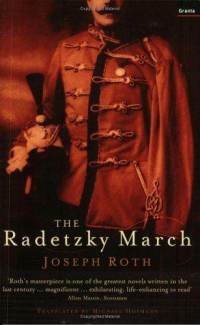
The Radetzky March is one of the very great novels of 20th century literature. It’s a swan song, a melancholic depiction of the end of an era.

The Radetzky March can fairly claim to be one of the great novels of the last century. Its theme, beautifully articulated, is the end of an era. His anthem for a vanished world has the intense, fleeting beauty of a sunset’ Sunday Telegraph ‘He saw, he listened, he understood. The Radetzky March is a dark, disturbing novel of eccentric beauty… If you have yet to experience Roth, begin here, and then read everything’ Eileen Battersby, Irish Times ‘The true reading pleasure afforded by the rich environment Roth captures may well have increased over time, while the schisms at the heart of Europe continue to fascinate. It seems that we are rediscovering in twentieth-century Central European literature classics for a new millennium.”

Book number two is After Midnight (1937) by Irmgard Keun.
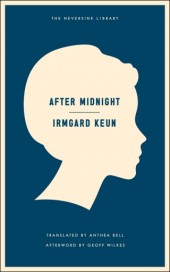
Keun was a very successful writer until the Nazi’s came. Her novel After Midnight and all of her other works (the most famous is The Artificial Silk Girl) were confiscated and banned. She flew from Nazi Germany together with her lover Joseph Roth. Keun is a tragic figure. In and out of psychiatric hospitals, alcoholism… Her biography is as fascinating as her novels. There is a lot of her own life in the novels too.

What I like a lot about her writing is that it seems so deceptively simple while in reality it is full of explosives. In After Midnight a young woman with the voice of a child describes the most upsetting things. It’s a lucid depiction of the ascent of Nazism and shows, like not many other novels, how and why the Nazi’s were so successful. The fact that a very simple, almost simpleminded girl tells the story makes it an uncanny read.

In 1937, German author Irmgard Keun had only recently fled Nazi Germany with her lover Joseph Roth when she wrote this slim, exquisite, and devastating book. It captures the unbearable tension, contradictions, and hysteria of pre-war Germany like no other novel. Yet even as it exposes human folly, the book exudes a hopeful humanism. It is full of humor and light, even as it describes the first moments of a nightmare. After Midnight is a masterpiece that deserves to be read and remembered anew.

The third book is Christa Wolf’s No Place on Earth (1979).
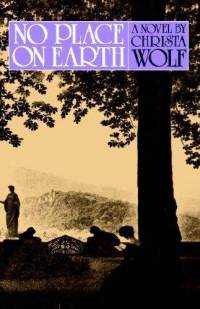
No Place on Earth is a special book for me and a special book for this event. It is my favourite Christa Wolf and its topic fits nicely into our event as it depicts an imaginary encounter between Heinrich von Kleist and the poet Karoline von Günderrode. Von Günderrode is hardly read anymore although she was very influential. She was the friend of Bettina von Arnheim (born Bettina von Brentano, sister of Clemens Brentano) who wrote a book about her which is really wonderful. Von Günderrode and von Kleist never really met but – that’s what Christa Wolf imagines – if they had…. Who knows, they might not have ended their lives. Both authors committed suicide at an early age and are seen as victims of the circumstances in which they lived. In Wolf’s novel they are given the opportunity to meet and to find that they are kindred spirits. It’s a very poetical novel and I would wish that whoever wins it will like it as much as I did.

This fictionalized account of an encounter in 1804 between the poet Karoline von Gunderrode and writer Heinrich von Kleist is pieced together from extracts of actual letters. In real life, both committed suicide some years after the events in this book.

If you would like to win one of those books, or enter for more than one, please let me know which ones you would like and why you would like to win them. Also indicate if you would like the book in English or in German. There is only one little condition – you should be a participant of German Literature Month.

The giveaway is open internationally, the books will be shipped by amazon or the book depository. The winners will be announced on Sunday 30 October 18.00 – European – (Zürich) time.
Jenny Erpenbeck, Clemens Meyer and Berlin City-Lit Giveaway -The Winners

It’s finally Sunday again and here are our three lucky winners drawn by random.org list generator.

The winner of Clemens Meyer’s short story collection All the Lights, courtesy of And Other Stories, is

Rise from in in lieu of a field guide

Jenny Erpenbeck’s Visitation which we give away courtesy of Portobello Books has been won by

neer from A Hot Cup of Pleasure 

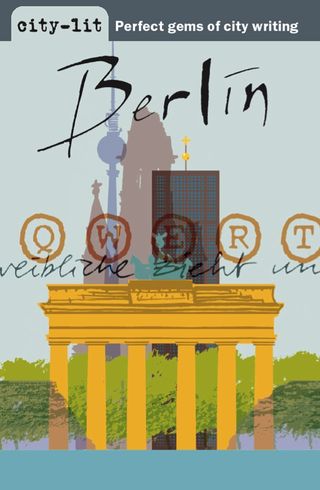
City-Lit Berlin, a contribution from Oxygen Books goes to

John (I think your site isn’t up and running yet?)

Happy reading, Rise, neer and John!

Please send me your contact details via beautyisasleepingcat at gmail dot com.

The giveaways are part of Lizzy and my German Literature Month in November.

The next giveaway will take place on Wednesday 26 October.

Btw. Those who won can participate again. 🙂

Wednesdays are wunderbar – Jenny Erpenbeck, Clemens Meyer and Berlin City-Lit Giveaway

Today we have a double giveaway. One on Lizzy‘s blog (that will be posted around 18.00 UK time) and the other one here. The giveaways are part of our German Literature Month in November.

Lizzy is giving away Pereine titles  (Next World Novella, Portrait of The Mother as A Young Woman and Maybe This Time) and two copies of Berlin City-Lit (see below). Her giveaway is UK only.

I’m very happy to be able to offer you three great book choices.

The first is Clemens Meyer’s short story collection All the Lights, courtesy of And Other Stories. Meyer started as a very young author and since he has entered the literary scene he has received a lot of praise.

Fifteen stories, laconic yet full of longing, from the young star of German fiction.’ GQ ‘The best crafted, toughest and most heart-rending stories in Germany.’ Spiegel ‘Respect to him. He’s the real deal.”

A man bets all he has on a horserace to pay for an expensive operation for his dog. A young refugee wants to box her way straight off the boat to the top of the sport. Old friends talk all night after meeting up by chance. She imagines their future together…Stories about people who have lost out in life and in love, and about their hopes for one really big win, the chance to make something of their lives. In silent apartments, desolate warehouses, prisons and down by the river, Meyer strikes the tone of our harsh times, and finds the grace notes, the bright lights shining in the dark.

The second book is Jenny Erpenbeck’s Visitation which we give away courtesy of Portobello Books. I’m sure you have seen the one or the other review of this book. It was a huge success in Germany and is now equally appreciated everywhere else.

`This haunting novel beautifully dramatises how ordinary lives are affected by history’

By the side of a lake in Brandenburg, a young architect builds the house of his dreams – a summerhouse with wrought-iron balconies, stained-glass windows the color of jewels, and a bedroom with a hidden closet, all set within a beautiful garden. But the land on which he builds has a dark history of violence that began with the drowning of a young woman in the grip of madness and that grows darker still over the course of the century: the Jewish neighbors disappear one by one; the Red Army requisitions the house, burning the furniture and trampling the garden; a young East German attempts to swim his way to freedom in the West; a couple return from brutal exile in Siberia and leave the house to their granddaughter, who is forced to relinquish her claim upon it and sell to new owners intent upon demolition. Reaching far into the past, and recovering what was lost and what was buried, Jenny Erpenbeck tells an exquisitely crafted, stealthily chilling story of a house and its inhabitants, and a country and its ghosts.

The third book is a contribution from Oxygen Books. You can win a copy of City-Lit Berlin. An anthology of stories set in Berlin. There are a lot of interesting authors included. Many German ones but also others.

If you would like to win one of those books, or enter for more than one, please let me know which ones you would like. Ideally you would read and review the book that you win.

Don’t forget to visit Lizzy’s Literary Life if you are located in the UK. She will post this evening (18.00 UK time).

The giveaway is open internationally, the books will be shipped by the editors. The winners will be announced on Sunday 23 October 20.00 – European – (Zürich) time.
Kleist Novellas Giveaway – The Winner

It’s finally Sunday and I’m glad to be able to announce the winner of the giveaway of the following two novellas by Kleist, courtesy of Melville House Press.

The giveaway is part of Lizzy and my German Literature Month in November.

The winner of this week’s giveaway – drawn by random.org number generator – is Vishy from Vishy’s Blog.

Please send me your contact details via beautyisasleepingcat at gmail dot com.

We hope you will be able to read and review at least one of them during Kleist week in November.

Happy reading, Vishy.

The next giveaway will take place next Wednesday.

Wednesdays are wunderbar – Kleist Novellas Giveaway

As Lizzy already announced last week, you should get used to our “Wednesdays are wunderbar” series that will take place on a fairly regular basis until the end of November. They are an integral part of our German Literature Month in November.

This week’s giveaway has been kindly provided by Melville House Press. We have two of Heinrich von Kleist’s novellas to give away, The Duel (aka Der Zweikapmpf) and Michael Kholhaas (Michael Kohlhaas deutsch).

Heinrich von Kleist died 200 years ago, on November 21 1811. Kleist was 34 years old when he died or – to be more precise – killed himself together with his friend, Henriette Vogel. As much as we appreciate his work now, that was not the case during his life. He got little recognition at the time. His plays and novellas that are considered to be among the finest in German literature had to wait until the 20th century to be discovered and treasured.

Like Jean Paul, or the equally tragic Friedrich Hölderlin, Kleist didn’t belong to any specific movement. He was neither a classic nor a romantic, but somewhere in between and quite unique. He certainly was a troubled man who was too sensitive for his time. Not being understood and the fear of losing his livelihood made matters worse.

He may be more famous for his plays but he has written some extremely impressive novellas. The stories are often violent and somewhat stretching believability but the accuracy of the descriptions and his use of language are what make him one of the very great German writers. He has a voice entirely his own.

Below you can see the two novellas we are giving away. As I haven’t read these two, I added the blurbs.

Based on actual historic events, this thrilling saga of violence and retribution bridged the gap between medieval and modern literature, and speaks so profoundly to the contemporary spirit that it has been the basis of numerous plays, movies, and novels. It has become, in fact, a classic tale: that of the honorable man forced to take the law into his own hands. In this incendiary prototype, a minor tax dispute intensifies explosively, until the eponymous hero finds the forces of an entire kingdom, and even the great Martin Luther, gathered against him.

One of the few novellas written by the master German playwright, The Duel was considered by Thomas Mann and others to be one of the great works of German literature. The story of a virtuous woman slandered by a nobleman, it is a precise study of a subject that fascinated von Kleist: that people are sometimes seemingly punished for their very innocence. This new translation reinvigorates a key work by this revolutionary German writer

If you are interested in reading these two novellas, please leave a comment. The only condition is that you read and review them during the Kleist and Other German Classics week of our German Literature Month in November (week 4).

The giveaway is open internationally, the books will be shipped by the editor. The winner will be announced on Sunday 16 October 20.00 – European – (Zürich) time.
German Literature Recommendations – 20 German Novels You Must Read

I’m planning on writing a few posts with recommendations  for Lizzy and my upcoming German Literature Month in November. While I will give my personal recommendations in another post, I chose to follow one of the most famous German critics for the classics and modern classics.

The notorious German critic Marcel Reich-Ranicki (also called Literaturpapst aka Pope of Literature), who, for decades, made writers – praise from him would invariably lead to sales, a negative comment could ruin a career – edited a few years ago the so-called Canon of German Literature. While I don’t always agree with the foreign books he chooses to praise, I trust his judgement on German literature. Especially classics. His “Kanon der deutschen Literatur” has five parts. The first consists of 20 novels, the others are dedicated to short stories, poems, plays and essays.

As I suppose most people who will join us in November will go for novels, I chose to present Reich-Ranicki’s list of novels. There are a few I haven’t read but I got all of them and have at least read the initial pages. I think it’s a good choice and it is great that you can find German, Austrian and Swiss authors on it. I indicated whether or not the book is available in English or out of print (OOP).

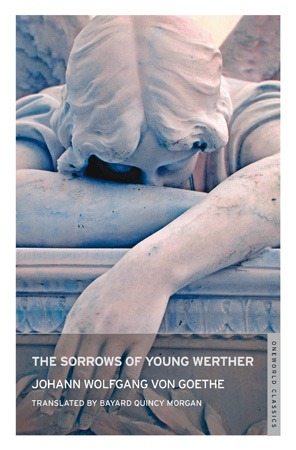
  1. Johann Wolfgang Goethe: The Sorrows of Young Werther aka Die Leiden des jungen Werther (1774) Germany
  2. Johann Wolfgang Goethe: Elective Affinities aka Die Wahlverwandtschaften (1809) Germany
  3. E. T. A. Hoffmann: The Devil’s Elixirs aka Die Elixiere des Teufels (1815/16) Germany
  4. Gottfried Keller: Green Henry aka  Der grüne Heinrich (1854/55) Switzerland
  5. Theodor Fontane: Frau Jenny Treibel (1892) Germany. Seems not available in English.
  6. Theodor Fontane: Effi Briest (1894/95) Germany
  7. Thomas Mann: Buddenbrooks (1901) Germany
  8. Heinrich Mann: The Blue Angel aka Professor Unrat (1905) Germany, OOP
  9. Hermann Hesse: The Prodigy aka Unterm Rad (1906) Germany
  10. Robert Musil: The Confusions of Young Törless aka Die Verwirrungen des Zöglings Törless (1906) Austria
  11. Franz Kafka: The Trial aka Der Prozess (1914/15) Germany – Prague
  12. Thomas Mann: The Magic Mountain aka Der Zauberberg (1924) Germany
  13. Alfred Döblin: Berlin Alexanderplatz (1929) Germany
  14. Joseph Roth: The Radetzky March aka Radetzkymarsch (1932) Austria
  15. Anna Seghers: The Seventh Cross aka Das siebte Kreuz (1942) Germany
  16. Heimito von Doderer: The Strudlhof Steps (The link included the translation of the first 79 pages)  aka Die Strudlhofstiege (1951) Austria. Seems not available.
  17. Wolfgang Koeppen: Pigeons on the Grass aka Tauben im Gras (1951) Germany
  18. Günter Grass: The Tin Drum aka Die Blechtrommel (1959) Germany
  19. Max Frisch: Montauk (1975) Switzerland. OOP
  20. Thomas Bernhard: Woodcutters aka Holzfällen (1984) Austria

Obviously there are authors and novels missing that I and others consider to be great, maybe in some cases greater than those included but you have to start somewhere. I think that Swiss author Robert Walser should have been mentioned. Many of my favourite authors have mostly written novellas and short stories and are therefore not included in this list. Some of them are Eduard von Keyserling, Theodor Storm, Annette von Droste-Hülshoff, Heinrich von Kleist, The Brothers Grimm and Arthur Schnitzler.

Be it as it may, the above mentioned list is a great starting point. The books vary a lot in style, length and themes.

My favourites are Effi Briest, The Elective AffinitiesThe Radetzky March and The Confusions of Young Törless. When it comes to Thomas Mann I liked everything but the book that impressed me the most was his Doctor Faustus, his most ambitious novel. Bekenntnisse des Hochstaplers Felix Krull aka The Confessions of Felix Krull, Confidence Man is the most entertaining. I read a lot of Hesse. Personally I think Narziss und Goldmund aka Narcissus and Goldmund to be his best.

Did you read any of them? Which ones did you like?

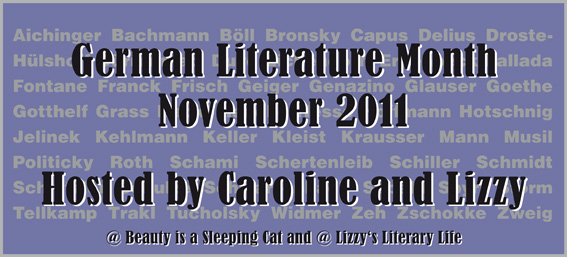
German Literature Month – November 2011

Finally I am allowed to let you know what Lizzy and I have been planning in the background for quite a while now.

I’m happy to announce that Lizzy Siddal from Lizzy’s Literary Life and I are co-hosting a German Literature Month in November.  Ever since Iris from Iris on Books hosted her Month of Dutch Literature it’s been on our minds to do something similar for the literature of the German-speaking countries. We both share a passion for the literature of Austria, Germany and Switzerland and hope to find many like-minded and interested people to join us.

We have prepared a programme, including two readalongs and a lot of giveaways that generous publishers like Melville House, Bitter Lemon Press, Pereine Press, And Other Stories, Portobello Books and One World Classics have kindly contributed. The giveaways are international with the exception of a few which are UK only.

The official kick off will be on November first,  from then on we will post on alternating days. Lizzy will post on Tuesdays and Fridays, I will post on Mondays and Thursdays. Wednesdays, starting already in October, are reserved for giveaways. The readalongs will take place on Saturdays. Sunday will be weekly wrap up day and the time for announcing the winners of the giveaways.

The first readalong is dedicated to  Effi Briest. It will run for three weeks. Details and exact dates are given below.

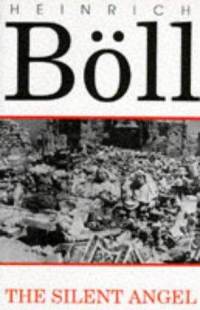
The second readalong is my monthly Literature and War Readalong that I will shift to Saturday and I have also changed the previoulsy announced title. We will read Heinrich Böll’s The Silent Angel. This book is unique for reasons that I will reveal in a later post. On a more personal note it is important to me as Böll is my favourite German author.

The programme will look as follows

Week 1 German Literature

Maybe you like Thomas Mann or you are a fan of Genazino. Now’s the time to share this.

Week 2 Crime Fiction

There are a lot of crime novels written in German out there. Whether you like it gritty or rather go for psychological suspense, you are sure to find something.

Week 3 Austria and Switzerland 

You could either read some of the 19th century Swiss classics like Gotthelf, Keller or Meyer or finally read the Roths and Zweigs you have had on your TBR pile for years.

Week 4 Kleist and Other German Classics

Kleist died 200 years ago. We are going to read some of his novellas and give away some of his books but we will also read other classics.

Week 5 Read As You Please and Wrap Up

Wrap up week is a chance to read and review whatever you like. I’ll go for something that hasn’t been translated yet.

Three Week Readalong on Saturdays  (5th chapters 1-15, 12th chapters 16 – 24 and 19th chapters 25 – 36, 280 pages)

Literature and War Readalong 2011 on Saturday 26th November

The Silent Angel (184 pages)

Giveaways

These are some of the possible titles for the giveaways. The exact titles will be announced on the giveaway days.

We will post a few times in the upcoming weeks sharing reading suggestions, as we hope that many of you will read and review with us.

The idea is that you link your posts in the comment sections of our posts. The Sunday will be wrap up day in which we will give an overview of everything that has happened through the week.

Get your copies out, enter the giveaways, or buy a few books and join us.

Feel free to use the button and spread the word.

I’m looking forward to November.

Visit the German Literature Month Page for regular updates.