German Literature Month is upcoming and since we’d like to promote women writers I thought, I give you some more suggestions. Two years ago I wrote this post containing mostly classics. Below you find a list with newer or lesser-known authors and books who are all interesting. None of these have been reviewed in one of the past GLM. There would be so many more if only they were translated.
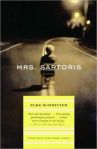
Elke Schmitter – Germany
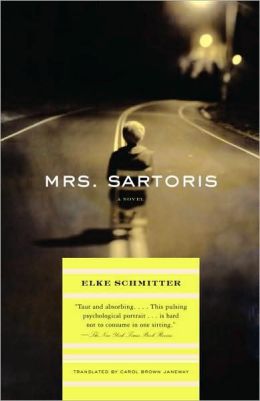
Mrs Sartoris
An explosive first novel – Madame Bovary in modern Germany – about a wife and mother whose failed love affairs have driven her to the edge of sanity and to a startling attempt at vindication. After being jilted by a rich boyfriend, Margaret, eighteen and heartbroken, throws herself into a comfortable but stifling marriage to Ernst, a war veteran with a penchant for routine and order, who still lives with his mother in a small German village.
It’s not a bad life, considering Margaret’s psychological scars, but neither Ernst’s adoration nor the birth of a daughter can reawaken her frozen emotions. Until she slides into an affair with a married man with whom she plans to run away. Her plan is a fantasy that cannot possibly come true. Its repercussions nevertheless will explode with unimaginable force in these astonished lives.
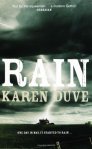
Karen Duve – Germany
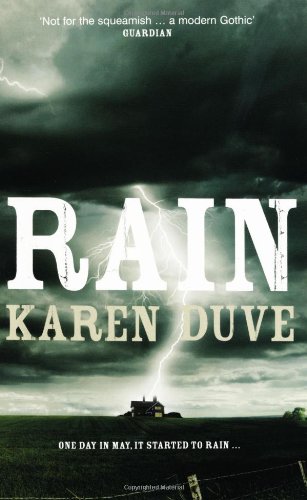
Rain
“It will get better when it stops raining,” said Leon. When Leon Ulbricht lands a contract to write a gangster’s memoirs and moves into his dream home in an East German village with his beautiful wife Martina, everything seems set for an idyllic existence. But the dream home turns out to be in the middle of a fetid swamp; his house and marriage are falling apart; he can’t write the book and has spent all of his advance. It rains without end and their attempts to repair the house, or at least dry it out, are hampered by the plague of slugs eating away at the foundations. And then the gangster, wondering why his memoirs are not yet completed, decides to get nasty.
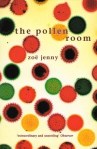
Zoe Jenny – Switzerland
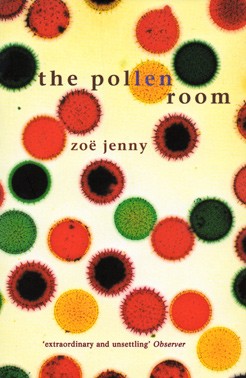
The Pollen Room
Carlin Romano “The Philadelphia Inquirer”A European “Catcher in the Rye” or “Less than Zero” — a “spokenovel” for its generation….Abounds in gleaming sentences, in burnished image after image…[Jenny] is a beautifully disciplined writer.
Anna Mitgutsch – Austria
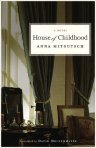
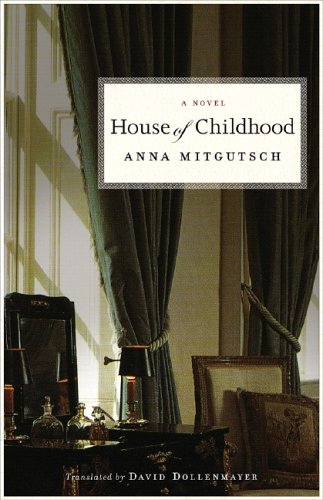
House of Childhood
Max Berman, a successful but rootless New York restoration architect, socialite, and ladies’ man, remembers his childhood home in the small Austrian town of “H,” mostly through his mother‚’s cherished photographs and vivid stories. When she dies, still longing for the house she fled with her husband and young children in 1928, Max temporarily abandons his playboy lifestyle and travels to H, determined to reclaim the confiscated house.
In H, Max encounters Nadja, a young woman convinced that her late mother was Jewish and that the local synagogue will provide the sense of community she lacks. Recognizing that she is too talented for her provincial neighbors, he arranges for her to attend college in the U.S., where she becomes the most significant of his many lovers. He also befriends Arthur Spitzer, a Holocaust survivor and the leader of H’s dwindling Jewish community, who helps him regain legal control of his mother’s house. When, years later, the last of his tenants finally moves out, Max returns to investigate his family’s ties in H for a fateful year that challenges his restlessness and seems to offer the chance for real belonging.
Acclaimed Austrian writer Anna Mitgutsch’s novel is a powerful examination of the meaning of home—in a place, a community, a relationship—and the difficulty of finding one in our tumultuous world.
Viola Roggenkamp – Germany
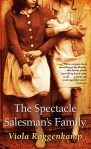
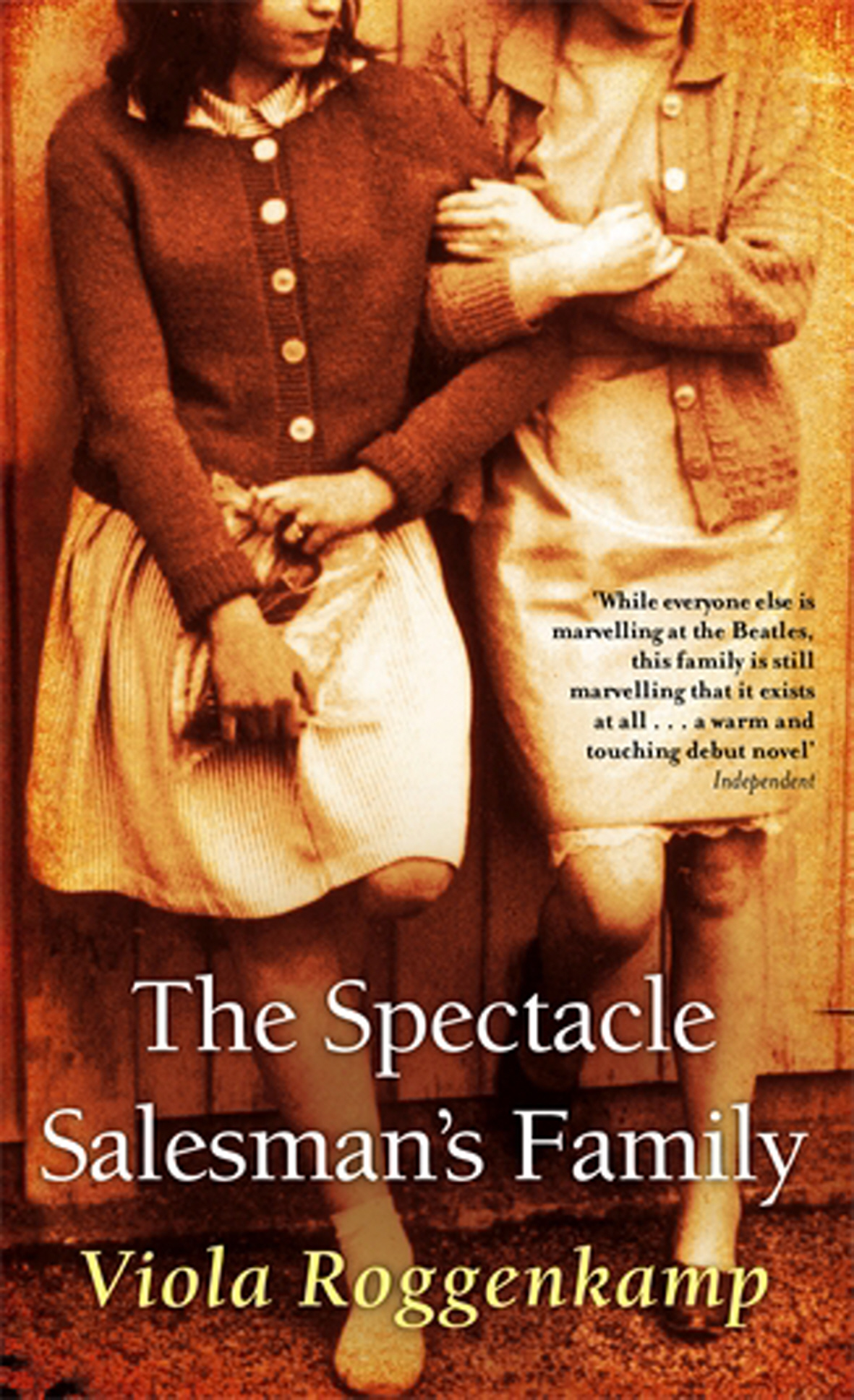
The Spectale Salesman’s Family
Paul Schiefer is a travelling spectacles salesman. Every Monday morning he leaves Hamburg on a week-long sales trip. His wife, his mother-in-law and his two teenage daughters Fania and Vera see him off with abundant hugs and kisses, and they welcome him back with equal exuberance on Friday evening – just in time for Sabbath eve. While her husband is away, Alma Schiefer defends the wellbeing of her family with an explosive mixture of ferocious love and extreme determination. Thirteen-year-old Fania is torn between the comfort of home and the fearful thrills of the unknown outside world, a sixties world that contains student protest, beehive hairdos, Israel and the Six Day War, politics, religion, revolution and . . . the promise of love. Sensual, funny and acerbic, The Spectacle Salesman’s Family is a brilliant, vivid portrait of Jewish life in post-Holocaust Germany that continues the Jewish tradition of memorialising, recounting the details in order to hold onto the past and its lessons.
Irmtraud Morgner – Germany
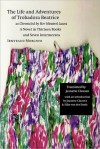
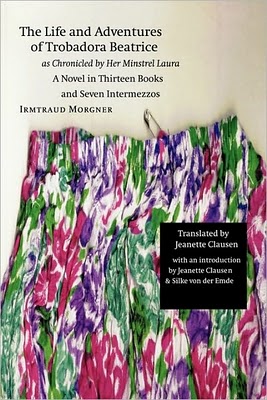
The Lives and Adventures of Trobadora Beatrice Chronicled by Her Minstrel Laura
Set in the German Democratic Republic of the early 1970s, The Life and Adventures of Trobadora Beatrice-a landmark novel now translated into English for the first time-is a highly entertaining adventure story as well as a feminist critique of GDR socialism, science, history, and aesthetic theory. In May 1968, after an eight-hundred-year sleep, Beatrice awakens in her Provence château. Looking for work, she makes her way to Paris in the aftermath of the student uprisings, then to the GDR (recommended to her as the “promised land for women”), where she meets Laura Salman, socialist trolley driver, writer, and single mother, who becomes her minstrel and alter ego. Their exploits-Beatrice on a quest to find the unicorn, Laura on maternity leave in Berlin-often require black-magic interventions by the Beautiful Melusine, who is half dragon and half woman. Creating a montage of genres and text types, including documentary material, poems, fairy tales, interviews, letters, newspaper reports, theoretical texts, excerpts from earlier books of her own, pieces by other writers, and parodies of typical GDR genres, Irmtraud Morgner attempts to write women into history and retell our great myths from a feminist perspective. Irmtraud Morgner (1933-90) was one of the most innovative and witty feminist writers to emerge from the GDR. Jeanette Clausen is an associate professor of German at Indiana University-Purdue University at Fort Wayne. She is a coeditor of German Feminism: Readings in Politics and Literature and is a past editor of Women in German Yearbook.
Monika Maron – Germany
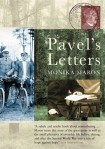
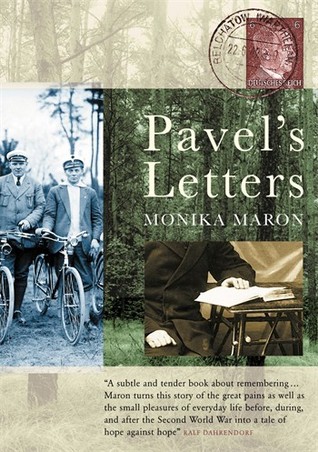
Pavel’s Letters
Teasing her family’s past out of the fog of oblivion and lies, one of Germany’s greatest writers asks about the secrets families keep, about the fortitude of ordinary people in extraordinary circumstances, and about what becomes of the individual mind when the powers that be turn against it.
Born in a working-class suburb of wartime Berlin, Monika Maron grew up a daughter of the East German nomenklatura, despairing of the system her mother, Hella, helped create. Haunted by the ghosts of her Baptist grandparents, she questions her mother, whose selective memory throws up obstacles to Maron’s understanding of her grandparents’ horrifying denouement in Polish exile.
Maron reconstructs their lives from fragments of memory and a forgotten box of letters. In telling her family’s powerful and heroic story, she has written a memoir that has the force of a great novel and also stands both as an elaborate metaphor for the shame of the twentieth century and a life-affirming monument to her ancestors.
Do you have a favourite author writing in German?

 Beauty is a Sleeping Cat