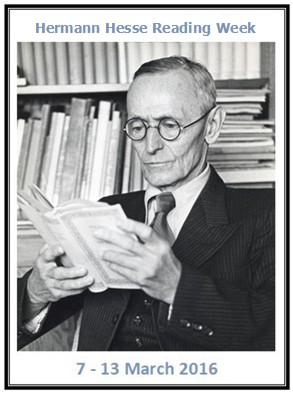
Welcome to Hermann Hesse Reading Week 7 – 13 March 2016

hesse revised

Today is the first day of Hermann Hesse Reading Week, here at my blog and over at Kaggsy’s Bookish Ramblings. I’ve been busy and have read a couple of books (Rosshalde, Klingsor’s letzter Sommer, Wanderung) and will write about them shortly. Pat (South of Paris Books) and I will both write about Klingsor on Thursday 10 March, so if anyone has read that too, try to  join our discussion.

If you participate, please use the Mr. Linky, so Karen and I can visit and comment. Just add your name (blog) + the name of the book you’ve read and then the link below.

I wish everyone a great week.


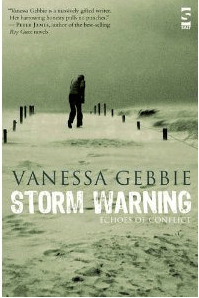
Vanessa Gebbie: Storm Warning – Echoes of Conflict (2010) Literature and War Readalong February 2016

Storm Warning

Very often short story collections are just that – collections of stories that may or may not have a few themes in common. Most of the time, the themes are different, while the voice stays the same. Not so in Vanessa Gebbie’s stunning collection Storm Warning – Echoes of Conflict. The themes —war and conflict— are the same in every story, but the voices, points of view, the structure, the range of these stories is as diverse as can be. That’s why this collection is one of those rare books, in which the sum is greater than its parts. Each story on its own is a gem, but all the stories together, are like a chorus of voices lamenting, accusing, denouncing, and exploring conflict through the ages and the whole world. The result is as chilling as it is powerful and enlightening. I don’t think I’ve ever come across anything similar in book form and the only comparable movie, War Requiem, uses a similar technique only at the very end, during which we see  horrific original footage taken from many different wars, covering decades, and dozens of countries.

We’ve often discussed the question of how to write about war in the Literature and War Readalong and I’ve said it before – if I put away a book and am left with a feeling of  I-wish-I’d-been-there, then the book is a failure in terms of its anti-war message. I don’t think one should write about war and give readers a similar, pleasant frisson, they get when they read crime. I can assure you, you won’t have a reaction like this while reading Storm Warning. Without being too graphic, Vanessa Gebbie’s message is clear – there’s no beauty in war. There’s no end to war either. Even when a conflict is finished, it still rages on in the minds of those who suffered through it. Whether they were soldiers or civilians. War destroys bodies and souls. And—maybe one of the most important messages— war is universal. Including stories set in times as remote as the 16th century, choosing locations as diverse as South Africa, the UK, and Japan, conflicts like WWI, WWII, the Falklands war, Iraq, Vietnam, and many more, illustrates this message powerfully. Choosing from so many different conflicts also avoids falling into the trap of rating. I always find it appalling when people rate conflicts, saying this one was worse than that one. Maybe the methods are more savage in some conflicts, but they are all equally horrific.

What is really amazing in this collection is that so many of the stories get deeper meaning because they are juxtaposed with other stories. For example, there’s the story The Ale Heretics set in the 16th Century, in which a condemned heretic, awaits being burned. Burning people alive was such a savage and abominable thing to do, but just when we start to think “Thank God, that’s long gone” – we read a story about necklacing, a form of torture and execution, practiced in contemporary South Africa (possibly in other regions too), in which the victims are also burned alive. And, here too, it’s said to be in the name of the law. If I had only read the first story, it wouldn’t have been as powerful as in combination with the second.

Vanessa Gebbie’s writing is very precise, raw, expressive. As I said before, each story has a distinct voice. There are men and women talking to a dead relative, others seem to try to explain what happened to them, others accuse, many denounce. Yet, as precise as the writing is, often there’s an element of mystery as to what conflict we are reading about. While it’s mostly clear, what conflict is described, they are rarely named. Interestingly, this underlines the similarity and universality, but it also makes differences clear. When a girl talks to her dead sister Golda, mentions the Kristallnacht, we know, it’s a Holocaust story. When gas gangrene is mentioned, we know it is about WWI.

Many of you might wonder, whether the stories are not too graphic, whether the book is depressing. There’s a balance between very dark and dark stories. There’s a touch of humour here and there, even if it’s gallows’ humour, and there’s the one or the other story that’s almost uplifting like my own personal favourite Large Capacity, Severe Abuse. In this story, a Vietnam veteran lives in the basement of an apartment house for retired army officers. He’s in charge of washing their laundry which gives him an opportunity for revenge. This story illustrates also the invisibility of many veterans. They are decorated, they return, they suffer, but society doesn’t care. Some of the veterans in this collection, end up homeless. Too sum this up— the collection is not easy to read, as it’s quite explicit in showing that war mutilates bodies and souls.

Another favourite story was The Return of the Baker, Edwin Tregear. It’s a story that does not only illustrate the difficulties of the homecoming, but the absurdity of things that happened during the war. In this case WWI and its practice of firing soldiers for so-called cowardice.

Some of the stories describe a narrow escape like in The Salt Box, in which a dissident poet finds an unexpected ruse to destroy his poems when his house is searched.

The narrators and characters in these stories are of different gender and age. Stories that have child narrators are often particularly harrowing. There’s the one called The Wig Maker, in which a child witnesses the execution of the mother, and another one, The Strong Mind of Musa M’bele, in which the kid knows his father will be necklaced. Another kid, in Cello Strings and Screeching Metal, witnesses someone being shot while climbing the Berlin Wall.

Quite a few of the stories are more like snapshots; they are very brief, only a page or two, but there are some longer ones as well.

I must say, I’m impressed. The range of these stories is amazing. Getting voice right and distinct, is a difficult thing to do and to get it as right and as distinct in so many stories is absolutely stunning. This is certainly one of the most amazing and thought-provoking anti-war books I’ve ever read.

Should you be interested, one of the stories – The Wig Maker – is available online. Just a warning – it’s possibly the most explicit of the collection.

Vanessa Gebbie is joining our discussion, so, please, don’t hesitate to ask questions.

Other reviews

Danielle (A Work in Progress)


*******

Storm Warning is the first book in the Literature and War Readalong 2016. The next book is the French WWI novel 1914  – 14 by Jean Echenoz. Discussion starts on Thursday 31 March, 2016. Further information on the Literature and War Readalong 2016, including the book blurbs can be found here.

Welcome to German Literature Month

literatur_2015_gold-2

This is just a brief welcome post to let you know about some of my own plans for German Literature Month.

Friedrich Schiller Week

The first week is Schiller week, over at Lizzy’s blog. I won’t participate actively. I hope to review a crime novel and maybe a novella or two.

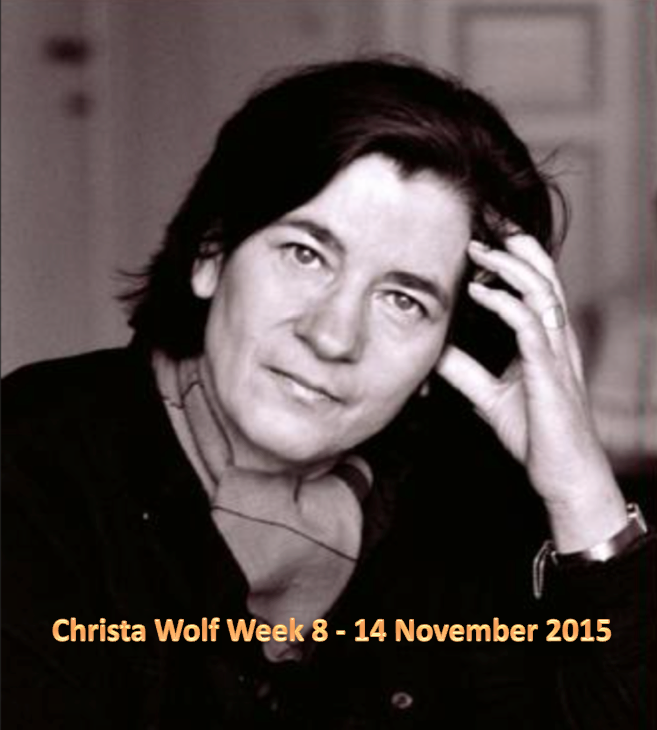
Christa Wolf Week

For Christa Wolf week I’m reading The Quest for Christa T., which is a bit of a challenge. I’m not as keen on it as I was on the her other books.

I’ve scheduled two things for week three. I’ll be posting a guest post by a writing buddy who recently revealed an interest in Irmgard Keun. I will also participate in Lizzy’s readalong of the YA novel Erebos. I’m almost finished with it and must say it’s a captivating book.

My own readlong is forthcoming in week four. Since Erich Maria Remarque’s novel A Time to Live and A Time to Die is rather chunky too, I suppose I’ll be busy reading that.

What other plans do I have?

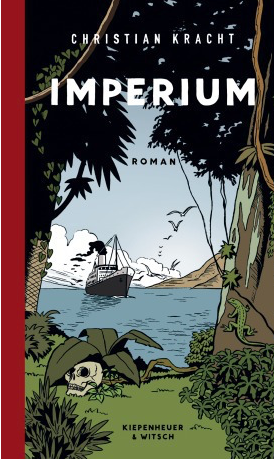
Imperium

Finally reading Christian Kracht’s recently translated Imperium.

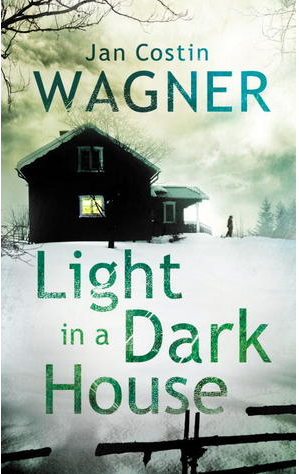
Light in a Dark House

Maybe read Jan Costin Wagner’s Light in a Dark House.

What else? Maybe some short stories.

Have you already started reading? What are your plans?

If you participate, please add your reviews to the German Literature Month Page.

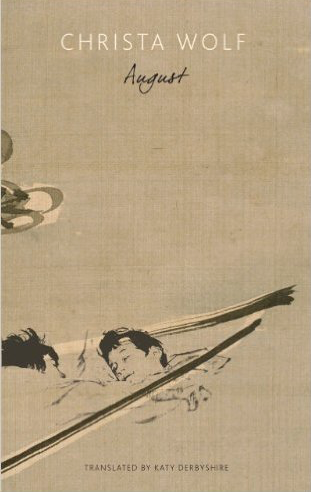
Wednesdays Are Wunderbar – German Literature Month Giveaway – August by Christa Wolf

literatur_2015_gold-2

It’s Wednesday again and you already know what that means. We’re hosting a giveaway. This week’s copies are from Seagull Books (University of Chicago Press).

Screen Shot 2015-10-27 at 17.02.56

For this year’s German Literature Month I have the opportunity to give away two copies of Christa Wolf’s August, translated by Katy Derbyshire. Since I’m hosting a Christa Wolf week this year, I’m particularly pleased about this giveaway.

Christa Wolf Week

Here’s what the editor writes about August:

Christa Wolf was arguably the best-known and most influential writer in former East Germany. Having grown up during the Nazi regime, she and her family were forced to flee their home like many others, nearly starving to death in the process. Her earliest novels were controversial because they contained veiled criticisms of the Communist regime which landed her on government watch lists. Her past continued to permeate her work and her life, as she said, “You can only fight sorrow when you look it in the eye.”

August is Christa Wolf’s last piece of fiction, written in a single sitting as an anniversary gift to her husband. In it, she revisits her stay at a tuberculosis hospital in the winter of 1946, a real life event that was the inspiration for the closing scenes of her 1976 novel Patterns of Childhood. This time, however, her fictional perspective is very different. The story unfolds through the eyes of August, a young patient who has lost both his parents to the war. He adores an older girl, Lilo, a rebellious teenager who controls the wards. Sixty years later, August reflects on his life and the things that she taught him.

Written in taut, affectionate prose, August offers a new entry into Christa Wolf’s work and, incidentally, her first and only male protagonist. More than a literary artifact, this new novel is a perfectly constructed story of a quiet life well lived. For both August and Christa Wolf, the past never dies.

*******
If you are interested in winning this book, leave a comment, telling me why you’d like to read it.

The competition is open internationally. The winner will be announced on Saturday October 31 2015, around 18:00 Central European time.

Imre Kertész: Fateless – Sorstalanság (1975) Literature and War Readalong September 2015

Fateless

Imre Kertész novel FatelessSorstalanság tells the story of fifteen-year old Gyuri Köves, a Jewish boy who lives in Budapest. It starts in 1944, on the day on which Gyuri’s father is sent to a labour camp. What strikes the reader from the beginning is the narrator’s voice and his cluelessness. He’s a young boy, interested in girls and puzzled by his parents strange arrangements (he lives with his father and his stepmother and his parents often quarrel because his mother wants him to live with her). He notices everything that goes on around him but his interpretations are always slightly off. He finds logic in many shocking things, like the yellow star they have to wear, the way they are being treated by non-Jews and many other things. Why? Because they seem logical, from a certain point of view. And because he doesn’t feel like a Jew. His family isn’t religious. They even eat porc during the last dinner with his father. He feels that the star and being ostracized hasn’t really anything to do with him. It’s not personal.

A little later Gyuri is sent to work in a factory and then, one morning, has to get off the bus and wait endlessly for a train to take him and others to another “work place”. Of course, the reader knows it’s a concentration camp. He’s first sent to Auschwitz, then to Buchenwald and later to Zeitz.

He still finds logic in everything he sees. In the way they are forced to work, in the way they are punished. That doesn’t mean he doesn’t suffer. He’s cold, dirty and constantly hungry. He witnesses executions and is afraid of being sent to the gas chambers.

Towards the end of the book, he falls ill and is sent back to Buchenwald until the day the camp is freed and he can return to Budapest.

Reading a novel, set to large parts in a concentration camp, filtered through the consciousness of a narrator like this, was a peculiar and eerie experience. It could have gone wrong. It could have felt sensationalist and dishonest like The Boy in the Striped Pyjamas (I’m referring to the movie not the book), but it didn’t. It’s chilling because we know what he’s talking about but he doesn’t. When Gyuri tells us how everyone stepping off the train is inspected and then either sent to one group or the other, we know that it means that they will either be sent to a labour camp or to the gas chambers. Reading Gyuri’s assessment of what happens, his feeling of being chosen and found worthy – without knowing the real logic behind it all – is almost creepy.

The best novels don’t just follow a character from the beginning to the end but they show a change. And Gyuri does change. The boy who’s leaving the concentration camp is bitter and full of hatred. The days of his admiration for a system that runs,logically, smoothly, and mercilessly are long gone.

I’ve seen this novel called “shocking” and, if you’ve read my review until now, you may think, you know why. Because of the distortion. But that’s not the shocking part. What may seem odd is the end of the book. It’s not a plot element, therefore, I don’t consider it to be a spoiler to reveal the end. When Gyuri returns to Budapest, people refer to the horrors he must have seen or ask him whether it was like hell. He tells them that he hasn’t seen hell and therefore he doesn’t know how to compare. And  he finds it absurd when people tell him to start a new life, leave what has happened behind. But it’s not likely he will ever forget. What he doesn’t tell them is, that there were moments of great happiness in the concentration camp. And that’s the shocking thing of the novel. It shows us that we cannot imagine something we haven’t experienced. Whether we think, like some,  it wasn’t all that bad or whether we assume it was “hell” – we have no clue. Both assumptions are equally faulty. And there’s a certain arrogance in a assuming that we can picture what we don’t know.  And there can always be happiness. This reminded me of one of my favourite books – Solzhenitsyn’s One Day in the Life of Ivan Denisovich.

The end also reveals the meaning of the title. The novel describes many instances in which the Jews let the oppressor handle them like cattle. They never fight back. This, as Gyuri says, was a choice. Everything was a choice. There’s no such thing as “fate” – everybody is ultimately free, free to choose how to act. Always.

I wish this review was more eloquent but I’ve got the flu since Monday and my head is fuzzy. I’m sorry for that. It’s a book that would have deserved a careful review because it’s stunning. I really liked it a great deal and, for once, “like” isn’t a badly chosen word, even though I’m writing about a Holocaust novel.

I have watched the movie as well and found it powerful. It stay’s close to the novel, with the exception of the last parts. In the movie Gyuri is offered to go to the US when the camp is freed by the Americans. Going back to Hungary means going to the Russian sector. Nothing to look forward to. This isn’t a topic in the book.

The book is based on Kertész’s own experience. As a fourteen-year old he was sent to Auschwitz and from there to Buchenwald. Interestingly he says that the book is far less autobiographical than the movie.


Other reviews

Emma (Book Around the Corner)


*******

Fateless is the third book in the Literature and War Readalong 2015. The next book is the German novel A Time to Love and a Time to Die – Zeit zu leben und Zeit zu sterben by Erich Maria Remarque. Discussion starts on Friday 27 November, 2015. Further information on the Literature and War Readalong 2015, including the book blurbs can be found here.
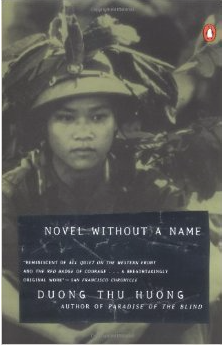
Duong Thu Huong: Novel Without a Name – Tiêu thuyêt vô dê (1995) Literature and War Readalong May 2015

Novel Without A Name

Duong Thu Huong is one of Vietnam’s most important writers. Since I haven’t read a lot of Vietnamese novels I was looking forward to reading her most famous book Novel Without a Name – Tiêu thuyêt vô dê. I wasn’t disappointed. It’s beautiful and harrowing.

At the beginning, Quan, the narrator, is sent on a mission to find his friend Bien. Quan, his commanding officer, Luong, and Bien have grown up together. When Luong hears that Bien has gone mad, he sends Quan to go and find out if it’s true.

What follows is the account of a dangerous mission on which Quan meets many people, dead and alive, sees atrocities, remembers his childhood, falls dangerously ill, dreams about his love, and finally finds his old friend.

Bien stands for many other “crazy” men we meet in this novel. Some really go mad because of the horrors they have experienced, others just withdraw into themselves, trying to escape the war.

Quan and his younger brother, who has been killed, have signed up right at the beginning of the war, ten years ago. Their father was one of those who supported a 100% mobilization, accepting that he might lose both of his sons. Almost all of Quan’s comrades are dead. The main story follows Quan on his mission, but overall the book is more like a series of vignettes. In parts it reminded me of Tim O’Brien’s The Things They Carried. Without the metafictional elements. Duong Thu Huong uses a mix of very short and long chapters. Some are dedicated to what’s happening to Quan on his trip, some are childhood memories or stories from the war, otheres are just short, intense snapshots.

What I liked best is how descriptive this book is. It speaks to the senses like not many others. It felt at times like watching a documentary on Vietnam. We read about the food, the flora, the fauna, the beliefs, the scents, the way people love, sleep, cook. Several chapters describe the landscape and make you want to visit this country that has sun sets the color of chrysanthemum flowers.

Duong Thu Huong served in the North Vietnamese army and so it’s not surprising the descriptions of combat, dead soldiers, the horror of war are drawn in a shockingly realistic way. She also manages to capture how tired and disillusioned most soldiers have become. The political slogans that fired them up and made them sign up have become mere empty words. Bodies pile up, their country is destroyed – for what? An ideal that isn’t even humane?

On his quest, Quan meets many people. Simple farmers, single mothers, small girls, old men. They are drawn with a lot of detail and warmth. We suffer for these kind, gentle people who had to endure the worst for such a long time.

It’s admirable that the author doesn’t blame the US. She finds a lot of fault with party politics and the false promises of the government. There is no evil enemy. Nor is there an army of faceless Vietnamese soldiers. Every soldier she describes becomes a human being with a history, feelings, wishes and hopes.

Novel Without a Name is a visceral account that doesn’t leave out any aspect of this war. It’s an insider’s perspective, a soldier’s account. The novel unrolls like a huge canvas, a painting of an abundant jungle, where humans butcher each other amidst the most beautiful scenery.

I read the German translation of this novel that’s why I can’t share any quotes. It’s too bad because many of the descriptions are so amazing that I read them more than once.

Other reviews

 TJ (My Book Strings)

Bonespark 


*******

Novel Without a Name is the second book in the Literature and War Readalong 2015. The next book is the Hungarian Holocaust novel Fateless – Sorstalanság by Imre Kertész. Discussion starts on Wednesday 30 September, 2015. Further information on the Literature and War Readalong 2015, including the book blurbs can be found here.
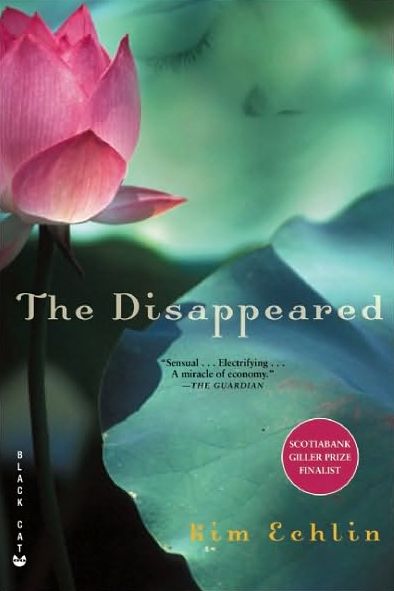
Kim Echlin: The Disappeared (2009) Literature and War Readalong March 2015

The Disappeared

Friends of mine visited Cambodia. They loved the country for its beauty, but they told me that it wasn’t an easy country for travelling as you’re not allowed to move as freely as you’d like because of the danger of the land-mines. A friend of mine is half-Cambodian. He was born in Europe, after the war, but spent a couple of months in Cambodia where he joined a bomb disposal unit. He came back changed and traumatized.  He wouldn’t speak for months. Thirty years of war ravaged the country and left the deadly long-lasting legacy of millions of land-mines. Cambodia is among the ten countries with the most landmines. Currently there are still 8 – 10 million. Cambodia has one of the highest rates of disability. Since 1979 there are some 40 amputations per week. To clear Cambodia of its land mines could take up to 100 years.

The war as such isn’t easy to understand. First there were the Khmer Rouge and Pol Pot, later the Vietnamese invasion. Mostly these wars were genocides. Depending on which side was in  power it would try to wipe out the other side using torture, rape, mutilation and shootings.

I usually don’t start a book review with so much back information but I felt it was needed in this case, although it’s still not nearly enough.

Kim Echlin’s novel The Disappeared begins right after the Khmer Rouge have fled the country. Anne Greves is in Phnom Pen looking for her lover Serey. She met him in Montreal ten years ago when she was only sixteen. Serey, a student and musician, fled Cambodia during the rise of the Khmer Rouge. He has no news of his family. The two young people begin a passionate love affair until Serey returns to Cambodia. Anne hopes he will keep in touch but he doesn’t. She waits and waits and the years go by. She has other lovers but she can’t forget Serey. Meanwhile she has learned the Khmer language and decides to travel to Cambodia and search for Serey in all the clubs of Phnom Pen.

When she finds him she discovers he too couldn’t forget her and they become lovers again until the day Serey disappears once more.

The Disappeared is a stunning novel. Beautiful and harrowing. Through the eyes of Anne we discover the beauty, tragedy, and horror of Cambodia. Thanks to her lover, and because she speaks the language, she is able to immerse herself fully. While the Pol Pot regime is over, Cambodia is still in a state of war, people are still hunted, tortured an executed.

The book is written like a lament. Often Anne addresses her lover.

I see your long silence as I see war, an urge to conquer. You used silence to guard your territory and told yourself you were protecting me. I was outside the wall, an intoxicating foreign land to occupy. I wondered what other secrets you guarded. Our disappeared were everywhere, irresistible, in waking, in sleeping, a reason for violence, a reason for forgiveness, destroying the peace we tried to possess, creeping between us as we dreamed, leaving us haunted by the knowledge that history is not redeemed by either peace or war but only fingered to shreds and left to our children. But I could not leave you, and I could not forget, and I did not know what to do, and always loved you beyond love.

Serey stands for millions of disappeared people. Most relatives never find out what happened to their loved ones, but Anne, fuelled by her passion and because she’s a foreigner who cannot fully comprehend the risk she’s taking, doesn’t let go until she’s found out what happened to the man she loves.

Many of the chapters are like short vignettes. Some contain not much more than lists of atrocities. War is awful but genocide is even much more horrible. To read about what is done to women and children, even babies, is hard to stomach.

Nonetheless it’s a beautiful, captivating book. Anne is passionate about her man and his country, discovering everything, breathlessly. This gives the reader the feel of being on a trip through a foreign country, led by a highly knowledgable guide. It is foreign but you feel like you’re quickly becoming a part of it.

The language is the language of a poet although Kim Echlin doesn’t write poetry. It’s lyrical and full of powerful images.

Kim Echlin managed something admirable. She captured the universality of grief, loss, and war, but at the same time she brought to life a country’s story that we’re either not familiar with or not interested in. In this, the novel is a call for compassion.

Why do some people live a comfortable life and others live one that is horror-filled? What part of ourselves do we shave off so we can keep on eating while others starve? If women, children, and old people were being murdered a hundred miles from here, would we not run to help? Why do we stop this decision of the heart when the distance is three thousand miles instead of a hundred?

The book explores the question of how much we can really understand of a foreign country. I liked that Anne never accepted to stay an outsider. She wanted to be part even if that meant that she put herself in danger.

The Disappeared isn’t easy to read but I loved this haunting book. It’s an amazing achievement, an intense, lucid, lyrical, and compassionate novel about a devastating conflict and a love that surpasses everything.

I’m going to end this post with one of my favorite scenes from the book. It takes place in Montreal. I think it shows what a wonderfully expressive writer Kim Echlin is and illustrates her style, how she renders dialogue.

We rode your bike to the great river. Stars and water and night. Down the riverbank, wrapped in darkness. You led me along a dock where boats were moored in narrow slips and we jumped onto the deck of a sloop called Rosalind. You took a small key from your jeans pocket and unlocked the cabin door. I followed you down the three steep steps into a tiny galley and you opened a cupboard door and took out a box of floating candles. You said, At home it is Sampeas Preah Khe, the night we pray to the moon. My grandmother always lit a hundred candles and sent them out on the black river.

Why?

To honor the river and the Buddha.

You handed me a book of matches and I lit them with you, one by one. We sent out the ninety-ninth and hundredth out together and wathched the trail of small flames drifting away. You said, My grandmother told me in the old days young people did this and prayed for love.

Other reviews

 My Book Strings

Vishy (Vishy’s Blog)


*******

The Disappeared is the first book in the Literature and War Readalong 2015. The next book is the Vietnamese novel Novel Without a Name – Tiêu thuyêt vô dê by Huon Thu huong. Discussion starts on Friday 29 May, 2015. Further information on the Literature and War Readalong 2015, including the book blurbs can be found here.