Literature and War Readalong October 28 2011: The Lotus Eaters by Tatjana Soli

lotus-eaters

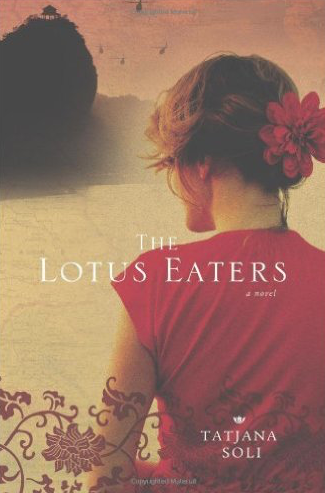
Tatjana Soli’s The Lotus Eaters is another novel on the war in Vietnam that has received a lot of positive reviews. It cannot be called a classic as it only came out last year. So of all the books of this readalong it is by far the most recent. I really don’t know all that much about it and will therefore just add the blurb that should help you decide whether you’d like to read along or not.

As the fall of Saigon begins in 1975, two lovers make their way through the streets, desperately trying to catch one of the last planes out. Helen Adams, a photojournalist, must leave behind a war she has become addicted to and a devastated country she loves. Linh, her lover, must grapple with his own conflicting loyalties to the woman from whom he can’t bear to be parted, and his country.

Betrayal and self-sacrifice follows, echoing the pattern of their relationship over the war-torn years, beginning in the splendour of Angkor Wat, with jaded, cynical, larger-than-life war correspondent Sam Darrow, Helen’s greatest love and fiercest competitor, driven by demons she can only hope to vanquish.

Spurred on by the need to get the truth of the war out to an international audience, and the immense personal cost this carries, Sam and Helen’s passionate and all-consuming love is tested to the limit. This mesmerising novel carries resonance across contemporary wars with questions of love and heart-breaking betrayal interwoven with the conflict.

After having been so impressed by Tim O’Brien’s book I think I will explore more literature on the war in Vietnam in the future and I’m looking forward to read Soli’s novel.

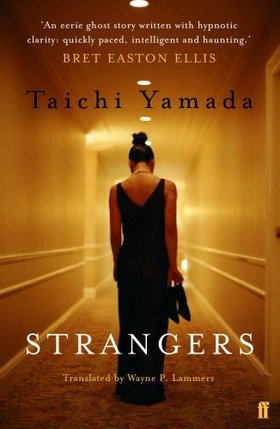
Taichi Yamada: Strangers – Ijin-tachi to no Natsu (1987)

A disconcerting, yet deeply satisfying novel: a wonderful study of grief and isolation, a moving expression of our longing for things we have lost and are unable to have again.

I’ve read about Strangers last year on Novroz’ blog (here is the review) and wanted to read it ever since. It’s a ghost story and as such a perfect choice for Carl’s R.I.P. challenge. But it is also so much more than just a ghost story. It’s a truly wonderful book with a haunting atmosphere, a melancholy depiction of solitude and loneliness with a surprisingly creepy ending.

I often think that the problem some people have with ghost stories is that they take them literally and if they do not believe in the possibility of an afterlife, they do not want to read them. But ghost stories can also be read as purely symbolical. Loneliness, longing and grief can affect a person deeply. Lonely children often start to talk with imaginary friends and also older people can start to talk to themselves which is actually rather a conversation with someone who is not present than a discussion with oneself.

I used to live in a huge apartment building for a while and remember that it could feel strange being awake at night when everyone else was obviously sleeping. All the lights were turned off, there were no noises. Coming home at night and seeing the building from afar, like a big ocean liner, with all the lights on, was also quite special.

Strangers starts in a building just like that. A huge apartment building on Tokyo’s noisy Route 8 where constant traffic keeps you awake and the density of the exhaust fumes forbids the opening of the windows. Most of the apartments are offices. Harada, a fortysomething TV script writer, has stranded here after his divorce. At first he can hardly sleep. The traffic noise is overpowering but after a few weeks he gets used to it. One night, despite the noise outside, he feels an intense loneliness. It seems as if he was the only person in this big building.  He finds out that there is only one other person, a woman, staying at the house at night. Everyone else leaves the place and lives somewhere else.

One night the woman, Kei, knocks on his door and wants to drink a bottle of champagne with Harada but he refuses. He regrets it and invites her a few days later. She is a beautiful woman but with a terrible burn mark where her breasts should be. While they start dating, Harada visits Asakusa, the downtown district in which he used to live with his parents. His parents died when he was very young. He never returned to the place but all of a sudden something attracts him magically. Many of the houses have been destroyed and replaced by modern ugly buildings. While walking around Harada meets a man who looks exactly like his dead father at the time of his death. He follows him to his house and there is his mother, she too is still young and looking exactly like she did before she died.

Harada knows that he shouldn’t return to see his parents but he cannot help himself. He has to go back again and again. His friends start to tell him that he is looking bad. Kei wants him to stop seeing them. He can’t and we understand why.

Something closely akin to the wonderful sense of security I’d felt at such times as a child had descended on me that night in Asakusa. I coul recall no such moments in all the years since my parents had died.

Yamada managed to write a ghost story that is at the same time an eerie tale and a realistic portrayal of loneliness, grief and the search for a meaning in life. Harada is at a turning point in his life. He has a hard time finding jobs, his wife got most of his money after the divorce, his son doesn’t want to see him, most women are not interested in a man like him. Falling in love with Kei seems not so much a choice as inevitable. They are both scarred in different ways. Meeting his dead parents is what infuses his days with meaning and warmth until he starts to pay a prize for it.

What did it amount to, anyway, this life I led? Busying myself with random tasks that popped up one after another, enjoying the moments of excitement each little sir brought before it receded into the distance, yet accumulating no lasting store of wisdom from any of it.

Strangers is an excellent ghost story and a melancholic depiction of the loneliness that living in a big city like Tokyo can bring. I really loved this book. I could hardly put it down and at the same time I didn’t want it to end.

German Literature Month November 2011 – The Participants

This is just a quick update to let you know I’ve added a new page to the top of my blog in which you can find the names and blog addresses of the participants of our German Literature Month. There are some more who have no blog, they have not been forgotten and are as appreciated as the others.

The list is the same as the one you can find below. All those who have been highlighted have reviewed a considerable amount of German books or already done an introductory post. You might want to visit them to find something to read and review in November. If I have forgotten or not highlighted someone, please leave a comment or send me an e-mail and I will include it as soon as possible. The list will be updated on a regular basis. Please also let us know when you do an introduction or anything else, I will include it. It might help others to find reading suggestions.

AS OF NOVEMBER 1 2011 THE LINKS TO PEOPLE’S POSTS WILL BE ADDED ON THE GERMAN LITERATURE MONTH PAGE BUT I STILL ADD THE BLOGS 

1morechapter – Michelle

50 Year Project – TBM

A Book Sanctuary – Tracey

A Common Reader – Tom C Effi Briest Review

A Hot Cup of Pleasure – Neer Introduction

Andrew Blackman – Andrew Blackman

Ardent Reader – Christina

A Work in Progress – Danielle AnnouncementIntroduction with 13 choices

Beauty is a Sleeping Cat – Caroline

Book Around the Corner – Emma – Introduction with choices

BookeyWookey – ted

Books Without Any Pictures – Grace – Introduction

Caravana de Recuerdos – Richard

Ceri

chasing bawa – sakura

Curious Incidents in the North East – Katie Introduction

Dr Ruth Martin – Ruth Martin

Dr. K  – ludogutten

Everybookhasasoul – Sara Introduction with choices

Farm Lane Books – Jackie Introduction

His Futile Preoccupations – Guy Savage Introduction with choices

in lieu of a field guide – Rise – Introduction with choices and links to older posts

Iris on Books – Iris

Leben, Kochen, Bier u. Fussball – Harvey

Leroyhunter

Lizzy’s Literary Life – Lizzy Siddal

Mar gheall ar a léim – Eibhlin – Introduction

Polychrome Interest – Novroz

Reader in the Wilderness – Judith Introduction with choices

Read, Ramble – Fay – Introduction with proposed reading

Rikki’s Teleidoscope – Rikki – Introduction

seraillon – Scott W.

sub rosa – Sigrun Introduction with choicesPreparations on HandkeWho is Thomas Bernhard?

Susanna

Susie Bookworm – Susanna P

Tabula Rasa – Priya Introduction with possible choices

The Argumentative Old Git  – Himadri

The Children’s War – Alex Baugh

The Parrish Lantern – Parrish

The Reading Lives – Mel u

Time’s Flow Stemmed – Anthony – Introduction and reading plans,  Introduction Part II

Tony’s Reading List – Tony  Introduction with choices

Tortoisebook – Liz

Vishy’s Blog – Vishy Introduction with choices

Who Killed Lemmy Caution? – Daryl – Introduction

Winstonsdad’s Blog – Stu Introduction with list and reading plans

Wuthering Expectations – Amateur Reader (Tom)  –Introduction with choices focusing on plays

AS OF NOVEMBER 1 2011 THE LINKS TO PEOPLE’S POSTS WILL BE ADDED ON THE GERMAN LITERATURE MONTH PAGE

Tim O’Brien: The Things They Carried (1990) Literature and War Readalong September 2011

A sequence of stories about the Vietnam War, this book also has the unity of a novel, with recurring characters and interwoven strands of plot and theme. It aims to summarize America’s involvement in Vietnam, and her coming to terms with that experience in the years that followed.

I expected The Things They Carried to be a very good book. A very good book about the war in Vietnam. What I found is not only an outstanding book about the war in Vietnam but also about the art of storytelling. I’m really impressed. I don’t normally rely so heavily on quotes but in this case, I think, the author is the best person to give an accurate impression of his excellent writing.

But this too is true: stories can save us. I’m forty-three years old, and a writer now and even still, right here, I keep dreaming Linda alive. And Ted Lavender, and Kiowa, and Curt Lemon, and a slim young man I killed, and several others whose bodies I once lifted and dumped into a truck. They’re all dead. But in a story which is a kind of dreaming, the dead sometimes smile and sit up and return to the world. (…) The thing about a story is that you dream it as you tell it, hoping that others might then dream along with you, and in this way memory and imagination and language combine to make spirits in the head.

The Things They Carried is told in interwoven stories. They are linked through the characters who return in most of them and through the common themes of war and storytelling. Each of the tales shows another way of telling a story or looks at an episode from another angle. Some are explicitly written by a writer for his readers only, they have never been told before. Some describe how the soldiers tell each other stories of what happened while they were separated or how they keep on retelling the same stories over and over again. Telling these stories gives meaning and is also liberating and healing. Those who cannot tell stories, those who are shut up by what they saw, those are bad off.

What is so fascinating about this book is that you can just read it like a series of linked episodes or you can read each episode as an attempt to tell the story another way.

One of the most powerful chapters is certainly the first, the one that gave the book its title. Through the enumeration of the things the soldiers carry, we get to know the soldiers, we sense that some of them will die and some will be wounded. As we learn later many of the young men O’Brien served with and who are introduced too us in this first chapter, die. Some through enemy fire, some in accidents. Some deaths are heroic, others are ridiculous, like Kiowa’s who got shot and then suffocated in a field full of shit. What impressed me in this story is the description of the stress, the weight they had to lift, the endless walking.

They moved like mules. By daylight they took sniper fire, at night they were mortared, but it was not battle, it was just the endless march, village to village, without purpose, nothing won or lost.

We learn a lot about the feeling of having been in a war and in this particular war. We hear about the state of mind of the soldiers and what war did to them. There are some chapters that made me feel uncomfortable like the one of a young soldier’s girlfriend who stayed with them a few weeks, joined the Green Berets and ultimately disappeared in the night, swallowed by the war. She got addicted to the feeling of danger and the heightened sense of being alive that went with it. This is fascinating and also unsettling.

I have read other accounts of men who went to war, I know my own father’s stories but they sound different which leads me to the conclusion that some experiences were typical for the soldier in Vietnam.

The average age in our platoon, I’d guess, was nineteen or twenty, and as a consequence things often took on a curiously playful atmosphere, like a sporting event, at some exotic reform school. The competition could be lethal, yet there was a childlike exuberance to it all, lots of pranks and horseplay.

At the end of the book you have the whole story of Tim O’Brien’s time in Vietnam. From the day when he got the letter that informed him that he was drafted, to the first days in Vietnam, all through the weeks that passed, all the things that happened, the friends he found, the friends he lost and how he ended up feeling like an outcast because he was sent away from his company after he was wounded and had to do some light duty in another camp. Maybe not all of this is true, as O’Brien writes, but a lot of what is made up is closer to what really happened than that what is just the plain unadorned truth.

Here is my favourite quote:

A true war story is never moral. It does not instruct, nor encourage virtue, nor suggest models of proper human behavior, nor restrain men from doing the things they have always done. If a story seems moral, do not believe it. If at the end of a war story you feel uplifted, or you feel that some small bit of rectitude has been salvaged from the larger waste, then you have been made the victim of a very old and terrible lie. There is no rectitude whatsoever. There is no virtue. As a first rule of thumb, therefore, you can tell a true war story by its absolute and uncompromising allegiance to obscenity and evil.

The Things They Carried is fascinating and powerful. Writing at its very best.

I hope others have read it as well and liked it as much. I would also like to hear how it compares to Matterhorn.

Other reviews

Anna (Diary of an Eccentric)

Danielle (A Work in Progress)

Silver Season

German Literature Month – November 2011

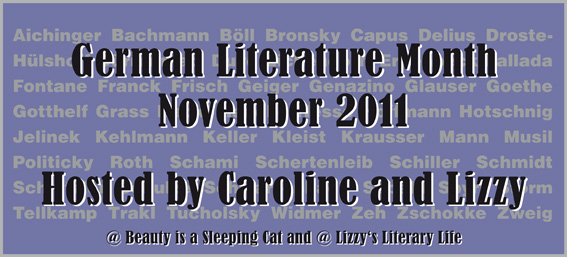
Finally I am allowed to let you know what Lizzy and I have been planning in the background for quite a while now.

I’m happy to announce that Lizzy Siddal from Lizzy’s Literary Life and I are co-hosting a German Literature Month in November.  Ever since Iris from Iris on Books hosted her Month of Dutch Literature it’s been on our minds to do something similar for the literature of the German-speaking countries. We both share a passion for the literature of Austria, Germany and Switzerland and hope to find many like-minded and interested people to join us.

We have prepared a programme, including two readalongs and a lot of giveaways that generous publishers like Melville House, Bitter Lemon Press, Pereine Press, And Other Stories, Portobello Books and One World Classics have kindly contributed. The giveaways are international with the exception of a few which are UK only.

The official kick off will be on November first,  from then on we will post on alternating days. Lizzy will post on Tuesdays and Fridays, I will post on Mondays and Thursdays. Wednesdays, starting already in October, are reserved for giveaways. The readalongs will take place on Saturdays. Sunday will be weekly wrap up day and the time for announcing the winners of the giveaways.

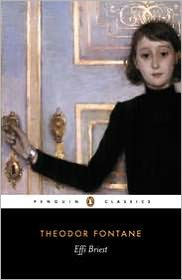
The first readalong is dedicated to  Effi Briest. It will run for three weeks. Details and exact dates are given below.

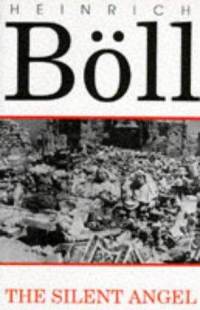
The second readalong is my monthly Literature and War Readalong that I will shift to Saturday and I have also changed the previoulsy announced title. We will read Heinrich Böll’s The Silent Angel. This book is unique for reasons that I will reveal in a later post. On a more personal note it is important to me as Böll is my favourite German author.

The programme will look as follows

Week 1 German Literature

Maybe you like Thomas Mann or you are a fan of Genazino. Now’s the time to share this.

Week 2 Crime Fiction

There are a lot of crime novels written in German out there. Whether you like it gritty or rather go for psychological suspense, you are sure to find something.

Week 3 Austria and Switzerland 

You could either read some of the 19th century Swiss classics like Gotthelf, Keller or Meyer or finally read the Roths and Zweigs you have had on your TBR pile for years.

Week 4 Kleist and Other German Classics

Kleist died 200 years ago. We are going to read some of his novellas and give away some of his books but we will also read other classics.

Week 5 Read As You Please and Wrap Up

Wrap up week is a chance to read and review whatever you like. I’ll go for something that hasn’t been translated yet.

Three Week Readalong on Saturdays  (5th chapters 1-15, 12th chapters 16 – 24 and 19th chapters 25 – 36, 280 pages)

Literature and War Readalong 2011 on Saturday 26th November

The Silent Angel (184 pages)

Giveaways

These are some of the possible titles for the giveaways. The exact titles will be announced on the giveaway days.

We will post a few times in the upcoming weeks sharing reading suggestions, as we hope that many of you will read and review with us.

The idea is that you link your posts in the comment sections of our posts. The Sunday will be wrap up day in which we will give an overview of everything that has happened through the week.

Get your copies out, enter the giveaways, or buy a few books and join us.

Feel free to use the button and spread the word.

I’m looking forward to November.

Visit the German Literature Month Page for regular updates.

Beryl Bainbridge: The Dressmaker (1973)

Wartime Liverpool is a place of ration books and jobs in munitions factories. Rita, living with her two aunts Nellie and Margo, is emotionally naive and withdrawn. When she meets Ira, a GI, at a neighbour’s party she falls in love almost as much with the idea of life as a GI bride as with the man himself. But Nellie and Margo are not so blind …

Guy’s recent review of the Girl in the Polka Dot Dress (you can find it here) put me in the mood to read Beryl Bainbridge who had been on my radar and reading pile for a while. Initially I didn’t even want to buy The Dressmaker as the cover looked like some soppy romance. I couldn’t have been more wrong. This is a fantastic book. It’s so fantastic that I don’t know how to describe her writing. One would have to quote her extensively to convey a good feeling for her art.

While I was reading the book I was alternatingly thinking three things: “Why did I not discover her earlier?”, I” want to write like her”, “How did she do that?”

The Dressmaker is set in wartime Liverpool, a place and time that interests me a lot. Young Rita lives with her two aunts, Marge and Nellie. Her mother died and her father, whom she calls Uncle Jack, a butcher,  was unable to cope and raise a girl on his own. That’s the reason why she finished living with her two spinsterly sisters. Nellie, who is a dressmaker, is a joyless woman. She only lives for the day when she can finally follow her own mother to the grave. She is very domineering and her cheerless ways crush her sister as much as her niece. She has turned polishing and looking after her mother’s furniture into a cult. The lifeless objects mean more to her than her fellow human beings. Marge is quite different. She was married but her husband died, she also seems to have affairs that Jack and Nellie try to crush as soon as they start. Still she is lively and tries to enjoy life as much as the other two allow it. Rita is  a very naive young girl, very cheerless as well and full of sentimental, romantic and unrealistic ideas. When she meets Ira, a young GI, she has all sorts of pictures and dreams in her mind but none matches reality.

Interestingly the novel starts at the end but we do not know that really until we finish the book.

Afterwards she went through into the little front room, the tape measure still dangling about her neck, and allowed herself a glass of port. And in the dark she wiped at the surface of the polished sideboard with the edge of her flowered pinny in case the bottle had left a ring.

Nothing is like it seems in this novel. That may not be an unusual premiss but what is unusual is the way Bainbridge provides information. She can describe a scene leaving out an important detail that she will give much later. This makes you feel as if you were discovering all sorts of things while reading. She would never give you the whole picture of any situation or a person right away. Reading her is like being sprayed with cool water every few minutes. It will keep you attentive, awake and alert the whole time.

Just like situations and characters are only understood completely after we have read most of the novel, the story and its ending are only fully grasped at the end.

Besides this very wonderful and unusual story telling, she touches on so many themes. It’s so accurate how she portrays the way those young GI’s were received in England, enthusiastic by the women and with a lot of jealousy by the men as they were “overpaid, oversexed and over here”, as they said. Economically they were so much better off than the British, it must have been quite painful for many men. There is a lot of prejudice but at the same time they are also idealized. The way young Rita felt was quite typical too.

She was mad for the way he said “dawg”, like he was a movie star, larger than life.

Of course he isn’t anyone famous or important and  doesn’t even come from a rich family as Rita assumes or hopes. Without being aware of it, Rita would probably have fallen for any man who would have given her the idea of escaping her oppressing situation. She is not only living in a cheerless but in a highly dysfunctional environment and under the surface a lot of things are smoldering. Repressed sexuality and joy are but a few results of the upbringing Nellie, Marge and Jack had to endure as children and are now passing on to their daughter and niece.

Bainbridge offers accomplished writing paired with an engrossing story that culminates in a surprising ending. If you haven’t read her, I can only urge you to rush and get one of her novels. If you have read her, I’m sure, you know what I’m talking about. I very rarely feel the urge to read all of someone’s novels. It does happen though. It just did.

After Guy’s suggestion I already ordered another one, An Awfully Big Adventure. Do you have any other recommendations?

Juan Rulfo: Pedro Páramo (1955) A Classic of Mexican Literature

Pedro Páramo” (1955) treats the physical and moral disintegration of a laconic ‘cacique’ (boss) and is set in a mythical hell on earth inhabited by dead individuals who are constantly haunted by their past transgressions.

Since years I wanted to read Pedro Páramo. It’s Juan Rulfo’s only novel and not only a classic of Mexican literature but one of the most important and most influential works of Latin American literature. Rulfo was a script writer and photographer (among other things) and his photos are quite impressive. Apart from this only novel, he left a collection of short stories El llano en llamas or The Burning Plain. Should you read Spanish, you are lucky as the stories are included in the same book in the Spanish version.

It’s always mysterious when someone writes only one novel, especially when it is an important one like Pedro Páramo. Susan Sontag who wrote the introduction to the English edition also touches on this.

Everyone asked Rulfo why he didn’t write another book, as if the point of a writer’s life was to go on writing and publishing. In fact, the point of a writer’s life is to produce a great book – that is, a book that will last – and that is what Rulfo did. (Susan Sontag)

When the book was published it was absolutely no success. It was called too Faulknerian, too loose, too heterogenous.

It isn’t an easy book but it is highly evocative and contains a multitude of powerful images. The photos below have been taken by Rulfo and many of them could serve to illustrate the novel which has also been turned into a movie.

On her deathbed Juan Preciado’s mother begs him to travel to her home village Comala and to look for his father the landowner Pedro Páramo and ask for his due. Juan does as he is told. When he approaches Comala it doesn’t look as his mother described it. Where is the beauty, the life? He meets people on his way and asks them about his father and also about the village and why it is so quiet and deserted. All the men and women he meets are elusive.  Someone at last indicates the house of a woman in which he can stay.

When the woman starts to tell Juan things about the people it becomes obvious that the village is deserted because everybody who lived there is dead. The people he sees are all ghosts. The noises he hears are the whispers of the dead.

The novel breaks into various different story lines from here. All those ghosts and voices start to tell their story. There is the story of the son of Pedro Páramo, killed by his horse. The story of the love between Juan’s mother and Pedro Páramo. The story of Susana, Pedro’s childhood sweetheart and second wife.

All the voices tell a different personal story but the underlying tale is the same. There is talk of corruption and oppression, exploitation and abuse. Murder and rape. Páramo is a bad man and so are his sons and it is only natural that the peasants and villagers plan an uprising.

The novel reads like a patchwork of different stories. As broken up as they are, it isn’t confusing, we know who speaks, we know who tells his tale.

While this isn’t a linear story, it is a stunning book. The writing is impressive. We hear the rain, we smell the odour of the dry earth when it is soaked, we see the shining full moon in the hot nights, we hear the ghosts whisper and see their shadows scurry along the walls. We see the tiny corn plants how they struggle for survival in the dry earth.

It’s a powerful novel infused with the spirit of the Mexican Día de los muertos or Day of the Dead at the same time it is an allegory of oppression and freedom that comes at the highest cost.

When you read Pedro Páramo it becomes obvious that “magic realism” has many faces.

I found this recording of Juan Rulfo reading one of his short stories in Spanish: Juan Rulfo reading  ¡Diles que no me maten!

I attached it because I liked the way he reads it a lot.

This is my second read for Carl’s R.I.P VI. Don’t forget to visit the reviewsite.