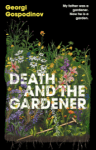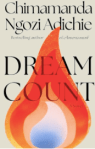
Blackwell’s Best Books of 2025

I sometimes order from Blackwell’s, a UK bookshop located in Oxford and regularly get their newsletter.

They just published their best of 2025 and I thought I could share it with you.

Book of the year 2025

Best books of 2025 per month

December

November

October

September

August

July

June

May

April

March

February

January

I have been aware of most of them but haven’t read any. I am tempted by Death and the Gardener, The Silver Book, Dream Count, and The Pelican Child.

Did you read any of these? And if so, would you recommend them?

You can visit Blackwell’s here.

Thomas Mann – The Magic Mountain Part 4 – Time, Boredom, Madness, and Final Thoughts

Time – Boredom – Madness

Thomas Mann said that The Magic Mountain was first and foremost a “Zeitroman”, a novel about time. Time in a double sense. First about historical time and then about the perception of time. There are many passages about time, most of which are written from the point of view of Hans Castorp. The longer he stays at the sanatorium, the more his perception and experience of time change. We all know how time can fly when we do something interesting and almost grind to a halt when we’re bored. Looking back over these periods of time we notice that those stretches of time have the opposite quality now. Periods of time in which we did a lot seem to have lasted longer when we look back, while those in which life is repetitive seem very short. The novel mirrors this in its structure. The first half narrates roughly a year while the second half stretches over the course of six years. The title, “Magic Mountain” also alludes to this near magical quality of time.

During his first weeks and months everything that is offered to the patients is of great interest to Hans and keeps him fully occupied. But the more he’s familiar with the routine and the distractions that are offered, the more he tries to occupy his mind otherwise and find additional ways to pass time. He’s suddenly very interested in biology, anatomy, and botany. Long passages are dedicated to these topics. Apparently, many readers find these passages boring but I thoroughly enjoyed them.

Boredom seems to be something many of the patients are afflicted by and so they try to find all sorts of distractions. Many sneak off during the lying cure and go to Davos to have drinks, play games, and meet other people. I mentioned the affairs they are having, and I would assume many of those are also just a way to pass the endless time. Others, like Clawdia Chauchat, leave when they have had enough and travel either home or to other places but always return after a certain time.

The sanatorium offers distractions like presentations by Dr. Krokowski about various topics; then there are concerts, and festivities at Christmas or during the carnival season. The carnival episode is one of the funniest and craziest in the book and it made me think that possibly “Narrenberg”, The Fools’ Mountain or Mad Mountain might have been a better title. There is this sense of madness and craziness throughout the novel and towards the end, it seems to intensify and can barely be contained. Two characters are introduced late in the novel, Mynheer Peperkorn and a young girl who says to be a medium. Each of them, in their own way, contribute to the intensification of wackiness. Settembrini who is always the voice of reason in the novel and who feels responsible for Hans, warns him about both.

There is always this sense of the sanatorium being outside of the real world which contributes to these feelings of alienation and madness. Hans Castorp identifies strongly with the world “up there” and wants nothing to do with the world he left behind. While Settembrini also stays at the sanatorium during the first chapters, he moves down to Davos later because he cannot afford to stay at the Berhof any longer. That’s where he meets Naphta who is also ill but not rich enough for the Berghof. This may be one of the reasons why Settembrini isn’t affected by the folly that comes with prolonged stay at the Berghof. He’s also still in contact with the world outside as he’s working on a book. He has a keen interest in what is going on in the world and tells Hans about it and warns that a catastrophe is coming.

When Hans has been at the sanatorium for many years, everyone seems to become more restless, more bored and people throw themselves on all sorts of hobbies. Collecting stamps, trying every chocolate available, listening to music, and participating in seances.

Things accelerate and finally the big clash comes – the war breaks out. Everyone has to leave and those young enough like Hans Castorp are sent to the front.

Final Thoughts

I read a lot but unfortunately many of the books are gone from my memory by the end of the year. That said, I’m not likely to forget this book. It’s so unusual and wild. And I absolutely love the way Mann writes. His sarcasm and wit are unparalleled. I hope it comes through in the translations. It would be sad if it didn’t.

As funny as the beginning is, there’s always a sense of unease. We see all these people from all over the world, Germany, Russia, France, Italy, South America, Poland. . . .  and we know, only a few years later, sitting together peacefully will no longer be possible.

I highly recommend this book to anyone who loves Mann, to those who want to read one of the great novels of German literature, but also to those who love books about microcosms of society as we find them in hotel novels. In many ways, The Magic Mountain is like an exaggeration of the hotel novel. Hotel novels wouldn’t have such an appeal if they were not also novels with memorable characters and The Magic Mountain certainly offers many such characters.

If you’ve read it, which was your favourite episode or element? I thought that one of the strongest was Hans Castorp’s skiing expedition, one of the funniest when he explores Clawdia’s painting. But there are also tragic parts that are very affecting, especially the end. I won’t mention these episodes so as not to spoil the book any further.

In October, I was tempted to go to the “Berghof, or rather hotel Schatzalp as it’s called, for a few days. Schatzalp opened as a luxury sanatorium in 1900, but has been a hotel since 1953. In the end, I couldn’t go but maybe next year.

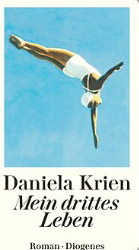
Daniela Krien’s My Third Life (Mein drittes Leben)

German author Daniela Krien who was born in the former G.D.R. published her first novel We Will Tell Each Other Everything (Wir werden uns alles erzählen) in 2011. Long before Kairos she told the story of a passionate love story between a very young woman and a much older man during the final months of the DDR. I found the book a little mawkish but not bad at all, especially in the parts that introduced us to a world that had already been long gone by then. Sure, Erpenbeck is the better writer but if I had to pick one of the two, I’d say I liked Krien’s novel better.

Since then, she’s published four more novels, two of which were translated – The Fire and Love in Case of Emergency (aka Love in Five Acts). While I got the latter on my piles, I haven’t read the others. When I was at the bookshop the other week, I discovered her latest Mein drittes Leben. It hasn’t been translated yet but given the success of some of her other books in translation, I wouldn’t be surprised if a UK or US publisher picked it up.

The book begins after Linda has moved away from Leipzig to the country, while her husband stayed in their flat in Leipzig. They aren’t divorced, nor are they theoretically separated but Linda needs some time on her own. The village and the house she’s staying in aren’t very appealing. But Linda doesn’t care. She’s looking after the chicken of the former owner and her dog and that’s all she seems to need. Her husband, Richard, visits her every other week and she makes a few friends, but mostly she stays on her own.

Bit by bit the reader discovers that Linda once had what she would have called the perfect life: a kind daughter, a husband she’s still in love with after almost twenty years, and a job as a curator of an art foundation that gave her a great deal of satisfaction. But then a tragedy happens. Her seventeen-year-old daughter is run over by a lorry. Linda and Richard grieve deeply but while Richard gets better, Linda doesn’t. On the contrary. It seems to get worse. When she’s diagnosed with cancer on top of that, she knows she can’t go on like before. Once the chemo is over, she moves.

I’ve read a few books about grief, fiction and nonfiction. Guilt is so often part of the grieving process. Here as well. Linda feels particularly guilty because her daughter did something that morning, she wouldn’t have done if Linda had told her not to. But the guilt runs much deeper and that’s where the strength of this book lies. It is tied into her motherhood and the way she became a mother. Richard had been married before and had two beautiful, intelligent children. He didn’t want another child and Linda had to fight very hard for him to give in. Once her daughter is born, Linda wants another child but Richard refuses. Years later, when he finally agrees, it’s too late. One of the things that weighs heavily on Linda’s consciences is the fact that she often compared her daughter to Richard’s first children or to other young people and found her lacking. She seemed too normal, too kind, not particularly beautiful, not fascinating.

Linda has a lot to come to terms with. Her struggles are intense. At times the reader fears she’s going to end it all. And then Richard loses patience. He’s been waiting two years and there is still no sign that Linda will return to Leipzig. The marriage ends when he meets another woman

It may sound like My Third Life is a very depressing book but it’s not. I found it engaging and enjoyable. The way Linda evolves after her marriage ends is uplifting and very relatable. Ultimately, My Third Life is much more than a story about grief, it’s also the story of a marriage. And an exploration of what makes life meaningful. I wouldn’t exactly call My Third Life great literature but it’s very readable. It would make an amazing book club read as it offers so many discussion points. How long should a person grieve? What is the right way to grieve? How do partners survive the loss of a child, especially when they don’t grieve the same way? What about friendships? How do friendships survive something like this?


Whatever Happened to My 20 Books of Summer?

Goodness did I fail spectacularly at Cathy’s 20 Books of Summer. My intentions were good, my choices were excellent, and, for a while, I read one book after the other until I realized my pile had one major flaw – there were no crime novels. And once I strayed from the path, it was hard getting back to it. That said, I read seven and a half of the books on my pile before going off course.

Olivier Adam’s Passer l’hiver is a collection of short stories that hasn’t been translated which is too bad. They were outstanding. Melancholy, poignant and so evocative. They show people at their loneliest but mange not to be depressing.

Hilary Mantel’s Learning to Talk is another short story collection and my first introduction to Hilary Mantel. I liked it very much. Especially the first story in the book which reminded me a little of Joyce’s Araby.

Jenny Erpenbeck‘s Kairos. What to say about this? The writing is impressive. If it hadn’t been so great, I wouldn’t have finished it. It’s actually interesting that before this got The International Booker, it wasn’t praised much in Germany. Maybe because of the very toxic nature of the relationship of the two main characters? Or simply because the depiction of the former DDR is anything but convincing.

Willa Cather‘s A Lost Lady. Now this is a novel that will make my best of the year. I liked it so much.

Elizabeth Taylor’s The Wedding Group. I have read a lot of Elizabeth Taylor’s novels and didn’t think I’d ever read one that I didn’t find convincing. Unfortunately, The Wedding Group is not her best. There are things to admire here but overall, it felt disjointed.

Kaye Gibbons‘ Charms for the Easy Life. This is a historical novel, set after WWII. It’s very well written and entertaining but not a favourite.

Kate Zambreno‘s The Light Room is a memoir and I liked it a great deal. She describes the year after her second child is born, which is right at the beginning of Corona. The title The Light Room is an allusion to the Japanese novel Territory of Light, which I’ve read earlier this year. They both have a lot to say about motherhood.

Patricia Lockwood‘ Nobody is Talking About This was praised by so many people, but I found it annoying. It’s uncanny how well she describes Twitter or X but for some reason, it wasn’t for me.

I’m not too bothered that I didn’t manage to finish reading my pile, I’m more annoyed that I didn’t review them. Or any other of the books I read and really enjoyed this summer like Hollinghurst’s The Line of Beauty which has been on my shelves since 2005. Definitely another novel that will make my Top 10 this year.

20 Books of Summer

I just realized, I’m late to Cathy’s 20 Books of Summer. It’s my first time participating and I had no idea it didn’t start at the beginning of summer but at the beginning of June.

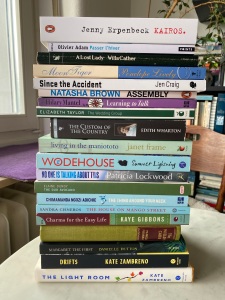
I was always tempted to participate but for some reason never could come up with a list of books. The other day, I was looking at a pile of unread books  on one of the shelves of my newest bookcase and noticed that there were almost 20 very tempting books. I added a few more to have at least one German and one French title, plus one memoir.

Normally, I don’t like to plan my reading but recently decision fatigue has kept me from actually reading and so, having a smaller pile to choose from, sounded like a great idea. It’s a bit like the capsule wardrobes that many people with too many clothes resort to.

Most of the books are rather slim with the exception of Erpenbeck’s Kairos and Edith Wharton’s The Custom of the Country. I’ve already read one book, Willa Cather’s A Lost Lady and am about halfway through Kate Zambreno’s The Light Room.

There are three books of short stories:

Olivier Adam’s – Passer l’hiver

Hilary Mantel’s – Learning to Talk

Chimamanda Ngozi Adichie’s The Thing Around Your Neck

The rest are all novels:

Jenny Erpenbecck – Kairos

Edith Wharton – The Custom of the Country

Willa Cather – A Lost Lady

Elizabeth Taylor – The Wedding Group

P. G Wodehouse – Summer Lightning

Pamela Frankau – The Willow Cabin

Janet Frame – Living in the Maniototo

Penelope Lively – Moon Tiger

Sandra Cisneros – The House on Mango Street

Kaye Gibbons – Charms for the Easy Life

Elaine Dundy – The Dud Avocado

Patricia Lockwood – Nobody is Talking About This

Natasha Brown – Assembly

Jen Craig – Since the Accident

Danielle Dutton – Margaret the First

Kate Zambreno – Drifts

One memoir

Kate Zambreno – The Light Room

I’m very pleased with my choices. There are so many books on this pile that I had wanted to read for ages like The Custom of the Country and Moon Tiger and A Lost Lady that I think, I might actually manage to stick to them.

The Best Books I Read In 2023

This is a bit of a déja-vu situation. At the beginning of last year, I returned to blogging with my best of list and then wrote a post for January in Japan. I had every intention of blogging regularly again but so many things went wrong, so many heartbreaking things happened. GLM was the date I had fixed to finally return but plans were made without me. I wish I had at least been consulted or informed . . . It felt like having climbed a mountain only to be pushed down again upon arrival. In many ways, that fit well into the overall theme of 2023. What a sad and exhausting year. But enough of this. Lets get to my list.

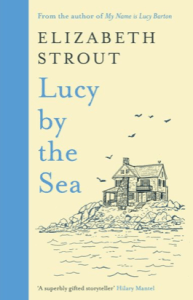
At the beginning of 2023 I went through an Elizabeth Strout phase, reading many of her books. I didn’t get to the Olive Kitteridge books or they might have been on the list but I read all the Lucy Barton novels and really loved them. Reading them felt like listening to someone tell you about their life. I can’t remember all the details but I remember how much I enjoyed them.

Maybe one could say, this was the year of life stories as I’ve read a few of them this year. Marzahn Mon Amour was one of my favorites. At forty, the author, an unsuccessful writer,  decided to become a chiropodist and was working in Marzahn. Marzahn used to be the biggest prefabricated housing estate in the former GRD.

When I visited Berlin, I went to see Gropius Stadt, which is similar, but not as huge. The atmosphere in Marzahn is quite oppressing, yet the people Katja Oskamp meets are full of life, colorful, eccentric. I highly recommend this book. I read it in German, so I don’t know who translated it but since it was published by Pereine, I’m sure it was done very well.

I don’t think that Volker Weidermann’s  Mann vom Meer has been translated yet but since other books by Weidermann have, it is posible this will be picked up by an anglophone publisher. I liked the idea and the book very much. It looks at Thomas Mann’s life and novels by focusing on his love for the sea. It contains a lot of quotes from his masterpieces like Buddenbrooks or Der Zauberberg. The book made me want to reread and read everything Mann has written. I also learned quite a few things about his life I didn’t know or had forgotten.

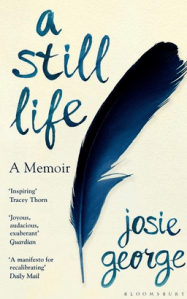
Josie George suffers from a condition that causes her incredible pain. She’s had it since she was a child and it has affected every area of her life. Most days she can barely walk. Doing things takes immense strength, leaving her exhausted. But A Still Life is more than an account of an incurable illness and the frustrations that come with it (also regarding doctors and medicine). It’s a story of remarkable resilience and of someone who is able to capture the beauty of the smallest things. The book is full of beautiful descriptions and observations. Its wise and gentle and ultimately very uplifting.

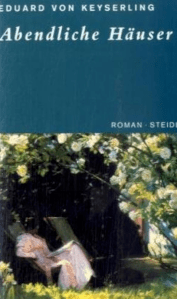
Whenever I read one of Eduard von Keyserling’s novels, it is bound to be among my favorites. I just love his writing so much. Abendliche Häuser is another one of those mournful tales of a dying society. In this novel, duels and class consciousness are slowly perceived as being less honorable than absurd. At the heart of Abendliche Häuser is a strong, independent young woman who follows her own heart and convictions. It seems this novel, which was published in 1914, was translated into English in 1927 but I don’t think it’s still available.

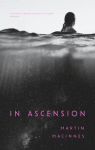
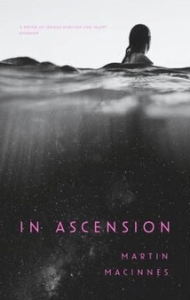
In Ascension is such a haunting novel. I always find it fascinating to read about people who are so passionate about what they are doing. The protagonist of this novel, Leigh, is a microbiologist. She first joins a team that explores an unexplainable deep vent in the ocean and then  goes on a space mission. The story of this book is captivating but what I liked even more was the atmosphere. It’s hard to describe but it’s so lovely and amazing to see and experience the world trough Leigh’s eyes. Some parts towards the end reminded me a bit of the movie Gravity.

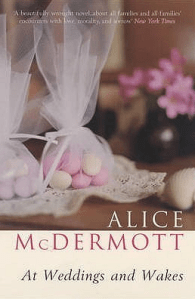
At Weddings and Wakes was my second Alice McDermott novel and once again, I was in awe of her writing. Is there anyone else who writes scenes like she doe? Her style is so amazing. But I also like her protagonists and settings. Most of her books are set in Brooklyn among Irish Catholic immigrants. Needless to say, religion plays a role. The family in this story is very eccentric which I enjoyed a lot. It was often like reading about big Italian families and since I’m half Italian, many characters felt familiar.

Cold Enough For Snow might be my favourite novel of 2023. It’s a bit surprising as initially I didn’t think it was all that good. Funny enough, I’m still not sure it is but I loved it. I loved it because it spoke to me and reminded me of places and things that are important to me. It also reminded me a bit of some of Tabbucchi’s stories. The main character and her mother are on a vacation in Japan. The descriptions are beyond beautiful. But there are other descriptions of places which I liked even more. The protagonists mother is from Hong Kong and there are passages describing the beauty of Hong Kong that capture it exactly as I remember it. The landscape around it, the mountains, the lights and skyscrapers and that balmy air I’ve experienced nowhere else. The book also explores a theme that fascinates me a lot – the way families tell their stories and how sometimes they tell various versions of a  story. In the end, nobody knows, which is the true story.

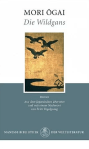
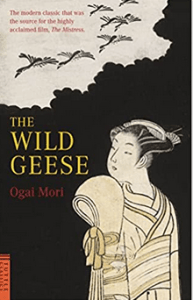
Ogai Mori’s The Wild Geese was the only book I reviewed last year. Here’s a snippet from my review:

What impressed me the most, is how immersive this story was. Reading it felt like making a trip to a distant place and time. The imagery, themes, and story are so haunting, I don’t think I’ll forget them any day soon.

The link  to the review is here.

Kick the Latch is such a unique book. Until you pick it up for yourself, you’ll probably never understand what makes it so great. It is based on a series of interviews that Katrhryn Scanlan did with Sonia, a horse trainer from the Midwest. Scanlan herself stays completely out of this, also its not rendered in interview form but like short and very short accounts of a very unique life and a world most of us haven’t experienced. To say, Scanlan stayed out of the story is misleading though. She’s not present as a character or the interviewer but she is very present in the way she chose to tell this story, in the way she condensed, chose titles for even the shortest chapters. It’s brilliant. I loved the book as much for its style and form as for the subject matter. Its touching, moving, heartbreaking and infused with a strange, wild beauty.

I might not have read as much as I usually do, but I’ve read a few books, especially at the beginning and towards the end of the year, that I’m not likely to forget.

How about you? Which books stood out for you?

The Ten Best Novels I Read This Year

Happy New Year. I hope you’re all doing really well and that 2023 will bring you light and joy.

I’ve been gone a while. Over a year, to be precise. Since summer I knew I wanted to return to blogging, if only to help myself remember what I’ve been reading. It’s easy to remember the books that make our top ten lists at the end of the year but all the others? Not so much. There are a few titles I saw on other people’s lists that I read too but until I read those lists, I’d totally forgotten about them. Needless to say, they won’t be on my list. Very often this has nothing to do with their quality at all. It has more to do with me as a reader. I’ve been an extremely distracted reader this year. I read far too many books in parallel and abandoned far too many. Nevertheless, the ten novels on my list not only captivated me, but they stayed with me.
I’ve read a lot of memoir and other nonfiction books this year. as well Also some poetry. More than usual, but to keep the list short, I’m only mentioning the novels.

Über Menschen by Juli Zeh

This chunky book hasn’t been translated yet. Possibly, because it was very controversial. It tells, among other things, the story of a woman who befriends a Neo-Nazi and tries to understand where he’s coming from. But it’s also set during the beginning of 2020 and the narrator flees to the country to avoid strict lockdown rules. I loved it for the writing. They way Juli Zeh describes people and places is just so immersive. I also found it courageous.

Open Water by Caleb Azumah Nelson

This was not what I expected. I had high expectations but more for the story, less for the writing. The stellar writing was a huge surprise. The rhythm of the book conveys the music the protagonist listens too. Each short chapter has its own flow, own rhythm. Some sentences, images are repeated, some sections meander, others are written in a staccato rhythm. The story, too, is beautiful and heartbreaking. As a woman, I’m often afraid to walk through certain neighborhoods as it can be scary to find yourself totally alone facing a hostile looking stranger. Now I know that young black men must feel like this just as often.

Tokyo Ueno Station by Yu Miri

What a haunting book. And so unusual. I don’t want to give away too much, I will just say that it tells the story of a homeless man, of social invisibility, using a very ingenious approach.

Passager de la nuit by Maurice Pons

This hasn’t been translated. Too bad as I loved it. It shows a side of the war of Algeria, or rather how the war played out in France, I was less familiar with.
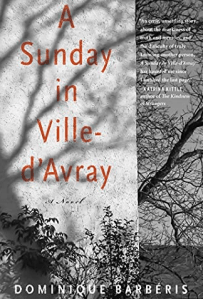
Sunday in Ville-d’Avray – Un Dimanche à Ville-d’Avray by Dominique Barbéris

A dreamy, lyric, short novel with a rich mood. Two sisters meet, speak about their childhood, their dreams, and one confesses a secret love story.

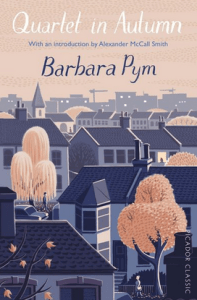
Quartet in Autumn by Barbara Pym

Not one of Pym’s lighter novels, this story of four people who might not exactly have had the life they wished for, is still typical Pym. As usual, the character portraits are rich and detailed and the story, while sad in places, isn’t depressing. I liked it a great deal. She’s such a sharp observer.

In a Summer Season by Elizabeth Taylor

Another novel from a sharp observer. This might not be my favorite Taylor novel but I enjoyed it nonetheless. The main character, a widow, marries a far younger man and it soon becomes clear, she might have made a huge mistake. Wonderful character portraits and a surprisingly enjoyable story.

The Camomile Lawn by Mary Wesley

Such a beautifully nostalgic novel. It begins during a summer holiday at the outbreak of WWII which will change everyone present. Fifty years later, the protagonists meet again for a funeral. It’s not a very straightforward novel but very immersive nonetheless.

The Fortnight in September by R.C. Sherriff 

I’m so glad I saw this mentioned on Twitter and elsewhere several times as I wouldn’t have discovered it on my own and that would have been such a shame. I read it in September and loved every page of it. Such a gentle, delightful book that tells of the holiday of an ordinary family and of the little joys and woes the holiday brings. Even though this book came out in 1931, most of what Sherriff describes is still relatable now. A timeless classic of a family holiday.

Mrs England by Stacey Halls

I can’t say that this historical novel was flawless, yet I still had a book hangover after finishing it, wishing it had been longer and looking for other, similar novels after putting it down. Mrs England tells the story of an Edwardian marriage and its dark undercurrents. The ending didn’t work for me, but the way Stacey Halls captured Edwardian England was so descriptive and captivating.


When I look at my best of list, it wasn’t such a bad reading year, but being able to easily whittle it down to ten, says a lot about the year as a whole. Normally, I always include a few crime novels in my end of year lists, but this year I managed to pick one dud after the other or just books that didn’t speak to me at all.
I decided to focus on novels in this post, but I didn’t want to end without mentioning my favourite memoir of the year, Horatio Clare’s The Light in the Dark, a Winter Journal. It’s about winter, the Yorkshire countryside, nature, depression and, as the title says, the light in the dark. Stunningly beautiful. Maybe my favourite book of the year.