Horace McCoy: They Shoot Horses, Don’t They? (1935) or The Hunger Games of the Great Depression?

The whole of last week I was looking for something to read that would grab me. I’ve read a few very good but very similar novels lately and was longing for something different. When I read Guy’s review of McCoy’s novel They Shoot Horses, Don’t They? I thought, that’s it, that’s what I want to read. Thanks to the kindle I could start right away. I’ve watched the movie when I was a teenager and although I was very impressed, I never read the book. Now that I have, I wonder why I didn’t read it any earlier. It’s great. It reminded me of another depression era book which has also been made into a movie, James M. Cain’s The Postman Always Rings Twice.

They Shoot Horses, Don’t They? is as powerful as I was expecting it to be. It’s written in the form of a testimony. A man is accused of murder. He doesn’t deny it but he wouldn’t exactly call it murder. He thinks he did the person he shot a favour. The court asks him to justify what he did and that’s why he tells his story.

Why he shot someone and why he thinks it was a favour is told in flash backs. Robert and Gloria are both luckless actors who can’t make it in Hollywood. Not even as extras, no matter how hard they try. One from Texas, the other from Arkansas, they both were hoping that Hollywood would make their dreams come true. They are very poor and hardly have enough money to buy food. When Gloria tells Robert about a dance marathon, he is first reluctant but then joins her and they sign up. These marathons were really held in those times. It’s hard to imagine nowadays but people signed up to dance for 900 and more hours straight. They were allowed to rest for fifteen minutes after one and half hours but that was all the rest they got. After a while they didn’t really dance but they had to keep moving all the time. The marathon was over when only one last couple was left.

Many  couples sign up together with Robert and Gloria, 50% already don’t make it through week one. Because the public is easily bored the organizers have to spice up things a bit and come up with additional ideas, like the derbies. Every evening the couples have to speed around the dance floor. The last couple is disqualified.

The drama during the marathon is intense. Fights break out, people collapse, the exhaustion is hard to picture, still many go on dancing after 800 hours.

There is a lot to like in this novel. The dialogue is spot on and highly effective. It captures the different colorful characters very well. What really impressed me are the two main characters Robert and Gloria. Especially Gloria. Robert and Gloria are such opposites despite the fact that they are in a very similar situation when they meet. Their mental state is so different. While Robert is hopeful, Gloria is one of the darkest characters one could imagine.

“Sometimes I’m sorry I ever met you, ” I said. “I don’t like to say a thing like that, but it’s the truth. Before I met you I didn’t know what it was to be around gloomy people.”

We crowded behind the starting lines with the other couples.

“I’m tired of living and I’m afraid of dying.” Gloria said.

Gloria is one of those people who are too far gone. I’ve met people like that in my life. You just knew, they had passed the point of no return, they were too self-destructive, no influence was going to save them. And, as one character says to Robert in the novel, it is dangerous to be in their company. They are like a maelstrom, the moment you’re in it they swallow you and drag you down.

They Shoot Horses, Don’t They? is an unflinching account of how far people are driven by poverty. And how others are willing to exploit this poverty for fun and entertainment. Only one couple can win the 1000$, the others hardly get anything. But nobody is really interested in the winners, people want to see the other couples fail. The more spectacular the failure, the better.

While it wasn’t surprising that this reminded me of another depression era book I was in no way expecting to find anything that would remind me of The Hunger Games. The writing cannot be compared, They Shoot Horses, Don’t They is excellent but there are still a lot of striking similarities that made me think. I was wondering whether Suzanne Collins was consciously using it or if it was just a coincidence. After finishing the book I googled the titles together and saw that I’m not the first to spot the similarities. Amy from My Friend Amy has also written about it as you can see here and so have others.

In both books, poor people are exploited for fun. While the role of the respective government is different, the outcome is similar. In The Hunger Games the people are forced to participate, while they sign up in McCoys novel. In both instances to see others fail, watch them struggle, makes the success of the show. In both books couples or people who are liked will get sponsors who will pay for things that will help them. Food and medicine in The Hunger Games, clothes in McCoy’s books.  In both novels food plays a prominent role. In They Shoot Horses, Don’t They? they are fed during the breaks and eat more than usual. In The Hunger Games the dinners and lunches in the Capitol are described in great detail. Ultimately hunge, is a key theme in both books. In both books there are fake marriages/romances. Couples agree to get married or to pretend to be in love in order to make the games more interesting. And in both books the show doesn’t end as expected, in both something goes wrong. Last but not least, killing and murder is another key theme in both novels.

What is completely different is the psychological dimension. The Hunger Games isn’t very psychological but They Shoot Horses, Dont They? is. The charcaters, even the secondary ones, are captivating and feel realistic.

It would be interesting to analyze these books in more depth and to compare some of the depression era books with the wave of dystopian novels we have and what it means in terms of the perception of economic crisis.

Have you read this or other books from the Depression era? What do you know about the similarities with The Hunger Games. Is it a pure coincidence?

I wasn’t aware but I’ve downloaded an Open Road Media title. They have just released this and Kiss Tomorrow Goodbye as you can see here.

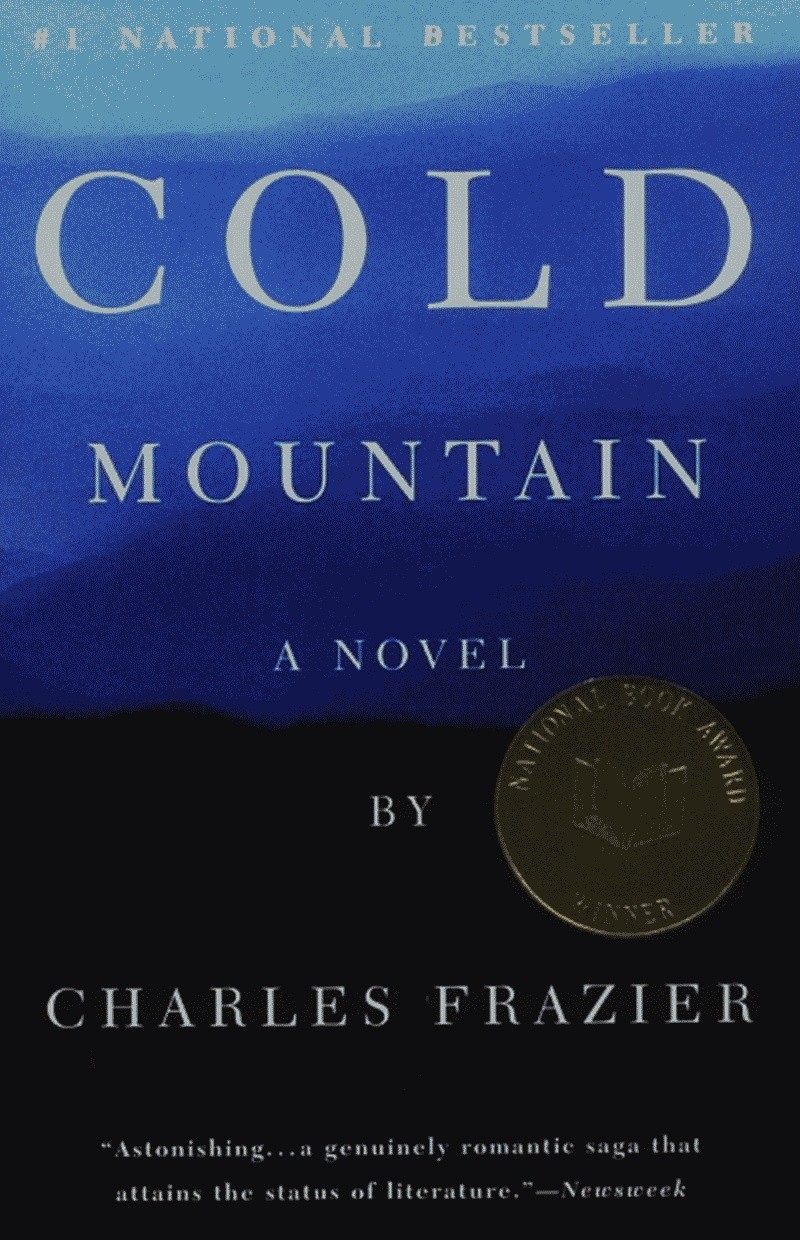
Charles Frazier: Cold Mountain (1997) Literature and War Readalong December 2011

The last book of this year’s readalong, Charles Frazier’s Cold Mountain,  is the only book on the American Civil War.

Cold Mountain juxtaposes the stories of Inman, a Confederate soldier, who was badly wounded at Petersburg, and Ada, the woman he loves, who waits for him in Cold Mountain. It describes Inman’s slow and long return to Cold Mountain and how Ada copes on her own after her father has died.

I have only just finished this book and I am still a bit stunned. This is an extraordinarily well-crafted novel. The structure is interesting from the beginning on. The chapters alternate between Inman’s and Ada’s point of view and are symmetrical. Motifs and themes that are described in one chapter will be echoed in the next. This is fascinating. At the beginning, for example, we see Inman at a hospital. He was badly wounded and most of the time he is lying in bed and watching the world through a window. The window is like the frame of a picture.

That summer, Inman had viewed the world as if it were a picture framed by the molding around the window. Long stretches of time often passed when, for all the change in the scene, it might as well have been an old painting of a road, a wall, a tree, a cart, a blind man.

In the next chapter we see how Ada struggles. Her father has died and left her nothing but a farm. The farmhands have all gone, either to war or they are hiding. Ada has lived almost all of her life in Charleston and has only lived in Cold Mountain for a few years, because her father was ill, and the mountain air was thought to be beneficial. She can sew, paint, play the piano and loves to read but never in all of her life has she worked with her hands. She doesn’t know how to keep the farm going, how to produce anything. She spends long stretches of time sitting in a chair, reading and staring through a window that starts to look like a frame, the sky outside like a painting.

There is nothing that Inman experiences, that Ada’s story doesn’t echo and vice versa. They both struggle to survive, they both find unlikely friends. I liked this structure a lot but there is more to this novel. It’s exceptionally well written. Words are chosen carefully, the prose is crystal-clear and manages to paint a picture of a breathtaking landscape that we see change with the seasons.

Maybe Ada would have starved or contracted an illness and died if Ruby hadn’t turned up at her farm. From that moment on her life is changed forever. Ruby has never read a book but she is so resourceful and attentive to every little detail of nature, one almost expects her to spin straw into gold. There is nothing she cannot use, mend, transform. And she knows how to teach Ada to become as capable as she is. All Ada knew so far was a life of leisure and that life now turns into work. It’s interesting to see how useless money has become during the war and how valuable it is to be able to produce your own food.

After a while, when plants grow and they have produced all sorts of things, the women are not only independent but almost completely self-sustaining. And they have become very close friends. They sit on the porch at night and Ada reads to Ruby. They talk and sit like an old couple. Content. At least Ruby is, Ada still longs for Inman.

After a while I started to dread his return. Their life seemed so peaceful, I couldn’t imagine how Inman would fit in. What would happen, would Ada send Ruby away, would they live together?

All this time Inman is walking and hiding. He is constantly in danger, he is a deserter after all and the country seems to have become lawless. Anyone can shoot you at any time. That’s what happens to him anyway. He is taken prisoner, shot and left for dead. He finds refuge with an old woman, who, like Ada and Ruby, lives completely on her own, with a little herd of goats.

This is a very powerful episode. The war is constantly present throughout the book. Inman remembers the battles, the dead men, the wounded. The butchery. But nowhere is this as much in the foreground as when he speaks with the old woman. I’m not very familiar with the American Civil War and the impression I got from reading Cold Mountain was that maybe initially there was a cause but very soon there were a lot of lawless people attracted who came in for the change and the freedom to go about killing people as they pleased.

While Ada and Ruby live an almost sheltered life, Inman, in crossing the country, sees the many faces of this war. The poverty, the illness, people who die for no reason, the cruelty, the violence. His own biggest fear however is that he is too damaged to live a happy life with Ada. The old woman says something that made me think and I wondered whether this is really true:

That’s just pain, she said. It goes eventually. And when it’s gone, there is no lasting memory. Not the worst of it anyway. It fades. Our minds aren’t made to hold on to the particulars of pain the way we do to bliss. It’s a gift God gives us, a sign of His care for us.

Something that struck me more than anything, besides the beauty of the language, the artful structure and the wonderful complexity of the characters, is how American Cold Mountain is. It’s a hymn to the landscape and the history of the country, that includes everything, the mythology of the Cherokee, the stories of the settlers, the possibilities that this country offers to resourceful people.

Cold Mountain is a stunning novel and I’m sorry, I feel haven’t done this book any justice. It’s a complex, rich and a very rewarding book. It’s rare that I feel envious of characters in a book but at times I thought that there could hardly be a better life than the life led by Ada and Ruby.

If you have seen the movie, it is still worth, reading the book. It is so much richer.

*******

Cold Mountain was the last book of the Literature and War Readalong 2011. The first book of the Literature and War Readalong 2012 is Helen Dunmore’s Zennor in Darkness. The discussion takes place on Monday, January 30 2012.

Literature and War Readalong December 30 2011: Cold Mountain by Charles Frazier

While I’m busy collecting the titles for next year’s Literature and War Readalong I should not forget to make you aware that there is still one more book on the list for 2011. Initially I had chosen two books on the US Civil War but German Literature Month made me remove The Killer Angels from the list.

This year’s last readalong title is Charles Frazier’s Cold Mountain. I’ve watched the movie a while back but don’t remember all that much apart from a stunning cinematography. I’ve heard a lot of good things about the novel and especially the friendship between the two women is said to be very compelling so I’m really looking forward to reading it and find out if I will like it or not. For some reason I think it’s a particularly good choice for December.

For those who have no idea what it’s all about and whether or not it’s worth joining here’s the blurb.

Charles Frazier’s debut novel, Cold Mountain, is the story of a very long walk. In the waning months of the Civil War, a wounded Confederate veteran named Inman gets up from his hospital bed and begins the long journey back to his home in the remote hills of North Carolina. Along the way he meets rogues and outlaws, Good Samaritans and vigilantes, people who help and others who hinder, but through it all Inman’s aim is true: his one goal is to return to Cold Mountain and to Ada, the woman he left behind. The object of his affection, meanwhile, has problems of her own. Raised in the rarified air of Charleston society, Ada was brought to the backwoods of Cold Mountain by her father, a preacher who came to the country for his health. Even after her father’s death, Ada remains there, partly to wait for Inman, but partly because she senses her destiny lies not in the city but in the North Carolina Blue Ridge.

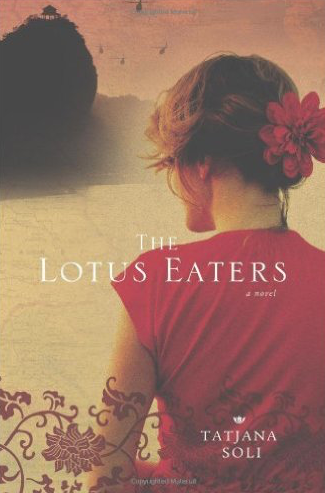
Literature and War Readalong October 28 2011: The Lotus Eaters by Tatjana Soli

lotus-eaters

Tatjana Soli’s The Lotus Eaters is another novel on the war in Vietnam that has received a lot of positive reviews. It cannot be called a classic as it only came out last year. So of all the books of this readalong it is by far the most recent. I really don’t know all that much about it and will therefore just add the blurb that should help you decide whether you’d like to read along or not.

As the fall of Saigon begins in 1975, two lovers make their way through the streets, desperately trying to catch one of the last planes out. Helen Adams, a photojournalist, must leave behind a war she has become addicted to and a devastated country she loves. Linh, her lover, must grapple with his own conflicting loyalties to the woman from whom he can’t bear to be parted, and his country.

Betrayal and self-sacrifice follows, echoing the pattern of their relationship over the war-torn years, beginning in the splendour of Angkor Wat, with jaded, cynical, larger-than-life war correspondent Sam Darrow, Helen’s greatest love and fiercest competitor, driven by demons she can only hope to vanquish.

Spurred on by the need to get the truth of the war out to an international audience, and the immense personal cost this carries, Sam and Helen’s passionate and all-consuming love is tested to the limit. This mesmerising novel carries resonance across contemporary wars with questions of love and heart-breaking betrayal interwoven with the conflict.

After having been so impressed by Tim O’Brien’s book I think I will explore more literature on the war in Vietnam in the future and I’m looking forward to read Soli’s novel.

Tim O’Brien: The Things They Carried (1990) Literature and War Readalong September 2011

A sequence of stories about the Vietnam War, this book also has the unity of a novel, with recurring characters and interwoven strands of plot and theme. It aims to summarize America’s involvement in Vietnam, and her coming to terms with that experience in the years that followed.

I expected The Things They Carried to be a very good book. A very good book about the war in Vietnam. What I found is not only an outstanding book about the war in Vietnam but also about the art of storytelling. I’m really impressed. I don’t normally rely so heavily on quotes but in this case, I think, the author is the best person to give an accurate impression of his excellent writing.

But this too is true: stories can save us. I’m forty-three years old, and a writer now and even still, right here, I keep dreaming Linda alive. And Ted Lavender, and Kiowa, and Curt Lemon, and a slim young man I killed, and several others whose bodies I once lifted and dumped into a truck. They’re all dead. But in a story which is a kind of dreaming, the dead sometimes smile and sit up and return to the world. (…) The thing about a story is that you dream it as you tell it, hoping that others might then dream along with you, and in this way memory and imagination and language combine to make spirits in the head.

The Things They Carried is told in interwoven stories. They are linked through the characters who return in most of them and through the common themes of war and storytelling. Each of the tales shows another way of telling a story or looks at an episode from another angle. Some are explicitly written by a writer for his readers only, they have never been told before. Some describe how the soldiers tell each other stories of what happened while they were separated or how they keep on retelling the same stories over and over again. Telling these stories gives meaning and is also liberating and healing. Those who cannot tell stories, those who are shut up by what they saw, those are bad off.

What is so fascinating about this book is that you can just read it like a series of linked episodes or you can read each episode as an attempt to tell the story another way.

One of the most powerful chapters is certainly the first, the one that gave the book its title. Through the enumeration of the things the soldiers carry, we get to know the soldiers, we sense that some of them will die and some will be wounded. As we learn later many of the young men O’Brien served with and who are introduced too us in this first chapter, die. Some through enemy fire, some in accidents. Some deaths are heroic, others are ridiculous, like Kiowa’s who got shot and then suffocated in a field full of shit. What impressed me in this story is the description of the stress, the weight they had to lift, the endless walking.

They moved like mules. By daylight they took sniper fire, at night they were mortared, but it was not battle, it was just the endless march, village to village, without purpose, nothing won or lost.

We learn a lot about the feeling of having been in a war and in this particular war. We hear about the state of mind of the soldiers and what war did to them. There are some chapters that made me feel uncomfortable like the one of a young soldier’s girlfriend who stayed with them a few weeks, joined the Green Berets and ultimately disappeared in the night, swallowed by the war. She got addicted to the feeling of danger and the heightened sense of being alive that went with it. This is fascinating and also unsettling.

I have read other accounts of men who went to war, I know my own father’s stories but they sound different which leads me to the conclusion that some experiences were typical for the soldier in Vietnam.

The average age in our platoon, I’d guess, was nineteen or twenty, and as a consequence things often took on a curiously playful atmosphere, like a sporting event, at some exotic reform school. The competition could be lethal, yet there was a childlike exuberance to it all, lots of pranks and horseplay.

At the end of the book you have the whole story of Tim O’Brien’s time in Vietnam. From the day when he got the letter that informed him that he was drafted, to the first days in Vietnam, all through the weeks that passed, all the things that happened, the friends he found, the friends he lost and how he ended up feeling like an outcast because he was sent away from his company after he was wounded and had to do some light duty in another camp. Maybe not all of this is true, as O’Brien writes, but a lot of what is made up is closer to what really happened than that what is just the plain unadorned truth.

Here is my favourite quote:

A true war story is never moral. It does not instruct, nor encourage virtue, nor suggest models of proper human behavior, nor restrain men from doing the things they have always done. If a story seems moral, do not believe it. If at the end of a war story you feel uplifted, or you feel that some small bit of rectitude has been salvaged from the larger waste, then you have been made the victim of a very old and terrible lie. There is no rectitude whatsoever. There is no virtue. As a first rule of thumb, therefore, you can tell a true war story by its absolute and uncompromising allegiance to obscenity and evil.

The Things They Carried is fascinating and powerful. Writing at its very best.

I hope others have read it as well and liked it as much. I would also like to hear how it compares to Matterhorn.

Other reviews

Anna (Diary of an Eccentric)

Danielle (A Work in Progress)

Silver Season

On Re-Reading Ambrose Bierce

Some classics are part of our childhood reading. There are many different writers that I haven’t re-read since I was quite young. Ambrose Bierce was one of them.

I remember sneaking off with a volume of his short stories and liking them very much when I was little. I knew nothing about the man, only much later when I read a lot of Latin American literature and came across Carlos Fuentes’ Gringo ViejoThe Old Gringo, that was also made into a movie, did I learn something about the man himself. Or rather the mystery of his ending. In 1913, at the age of 71, he rode off to Mexico and was never seen again. Fuentes’ exploration of his vanishing is a great book. I have also seen the movie but can’t remember if I liked it or not. It is believed that Bierce, who also fought in the Civil War, joined the forces of Pancho Villa.

But even without such a mysterious ending, Ambrose Bierce would be an interesting character. He was known for his satirical writings in which he used an acerbic and vitriolic tone. Some of his articles seem to have ruined more than one career of a new writer. He also wrote a lot of short stories and his famous The Devil’s Dictionary.

Since my time is limited these days, I’m much more inclined to read short stories and novellas besides my chunky August Readalong choice (Elsa Morante’s History – one of the great works of Italian literature ! – Yes, you can still join me).

Yesterday I decided to re-read some of Ambrose Bierce’s short stories. I wanted to see how I would like them as a grownup and how the knowledge of his disappearance would influence my reading. I read An Occurrence at Owl Creek Bridge, Beyond the Wall, An Adventure at Brownville, The Damned Thing, One of the Missing and The Stranger. Most of Ambrose Bierce’s short stories can be found online here.

I really loved these stories. Bierce is a fantastic writer. Realistic, yet capable of creating an eerily haunting atmosphere. The Civil War, in which he served, is often a backdrop. The stories are either set in San Francisco or rural California, one takes place in an Arizona desert. The city as well as the country provide material for mysterious descriptions.

In my memory, Bierce’s stories had a certain resemblance with Edgar Allan Poe. It is also said that H.P. Lovecraft was influenced by him. Of the 90something short stories written by Bierce far over 50 have a supernatural, macabre or horror theme. What I had not realized when reading them before is the fact that he has a lot in common with Maupassant. The descriptions more than anything bear a strong resemblance with Maupassant’s short stories. Poe’s descriptions are different.

An Occurrence at Owl Creek Bridge is one of his most famous stories. It is set during the Civil War and tells the story of a man who has been sentenced to be hanged. The story is, like so many others, quite surprising, it is non-linear and offers an unexpected ending. There isn’t anything supernatural in this one, just a touch of it.

Beyond the Wall is a ghost story set in San Francisco during a cold winter night.

The night of my visit to him was stormy. The Californian winter was on, and the incessant rain plashed in the deserted streets, or, lifted by irregular gusts of wind, was hurled against the houses with incredible fury.

An Adventure at Brownville is an atmospherical exploration of the mind’s faculties. It is a beautiful story with great descriptions.

As I leaned wearily against a branch of the gnarled old trunk the twilight deepened in the somber woods and the faint new moon began casting visible shadows and gliding the leaves of the trees with a tender but ghostly light.

The Damned Thing is the story that reminded me the most of Maupassant. It is a very subtle horror story in which two men go hunting.

One of the Missing is the longest story in the collection. It is a tragic story of the Civil War in which a soldier of General Sherman’s army is sent on a dangerous mission.

The Stranger is a ghost story in form of a Western. A party of men camping in the Arizona desert meets a mysterious stranger who tells them an uncanny tale.

If I think of the story of his life and compare its ending to his tales, I think, it is safe to say that Bierce loved mysteries. Maybe he didn’t want to return, maybe he got lost on the way or something occurred that was similar to what happened to the soldier in One of the Missing. One thing is certain, we will never know.

As I said, I enjoyed reading these stories a great deal and since we have autumn-like weather it was quite fitting. I sat on the balcony floor while reading them, it was raining and quite cool. One of the cats was lying on a table, the other one sitting with me under the woolen blanket I had draped around myself. There were a dozen ravens sitting on the huge maples in the back garden flapping their wet wings and cawing.

Sarah Gardner Borden: Games to Play After Dark (2011)

An unsparingly honest portrait of one marriage’s devolution into train wreck. Borden covers it all—from the resentments that build over childcare to the sex that’s no longer fun. Reading Games to Play After Dark is as intimate an experience as reading someone’s diary.

It is hard to believe that Games to Play After Dark is Sarah Gardner Borden’s first novel. The topic, a marriage that falls apart, may not be the most original, the young mother who tries to combine the demands of her children and her husband and her personal needs, isn’t new but how she describes it, the details she evokes, the way she looks at what has been swept under the carpet and the bed and what is hidden in the closets is extremely well done.

There have been a few similar books in recent years. Rebecca Miller’s The Private Lives of Pippa Lee, Rachel Cusk’s Arlington Park and Ayelet Waldman’s Love and Other Impossible Pursuits (see my review) are a few I have read. Many recent thrillers and crime novels also explore marriage and family life. One of the distiguishing traits of this novel is that Borden looks at sexuality in a detailed way and handles the topic explicitly. The games that are played after dark, are indeed of specifically sexual nature. More than any other recent writer of domestic disasters, Borden shows human beings as sexual beings, initiating with the discovery of sexuality by young people and leading to the sexuality of adults in- and outside of marriage.

Kate and Colin meet at a party, fall in love and get married soon after. The first years are intense and enjoyable but the moment the sexual attraction diminishes, things get complicated.

She became finicky about sex, wanting it only occasionally. Her body began to feel like a recently tidied room that she didn’t want Colin to mess up.

After the first child the marriage gets really awry. Kate has a hard time to cope and Colin, who is on a career path, doesn’t help much. The discussions and disputes that follow are some of the best bits of writing in this novel. A second child seems a good idea at first, after all, they want to be a “real family” and that is, according to Kate and their friends, only possible with a second child. After the second child is born, Kate doesn’t want any physical intimacy from Colin anymore. Her need of tenderness and proximity is covered by her daughters. She loves to lie in bed with them, feel their warm bodies.

But there is also decidedly more house work with a second child and the second daughter, on top of that, is a horrible brat. A child from hell. Scenes like the one below are all too frequent.

How much longer could she continue, could she stand it: the serving, the directing, the resulting absurd sense of abuse, the constant tiny negotiations of space? On the landing as Kate dropped the stuff and bent to collect her keys from her purse, Robin kicked her in the behind.

The older the girls get, the uglier the marriage turns. Although they try hard, they go to see a therapist, they try “date nights” and “family dinner”, things always go wrong. Kate and Colin fight constantly and more than once they both display violent behaviour. It is obvious Kate cannot take it much longer. She desperately tries to find a way out and the first path she chooses, is the well-known one of the affair. This is the only bad story line Borden told, not so much because she chose to have Kate start an affair (after all this seems more than common) but because it doesn’t seem plausible. In any case, the affair doesn’t last very long, and Kate will have to find another way out.

It’s a well-told book, I loved reading it and was captivated. I also appreciated that Borden seems to say, that not every marriage has to turn out like this, having children doesn’t need to be like this but there are combinations of people and circumstances that seem doomed from the start. Kate’s character and her past prepared the ground for this disastrous marriage. And Kate, when thinking back and remembering the beginning when they just got married wonders:

She had no idea if at that point things could have gone one way or the other, or if only one way, this way, had been available.

It is obvious that it isn’t only Colin’s fault, things go wrong, although, during their disputes, we think it is. The reasons lie much deeper and we see some of it in an early passage.

She could see that doing what he wanted was compelling for both of them, and that to interfere would interfere with the sexual chemistry that served as foundation for their bond. “Okay,” she said. “I don’t care where I am, ” she said, “so long as we’re together.” But later that night, doubt moved in her.

Kate doesn’t know herself and has not learned to analyze her feelings which is a bad foundation for a marriage. She had a complicated relationship with her father, which we get to know in flashbacks all through the novel.

Sexual attraction, sexuality and intimacy are core themes in Games to Play After Dark . The way they are described indicates clearly that they are no games but, on the contrary, powerful forces that need to be handled with care or they will constantly influence, interfere and fire back.

I’m very interested to see where Sarah Gardner Borden will go after such a promising debut novel.