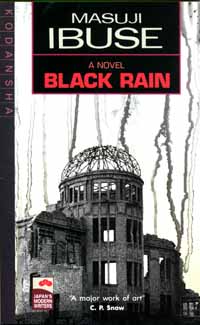
Masuji Ibuse: Black Rain – Kuroi Ame (1969) Literature and War Readalong July 2012

Reading Masuji Ibuse’s Black Rain was an intense experience. Beautiful and horrifying. In all honesty though I have to say the horror prevailed and I have to contradict those who say it’s not depressing. For sure, Ibuse isn’t a manipulative writer, he doesn’t strive for emotional reactions in his readers, but still, I couldn’t help being affected by what I read as no amount of toning down – something Ibuse has been accused of – can minimize the atrocity of what people had to endure on August 6 1945, in Hiroshima and the days and months that followed the bombing.

I think one hast to call Black Rain a documentary style novel. In order to write the book Ibuse has used real diaries and notes of victims and incorporated them in his book. Additionally the descriptions are so detailed and often matter-of-fact that the book reads in parts like a non-fiction account.

The main story is the story of Shigematsu Shizuma’s niece Yasuko. She would like to get married but a marriage is endangered as there are rumours that she got in the Black Rain after the bombing of Hiroshima and suffers of radiation sickness. Shigematsu himself is afflicted by a mild form of radiation sickness which he tries to fight by eating as healthily as possible and with mild exercise and a lot of rest. At the beginning of the novel which starts a few months after the bombing, Yasuko shows no signs of sickness at all. In order to help his niece and to prove that she didn’t get in the Black Rain and is not ill, Shigematsu starts transcribing his niece’s and his own diary covering the days before and after the bombing. The diaries are meticulous and incredibly detailed accounts of those days. The novel moves back and forth between the diary entries of August 5 – 15 and the present in which the entries are copied.

I have seen pictures of Hiroshima and read a few things but never anything like this book which was absolutely overwhelming in its details and the way it captured human suffering. The descriptions always move back and forth between individual and collective experiences. There were descriptions of people who had only mild burns and some whose whole body was an open wound. Some died in agony, some in grotesque positions. There were descriptions which showed how some people afflicted by radiation sickness a few days or weeks later died suddenly while others agonized for months. Towards the end there is a real account of a doctor who served in the infantry and was almost directly under the bomb when it exploded. It was unbearable to read about the suffering he went through.

I was surprised to see what an important element food is in the book. We read detailed accounts of what food was available during the war, how it was prepared and how they had to substitute a lot. Food is also one of the major elements in a successful treatment of radiation sickness. It was fascinating and sad to read.

What shocked me more than anything else, more than the descriptions of the wounded humans and animals and the ensuing total chaos, was the utter helplessness which was expressed in the way how they spoke about the bomb. They had no clue what had happened. They knew it was something unheard of,  never used before, but they didn’t know anything specific. What were the effects? Were burns the only thing or would there be more to come later? How did you treat radiation sickness? Days later they find out what had hit them.

“The name of the bomb had already undergone a number of changes, from the initial “new weapon” through “new-type bomb” to “special high-capacity bomb.” That day I learned for he first time to call it an “atomic bomb”.

The confusion and helplessness of the people is terribly sad. Even more when you read how they started to realize that even people who were not in Hiroshima on August 6, but part of rescue teams who came later, all died. This meant that each and every person who had been in Hiroshima on the 6th or came later would have to wait, sometimes for months, to be sure they were not affected by radiation.

After having read all this you will probably wonder why I called this book “beautiful”. I thought it was beautiful because the way Ibuse describes the Japanese culture, Japanese sensibilities, the descriptions of the food, the habits, some customs and many details of things we are not familiar with is full of beautiful moments like this description of Shigematsu’s childhood.

As a boy, Shigematsu had seldom come to the flat rock to play, but he had often been to play under the ginkgo tree at Kotaro’s place. When the frosts came and the ginkgo tree began to shed its leaves, the roof of Kotaro’s house would be transformed into a yellow roof, smothered with dead leaves. Whenever a breeze sprang up, they would pour down from the eaves in a yellow waterfall, and when it eddied they would swirl up into the air – up and up to twice, three times the height of the roof – then descend in yellow whirlpools onto the road up the slope and onto the oak grove.

Of course the same culture which had such a lot of beauty was also trapped in a destructive system of total obedience which is mentioned more than once in the novel. It takes a masterful writer to be able to convey so much insight into a culture and render a tragedy the way he did it. While Black Rain was not an easy book to read and has to be absorbed in small doses, I think it’s an outstanding book.  Without ever accusing anything or anyone Ibuse shows drastically that in the case of Hiroshima the end didn’t justify the means.

Other reviews

Danielle (A Work in Progress)

Judith (Reader in the Wilderness)

Rise (in lieu of a field guide)

Older reviews

Mel U (The Reading Life)

Gary (The Parrish Lantern)

The review is my first contribution to Bellezza’s Japanese Literature Challenge 6.

*******

Black Rain was the seventh book in the Literature and War Readalong 2012. The next one will be Aaron Applefeld: The Story of a Life – Sippur chajim. Discussion starts on Friday August 31, 2012.

On Juan Carlos Onetti’s A Brief Life – La vida breve (1950)

Picture a lazy summer afternoon. The heat is unbearable. You’re in a room with the blinds half down, lying on a bed listening to the voices of complete strangers in the apartment next door. You’re in a languid dreamy mood. Your imagination starts to invent a story based on the snippets of the conversation you hear.  After a while the lives next door seem more real than your own.

Many of the chapters in Juan Carlos Onetti’s famous novel A Brief Life capture this type of mood, describe inertia paired with a vividly active imagination. I liked this, because I like those motionless summer afternoons spend lazily doing nothing else but day-dreaming. I liked the languid and languorous feeling those chapters conveyed. Seeing the narrator Juan María Brausen captivated by his imagination was appealing but the narrator was not. I hated him big time. I rarely if ever use the word “misogynist” but I felt the narrator was exactly that. His wife has just undergone a mastectomy and the way he thinks about her, her pain, her mutilated body, is unfeeling, self-centered and lacking any kind of empathy. It just annoyed me so much that after 150 pages I stopped reading. Because life is indeed very brief, I decided to abandon this novel.

The novel is well written and parts of it had an atmosphere and a mood I liked a lot but it was also confusing at times. It constantly switches from the narrator’s real life to the invented story about a doctor living in the fictional city Santa María. From there it switches to a third narrative strand showing the narrator inventing himself a double life and visiting the woman, a prostitute, who lives next door.

I suppose if the narrator hadn’t annoyed me so much – and not only because he is misogynistic – I would have finished the book as I found the narrative technique interesting.

I was curious to see whether other people had felt the same and googled “Onetti and misogynist”. I’m not sure why I didn’t trust my own impression but I was relieved to see that it was something critics and readers had commented on very often.

Onetti was a Uruguayan writer. He is famous for his novels and his short stories. I’ve read the collection Tan triste como ella a few years back and liked the melancholic tone. Onetti fled to Spain after having spent 6 months incarcerated in a mental hospital by the military government. Onetti was married 4 times (why did that not surprise me?).

I’ve read Onetti’s novel for Spanish Literature Month hosted by Richard (Caravana de recuerdos) and Stu (Winstonsdad’s Blog). It’s part of a readalong. It will be interesting to see what others thought, if they finished it and how they liked it.

Literature and War Readalong July 30 2012: Black Rain – Kuroi Ame by Masuji Ibuse

When I saw Black Rain mentioned by Gary (The Parrish Lantern) on Rise’s blog (in lieu of a field guide) last year, I knew I wanted to include this book in this year’s readalong. Last year we read Marguerite Duras’ Hiroshima Mon Amour and I’m really curious to find out how this horrible event will be treated by a Japanese author. John Hersey’s Hiroshima and Ibuse’s Black Rain are said to be the most important novels on the horror of Hiroshima.

Here are the first sentences

For several years past, Shigematsu Shizuma, of the village of Kobatake, had been aware of his niece Yasuko as a weight on his mind. What was worse, he had a presentiment that the weight was going to remain with him, unspeakably oppressive, for still more years to come.

*******

The discussion starts on Monday, 30 July 2012.

Further information on the Literature and War Readalong 2012, including all the book blurbs, can be found here.

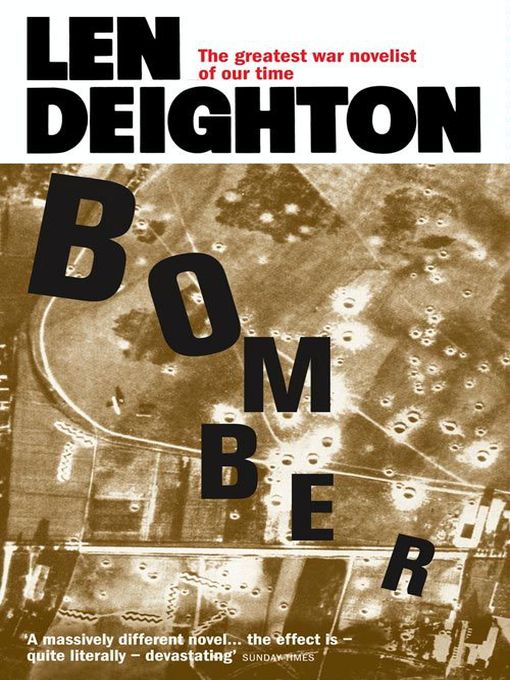
Len Deighton: Bomber (1970) Literature and War Readalong June 2012

It is very rare that I abandon a book. Often I regret this persistence when I finish it anyway and have to find out that it simply isn’t good. Sometimes I’m incredibly glad I went on. Len Deighton’s Bomber was one of those. I struggled badly for 150 pages and the idea to have to go on for another 400 seemed daunting. But it was worth the effort, it really was and looking back, I have to say, how lucky this was part of my readalong or I would have given up and missed out greatly. Bomber is amazing. It’s maybe not refined and highly literary but it’s a huge achievement. Not only because it is extremely accurate and detailed but also because it’s very engaging and admirably well constructed.

Bomber is an epic. A book with a huge cast and numerous different settings and story lines. Deighton really needed 150 pages to set the scene and introduce everyone, including the different aircraft. That part was really challenging to read as there were so many names and one had to try to constantly picture a map to see where they were located. Once the set up was done, the story moved on nicely, all the different story lines were tied together, the characters had become more than just names but people with a story.

Bomber tells the story of a bombing raid that takes place on June 31st 1943. Deigthon deliberately chose a date that doesn’t exist, knowing well that his book felt so realistic and authentic that people would always end up assuming it was non-fiction.

The 31st is a full moon night and all the crews get ready for a night of bombing and fighting. The target is the city of Krefeld in Germany. The planes take off from Warley Fen, head towards Krefeld and have to try to not get shot down before they have dropped the bomb. But before they can drop a bomb

First the PFF Mosquito aircraft will mark the target with red markers. Their gear is much more accurate than anything we have, so their reds are what the Finders must look for. The Finders will put long sticks of flares over the reds. Mixed in with the Finder aircraft there are Supporters – and these are mostly crews on their first couple of trips – who are carrying only high-explosive bombs. That’s because incendiaries could be mistaken for red markers.

What you just read is part of the instruction the pilots receive before flying off. But this part is more than that, it points towards the core of the book because the tragedy of the story has it’s source in the fact that, due to many unlucky circumstances, the markers were dropped on the wrong targets and what was bombed was the small city of Altgarten. No factories, no strategic points, just civilian buildings.

The first third of the book, sets the scene, the next third describes a lot of action and how the mistake happened and the last third is describing the drama in the air and on the ground in a very graphic way. I had to swallow hard a lot of times.

What I liked is that Deighton described a wide range of German characters, from the fanatic Nazi to the likable soldier. The portraits are nuanced and we get a feel for the diversity of the people.

The British crews are equally diverse but for other reasons. There are also Canadians and Australians, upper class and lower class men, married guys and womanizers, men who just do their duty, cowards and heroes.

In the death scenes Deighton’s sympathies clearly lie with the German civilians and the British bomber crews. Each part has one or two main characters and a lot of secondary characters and the fate of the main characters is equally sad in all the parts. I cannot go into too much detail, if you want to read it, you want to find out for yourself who will survive and who will die.

I’ve read a few harrowing accounts in the past and the one or the other book has depressed me incredibly. Bomber didn’t depress me but it brought a few tears to my eyes, a thing that rarely if ever happens to me unless something sad happens to an animal.

Bomber offers an interesting mix of emotional story telling, accuracy and numbers. We are informed of everything. How many people were involved, how many died, how many were injured, how many bombs hit target, how many were jettisoned, how many missed or didn’t go off and so on and so forth. At the end of the book were also informed about each and every surviving character’s future. It’s as if Deighton wanted to answer each and every question someone reading his novel might have.

If you ever wondered what it is like to be in a city which is bombed, this book will bring you close to this experience. If you ever wondered what it is like to be in plane on a bombing raid, this book will allow you to experience this as well.  In any case, if you are interested in WWII and how it was fought in the air, this is the book you should read.

If you’d like to find out a few things about Deigthon and his other books don’t miss visiting the Deighton Dossier. It is a site dedicated to Deigthon’s work and it is done with a lot of passion.

Other reviews (I’m somewhat doubtful that there will be any)

*******

Bomber was the sixth book in the Literature and War Readalong 2012. The next one will be Masuji Ibuse’s Black Rain. Discussion starts on Monday July 30, 2012.

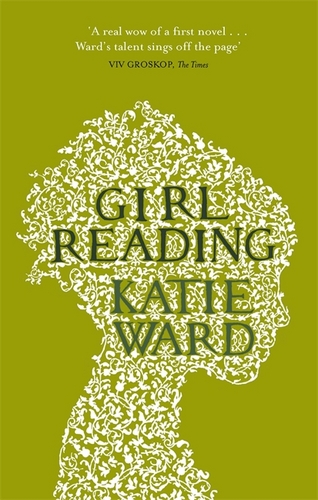
Katie Ward: Girl Reading (2011)

Katie Ward’s Girl Reading is called a novel which is slightly misleading as what it really is, is a collection of seven episodes with a similar theme which are tied together by the last one. Each of the episodes or scenes is set in another time and place, 1333, 1668, 1775, 1864, 1916, 2008, 2060. The way it is tied together, with a final scene set in 2060, gives the whole book a futuristic finish. I knew all this before I started the book but what surprised me was the writing which is quite dense, elaborate and heavily influenced by other books and tales, and, of course, paintings as the linking idea are portraits of reading women or girls seen through the ages.

Most of these “stories” are mysterious, that’s why I chose to call them episodes. They are like small windows that open up on scenes set in the past. We hardly ever get all the background information and often don’t know what will happen to the characters later.

Each of the scenes describes the challenges of women in their respective time and the girl or woman chosen for the portrait is mostly not exactly in line with what is expected of a woman at the time. The fact that the challenges and problems women face stay so similar from the 14th to the 21st century is somewhat unsettling.

Of the 7 stories or episodes I really liked four a lot. The first one, set in Siena, and the second, set in the Netherlands, were not so much to my liking nor was the last set in the future. In the case of story 1 and 2 I had a feeling I have read the exact same stories before, especially the second which was very similar to Girl with a Pearl Earring. Too similar.

I thoroughly enjoyed story 3, set in 1775 in which a female painter comes to the estate of a noble woman to finish the portrait of her lover. The lover, a woman as well, has left and the abandoned one is depressed and morose.

Story 4, set in Victorian England, was another favourite despite the fact that it resembled Audrey Niffenegger’s Her Fearful Symmetry. It’s a tale of two psychic twins. One becomes a photographer, while the other tours the world as a famous medium. It’s a wonderful story and the decor, clothes, atmosphere, are lush and evocative.

Story 5 is another wonderful story. The girl in the center will be a painter in the future but at this point in time she is a slightly silly young girl, infatuated with a painter. What is wonderful is the intensity with which she experiences life. Everything she does – smoking, drinking, falling in love – she does for the first time and savours every minute. Even being heartbroken as it seems.

While I liked some of the stories, I think story 6, set in a Shoreditch bar in 2008, was the most original and rounded of the stories. We get to know much more about the character in this story than about any other of the characters. She is a young black Tory who wants to become member of the Parliament. At the same time she has to decide whether she should get married or not. I liked the way she was described and how descriptions of the most mundane struggles, like wearing shoes which were new but painful, were interwoven with heavy decisions.

I enjoyed some of the stories a lot but as a novel Girl Reading didn’t work for me at all. While the last story, set in the future, gave it an interesting twist, it didn’t manage to really tie them all together. As a whole I found the book a bit artificial which is certainly due to the elaborate and somewhat forced writing. On top of that a few of the stories were too similar to other books I’ve read to be entirely satisfactory.

I’ve read the book along with Rikki and am looking forward to hear what they thought.

Rikki (Rikki’s Teleidoscope) First impressions, Stories 3 and 4, Stories 5-7

If anyone else has read this I would like to know which of the stories you liked best and whether this worked as a novel for you or not. Looking back, I think that story 6 was my favourite because it was the only one that didn’t feel like a pastiche.

If you’d like to see the paintings the stories are based on here is the link to Katie Ward’s site where you find the links.

Literature and War Readalong June 29 2012: Bomber by Len Deighton

The last two titles in the readalong were both about the Blitz and the bombings of the British cities seen from the perspective of civilians. Bomber shows another point of view. Set in summer 1943 it tells the story of an Allied air raid from the point of view of all of the participants, in the air and on the ground, covering 24 hours. It has been praised for its detailed descriptions and documentary style and from what I read so far, it seems very well done. I have to thank Kevin (The War Movie Buff) for pointing it out.

Here are the first sentences

It was a bomber’s sky: dry air, wind enough to clear the smoke, cloud broken enough to recognize a few stars. The bedroom was so dark that it took Ruth Lambert a moment or so to see her husband standing at the window. “Are you alright, Sam?”

“Praying to Mother Moon.”

She laughed sleepily. “What are you talking about?”

“Don’t you think I need all the witchcraft I can get?”

“Oh, Sam. How can you say that when you…” She stopped.

“He supplied the words: “Have come back safe from forty-five raids?”

Should you want to join you will have to start early. With 527 pages it is by far the longest book of this readalong.

*******

The discussion starts on Friday, 29 June 2012.

Further information on the Literature and War Readalong 2012, including all the book blurbs, can be found here.

Katie Ward’s Girl Reading Readalong June 25 2012

A while back Rikki (Rikki’s Teleidoscope) and I have decided to read Katie Ward’s Girl Reading together. I discovered the book on Danielle’s blog. It was one of those posts that made me want to get the book and read it immediately. I added the blurb but Danielle’s wonderful review (here) will give you a much better idea.

A real wow of a first novel. The premise is alarmingly simple and yet somehow stunning: seven portraits, seven artists, seven girls and women reading . . . A wonderful, imaginative evocation of seven different worlds . . . It’s very rare for a novel to have a real freshness and originality but at the same time to evoke echoes of other literary memories. This feels incredibly clever. It’s a book packed full of adventures and stories and you completely lose yourself in them . . . This book’s great strength: the perfect, separate, involving worlds it creates. Like Mitchell, Ward is equally adept at shifting between completely different registers and voices . . .

What the blurb doesn’t say is that each episode captures another era and according to Danielle’s review some of them are done remarkably well.

If you have enjoyed Susan Vreeland’s Girl in Hyacinth Blue, you might like this as well.

It would be great if you would consider joining us in reading this novel.

We will discuss the book on Monday June 25 2012. Links to other participant’s posts will be added to our respective reviews.