John O’Hara: Appointment in Samarra (1933) The Social and Psychological Downfall of an Alcoholic

Appointment in Samarra is a fast-paced, blackly comic depiction of the rapid decline and fall of Julian English. English is part of the social elite of his 1930s American hometown but from the moment he impetuously throws a cocktail in the face of one of his powerful business associates his life begins to spiral out of control – taking his loving but troubled marriage with it.
“For all its excellence as a social panorama and a sketch of a marriage, it is as a picture of a man destroyed by drink and pride that Appointment in Samarra lives frighteningly in the mind” John Updike

Isn’t it wonderful when you read a book at the exact right time? I started Appointment in Samarra on Christmas Eve, not knowing that the novel started on Christmas Eve or rather, during the early morning hours of Christmas and tells a story, with a few flashbacks, that lasts exactly three days. Three days in which a man starts his descent. The man is Julian English and the reason for his downfall seems to be his throwing a glass of drink, including ice cubes, into the face of a much despised but universally feared man. Of course this is not the real reason for Julian’s fall into the social and psychological abyss, it is just the tipping point, the one crucial moment that pushes him over the edge. The real reason is his heavy drinking and, due to this, the end of his marriage to Caroline, a woman he still loves and desires as much as when he met her. On an even deeper level, there is also something happening that the French writer Cocteau termed “La machine infernale”. And exactly this is what the title alludes to. Appointment in Samarra refers to a short piece taken from Somerset Maugham titled Death speaks that opens the novel. Death speaks alludes to the inevitability of destiny. Once the machine is set in motion, there is no stopping it. Once your fate has been decided you cannot change it.

Apart from following Julian’s descent Appointment in Samarra offers an incredibly interesting analysis of a highly ritualized society during the Great Depression and Prohibition era. Julian and Caroline English are part of the high-society of the small town, Gibbsville. They follow the rules of club life and parties very closely until Julian throws his drink into Harry’s face. From this moment on, he is an outcast. But what is so terrible in what he did? It seems to lay bare the undercurrent of hate and contempt beyond this façade of politeness and good manners. And what’s worst, he doesn’t really give a damn. Breaching the rules of society sets something free in Julian as well. He doesn’t keep up a front anymore. He had problems with alcohol before but now they get unbridled. He drinks and drinks and drinks, hurts people’s feelings and still doesn’t care until he cannot stop anymore.

Appointment in Samarra was criticized when it came out as it is a very outspoken novel. Sexuality is a central theme and even women show interest in it. At the same time it illustrates what society expects from its members, especially its female members. Virginity is an important topic and the fact whether or not a girl is a virgin is of greatest importance. There are two flashback parts in the novel. One shows Caroline just before she gets married to Julian and is an interesting and careful analysis of women’s role in this society. The second flashback focuses on Julian’s childhood and his complicated relationship with his father a very incapable surgeon. It also mentions Julian’s grandfather who committed suicide and was, as Julian’s father states, a liar like Julian himself.

One of the most impressive features of this book is how O’Hara handles point of view. It is very diverse and original but not experimental. The second thing that struck me is his use of dialogue. Some of the dialogues are among the best I have ever read. These people sound like real people, also the drunken Julian is incredibly well rendered.

Apparently O’Hara has in parts told his own story. He just got divorced, pretty much for the same reasons as Julian. He drank too much. However some of the traits are inverted. O’Hara was an Irish Catholic but in the book Harry, the guy he throws the drink at, is an Irish Catholic. O’Hara’s own father was a doctor and the relationship must have been a conflicting one.

Appointment in Samarra is also a very American novel, one of the most American novels I have ever read and this is not only based on the fact that the Depression and Prohibition are mentioned but in how prominent the role of cars is in this novel. Cadillacs to be precise. Apart from being status symbols, they are treated like rooms. You drive in them, talk in them, quarrel and make love in them. You sit in your car to drink or smoke or just think. And you can end your life in a car as well.

According to John Updike who wrote the foreword to my edition, this seems to have been O’Hara’s first and most accomplished novel. Apparently he wrote some 400 short stories.

I always wanted to read the novel since I saw it mentioned by one of the soldiers in the movie Redacted (which I never finished watching btw.  There are a lot of allusions to the Great War, which would probably also be worth analyzing) and lately saw O’Hara mentioned on Danielle’s blog.

This is definitely a book to reread. I don’t really know if I liked it but I found it fascinating and enjoyed the style a great deal. This is like reading F. Scott Fitzgerald without the varnish. A novel with the feel of a roman noir and the bleakest of endings.

Literature and War Readalong 2011

Since the days of Voltaire’s Candide and even before (Grimmelshausen’s Simplicissimus or Homer’s Illiad….), war has had a prominent place in literature.

I recently had a look at my TBR piles and realized I would easily come up with 12 books centering on one war or the other. I ruled out quite a few books, like Matterhorn, The Thin Red Line and Catch 22, as they were by far too long. I hope that much more people will feel like participating, if the books are not too chunky. The only really substantial one I included is Elsa Morante’s La Storia aka History. As you can see, there are always a few novels on the same war following each other.

I would like to post on the chosen books on the last Friday of every month which leaves us with the following dates.

January, Friday 28

Susan Hill: Strange Meeting (UK), WWI, 192 pages

February, Friday 25

Jennifer Johnston: How Many Miles to Babylon? (Ireland), WWI, 156 pages

March, Friday 25

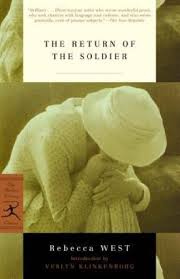
Rebecca West: The Return of the Soldier (UK), WWI, 92 pages

April, Friday 29

Carol Ann Lee: The Winter of the World (UK), WWI, 316

May, Friday 27

Shusaku Endo: The Sea and Poiso aka Umi to dokuyaku (Japan), WWII, 167 pages

June, Friday 24

Primo Levi: If this is a man aka Se questo è un uomo (Italy), WWII, 180 pages

July, Friday 29

Marguerite Duras: Hiroshima, mon amour (France), WWII, 155 pages

August, Friday 26

Elsa Morante: History aka La Storia (Italy), WWII, 768 pages

September, Friday 30

Tim O’Brien: The Things They Carried (US), Vietnam, 256 pages

October, Friday 28

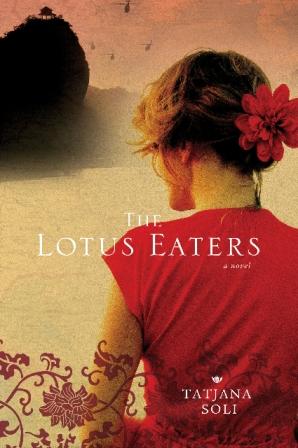
Tatjana Soli: The Lotus Eaters (US), Vietnam, 400 pages

November, Friday 25

Michael Shaara: The Killer Angels (US), American Civil War, 416 pages

December, Friday 30

Charles Frazier: Cold Mountain (US), American Civil War, 448 pages

I hope that  some of you will participate in reading the one or the other, or even all of them. All the books are available in English, apart from Hiroshima, mon amour. Should anyone feel like participating anyway, I suggest you watch the movie instead as the book is actually a script.

I created a page that will be accessible at all times. You can always leave comments. If you are planning on reading along and want to post as well, leave the comment in advance on the page so I can add your link to the post. Alternatively you can always add the link in the comments section.

I am really looking forward to this and hope that others might enjoy the idea as well.

Meg Rosoff: What I Was (2007) A Very Poetical Novel

The narrator of Carnegie Medal winner Rosoff’s latest and perhaps most perfect novel is a 16-year-old boy who has been expelled from two boarding schools and finds himself dumped in a third, near the Suffolk coast. The school is all arbitrary rules, pretentious tradition and routine bullying. But on the beach nearby the boy finds a fisherman’s hut occupied by beautiful, competent Finn, who is everything he wishes he could be himself: athletic, self-sufficient, able, free. The relationship that follows becomes an escape and an obsession, pure and transporting, and a turning point in a life remembered by the narrator at the age of 100. It makes us fall in love not only with Finn but also with the Suffolk coast, the land, the sky and the sea passionately described in airy and crystalline prose. It’s already a classic.

I wasn’t aware that I was reading a YA novel when I started Meg Rosoff’s hauntingly beautiful novel What I Was. It tells the story of a teenage boy but apart from that I don’t see why it is classified as YA. It is very lyrical, poetical and even mysterious. Rosoff creates a wonderful world, her descriptions are very atmospheric.

The novel takes place in 1962. Hilary is an old man now and looks back on his time at St. Oswalds boarding school.  It is the third school in a very short time. He doesn’t really fit in, he hates the place, he doesn’t like the people. The description  of the place had an almost gothic feel.

When Hilary meets Finn, his life changes. What follows is one of the most subtle descriptions and meditations on falling in love. Rosoff manages to show the complexity of the feeling in a masterful way. Don’t we always wish to a certain extent to be like the one we fall in love with? Isn’t the one we love not often an idealized version of our selves, a better part of ourself?

Finn lives all alone in a little fisherman’s hut, near the sea. His sole companion is his little grey cat. Finn is independent, strong, adept at many things. He is everything that Hilary is not. And very beautiful. Hilary is touched by Finn’s beauty in a very profound and even painful way. He compares himself and thinks that this is how he would like to look, how he would like to be. There is also a great transformative power in this kind of love. Through his feelings Hilary becomes every day a little more like Finn.

The fisherman’s hut is located in a very precarious position, threatened to be flooded at all times. Storms are a great danger to it. But it is also a very cozy little hut. Finn has a fire going all the time, he makes tea for them, cooks dinner. Finn likes to read and is interested in history. Through him Hilary discovers a lot he didn’t know.

The description of the landscape and the weather has also a very gothic feel. The sea is wild and seems to devour the land, the winds are howling, the storm is raging. At times I felt reminded of Jonathan Coe’s The House of Sleep, one of my all-time favourites. And once you know the story has a twist, even more so. I wasn’t surprised by the twist, I thought it was pretty obvious from the start but that didn’t dampen the reading experience. I truly liked this book and might very well pick up another one of her novels soon.

Has anyone read this one or another one of her books?

Should anyone want to know more about Meg Rosoff here is her website and blog.

Bookish Christmas Memory: Mrs Dalloway

This post is my contribution to the Virtual Advent Tour. A big “Thank you” to Kailana from The Written World and Marg from Adventures of an Intrepid Reader for organising it. It is already day 22 and many interesting, touching and informative posts have been written so far. Mostly family memories, but also a few of another kind.

Christmas has always been a special and a very quiet holiday  for me. When I was very little, we spent the Christmas season in Paris, with my father’s family. My mother’s side is dispersed all over Europe, there was never a possibility or a will for a big gathering. Later, when I grew older, and family politics made it impossible to have one joint meeting, we mostly stayed at home. Due to these circumstances Christmas was always a time of intensified reading and watching of old movies on TV.

Books that I have read during a certain season, on a holiday, somewhere abroad, a special period of my life, have always seemed to stay more intensely in my mind than others. I have a mental treasure trunk full of cherished book memories of this kind.

The last Christmas I spent with my parents, when still living with them, at age 19, is, in retrospect, one of the most enchanted ones. I already studied at the university but had no worries, lived in great comfort and was looked after. No illness, no precarious financial situation, no major burn-out, nothing of the kind, that all happened later. All I had to do, is come out of my room and join my parents for lunch and dinner. With hindsight, that Christmas seems like frozen in time, like a scenery in a snow globe and when I look at it, I see a young girl, curled up in an old wicker chair, holding a book with a greenish cover and reading it with utter enchantment.

That year, someone had offered me my first Virginia Woolf novel. It was Mrs. Dalloway. I will never forget that novel and especially not my favourite scene in it. This scene comes to my mind the very instant when I think of Christmas. Invariably since that time my mind wanders spontaneously along the following trail: Christmas, Mrs. Dalloway and off into a string of associations that are all tied to one particular episode in the book: Mrs Dalloway buying flowers at a flower shop. My memory of this scene is intense and sensual. I remember Mrs Dalloway entering a cool shop, an intense green scent of freshly cut flowers pervades the air and the odor of some sweet smelling blossoms seems to linger all over the place. I cannot remember what flowers she bought, I remember semi-darkness and this almost sparkling scent.

I often remember one particular scene from the novels I liked best. Everything else slowly sinks into oblivion but that one scene, with all the associations and meanings it represents to me, stays ingrained in my mind. I don’t know if others feel like this about books.

I have never read Mrs Dalloway again, I am afraid of what I might find. Maybe my memory has adorned it over the years with elements entirely my own. I fear disenchantment. I have read Michael Cunningham’s The Hours, the novel that is dedicated entirely to Virginia Woolf and Mrs Dalloway, and have seen the movie that is based on it. The novel is wonderful and the movie is one of the best I know, especially because of Philip Glass’ music. It has acoustic qualities that are corresponding to the flower shop scene’s visual ones; they are light, fresh and green.

It may be odd to tie Christmas to one distant reading experience but I love the memory.

I haven’t made many Christmas plans for this year apart from dinner with friends. I was toying with the idea to read Elizabeth Gaskell’ s Cranford or maybe Michael Chabon’s Wonder Boys. I have seen the movie during another Christmas season and found it wonderful. I like books and movies about writers and it is the only movie in which I liked Michael Douglas.

Does anyone else have any speacial Christmas reading memories or plans?

Don’t forget to visit the other stops today.