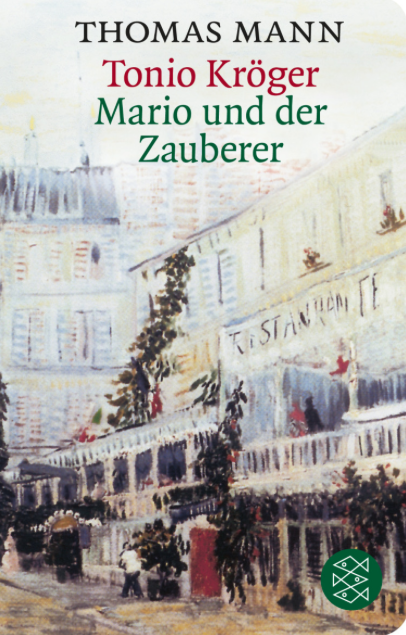
Thomas Mann: Tonio Kröger (1903)

Tonio Kröger

Tonio Kröger is considered one of Thomas Mann’s masterpieces, but only a few elements spoke to me, most of it infuriated me.  The writing is stellar, as usual, and the way he described Lübeck – the narrow alleys and gabled roofs – made me want to travel there, but the idea of the artist as tortured soul and ultimately superior was hard to stomach.

Tonio Kröger is the son of a German Consul and a Southern woman. He’s got his looks, – dark eyes and dark hair – and the name from her. From an early age on, Tonio feels he’s different, an outsider. Not only because his mother’s from the South, but because he loves books and art and feels like an artist. He first feels an intense love for blond and blue-eyed Hans and later for the blond, blue-eyed Inge. They seem to live in another sphere, a happier one, more immersed in life and what society expects from them.

Tonio wants to become a writer and finally, in his twenties, leaves Lübeck for Munich where he lives a life of debauchery, which disgusts him eventually. A long central chapter shows us Tonio discussing his views of art and life with the painter Lisaweta Iwanowna. Tonio is in his thirties now. Prematurely aged and sobered. Shortly afterwards, he departs for his hometown Lübeck. He visits his family home, which has been sold after the death of his father. One part of the stately home houses a public library. Tonio walks through the once familiar rooms. There’s nothing here for him anymore. He leaves for Denmark. At the hotel in Denmark he meets Hans and Inge again. They are married. He watches them without making himself seen. He’s less an outsider now than a spectator, still, he feels keenly that he’s different and decides to return home which isn’t Lübeck anymore.

A last letter to Lisaweta tells us he’s made peace with himself and will return to Munich for good.

The descriptions and the structure of the novella are wonderful. The way Mann captures the feeling of being an outsider is something one can easily relate to. But I didn’t like the ideas contained in the book. Tonio suffers a lot and he would like to be an ordinary person, like Hans and Inge. He would like to be blond and blue-eyed because those people have an easier, happier life. He’s tortured because he’s no conformist, but an artist. This is so dated and clichéd, it’s painful. Plus the association of blue eyes, blond hair with health and strength made me shudder. There’s also a lot of arrogance in this depiction of an artist. Yes, Tonio does suffer – or says so – , but he very obviously feels superior too.

I don’t think you have to be a tortured soul to be a great artists. Feeling like an outsider and being a non-conformist, most probably comes with it, but it doesn’t mean you have to suffer. And it most certainly doesn’t mean you are superior. I can’t accept the idea of an artist (or anyone else) as a superior person  or as “chosen”. That’s pure hubris. Tonio Kröger is filled to the brim with hubris. The suffering Tonio professes felt more like a pose than real pain.

Has anyone read Tonio Kröger? How do you feel about it?
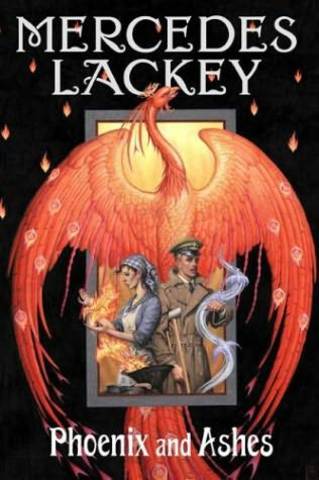
Mercedes Lackey: Phoenix & Ashes (2004) Literature and War Readalong October 2014

Phoenix and Ashes

I wasn’t going to do that anymore but after 270 pages of boredom, I had to put the book aside. I’ve got a pile of books on a small shelf, just opposite my bed, and while reading Mercedes Lackey’s novel Phoenix & Ashes I kept on looking at the titles of books I just bought (The Flamethrowers, The Interestings, Nobody is Ever Missing . . .) that I wasn’t reading because of this. I skipped to the end, read the last two chapters and that was that. The idea sounded so original. A retelling of Cinderella set right after WWI. Unfortunately the result is neither a proper historical novel, nor did it feel like real fantasy. It was more like an author filling pages using painting by numbers for books. You can’t just take a fairy tale, and use the story as plotline. Fairy tale retellings need to tell us something new about a fairy tale. They shouldn’t just be abused because the author has no story of her own to tell.

A novel like this needs great characters but I found them all very one-dimensional and uninteresting.

The period detail was well done, but it wasn’t anything new. You could watch Downton Abbey and get more out of it. Or read one of the many excellent historical novels set at that time. No need to trudge through 480 pages of something like this.

I was also annoyed because of the very poor editing. Or shoddy proofreading. So many mistakes in a book are not acceptable.

Luckily I have only one of Mercedes Lackey’s novella’s on my shelves. I’m not going to pick that up any day soon. I thought this book was a waste of talent, because she isn’t a bad writer as such, but sadly this is a lifeless, uninspired book.

My sincere apologies to all those who picked this up because of the readalong. I know Emma had the same reaction and gave up after some 100 pages. But I’m equally sorry if someone loved it and has to read such harsh words now.


*******

Phoenix & Ashes is the tenth book in the Literature and War Readalong 2014. The next book is the WWI novel Flight Without End – Die Flucht ohne Ende by Joseph Roth. Discussion starts on Friday 28 November, 2014. Further information on the Literature and War Readalong 2014, including the book blurbs can be found here.

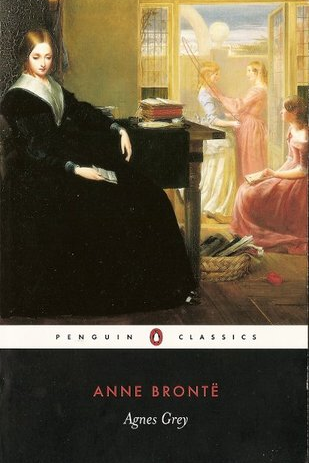
Anne Brontë: Agnes Grey (1847)

Screen Shot 2014-10-05 at 15.33.49

Last year I read all the Jane Austen novels I hadn’t read yet. This year I wanted to do the same with the Brontë novels. Agnes Grey was one of those I hadn’t read yet. Unfortunately starting my project with this book wasn’t a good choice. I found it so dark, I don’t think I’ll pick up The Tenant of Wildfell Hall any day soon, nor Villette or Shirley. Don’t get me wrong, I did expect a bleak story as I knew the book was based on Anne Brontës experience as a governess; an experience that was so negative that it led to her writing of Agnes Grey, hoping it would raise awareness and maybe help change a few things for future governesses. The description of the loneliness and social isolation of a governess were bound to be depressing but what really got to me are the many instances of cruelty against animals. I didn’t see that coming and really struggled through this novel. All the negative characters in this book—children and grownups alike— share a common trait— they see themselves as superior. If they think they are superior to other human beings, how much more must they feel superior to animals? Descriptions of torturing birds, hitting and kicking cats and dogs abound, and turned reading this novel into a nightmare. There’s even an instance in which Agnes, who loves animals, crushes a bird’s nest, to save the small birds from being tortured. Awful!

The book begins with the description of Agnes Grey’s childhood. Unlike most other Brontë heroines, she has a happy childhood and loving parents. They are not very rich but live comfortably until the day when her father loses everything due to an unfortunate investment. There is no urgent need for the two Grey girls to work, but Agnes would like to help her parents financially and decides to become a governess. Thanks to a reference from an acquaintance, she soon finds employment, although she’s only 19 years old and doesn’t have a lot of qualifications.

Her first employment is with the Bloomfields. Agnes knows it will be hard to live far away from her family and that she won’t be able to see them more than once a year. She is sure that her time away will not be easy but she didn’t expect she would be so miserable. Not only is she treated like a servant, but the children of the family are monstrous. They kick and scream and rebel. They are so badly behaved, only a very strong hand would be able to tame them. At the same time they are spoilt and Agnes isn’t even allowed to raise her voice, let alone punish them. She is shocked. She didn’t even knew that children could be like this. One boy in particular is very nasty and enjoys torturing small animals.

After a year she leaves the Bloomfield family and finds new employment with the Murrays. The children are slightly better behaved. There are four of them, two boys and two girls. Luckily the boys are sent away and Agnes does only have to teach the two girls. They are not interested in learning anything and treat Agnes just like their parents: condescending and as if she was a slave. One of the girls is a nasty piece of work. She’s very beautiful and uses her looks to manipulate and flirt. It’s her biggest joy to refuse and humiliate the men who fall in love with her. When she becomes aware that Agnes is interested in the curate Mr Weston, she tries to seduce him as well.

I can understand that people at the time were shocked when they read the book. I wasn’t shocked about Agnes’ treatment, because I knew that governesses had a hard life, due to their awkward situation. They come from the same class as their employers but they have no money and are forced to work. Because they have to work they are seen as inferior, at the same time they are not accepted by the servants because their social class and education places them above. It’s hard to imagine how lonely and helpless these women must have felt.

What shocked me as a modern reader is not so much that they didn’t accept Agnes as one of their own, but how mean and nasty those children were. How spoilt and misbehaved. They were as cruel and mean to Agnes as they were to their animals. They made her suffer on purpose, played tricks on her, disobeyed constantly, had no interest in anything.

If this was what poor Anne Brontë had to endure it’s quite appalling. I don’t know why any parents would have put up with such behaviour. These children have not the tiniest feeling for good and bad, no morals at all. They know what’s socially acceptable, and act accordingly, but only as long as it brings them some benefit or other.

What I found  most disturbing are the scenes among the destitute and the poor. Many rich girls and women did (and still do) charity work. The Murray girls are no exception. They visit the poor, bring things and money but they are never good or kind. They have been taught to give but they do so condescendingly, while Agnes spends time with them, reads for them or just sits and chats with them.

The end felt a bit like wish fulfilment. In a way you could say that the good are rewarded and the bad are punished.

I can see why Agnes Grey isn’t as famous as Wuthering Heights or Jane Eyre. Nor why it is not as well-known as Villette and The Tenant of Wildfell Hall. I found it interesting but dry and shocking. It’s not very descriptive and the character’s voice lacked life. I suspect, should I go on with my Brontë project, that this will remain my least favourite of their novels.

Have you read Agnes Grey? What did you think of it?

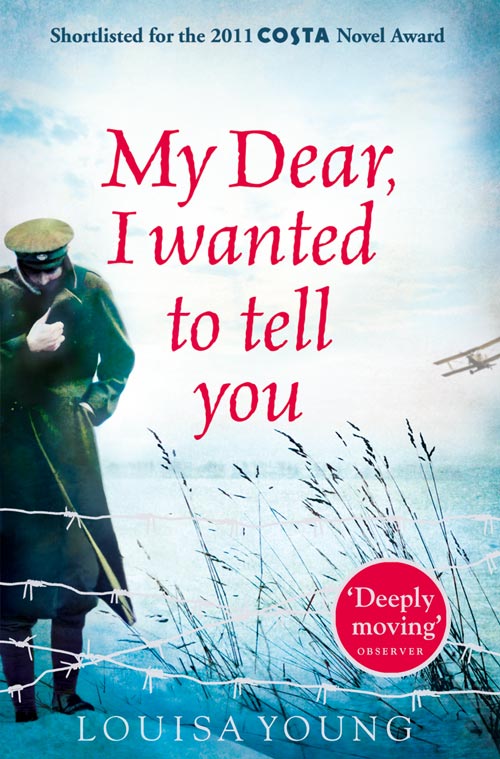
Louisa Young: My Dear, I Wanted to Tell You (2011) Literature and War Readalong September 2014

My Dear I Wanted To Tell You

Louisa Young’s novel My Dear, I Wanted to Tell You is one of the most surprising reads for me this year. After having been disappointed in Pat Barker’s Toby’s Room and Helen Dunmore’s The Lie, I was a little worried this would be the third in a series of underwhelming contemporary WWI novels. Well, it wasn’t. I loved this book and could hardly put it down. Not only because the story was so engaging and the characters so likable but because Louisa Young is a skillful storyteller with a very unique style. It’s not easy to tell a WWI story, including all the common themes, and manage to do that in a fresh and original way, but that’s just what Louisa Young did.

Riley Purefoy and Nadine Waveney meet when they are still small children. Although from very different backgrounds – he’s a poor working-class boy, she’s from a rich upper-class family – they become friends and their friendship turns into love eventually. They both share a passion for art and both want to become artists. Just before the war breaks out, Riley works as an assistant to an artist. He sees Nadine regularly and they know they are in love. However, when her parents find out, they are not thrilled and make Riley understand that he isn’t welcome in the Waveney’s home anymore. Feeling hurt and insulted, Riley impulsively joins the army and within a few weeks is sent to the trenches. Nadine on her side, becomes a nurse. They keep in contact and write to each other regularly, even meet during one of Riley’s leaves.

Thanks to influential people at home and thanks to Peter Locke, Riley’s commanding officer, who understands that Riley is very cultured and intelligent, Riley becomes an officer in spite of his background.

Peter Locke and his wife, Julia, are the second important couple in this novel. The book moves back and forth between these four characters.

The first half of the book is intense and beautiful and drew me in so much that when tragedy strikes it made me gasp. What followed wasn’t an easy read. It was tragic but so well done. There are numerous ways to write about facial mutilation and the way Louisa Young did it was outstanding. She combines the themes of body image, art, and beauty, and weaves them together in way that I found extremely thought-provoking. Peter’s wife, Julia, is obsessed with her beauty. She thinks she has nothing else to offer and, although not yet 30, already wants to undergo plastic surgery. Her thoughts and her anguish mirror the thoughts and the anguish of the mutilated men. I also liked that Louisa Young set the book in an artists’ milieu at the beginning because it underlines that we humans are extremely visual beings and while we might not all feel the same about beauty, we all feel the same about looks and mutilation. Making beauty, even more than mutilation, a main theme was a unique choice and even daring. Daring, because Louisa Young doesn’t spare us. She shows us what those mutilations looked like, what they did to a soldier. And how the society reacted. Even mothers screamed and fled at the sight of their disfigured sons.

The second part of the novel focusses almost entirely on the surgeries and the despair of the mutilated men and on the toll the war takes on the minds of those who survive intact.

One of the strengths of the book is its accuracy, another one is that Louisa Young makes us care about her characters. Not only about the main characters but about the minor characters as well. She captures a society and an event, and thus achieves what the best historical fiction should achieve— make us we feel we’ve been there too.

Although My Dear I Wanted to Tell You tells a horrific story, it’s an amazingly beautiful book, full of sentiment and rich descriptions. Louisa Young has already published the sequel (The Heroe’s Welcome) and more books centering on the same characters are still to come. As she said in an interview: “I think I may be writing the twentieth century, through these characters.” I’m eager to read more of her novels.

Other reviews

 Anna (Diary of an Eccentric)

Danielle (A Work in Progress)

My Book Strings

*******

My Dear, I Wanted to Tell You is the ninth book in the Literature and War Readalong 2014. The next book is the Fantasy novel Phoenix and Ashes by Mercedes Lackey. Discussion starts on Friday 31 October, 2014. Further information on the Literature and War Readalong 2014, including the book blurbs can be found here.

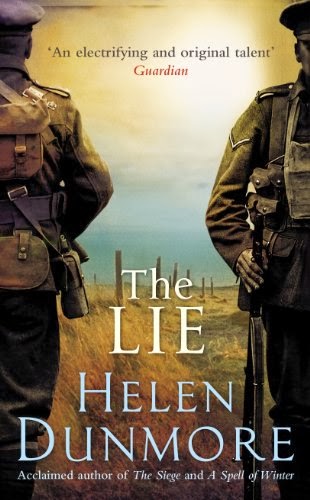
Helen Dunmore: The Lie (2014) Literature and War Readalong July 2014

The Lie

The Lie is not the first WWI novel Helen Dunmore has written. Nor is it her first book about war. While you certainly don’t have to read Zennor in Darkness, or The Siege, or her ghost story The Greatcoat, before you read The Lie, it’s interesting to see how she approaches war from different angles. The Lie is foremost about the aftermath of war. About the scarring, the wounds, in the souls, the bodies, the land.

The Lie is set after WWI in Cornwall. The narrator, Daniel, lives on a forlorn piece of land, overlooking the sea. He’s shell-shocked, but unlike so many other soldiers with post-traumatic stress disorder, who populate literature, he’s taciturn and withdrawn. Even people who know him, like his childhood friend Felicia, would not be able to tell what is going on inside of his head.

I’ve been quiet a long time, I know that. It happens. I go back in my mind. It’s not the same thing as remembering, because it has colour and smell and taste.

The land on which Daniel lives belongs to Mary Pascoe, an old woman, almost blind and frail, who lived outside of society, far from the town, all of her life. WhenDaniel returns from the war, she let’s him seek shelter on her land. When she becomes very ill and blind, Daniel takes care of her and moves into her cottage with her. She makes him promise not to fetch a doctor and to stay on her land once she’s dead.

He takes care of her until her last moment and buries her on her land. Daniel is an able gardener and can live of the land, whose soil is rich. There’s a goat and hens as well. When people start to inquire about Mary, he tell’s them she’s still alive.  The lie will be his undoing.

The story moves back and forth in time, is interwoven with flashbacks of his childhood during which he was friends with Frederick and Felicia, and flashbacks of the war.

I was green as grass. And there was first aid drill, which was like no first aid I ever saw in France. We had a dummy which kept still and didn’t scream, bleed, or stink of shit because its insides were falling out. They taught us to tie a tourniquet, and apply field dressings, and that gas lies in pockets close to the ground long after you think it’s cleared.

You’d think selfishness would be the stronger force, but it turns out that it’s not so. Tell a man to unwrap his puttees, take off his boots, dry each toe individually, examine his feet for sores and rub them all over with whale oil, and tell him if he doesn’t he’ll get trench foot which will cause his feet to go black and stink and maybe even have to cut off — well, you’d think he’d do it. But he doesn’t. He’s cold and wet and dead beat and all he wants is to get some kip. Tell him he’s responsible for the feet of the man next to him, and he does it.

Daniel fights on his own at first and later, with Frederick. Frederick and Felicia come from money, while Daniel is the son of a poor housekeeper. Frederick’s and Daniel’s friendship is tested often due to these class differences; it ultimately survives, because the attachment is so profound.

During the war the class difference almost splits them up, but their friendship survives even this test. It even survives death. We know from the beginning that Frederick is killed in France. We just don’t know how, but assume that Daniel must have witnessed it and feels guilty, as he’s haunted by his death. And by Frederick’s ghost. I thought it was strange that she chose to write another ghost story, right after The Greatcoat, but this isn’t a ghost story. I read the ghost as a symbol for how deeply rooted the trauma of war is.

All at once I know he’s going to come. The dead aren’t tied to one place. He’s as fearful as I am, more maybe. He knows what’s coming to him, and he can’t get away from it. Something’s gone wrong. Thing’s out to stop, once they’re finished, but this won’t stop. They say the war is over, but they are wrong. It went too deep for that. It opened up a crack in time, a crater maybe. Once you fall into it, you can’t get out again. The mud is too deep and it holds you.

Daniel isn’t the only one grieving. Felicia has lost her husband and her brother in the war. When they meet again for the first time, they are both wary. They have changed and are not sure  whether there is more than their connection with Frederick that brings them together, or if there is a possibility of friendship, even love.

The Lie is a poetical story. The flashbacks are so tightly woven into the progressing story that they become part of it. Nothing that Daniel does, doesn’t remind him of the war. When he repairs Felicia’s furnace, he’s transported back to the trenches. When he cultivates the land, and digs in the soil, he’s reminded of the mud in France.

The most beautiful parts are the descriptions of this forlorn country, covered in furze and bracken, smelling of salty sea air and the richness of its soil. But in spite of these beautiful passages, I found the novel and its tragic ending, extremely depressing. And I didn’t get why the lie had such tragic consequences.


Other reviews

Danielle (A Work in Progress)

TJ (My Book Strings)

Violet (Still Life With Books)


*******

The Lie is the seventh book in the Literature and War Readalong 2014. The next book is the WWI memoir Undertones of War by Edmund Blunden. Discussion starts on Friday 29 August, 2014. Further information on the Literature and War Readalong 2014, including the book blurbs can be found here.

Gabriel Chevallier: La Peur – Fear (1930) Literature and War Readalong June 2014

Fear

Most of the books we read for the Literature and War Readalong are historical novels, written by people who do not have any experience of war. But I always try to make sure to include at least one novel or memoir written by someone who had first-hand experience. Gabriel Chevallier’s Fear – La Peur is one of those. Like his narrator Jean Dartemont, Chevallier was a simple soldier during WWI. He served from 1914 to the end of the war. In 1915 he had a small break because he was wounded but was sent back to the front-line after his recovery. Reading his account it sounds like a miracle that anyone could survive this long under such circumstances. Given the title of this novel it may also come as a surprise that its author returned highly decorated. He was awarded the Croix de Guerre and the Chevalier de la Légion d’honneur.

Most of the time reading La Peur felt like reading a memoir and I suppose most of it is autobiographical. What drew me in from the beginning was the voice. I hope they were able to capture this unique and powerful voice in the English translation. A voice that mentions everything, denounces everything, and lets us get as close to the war in the trenches as possible without having been there.

The book hasn’t a plot as such, it’s more an episodic account of Dartemont’s experience of WWI and his thoughts. Not for one second does he think the war is noble, nor does he ever strive for glory. He sees right through most of the cowardly and sadistic officers and he speaks openly. Not always though. Sometimes he’s just too baffled to speak his mind like when an elderly man asks him on his leave whether they are having fun. Those at home think it’s all a great adventure, just like most of those who signed up early on.

Dartemont who was a student didn’t sign up for “gloire et patrie” (glory and homeland), he signed up because he wanted to see. He’s a very curious person, that’s probably why he never averts his eyes, no matter how scared he is. In the beginning he’s just like a participant observer. At first he’s far from the most intense fighting but once he’s seen his first battle, the first dead people and horribly wounded, fear is his constant companion.

I don’t think I’ve ever read anything quite like this. Not for one second are we led to believe that going to war is heroic. It might very well be one of the most openly anti-war books I’ve ever read. Free of any sentimentality, free of any attempt to make us swallow the bitter pill by telling some touching story. It’s just one man’s account of the most horrible things one can experience.

The parts that shocked me the most are not the gruesome descriptions of the wounded and the dead but those that show how utterly ill prepared most of the attacks were. And how incapable and idiotic most of the high command was. How can you expect to win a battle when the enemy is dug in and your soldiers are just running into open fire? No wonder there were some battles in which there were 50,000 to a 100,000 dead and wounded within two hours. All this led to the mutinies of 1917. Of course it wasn’t much better on the British side. Unfortunately many officers were not only useless but petty and sadistic, mean-spirited and small-minded, and managed to turn even times of rest into nightmares.

Seeing how scared Dartemont was all through the war, and how long he stayed in the trenches, I was wondering why he wasn’t shell-shocked. I think he must have had an extremely strong character. Unlike so many, he never looks away, not even when he’s scared. He’s always aware that any moment could be his last, that he could end up maimed for life from one second to the other. This extreme awareness, paired with a strong character, seems to have helped him stay sane through the madness.

As awful and detailed as many of the description were, I liked reading this, because I liked the narrator’s voice so much. Staying this matter of fact in such mayhem is admirable.

I’m not surprised this book went out of print in France when WWII broke out. It’s as powerful as it is subversive. Chevallier rips off the masks of all those who pretend war is noble.


Other reviews

 Guy (His Futile Preoccupations)

Judith (Reader in the Wilderness)

*******

Fear – La Peur is the sixth book in the Literature and War Readalong 2014. The next book is the WWI novel The Lie by Helen Dunmore. Discussion starts on Monday 28 July, 2014. Further information on the Literature and War Readalong 2014, including the book blurbs can be found here.

Michael Cunningham: The Snow Queen (2014)

The Snow Queen

Michael Cunningham’s luminous, compassionate new novel begins with a vision.

It’s November 2004. Barrett Meeks, having lost love yet again, is walking through Central Park when he is suddenly and inexplicably inspired to look up at the sky, where he sees a pale, translucent light that seems to regard him in a distinctly godlike way. Although Barrett doesn’t believe in visions – or in god, for that matter – he can’t deny what he’s seen.

At the same time, in the not-quite-gentrified Bushwick neighborhood of Brooklyn, Beth, who’s engaged to Barrett’s older brother ,Tyler, is dying of colon cancer. Beth, Tyler, and Barrett have cobbled together a more or less happy home. Tyler, a struggling musician with a drug problem, is trying and failing to write a wedding song for his wife-to-be – something that will be not merely a sentimental ballad but an enduring expression of eternal love.

Barrett, haunted by the light, turns unexpectedly to religion. Tyler grows increasingly convinced that only drugs can release his deepest creative powers. Beth tries to face mortality with as much courage and stoicism as she can summon.

One night, after having been dumped by his boyfriend via text message, Barrett is walking through Central Park when he sees a light. He’s pretty sure it’s of divine origin and looking down on him. He’s not the only one in his entourage who would benefit from divine intervention. He shares an apartment with his older bother Tyler, an unsuccessful musician with a drug problem, and his soon-to-be sister-in law Beth who has colon cancer. Both could do with some divine assistance.

The Snow Queen starts shortly before Christmas. It snows constantly and the images Cunningham creates are lovely and haunting. Tyler standing at the open window, while the snow swirls into the room full of old broken objects. Beth who wears only white and goes for a solitary walk. Liz and Andrew who do drugs until the early morning and stand on the top of the roof talking.

Barrett was once a wunderkind, someone who promised to be great one day. A scholar, a writer, someone who would leave a mark. Nowadays he’s happy to be a shop assistant in Beth’s and Liz’s vintage clothes shop. He doesn’t see himself as a failure when it comes to his career but he definitely sees himself as failure when it comes to love.

Tyler, the addict, struggles hard to write the perfect song for his wedding. He’s sure that a small bit of cocaine occasionally will help him. But occasionally is just an addict’s way of saying “I’ll stop soon”. And he always stops – until the next time, which comes invariably.

Liz is the oldest of the group of friends. She’s over fifty and still dating young men in their twenties. When they leave her for younger women she doesn’t care. It’s part of the plan, part of never settling.

We follow the four characters over the course of four years and see each of them come to terms with their life choices. They are drifters who have to learn that what they wanted in life might not have been the thing that would really make them happy.

I’m not sure what to think of this novel. I’ve read it in one sitting and some of the images are still vivid but it was also quite lame. I’ve read two of Cunningham’s novels A Home at the End of the World and The Hours. I loved both but this one left me puzzled. The writing is airy and precise, the images he creates are haunting but overall it’s so fluffy. And most of the time I felt like I’ve read something similar somewhere before. I even had a shock moment while working out, watching TV, and an episode of Sex and the City came on. A lot in this episode resembled The Snow Queen. I must say I like him better when he recycles Virginia Woolf. I also have no idea why he chose the title. Tyler get’s a snow splinter in his eye at the beginning but apart from that and the snow-heavy first chapters, there’s no link. Another possible inspiration might have been Jonathan Lethem’s Fortress of Solitude, with which it has more than one element in common.

With the exception of one critic most were raving about this book. I agree that the writing is lovely and the descriptions of addiction are extremely well done. Nonetheless, I need a bit more than a person seeing a light which is never explained and a couple of drifters accepting that life isn’t as grand as they thought it would be. Read it if you want to read an ode to resignation in a snowy setting.