Imre Kertész: Fateless – Sorstalanság (1975) Literature and War Readalong September 2015

Fateless

Imre Kertész novel FatelessSorstalanság tells the story of fifteen-year old Gyuri Köves, a Jewish boy who lives in Budapest. It starts in 1944, on the day on which Gyuri’s father is sent to a labour camp. What strikes the reader from the beginning is the narrator’s voice and his cluelessness. He’s a young boy, interested in girls and puzzled by his parents strange arrangements (he lives with his father and his stepmother and his parents often quarrel because his mother wants him to live with her). He notices everything that goes on around him but his interpretations are always slightly off. He finds logic in many shocking things, like the yellow star they have to wear, the way they are being treated by non-Jews and many other things. Why? Because they seem logical, from a certain point of view. And because he doesn’t feel like a Jew. His family isn’t religious. They even eat porc during the last dinner with his father. He feels that the star and being ostracized hasn’t really anything to do with him. It’s not personal.

A little later Gyuri is sent to work in a factory and then, one morning, has to get off the bus and wait endlessly for a train to take him and others to another “work place”. Of course, the reader knows it’s a concentration camp. He’s first sent to Auschwitz, then to Buchenwald and later to Zeitz.

He still finds logic in everything he sees. In the way they are forced to work, in the way they are punished. That doesn’t mean he doesn’t suffer. He’s cold, dirty and constantly hungry. He witnesses executions and is afraid of being sent to the gas chambers.

Towards the end of the book, he falls ill and is sent back to Buchenwald until the day the camp is freed and he can return to Budapest.

Reading a novel, set to large parts in a concentration camp, filtered through the consciousness of a narrator like this, was a peculiar and eerie experience. It could have gone wrong. It could have felt sensationalist and dishonest like The Boy in the Striped Pyjamas (I’m referring to the movie not the book), but it didn’t. It’s chilling because we know what he’s talking about but he doesn’t. When Gyuri tells us how everyone stepping off the train is inspected and then either sent to one group or the other, we know that it means that they will either be sent to a labour camp or to the gas chambers. Reading Gyuri’s assessment of what happens, his feeling of being chosen and found worthy – without knowing the real logic behind it all – is almost creepy.

The best novels don’t just follow a character from the beginning to the end but they show a change. And Gyuri does change. The boy who’s leaving the concentration camp is bitter and full of hatred. The days of his admiration for a system that runs,logically, smoothly, and mercilessly are long gone.

I’ve seen this novel called “shocking” and, if you’ve read my review until now, you may think, you know why. Because of the distortion. But that’s not the shocking part. What may seem odd is the end of the book. It’s not a plot element, therefore, I don’t consider it to be a spoiler to reveal the end. When Gyuri returns to Budapest, people refer to the horrors he must have seen or ask him whether it was like hell. He tells them that he hasn’t seen hell and therefore he doesn’t know how to compare. And  he finds it absurd when people tell him to start a new life, leave what has happened behind. But it’s not likely he will ever forget. What he doesn’t tell them is, that there were moments of great happiness in the concentration camp. And that’s the shocking thing of the novel. It shows us that we cannot imagine something we haven’t experienced. Whether we think, like some,  it wasn’t all that bad or whether we assume it was “hell” – we have no clue. Both assumptions are equally faulty. And there’s a certain arrogance in a assuming that we can picture what we don’t know.  And there can always be happiness. This reminded me of one of my favourite books – Solzhenitsyn’s One Day in the Life of Ivan Denisovich.

The end also reveals the meaning of the title. The novel describes many instances in which the Jews let the oppressor handle them like cattle. They never fight back. This, as Gyuri says, was a choice. Everything was a choice. There’s no such thing as “fate” – everybody is ultimately free, free to choose how to act. Always.

I wish this review was more eloquent but I’ve got the flu since Monday and my head is fuzzy. I’m sorry for that. It’s a book that would have deserved a careful review because it’s stunning. I really liked it a great deal and, for once, “like” isn’t a badly chosen word, even though I’m writing about a Holocaust novel.

I have watched the movie as well and found it powerful. It stay’s close to the novel, with the exception of the last parts. In the movie Gyuri is offered to go to the US when the camp is freed by the Americans. Going back to Hungary means going to the Russian sector. Nothing to look forward to. This isn’t a topic in the book.

The book is based on Kertész’s own experience. As a fourteen-year old he was sent to Auschwitz and from there to Buchenwald. Interestingly he says that the book is far less autobiographical than the movie.


Other reviews

Emma (Book Around the Corner)


*******

Fateless is the third book in the Literature and War Readalong 2015. The next book is the German novel A Time to Love and a Time to Die – Zeit zu leben und Zeit zu sterben by Erich Maria Remarque. Discussion starts on Friday 27 November, 2015. Further information on the Literature and War Readalong 2015, including the book blurbs can be found here.

Kristina Carlson: Mr Darwin’s Gardener (2009)

Mr Darwin's Gardener

Mr Darwin’s Gardener is a novella by Finnish author Kristina Carlson. In her native Finland, she’s a popular children’s book author but has also written three highly acclaimed books for adults, one of which is Mr Darwin’s Gardener.

The blurb calls this novel “A postmodern Victorian novel about faith, knowledge and our inner needs.” The main character is Thomas Davis, Darwin’s gardener. A loner and widower whose faith and trust in life are tested. Not only has he lost his wife but his children are sickly. Since he shuns religion, he can’t even find solace in the church. When the book begins he’s not sure life is still worth living. This sounds conventional enough but the way this novella is presented is anything but. The “story” is told by multiple narrators. The effect is that of a chorus. Kristina Carlson dips in and out of various POVs, often switching from first to third within a paragraph. I could have gotten used to that if the 1st and the 3rd POV had been that of the same person, but very often, that wasn’t the case. The transitions were blurred most of the time and since there were so many characters it was confusing at times. It would have helped, if there had been a change in voice and tone, but Kristina Carlson used the same voice and tone throughout the novel. The way the narrators spoke about faith and destiny, was the only way to distinguish one person from another.

Nonetheless, I enjoyed large parts of the book, because of the descriptions. This book contains some of the most exquisite and precise nature descriptions I’ve come across. And they do serve a purpose. This is a novel about faith, and about a very specific point in time. Darwin’s books challenges the Bible, contradicting it, questioning it. What did a person have when the person lost his/her faith?— nature. Those detailed descriptions reminded me of some very detailed religious paintings. A believer would find much solace in their minutiae. And so, Thomas Davis finds solace in contemplating nature, following its change through the seasons. Its never-ending cycle is a consolation.

Here’s a quote to illustrate her writing

A shadow flits across one of the dark windowpanes of Down House and Thomas is startled. He straightens up, shoves his hands into his pockets and stools to the back gate. Herbs and cabbages grow in a bed where Mr Darwin once cultivated yellow toadflax. The villagers thought it was a mere weed, and of course dahlias and asters are more beautiful, though the nature of beauty is mysterious. By the footpath grow hazel, alders, elms, birches, hornbeam, privet, dogwood and holm oak. Mr Darwin had them planted decades ago. Thomas turns and wanders across the meadow. When the heels of his boots sink into wet earth, the smell of mould wafts out of the long flattened grass.


A book about faith, religion, destiny, bigotry and hope, with accurate and gorgeous nature descriptions. Not a breezy book by any means, but one that’s exquisitely crafted.

This is book five of my 20 under 200 project.

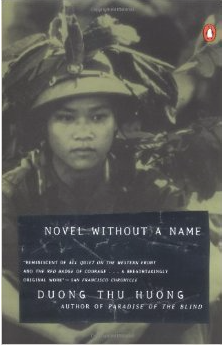
Duong Thu Huong: Novel Without a Name – Tiêu thuyêt vô dê (1995) Literature and War Readalong May 2015

Novel Without A Name

Duong Thu Huong is one of Vietnam’s most important writers. Since I haven’t read a lot of Vietnamese novels I was looking forward to reading her most famous book Novel Without a Name – Tiêu thuyêt vô dê. I wasn’t disappointed. It’s beautiful and harrowing.

At the beginning, Quan, the narrator, is sent on a mission to find his friend Bien. Quan, his commanding officer, Luong, and Bien have grown up together. When Luong hears that Bien has gone mad, he sends Quan to go and find out if it’s true.

What follows is the account of a dangerous mission on which Quan meets many people, dead and alive, sees atrocities, remembers his childhood, falls dangerously ill, dreams about his love, and finally finds his old friend.

Bien stands for many other “crazy” men we meet in this novel. Some really go mad because of the horrors they have experienced, others just withdraw into themselves, trying to escape the war.

Quan and his younger brother, who has been killed, have signed up right at the beginning of the war, ten years ago. Their father was one of those who supported a 100% mobilization, accepting that he might lose both of his sons. Almost all of Quan’s comrades are dead. The main story follows Quan on his mission, but overall the book is more like a series of vignettes. In parts it reminded me of Tim O’Brien’s The Things They Carried. Without the metafictional elements. Duong Thu Huong uses a mix of very short and long chapters. Some are dedicated to what’s happening to Quan on his trip, some are childhood memories or stories from the war, otheres are just short, intense snapshots.

What I liked best is how descriptive this book is. It speaks to the senses like not many others. It felt at times like watching a documentary on Vietnam. We read about the food, the flora, the fauna, the beliefs, the scents, the way people love, sleep, cook. Several chapters describe the landscape and make you want to visit this country that has sun sets the color of chrysanthemum flowers.

Duong Thu Huong served in the North Vietnamese army and so it’s not surprising the descriptions of combat, dead soldiers, the horror of war are drawn in a shockingly realistic way. She also manages to capture how tired and disillusioned most soldiers have become. The political slogans that fired them up and made them sign up have become mere empty words. Bodies pile up, their country is destroyed – for what? An ideal that isn’t even humane?

On his quest, Quan meets many people. Simple farmers, single mothers, small girls, old men. They are drawn with a lot of detail and warmth. We suffer for these kind, gentle people who had to endure the worst for such a long time.

It’s admirable that the author doesn’t blame the US. She finds a lot of fault with party politics and the false promises of the government. There is no evil enemy. Nor is there an army of faceless Vietnamese soldiers. Every soldier she describes becomes a human being with a history, feelings, wishes and hopes.

Novel Without a Name is a visceral account that doesn’t leave out any aspect of this war. It’s an insider’s perspective, a soldier’s account. The novel unrolls like a huge canvas, a painting of an abundant jungle, where humans butcher each other amidst the most beautiful scenery.

I read the German translation of this novel that’s why I can’t share any quotes. It’s too bad because many of the descriptions are so amazing that I read them more than once.

Other reviews

 TJ (My Book Strings)

Bonespark 


*******

Novel Without a Name is the second book in the Literature and War Readalong 2015. The next book is the Hungarian Holocaust novel Fateless – Sorstalanság by Imre Kertész. Discussion starts on Wednesday 30 September, 2015. Further information on the Literature and War Readalong 2015, including the book blurbs can be found here.

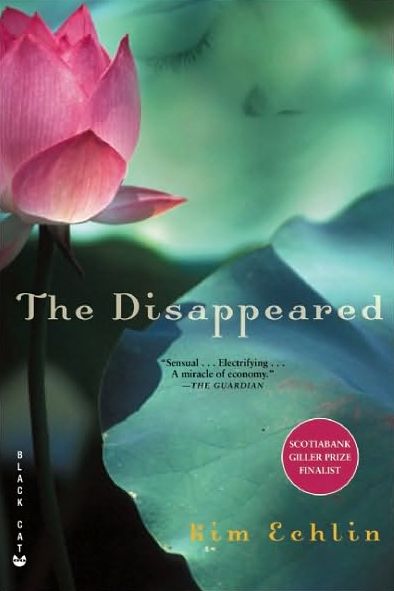
Kim Echlin: The Disappeared (2009) Literature and War Readalong March 2015

The Disappeared

Friends of mine visited Cambodia. They loved the country for its beauty, but they told me that it wasn’t an easy country for travelling as you’re not allowed to move as freely as you’d like because of the danger of the land-mines. A friend of mine is half-Cambodian. He was born in Europe, after the war, but spent a couple of months in Cambodia where he joined a bomb disposal unit. He came back changed and traumatized.  He wouldn’t speak for months. Thirty years of war ravaged the country and left the deadly long-lasting legacy of millions of land-mines. Cambodia is among the ten countries with the most landmines. Currently there are still 8 – 10 million. Cambodia has one of the highest rates of disability. Since 1979 there are some 40 amputations per week. To clear Cambodia of its land mines could take up to 100 years.

The war as such isn’t easy to understand. First there were the Khmer Rouge and Pol Pot, later the Vietnamese invasion. Mostly these wars were genocides. Depending on which side was in  power it would try to wipe out the other side using torture, rape, mutilation and shootings.

I usually don’t start a book review with so much back information but I felt it was needed in this case, although it’s still not nearly enough.

Kim Echlin’s novel The Disappeared begins right after the Khmer Rouge have fled the country. Anne Greves is in Phnom Pen looking for her lover Serey. She met him in Montreal ten years ago when she was only sixteen. Serey, a student and musician, fled Cambodia during the rise of the Khmer Rouge. He has no news of his family. The two young people begin a passionate love affair until Serey returns to Cambodia. Anne hopes he will keep in touch but he doesn’t. She waits and waits and the years go by. She has other lovers but she can’t forget Serey. Meanwhile she has learned the Khmer language and decides to travel to Cambodia and search for Serey in all the clubs of Phnom Pen.

When she finds him she discovers he too couldn’t forget her and they become lovers again until the day Serey disappears once more.

The Disappeared is a stunning novel. Beautiful and harrowing. Through the eyes of Anne we discover the beauty, tragedy, and horror of Cambodia. Thanks to her lover, and because she speaks the language, she is able to immerse herself fully. While the Pol Pot regime is over, Cambodia is still in a state of war, people are still hunted, tortured an executed.

The book is written like a lament. Often Anne addresses her lover.

I see your long silence as I see war, an urge to conquer. You used silence to guard your territory and told yourself you were protecting me. I was outside the wall, an intoxicating foreign land to occupy. I wondered what other secrets you guarded. Our disappeared were everywhere, irresistible, in waking, in sleeping, a reason for violence, a reason for forgiveness, destroying the peace we tried to possess, creeping between us as we dreamed, leaving us haunted by the knowledge that history is not redeemed by either peace or war but only fingered to shreds and left to our children. But I could not leave you, and I could not forget, and I did not know what to do, and always loved you beyond love.

Serey stands for millions of disappeared people. Most relatives never find out what happened to their loved ones, but Anne, fuelled by her passion and because she’s a foreigner who cannot fully comprehend the risk she’s taking, doesn’t let go until she’s found out what happened to the man she loves.

Many of the chapters are like short vignettes. Some contain not much more than lists of atrocities. War is awful but genocide is even much more horrible. To read about what is done to women and children, even babies, is hard to stomach.

Nonetheless it’s a beautiful, captivating book. Anne is passionate about her man and his country, discovering everything, breathlessly. This gives the reader the feel of being on a trip through a foreign country, led by a highly knowledgable guide. It is foreign but you feel like you’re quickly becoming a part of it.

The language is the language of a poet although Kim Echlin doesn’t write poetry. It’s lyrical and full of powerful images.

Kim Echlin managed something admirable. She captured the universality of grief, loss, and war, but at the same time she brought to life a country’s story that we’re either not familiar with or not interested in. In this, the novel is a call for compassion.

Why do some people live a comfortable life and others live one that is horror-filled? What part of ourselves do we shave off so we can keep on eating while others starve? If women, children, and old people were being murdered a hundred miles from here, would we not run to help? Why do we stop this decision of the heart when the distance is three thousand miles instead of a hundred?

The book explores the question of how much we can really understand of a foreign country. I liked that Anne never accepted to stay an outsider. She wanted to be part even if that meant that she put herself in danger.

The Disappeared isn’t easy to read but I loved this haunting book. It’s an amazing achievement, an intense, lucid, lyrical, and compassionate novel about a devastating conflict and a love that surpasses everything.

I’m going to end this post with one of my favorite scenes from the book. It takes place in Montreal. I think it shows what a wonderfully expressive writer Kim Echlin is and illustrates her style, how she renders dialogue.

We rode your bike to the great river. Stars and water and night. Down the riverbank, wrapped in darkness. You led me along a dock where boats were moored in narrow slips and we jumped onto the deck of a sloop called Rosalind. You took a small key from your jeans pocket and unlocked the cabin door. I followed you down the three steep steps into a tiny galley and you opened a cupboard door and took out a box of floating candles. You said, At home it is Sampeas Preah Khe, the night we pray to the moon. My grandmother always lit a hundred candles and sent them out on the black river.

Why?

To honor the river and the Buddha.

You handed me a book of matches and I lit them with you, one by one. We sent out the ninety-ninth and hundredth out together and wathched the trail of small flames drifting away. You said, My grandmother told me in the old days young people did this and prayed for love.

Other reviews

 My Book Strings

Vishy (Vishy’s Blog)


*******

The Disappeared is the first book in the Literature and War Readalong 2015. The next book is the Vietnamese novel Novel Without a Name – Tiêu thuyêt vô dê by Huon Thu huong. Discussion starts on Friday 29 May, 2015. Further information on the Literature and War Readalong 2015, including the book blurbs can be found here.

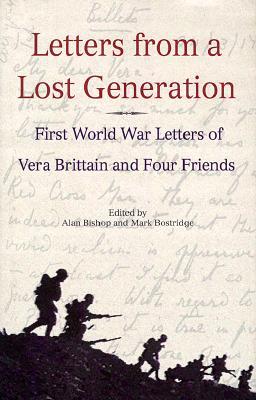
Letters From a Lost Generation – Literature and War Readalong December 2014

Letters From a Lost Generation

Vera to Edith Brittain

Malta, 15 December 1916

I do wonder if I shall ever see Edward again; it is very hard that we should be the generation to suffer the War, though I suppose it is very splendid to, & is making us better & wiser & deeper men & women (at any rate some of us . . .) than our ancestors ever were or our descendants ever will be. It seems to me that the War will make a big division of ‘before’ and ‘after’ in the history of the World, almost if not quite as big as the ‘B.C.’ and ‘A.D.’ division made by the birth of Christ  . . . ( . . . )

I finished reading Letters from a Lost Generation on December 22nd. Only when I put it aside and picked up Testament of Youth did I realize that Vera Brittain’s fiancé Roland Leighton was shot exactly 99 years ago and died on December 23rd 1915. When I chose the book I didn’t know about this; reading it exactly during that time made it even more moving.

The first half of the book contains mostly the letters between Vera Brittain and Roland Leighton. There are a couple of letters between her and her brother Edward and between her and their best friends Victor Richardson and Geoffrey Thurlow, but the major part is the correspondence between Vera and Roland.

Reading these letters was very difficult. They are not graphic or gruesome at all – at times I wondered whether the four men really served in the trenches – but they are so unbearably tragic and sad. These five people were such close friends, that each time one of them dies, they all suffer terribly. Since Roland is the first to go and seems the one everyone liked the most, his death overshadows all the later letters. He’s mentioned constantly, quoted, remembered, and after a while I started to feel the loss almost as badly. No wonder people still visit his grave in France.

After Roland is killed Vera dedicates herself with even more verve to nursing. She first stays in England but then moves to Malta and later to France.

What spoke to me is the way they deal with grief. It shows how very important it is when you lose someone you love to know exactly what happened. In each case, and also in the case of friends who are not as close, they try, like detectives, to find out what happened. It’s particularly painful for Vera to know that Roland was wounded on the 22nd and only died one day later, after having been conscious the whole time, but didn’t write her a goodbye note. They find out later that he took an unforseen turn to the worse and might not have known he was going to die. Other aspects of his death become painful only later. Some of the friends are wounded and killed during battles, not so Roland. His death is rather an accident and Vera sometimes wishes that he’d died in one of the big battles so that his death would forever be linked to that name.

What I found extremely shocking is that Roland’s clothes – the stinking, muddy, bloody uniform and shoes – were sent to his family. I’d never heard of anything like this before. Vera describes the particular stench and the horror of the sight in great detail and I felt so sorry for them. How cruel and thoughtless. In Pat Barker’s Toby’s Room is a scene in which the sister takes out Toby’s clothes and speaks of the stench of the trenches. I’m pretty sure Pat Barker was inspired by the description of Roland Leighton’s clothes.

Letters from a Lost Generation is an important document on how the perception of the war changed. The four men signed up enthusiastically, spoke about honour and glory. Even war is glorified. The longer the war takes, the higher the losses, and the more futile it all seems, the more that perception changes.

Reading about the work of a nurse was especially interesting and showed to some extent why it was possible for so many people in England to ignore the mutilations. By the time the wounded men arrived, they had already been patched up as good as possible.

Another aspect that struck me is how humble the five friends were. None of them complained much or made a big fuss. Not about the cold, the mud, and the rain, nor about the battles and the fear of death. Not even when they are wounded.

I still wonder how Vera Brittain managed to survive the death of the four people who were closest to her. After the war she met the writer Winifred Holtby who became her best friend and helped her to overcome her grief. Sadly Holtby too died an early death in 1935. Another great loss for Vera.

I don’t think I’ve ever read a collection of letters this quickly and as soon as I finished the book I started Vera Brittain’s memoir Testament of Youth. I want to know more about her, about them. Letters from a Lost Generation is as important as it is beautiful and moving. It’s a document of deep and heartfelt friendship, a testimony of grief, loss and sorrow, and a valuable contribution to understand a generation and its motives.

Other reviews


*******

Letters from a Lost Generation was the last book in the Literature and War Readalong 2014. The next book is The Disappeared by Kim Echlin. Discussion starts on Tuesday 31 March, 2015. Further information on the Literature and War Readalong 2015, including the book blurbs can be found here.

Best Books 2014

mail.google.com

I had a feeling this wasn’t a good reading year, but when I went over my posts I saw that I was wrong. I’ve read some outstanding books some of which will stay with me for a long time.

Best Literary Fiction
Evening

Here’s what I wrote about Susan Minot’s Evening

It’s not easy to capture the beauty of Susan Minot’s gorgeous and ambitious novel Evening. If Virginia Woolf or Proust had written page-turners, that’s what it could look like.

In beautiful prose which explores how memory and consciousness work Evening captures the story of Ann Grant’s life. It is 1994 and Ann is terminally ill; she’s lying in her bed, drifting in and out of consciousness. Scent transports her back in time. The morphine induces hallucinations, which are rendered in brilliant stream of consciousness paragraphs. These chapters and paragraphs, are very short, fragments only; the main story however simply moves back and forth between 1994 and 1954, the summer in which she met Harris Arden.

It’s a beautiful book and strangely uplifting. Possibly because it testifies how intense an interior life can be and that nothing is really lost. Everything we’ve ever experienced, imagined or dreamed is still somewhere. In its best moments Evening reminded me of Virgina Woolf’s The Voyage Out, in which we often see people or houses from outside. They are motionless or sleeping, but we catch a glimpse of their inner lives, which are rich and deep and passionate.

My review
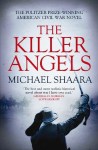
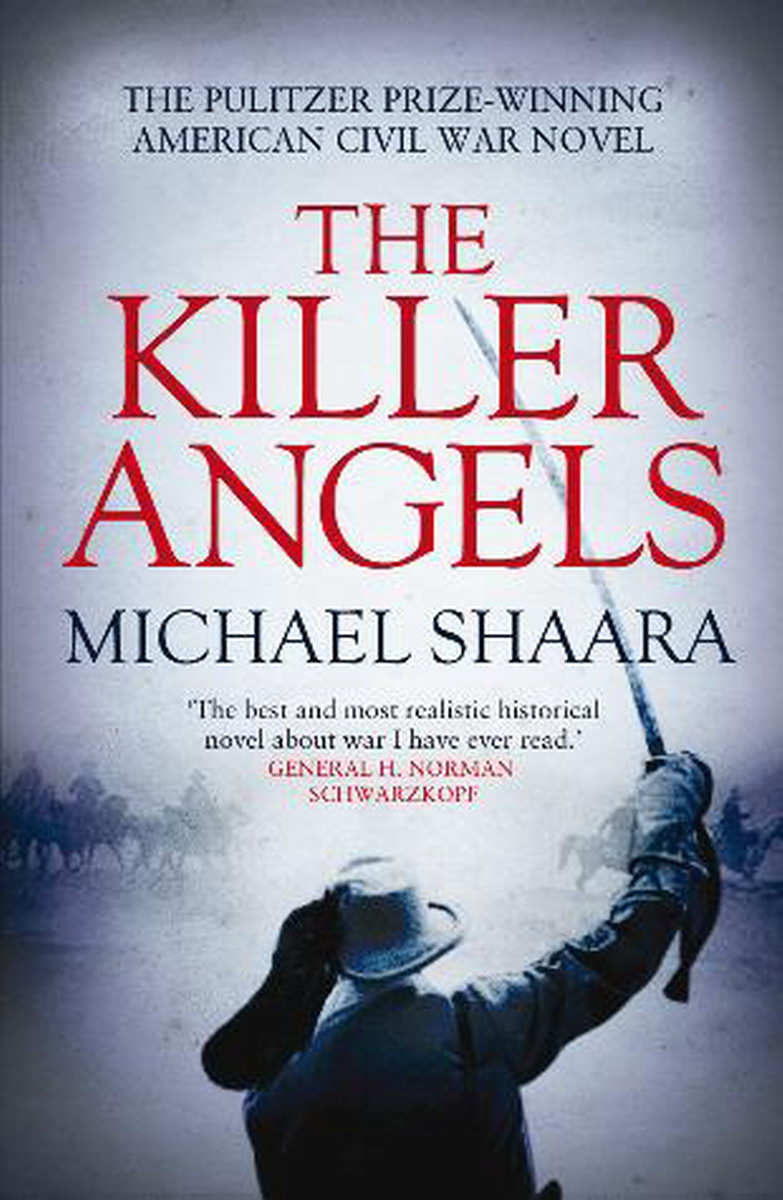
The Killer Angels

Michael Shaara’s Killer Angels is the only Literature and War Readalong title that made the list.

Here’s what I wrote:

Books are not always the way we expect them to be. Still, I’ve only rarely been this wrong. I was afraid Michael Shaara’s Pulitzer Prize winner would be dry, heavy on tactics and military jargon. It wouldn’t have been too surprising if it had been like that, after all, Shaara tells the story of the three-day battle at Gettysburg. But The Killer Angels is anything but dry or heavy. It’s a beautiful, lyrical novel, which focusses much more on the moods and emotions of the main characters than on tactics.

I don’t know what other books the year will bring, but I have a feeling this one could make it on the Best of List. I love books which are rich in atmosphere, capture quiet, introspective moods and manage to bring the most different characters to life. I certainly didn’t expect to find all that in a war novel. The Killer Angels is a gorgeous book on an awful subject, reading it felt like seeing all the major participants of the battle during their most intimate moments. I’m grateful to Kevin who said I would be missing out, if I didn’t read it. He was right.

My review
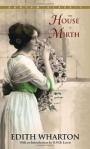
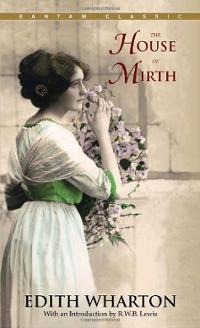
The House of Mirth

Edith Wharton’s The House of Mirth 

Here’s what I wrote:

It took me far over two months to decide whether I wanted to review The House of Mirth or not. For some reasons, I found this book profoundly disturbing.

While reading  The House of Mirth I felt like I was watching a fly getting trapped in a spider’s web. At first, when they notice that they are trapped, they wiggle frantically, hoping to be able to free themselves but, in doing so, entangle themselves even more. Comparing the stunningly beautiful Lily Bart to a fly isn’t doing her any justice, but the way she’s trapped by the society she lives in, and the way in which she tries to free herself, is not much different from the poor fly. I’m still a bit shocked. I knew nothing about The House of Mirth and to find that Lili Bart is just as tragic – maybe even more so – as Effi Briest or Mme Bovary (only without the adultery), came as a huge surprise.

My review
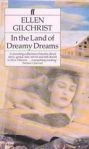
In the Land of Dreamy Dreams

Ellen Gilchrist’s In the Land of Dreamy Dreams is the best short story collection I’ve read this year and one I want to read again some day.

Here’s what I wrote:

I came across Ellen Gilchrist by chance. I was looking for books set in New Orleans and saw one of her short stories Rich in an anthology. I wasn’t familiar with her and looked her up and finally ordered a used copy of her first collection In the Land of Dreamy Dreams. It’s very rare that I read a whole short story collection in a few days, but I did in this case. There was a unity of setting, mood and atmosphere, and even one returning character that it read almost like a novel in stories.

I haven’t read anyone quite like Ellen Gilchrist but she still reminded me of a few authors. Tennesse Williams came to mind – A Streetcar Named Desire as much as The Roman Spring of Mrs. Stone – because of the setting and some of the older characters. But she also reminded me of Julie Orringer whose intricately woven sentences and lush descriptions are similar and there’s some of Yoko Ogawa’s cruelty in this collection as well. Funny enough Ogawa’s last short story collection has the English title Revenge. One of Gilchrist’s best stories is called Revenge as well. Coincidence? Who knows.

If you like rish, complex short stories, full of allusions and sensual descriptions, sometimes mean, sometimes dreamy – then do yourself a favour and get a copy of this wonderful book.

My review
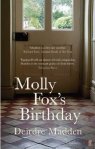
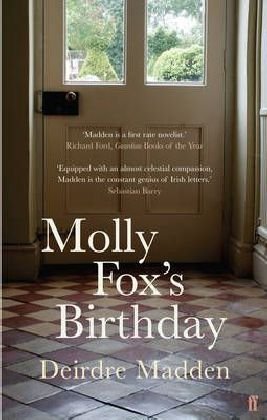
Molly Fox's Birthday

Deirdre Madden was another great discovery this year. I absolutely loved. Molly Fox’s Birthday 

Here’s what I wrote:

It’s been a while since I’ve read a book by a new-to-me author and felt like reading everything she’s ever written.

Molly Fox’s Birthday is a wonderful celebration of the interior life, art, theatre, friendship and it’s an exploration of how daily life, despite the struggles, doesn’t have to turn into something dull and devoid of authenticity. There’s always meaning, you just have to look for it.

My review
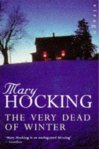
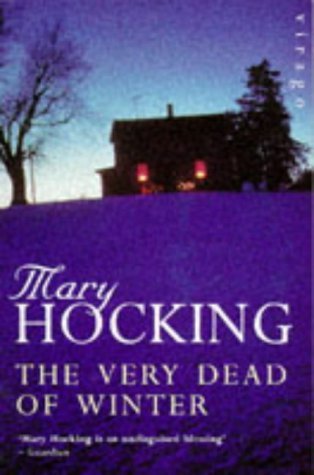
The Very Dead of Winter

I hadn’t heard of Mary Hocking before and have to thank heavenali who hosted a Mary Hocking Week for the discovery.

Here’s what I wrote:

I really liked The Very Dead of Winter are great deal. Not only for its wry humour and psychological insight, but also for some lovely descriptions. It’s not a flawless novel, there are a few instances of shifty point of view, but that didn’t diminish the experience one bit. I’ll certainly read more of Mary Hocking, might even re-read The Very Dead of Winter.

My review
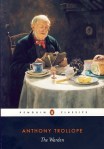
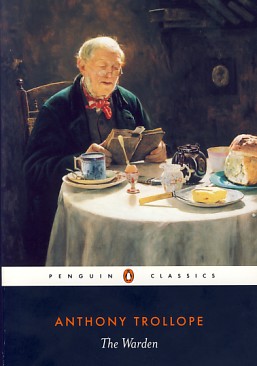
The Warden

After reading Trollope’s The Warden I wasn’t sure whether it would make it on the list but I must admit- it’s a memorable book.

Here’s what I wrote:

Memory is a funny thing. For years I have been haunted by a sensual impression of a place. I remember being in England and walking along a row of houses. It’s a very peaceful, mild, warm autumn afternoon. The houses are part of a larger compound, overshadowed by a huge cathedral. I remember walking away from the cathedral close and coming to a small river that was flowing through the grassy meadow, on the same level as the soil. There were weeping willows and sheep. Walking around that place was like visiting a time long gone. These haunting images returned periodically. The light outside of my windows sometimes triggered the memory. It was always nice to go back in my mind, the only trouble was – I couldn’t remember where this had been. I’ve been in England many times, stayed there for a couple of months or weeks. I’ve visited many places and many cathedrals, but as much as I thought about it – I had no clue where I’d been on that warm autumn afternoon. Not until reading The Warden. The moment I opened the book and read the description of Barchester I knew – this is where I had been. But how could that be? Barchester doesn’t exist. Although I like to keep the introduction of a book until I’ve finished it, I had to read it to find out more. In the introduction I learned that Trollope based Barchester on Salisbury and Winchester. I immediately went online and looked up photos of Salisbury cathedral, the cathedral close and the meadows around and, yes, indeed, that’s where I’ve been some years ago. I found it pretty uncanny that Trollope was so capable at describing a place. I still don’t know why I forgot that the images were images of Salisbury. I’ve never forgotten a place like that. Maybe because it was so dreamlike?

I’m glad I read The Warden. It made me remember my stay at Salisbury and I loved the descriptions. I liked his choice of themes and think they are just as important today as they were then. I also think he’s a wonderful satirist.

My review
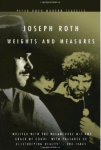
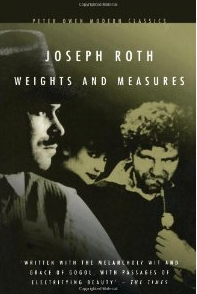
Weights and Measures

This too will stay with me. Joseph Roth’s Weights and Measures – Das falsche Gewicht is such a powerful short novel.

Here’s what I wrote:

How does an upright, steadfast man survive among corruption, hypocrisy, and crime? Roth’s answer to this question, which lies at the heart of Weights and Measures – Das falsche Gewicht, is pretty simple: he doesn’t. Either he is tainted or he will go down.

What I liked most is how Roth used the descriptions of the place and the weather to show Eibenschütz’s emotions and to underline the wild remoteness of this region. There were many beautiful small scenes and episodes. Eibenschütz is upright and stiff, but he’s also very emotional and feels deeply. His life as a soldier sheltered him emotionally; experiencing heartache and passion, unhinges him. When he falls in love he discovers nature. Before his “awakening” nature is just a phenomenon he sees but barely notices. The changing seasons bring rain or snow, breaking ice or sunshine, but that doesn’t affect him. Once he’s “awake” he feels the seasons, feels he’s part of it.

My review
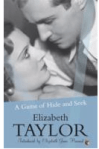
Screen Shot 2014-11-26 at 09.12.22

Elizabeth Taylor’s A Game of Hide and Seek was another winner.

I often read the best books of the year in December. Sometimes they don’t make it on the Top 10 list because I read them so late in the year. Luckily I’ve read Elizabeth Taylor’s fifth novel  A Game of Hide and Seek  just in time. This is my third Elizabeth Taylor novel and every time I read her I’m amazed to find out again how good she is. As much as I liked Blaming and Mrs Palfrey at the ClaremontA Game of Hide and Seek is even better. It’s larger in scope, richer in themes, with many more protagonists, and stretches over decades. The mood and atmosphere reminded me a lot of Rosamond Lehmann’s Dusty Answer and David Lean’s movie Brief Encounter, both of which are favourites of mine.

I’m aware I wasn’t able to capture this book because it contains so many themes (childhood, first love, passion, married life, women’s rights, work, education, memory, growing older . . .) and is so rich— there’s a wonderful, bitter-sweet love story, accurate descriptions of a period, lifelike, flawed characters, and humourous observations. It’s one of the best books I’ve read this year. I even added it to my list of all-time favourite books.

My review

Best Mainstream Fiction
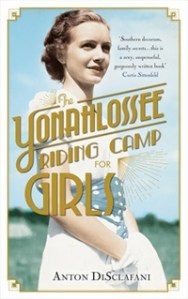
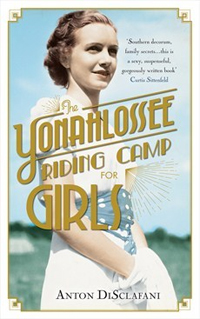
The Yonahlossee Riding Camp for Girls

I read  Anton DiSclafani’s The Yonahlossee Riding Camp for Girls in January but it’s still present as if I’d read it a couple of weeks ago. It’s such a lovely book.

This is what I wrote then

I’m not sure what exactly made me love this book so much. Was it the elegant writing, the dreamy mood, the sense of seeing a long-gone world, the tragedy of the story or the characters?

I loved the way DiScalafani captured the setting and the period. I liked how she showed the end of an era without turning this into a mournful book, but into one that shows that people can free themselves from their stifling upbringing if they are true to themselves. Thea is a character who is true to herself at all times. This comes at a cost but one she’s aware of and willing to pay.

If you like a rich, beautifully told story, with mystery and a lush setting, if you are fascinated by the Great Depression and big Southern Families and enjoy a coming-of-age story, which is at times quite steamy, then I’m pretty sure you’ll love The Yonahlossee Riding Camp For Girls.

Best Crime

It was a great crime reading year. I can’t say I’ve read anything that I didn’t like to some extent, so the choice wasn’t easy but my two favourite books this year were
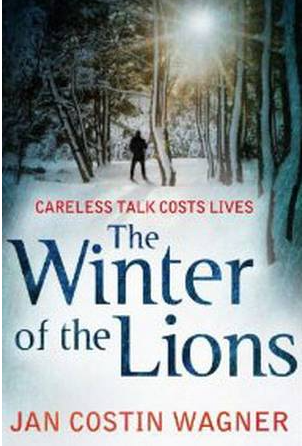
The Winter of the Lions

Jan Costin Wagner was a real discovery this year. I’ve read his first three. They are all good but I only reviewed this one.

Here’s what I wrote:

What made me love Wagner’s books even more was his writing style. This is crime at the literary end of the spectrum. The sentences are short, spare, and very precise.

As if all of this wasn’t enough there’s a haunting atmosphere in every book and the Finnish setting is another bonus, especially since each book takes place during another season. I loved to read about the long nights in winter and the endless days in summer.

Should you wonder why a German author chose to set his books in Finland —Wagner is married to a Finnish woman and spends half of the year in Finland.

This is one of the best crime series I know. Haunting, atmospherical, with philosophical depth and impeccable writing.

My review
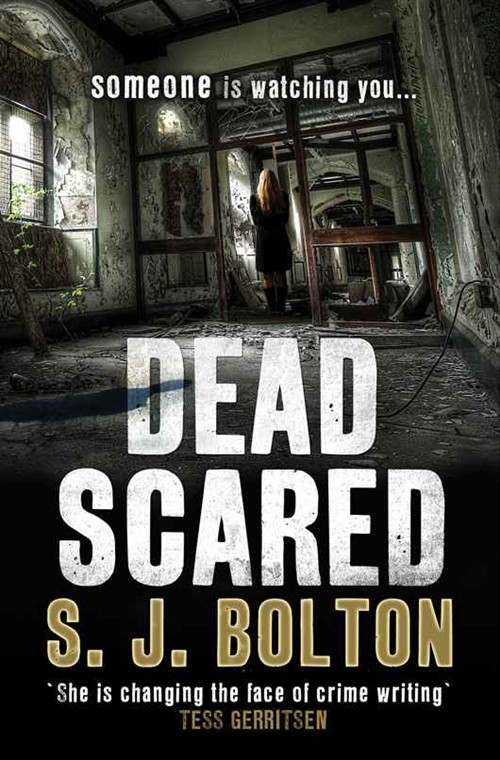
Dead Scared

S.J.Bolton is certainly one of my favourite crime writers and I’ll read all of her books eventually. Still, this was the best so far. I loved it.

Here’s what I wrote

Dead Scared was my third novel by S.J. Bolton. It’s the second novel featuring Lacey Flint and DI Mark Joesbury. I liked Sacrifice and Now You See Me a lot, but I really loved Dead Scared. I think it’s one of my all-time favourite crime novels. It’s got everything I like in a plot-driven crime novel. Great setting, evocative atmosphere, appealing characters, a well-paced plot and a really great story. For once she didn’t even stretch believability all that much.

My review

Best Sci-Fi
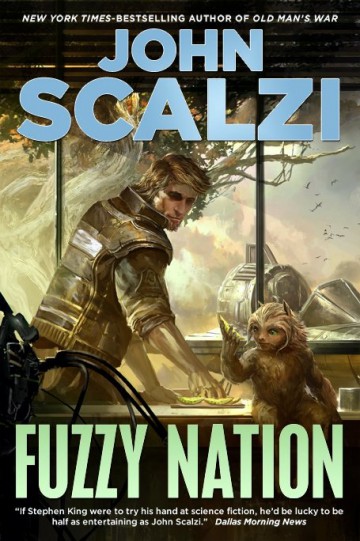
Fuzzy Nation

I loved John Scalzi’s Fuzzy Nation. Funny, entertaining and thought-provoking with one of the best beginnings ever.

Here’s what I wrote:

Fuzzy Nation isn’t only an adventure story, in which cute little animal-people are suddenly in great danger and other people have to make some tough decisions, it’s also an exploration of what makes a human. Is it understanding, intelligence, dexterity, the aptitude to use machines or language? In any case, once you’re declared a sentient being, you have the right to possess things. Before that, everything you own can be taken and destroyed.

 Here’s the review

Best Children’s Book
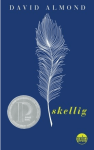
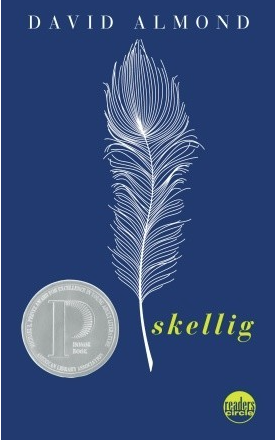
Skellig

I’ve read so many children’s books this year that I didn’t even get the time to review them. Two stood out Diana Wynne Jones’s Fire and Hemlock and David Almond’s Skellig.

Here’s what I wrote about Skellig:

I often think that the best books for children are not just books for a particular age group but timeless tales for any age. Just think of Antoine de St Exupéry’s The Little Prince. It’s a children’s book but it is so much more. And so is Skellig, David Almond’s wondrous, lyrical novel of love and healing.

Skellig is such a magical book. Lyrical, spiritual and philosophical, but very realistic too. It’s an elusive book, that is hard to describe without breaking its spell. It’s a story of love and loss, grief and joy, inspired by tales of angels, the evolution of birds and William Blake. Every reader interprets Skellig in another way. After I finished it I’m still not sure what Skellig is but it doesn’t matter. It’s enough to feel how inspired David Almond was when he wrote this novel. Skellig is pure magic; an image, a deeply haunting feeling, that carries a truth that predates words. I think it took courage to write a book like this and to leave so many questions unanswered. David Almond seems to have been sure that even if we didn’t “get it” intellectually, we would still be able to understand it on an emotional level. I really love that.

And the review

Best Non-Fiction

It's Easier Than You Think

It’s Easier Than You Think by Sylvia Boorstein.

I didn’t review it but it made a huge impression on me. Especially the parts about impermanence. I told all of my friends about it, urging them to read it.


Joseph Roth: Flight Without End – Die Flucht ohne Ende (1927) Literature and War Readalong November 2014

Screen Shot 2014-10-19 at 10.18.51

I’ve read a few novels by Joseph Roth now and every time I’m surprised how different they are. Die Flucht ohne EndeFlight Without End is no exception. This is a Roth I’ve not encountered so far, or only in snippets. Flight Without End clearly shows the mark of the journalist, but it’s also the book of someone who cannot take the society he lives in seriously. Rarely have I seen him this sarcastic, mocking individuals and groups of people. And rarely have I come across a Roth that was this funny. I had to laugh out loud more than once and truly wish the translator was able to capture this. Roth’s wit and humour is very subtle and although a translation could be literal, the humour might get lost in translation as it’s often tied to one word that changes the meaning. Mostly he uses it when describing someone. Here’s just a short example.

Eine junge Schauspielerin, die zwar mit dem dicken Zweiten Bürgermeister geschlafen hatte, aber unbeschädigt aus seiner Umarmung wieder herausgekommen war und teilweise sogar erfrischt.

A young actress, who indeed slept with the fat second mayor but came out of this embrace undamaged, partially even refreshed.

I take just one element of the sentence to explain what I mean. It’s entirely possible to choose the word unharmed instead of undamaged but it would remove a lot of the fun. “Unbeschädigt” means both unharmed or undamaged, but normally you’d use it for an object, while unharmed would rather mean a person. Roth chose undamaged very consciously.

What struck me too in this book was how cosmopolitan Roth was. The book starts in the Russian steppe, moves to Baku, from there to Vienna, then to a unamed city on the Rhine, and ends in Paris. Each place is described masterfully, its essence captured, its character laid bare.

The story is a bit more problematic. I’ve seen this book mentioned as one of Roth’s weakest works, which would have needed some editing. I agree to some extent. I didn’t mind the lack of plot. What we find here is basically the story of a quest. Franz Tunda, former officer, then captive of the Russian army, escapee, revolutionary, drifter and private tutor, lacks one thing – a home. What is home for a man like Tunda? If he can be of some use, he’s adopted everywhere, but never really welcome. He stays an outsider and this makes him a keen observer. He sees behind everyone’s masks, doesn’t buy any of the big theories on progress and wealth. He’s as wary of the communists as he is of the socialist’s and the bourgeoisie. They all have a hidden agenda. That’s why his flight is without end because, as vast as the world may be, society ultimately makes it very small and there’s no home for those who don’t play along. When I get so much insight and analysis of people and countries I don’t mind a lack of plot. My reservation has something to do with the structure of the book. It’s presented as if we were reading an account of someone who is Tunda’s friend. At the same time there are accounts that are directly made by Tunda and it switches occasionally from third to first person. I think this would have needed editing but it’s a minor flaw.

One of the most poignant scenes is when Tunda visits the grave of the unknown soldier, under the Arc de Triomphe, in Paris.

The blue flame burned not to honor the dead soldiers, but to reassure the survivors. Nothing was more cruel than the blissfully ignorant devotion of a surviving father at the grave of his son, whom he had sacrificed without knowing it. Tunda sometimes felt as if he himself lay there in the ground, as if we all lay there, all those of use who set out from home and were killed and buried, or who came back but never came home. For it doesn’t really matter whether we’re buried or alive and well. We’re strangers in this world, we come from the realm of shadows.

Flight Without End doesn’t show us a poetic or lyrical Roth. It’s not elegiac or nostalgic. It’s sarcastic and ironic. It’s the work of someone who saw the downside of globalisation long before anyone else and who was no fool when it came to human beings. There are a few good ones out there but they hardly ever occupy the big stages; they might be hidden somewhere in the Taiga, doing their thing quietly and unseen.

I thoroughly enjoyed this book. It’s witty, irreverent, unflinching and astute. It may not be the best book for someone who hasn’t read Roth yet, but it’s a must-read for those who already like him.


Other reviews

Vishy (Vishy’s Blog) 


*******

Flight Without End is the eleventh book in the Literature and War Readalong 2014. The next book is Letters from a Lost Generation by Vera Brittain and four of her friends. Discussion starts on Monday 29 December, 2014. Further information on the Literature and War Readalong 2014, including the book blurbs can be found here.