Ben Fountain: Billy Lynn’s Long Halftime Walk (2012) Literature and War Readalong September 2016

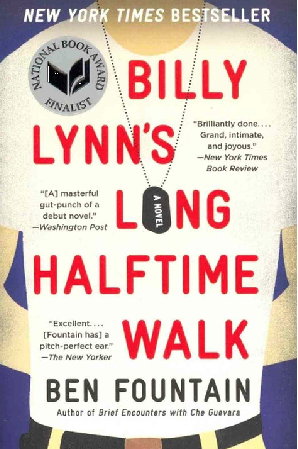
Billy Lynn's Halftime Walk

Luckily Billy Lynn’s Long Halftime Walk was one of my readalong titles or I might have given up after fifty pages. I found it hard to get into but once I passed the fifty page mark, I was so engrossed, I could hardly put it down. What a terrific, poignant, witty, and sarcastic book.

The novel is set on the last days of Bravo company’s victory tour. Billy Lynn and his comrades are heroes. They survived a firefight in Iraq, during which they overthrew a group of insurgents. One of the Bravos died in the fight, another one came back disabled. Nonetheless, this “sacrifice” might have passed unnoticed if it hadn’t been filmed by an embedded journalist. As a reward they receive medals and are sent home on a propaganda tour.

This does it; they throw back their heads and roar. In a way it’s so easy, all he has to do is say what they want to hear and they’re happy, they love him, everybody gets along. Sometimes he has to remind himself there’s no dishonor in it. He hasn’t told any lies, he doesn’t exaggerate, yet so often he comes away from these encounters with the sleazy, gamey aftertaste of having lied.

The last day is meant not only as a special tribute but as a special treat. The Bravos assist and participate in a game of the Dallas Cowboys. They are allowed to go back stage and to talk to the players, their manager and their rich Texan supporters. At halftime, they are on the field, right next to the musical attraction – Destiny’s Child. And during every break, the footage of their fight is shown on a giant screen.

During this tour, and especially on this last day, people force themselves on the young men, telling them how much they admire them, asking them questions about the war “Are we winning?” – “Did you kill many?” – “It’s a god war we’re fighting, right?”

Billy who’s done the most heroic thing, is the 3rd person narrator of this story. Like Holden Caufield he is equally precocious and naïve and such a terrific character. One of the central plot lines is his falling in love with a cheerleader. While his testosterone-fuelled feelings might not be love, as he thinks, hers are even further from the feeling as all she wants is “a hero” – “a soldier”, as Destiny’s Child sing. She wants the idea of a man, not the man himself.

“Hi, you’ve reached Faison! I’m not able to take your call right now…”

It makes for an odd sensation, watching her real-time person in the middle distance while holding her disembodied voice to his ear. It puts a frame around the situation, gives it focus, perspective. It makes him aware of himself being aware of himself, and here is a mystery that seems worth thinking about, why this stacking of awareness should even matter. Ant the moment all he knows is that there’s structure in it, a pleasing sense of poise or mental ordering. A kind of knowledge, or maybe a bridge thereto–as if existence didn’t necessarily have to be a moron’s progress of lurching from one damn this to another? As if you might aspire to some sort of context in your life, a condition he associates with adultness. Then comes the beep, and he has to talk.

It’s a very difficult book to review as it’s not very plot-driven. It’s the exuberant style that’s important, the descriptions of the absurdities, the frenzy with wich football and war are celebrated by the very rich, as if both only served one purpose – to make them feel good about themselves and about being Americans.

Where else but America could football flourish, America with its millions of fertile acres of corn, soy, and wheat, its lakes of dairy, its year-round gushers of fruits and vegetables, and such meats, that extraordinary pipline of beef, poultry, seafood, and pork, feedlot gorged, vitamin enriched, and hypodermically immunized, humming factories of high-velocity protein production, all of which culminate after several generations of epic nutrition in this strain of industrial-sized humans? Only America could produce such giants.


No matter their age or station in life, Billy can’t help but regard his fellow Americans as children. They are bold and proud and certain in the way of clever children blessed with too much self-esteem, and no amount of lecturing will enlighten them as to the state of pure sin toward which war inclines. He pities them, scorns them, loves them, hates them, these children. These boys and girls. These toddlers, these infants. Americans are children who must go somewhere else to grow up, and sometimes die.


All the fakeness just rolls right off them, maybe because the nonstop sales job of American life has instilled in them exceptionally high thresholds for sham, puff, spin, bullshit, and outright lies, in other words for advertising in all its forms.

I don’t think I’ve ever come across a contemporary book that was so astute and harsh in its criticism of the negative aspects of American culture. It shows that most things are about money and consumption. And even when people pretend they care about something, they ultimately only care about what it can bring them.

Somewhere along the way America became a giant mall with a country attached.

The book is written in a frantic, quick-paced style, with long sentences and paragraphs that reminded me of listening to a frenzied sports commentator.

Billy tries to imagine the vast systems that support these athletes. They are among the best-cared for creatures in the history of the planet, beneficiaries of the best nutrition, the latest technologies, the finest medical care, they live at the very pinnacle of American innovation and abundance, which inspires an extraordinary thought – send them to fight the war! Send them just as they are this moment, well rested, suited up, psyched for brutal combat, send the entire NFL! Attack with all our bears and raiders, our ferocious redskins, our jets, eagles, falcons, chiefs, patriots, cowboys – how could a bunch of skinny hajjis in man-skits and sandals stand a chance against these all-Americans? Resistance is futile, oh Arab foes. Surrender now and save yourself a world of hurt, for our mighty football players cannot be stopped, they are so huge, so strong, so fearsomely ripped that mere bombs and bullets bounce off their bones of steel. Submit, lest our awesome NFL show you straight to the flaming gates of hell!

Sometimes, when I watch a war movie or read a book about war, I have my doubts. I wonder whether or not it’s really anti-war – as it should. I never wondered for one second while reading this book. It’s not only against war but against the justification, the fake heroism, the phony concern and gratefulness. But it’s kind to the soldiers. They are shown as victims who very often only joined up because they were too poor to do anything else.

I was thinking, if Salinger had written Catcher in the Rye right after 9/11, it might have been a lot like Billy Lynn. I loved the Catcher in the Rye. Needless to say, I loved Billy Lynn.

Since the writing is the most important thing in this book, I’ll leave you with some more quotes:

Don’t talk about shit you don’t know, Billy thinks, and therein lies the dynamic of all such encounters, the Bravos speak from the high ground of experience. They are authentic. They are the Real. They have dealt much death and received much death and smelled it and held it and slopped through it in their boots, had it spattered on their clothes and tasted it in their mouths. That is their advantage, and given the masculine standard America has set for itself it is interesting how few actually qualify. Why we fight, yo, who is this we? Here in the chicken-hawk nation of blowhards and bluffers, Bravo always has the ace of bloods up its sleeve.


Fear is the mother of all emotion. Before love, hate, spite, grief, rage, and all the rest, there was fear, and fear gave birth to them all.


It’s going to be a long, lonesome eleven months in Iraq, long and lonesome being the best-case scenario.


Everybody supports the troops,” Dime woofs, “support the troops, support the troops, hell yeah we’re so fucking PROUD of our troops, but when it comes to actual money? Like somebody might have to come out of pocket for the troops? Then all the sudden we’re on everybody’s tight-ass budget. Talk is cheap, I got that, but gimme a break. Talk is cheap but money screams, this is our country, guys. And I fear for it. I think we should all fear for it.


Other reviews


*******

Billy Lynn’s Long Halftime Walk is the fourth book in the Literature and War Readalong 2016. The next book is the German WWII novel All For Nothing – Alles umsonst by Walter Kempowski. Discussion starts on Friday 25 November, 2016. Further information on the Literature and War Readalong 2016, including the book blurbs can be found here.
New Fiction in The Vignette Review and Ink in Thirds

Ink in Thirds

May was a particularly good month for acceptances. I’ve had three stories accepted, two of which have been published by now, the third is forthcoming at the end of this month.

I’m particularly happy about these acceptances because the stories are so diverse. One is a prose poem, one is a historical, and one a YA short story.

For those who would like to read them, here’s my historical flash.

The New Girl

and here’s my prose poem:

I Keep the First for Another Day

James Salter: The Hunters (1956) Literature and War Readalong May 2016

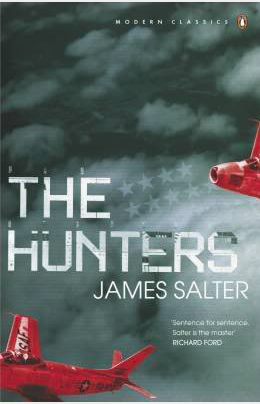
The Hunters

The Hunters was James Salter’s first novel. It is based on his own experience as a fighter pilot during the war in Korea.

The Hunters tells the story of Cleve Connell, an excellent, seasoned pilot who is sent to Korea. Cleve is anxious to get there. He wants to prove himself and become an ace, a fighter pilot who has shot down five enemy planes – MIGs. He knows he’s running against time because he isn’t a young pilot anymore.

One thing he was sure of: this was the end of him. He had known it before he came. He was thirty-one, not too old certainly; but it would not be long. His eyes weren’t good enough anymore. With a athlete, the legs failed first. With a fighter pilot, it was the eyes. The hand was still steady and judgement good long after  man lost the ability to pick out aircraft at the extreme ranges. Other things could help to make up for it, and other eyes could help him look, but in the end it was too much of a handicap. He had reached the point, too, where a sense of lost time weighed on him. There was a constant counting of tomorrows he had once been so prodigal with. And he found himself thinking too much of unfortunate things. He was frequently conscious of not wanting to die. That was not the same as wanting to live. It was a black disease, a fixation that could ultimately corrode the soul.

Cleve and every other pilot lives for nothing else but the adrenaline rush of a mission that may bring the possibility to shoot down an MIG and to survive another dangerous mission. The pilots are all competitive but that doesn’t mean they would endanger each other.

They had shot down at least five MIGs apiece. Bengert had seven, but five was the number that separated men from greatness. Cleve had come to see, as had everyone, ho rigid was that casting. There were no other values. It was like money: it did not matter how it had been acquired, but only that it had. That was the final judgement. MIGs were everything. If you had MIGs you were standard of excellence. The sun shone upon you.

Then, one day, Pell arrives. Pell is by far the most competitive pilot Cleve has ever met. And the most reckless. He’s assigned to Cleve’s flight, a small group of pilots of which Cleve’s the leader. Cleve hates him immediately. Not only because he’s so competitive but because he senses he would do anything for a kill and that he’s dishonest. Pell hates Cleve just as much. He’s jealous of his reputation and undermines his authority from the start.

At first, Cleve’s very sure of himself because he’s known to be one of the best pilots but after he returns from many missions, without one single kill, he loses confidence. On top of that, Pell shoots down one enemy plane after the other and, so, killing turns into an obsession for Cleve.

Cleve’s not the only pilot who seems to have forgotten, that ultimately they are in a war. The following quote might explain why this is the case.

They talked for a while longer, mostly about the enemy, what surprisingly good ships they flew and what a lousy war it was. The major repeated that despairingly several times.

“What do you mean, lousy?”

“Oh, I don’t know,” Abbott said distractedly, “it’s just no good. I mean what are we fighting for, anyway? There’s nothing for us to win. It’s no good, Cleve, You’ll see.”

The Korean war is often referred to as the “forgotten war” and this sense of not really knowing what they were fighting for, seems to have been almost universal. Many of the pilots who fought in the Korean war, fought during WWII. While they had the sense of having done good in Europe and the Pacific, they often didn’t really understand why they fought in Korea. However, the book doesn’t explore the political or historical dimensions of the war. It only focuses on the drama of the pilots.

The Hunters is an excellent novel and the reader senses that from the beginning. The writing is tight and precise. Salter uses metaphor and foreshadowing with great results. He’s also very good at capturing emotions and moods like in this quote:

He was tired. Somehow, he had the feeling of Christmas away from home, stranded in a cheap hotel, while the snow fell silently through the night, making the streets wet and the railroad tracks gleam.

The book offers a fascinating character study, or rather the study of two characters. And it’s suspenseful. We wonder constantly whether Cleve will make it, become an ace and leave Pell behind or whether Pell will leave him behind for good. And then there’s the almost mythical figure of “Casey Jones”, a Korean Fighter pilot who is so reckless and successful that everybody speaks about him and thinks he’s invincible. Shooting down a pilot like that, would make up for everything else.

I can’t say more as it would spoil this excellent novel. It’s amazingly well written and surprisingly suspenseful. And, as if that was not enough, the end is unexpected and satisfying.

The book comes with a foreword, for which I was glad as it’s key to understand in what formations the pilots flew and to know what the characteristics of the respective planes were. There’s a great scene towards the end, in which Cleve and another pilot fight with almost empty tanks. The logic of this and other fights would have been difficult to understand without the introduction.

Other reviews


*******

The Hunters is the third book in the Literature and War Readalong 2016. The next book is the US novel Billy Lynn’s Long Halftime Walk by Ben Fountain. Discussion starts on Friday 30 September, 2016. Further information on the Literature and War Readalong 2016, including the book blurbs can be found here.
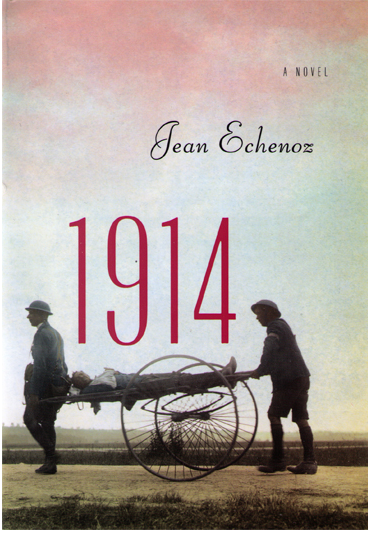
Jean Echenoz: 1914 – 14 (2012) Literature and War Readalong March 2016

1914

Jean Echenoz tells a very simple story in this short, compressed novel. Five men go to war; two of them return, three don’t. Two of them are brothers and in love with the same woman. The characters as such are not that interesting. What is interesting is what happens to them. Each stands for something that is particular to WWI. Charles is shot down when he joins a pilot to take pictures. The industrialization of war and the use of planes is new. Both elements were important for Echenoz and whole chapters are dedicated to them. One of the men is blinded by gas. That, too is a new and especially beastly feature of WWI. One man returns after having lost an arm. I don’t think any war saw as many mutilated men return. One of the men is executed because they mistake him for a deserter. The absurdity and farce of these decisions is made clear. One man dies during an attack. His body’s lost somewhere in the mud of no-man’s-land. All these are exemplary fates and could have turned the men into pure types, but thanks to Echenoz’s sense for detail, they are more than just types. Echenoz, as he said many times, isn’t interested in psychology. To convey a characters personality and emotions he sticks to pure “show don’t tell”. He describes the actions and the objects surrounding the characters. Both contribute to the description, one in a very realistic, the other in a more symbolic way. I think this was what fascinated me the most. Echenoz’s writing is so rigorous. There’s not one superfluous word. The vocabulary is refined, rich, and exact. He uses lists and enumerations, abstraction, numbers, irony. His writing is visual, even audiovisual because he tries to convey emotions through sounds.

1914  – 14 is one of those books that gets more interesting the more you read about it. My French paperback had about 40 pages of additional material, for which I was grateful, as an important element of Echenoz’s writing is intertexuality. I’ll give you one example. The story begins with Anthime on a hill. There’s a strong wind and suddenly he hears church bells ringing the tocsin that signals mobilisation. At the end of the scene, Anthime drives back to the village on his bicycle. He loses his book which has fallen from his bicycle and opened at the chapter “Aures habet, et non audiet”. What is interesting here is the fact that this whole scene is inspired, or rather taken from a scene in Victor Hugo’s Quatrevingt-treize – 93. It’s almost the same scene, only in Hugo’s novel, the character cannot hear the church bells, he only sees them moving. Echenoz who is interested in sound – the incredible noise is another new feature of this war – rewrote this scene, describing the sound of the bells. The book that Anthime carried with him is Hugo’s book. Allusions like these, which blend history and literature and the writing about history and literature are frequent and the closer you read, the more allusions you find.

When the book came out it was praised for its originality although Echenoz himself doesn’t seem to think it’s all that original. Here’s a quote from the book.

All this has been described a thousand times, so perhaps it’s not worthwhile to linger any longer over that sordid, stinking opera. And perhaps there’s not much point either in comparing the war to an opera, especially since no one cares about opera, even if war is operatically grandiose, exaggerated, excessive, full of longueurs, makes a great deal of noise and is often, in the end, rather boring.

I can see why critics found this original. His writing style is unique and he includes some chapters, like the one on animals, which is very different from what I’ve read in other WWI novels. The most original however is that he uses the techniques of the Nouveau Roman. One of these techniques is to explore nontraditional ways of telling a story. That’s why we find shifts in POV, intrusions of the author. Comments about the future etc. To some extent it is as much a book about writing as about war.

In an interview at the beginning of my edition, Echenoz names the three books that have influenced him the most when he wrote 14. Erich Maria Remarque’s All Quiet on the Western Front – Im Westen nichts Neues, Henry Barbusse’s Feu Under Fire (Prix Goncourt 1916) and Gabriel Chevallier’s Peur – Fear, which we have read during an earlier Literature and War Readalong.

As short as this novel is, it’s very complex. Luckily, others have reviewed it too and much better than I.

I really liked Echenoz’s writing and would like to read more of him. Do you have suggestions?

Other reviews

Juliana (The Blank Garden)

Danielle (A Work in Progress)


*******

1914 was the second book in the Literature and War Readalong 2016. The next book is the a novel on the war in Korea, The Hunters by James Salter. Discussion starts on Tuesday 31 May, 2016. Further information on the Literature and War Readalong 2016, including the book blurbs can be found here.
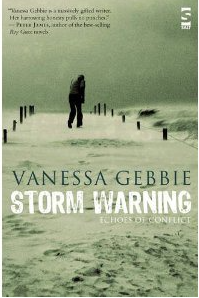
Vanessa Gebbie: Storm Warning – Echoes of Conflict (2010) Literature and War Readalong February 2016

Storm Warning

Very often short story collections are just that – collections of stories that may or may not have a few themes in common. Most of the time, the themes are different, while the voice stays the same. Not so in Vanessa Gebbie’s stunning collection Storm Warning – Echoes of Conflict. The themes —war and conflict— are the same in every story, but the voices, points of view, the structure, the range of these stories is as diverse as can be. That’s why this collection is one of those rare books, in which the sum is greater than its parts. Each story on its own is a gem, but all the stories together, are like a chorus of voices lamenting, accusing, denouncing, and exploring conflict through the ages and the whole world. The result is as chilling as it is powerful and enlightening. I don’t think I’ve ever come across anything similar in book form and the only comparable movie, War Requiem, uses a similar technique only at the very end, during which we see  horrific original footage taken from many different wars, covering decades, and dozens of countries.

We’ve often discussed the question of how to write about war in the Literature and War Readalong and I’ve said it before – if I put away a book and am left with a feeling of  I-wish-I’d-been-there, then the book is a failure in terms of its anti-war message. I don’t think one should write about war and give readers a similar, pleasant frisson, they get when they read crime. I can assure you, you won’t have a reaction like this while reading Storm Warning. Without being too graphic, Vanessa Gebbie’s message is clear – there’s no beauty in war. There’s no end to war either. Even when a conflict is finished, it still rages on in the minds of those who suffered through it. Whether they were soldiers or civilians. War destroys bodies and souls. And—maybe one of the most important messages— war is universal. Including stories set in times as remote as the 16th century, choosing locations as diverse as South Africa, the UK, and Japan, conflicts like WWI, WWII, the Falklands war, Iraq, Vietnam, and many more, illustrates this message powerfully. Choosing from so many different conflicts also avoids falling into the trap of rating. I always find it appalling when people rate conflicts, saying this one was worse than that one. Maybe the methods are more savage in some conflicts, but they are all equally horrific.

What is really amazing in this collection is that so many of the stories get deeper meaning because they are juxtaposed with other stories. For example, there’s the story The Ale Heretics set in the 16th Century, in which a condemned heretic, awaits being burned. Burning people alive was such a savage and abominable thing to do, but just when we start to think “Thank God, that’s long gone” – we read a story about necklacing, a form of torture and execution, practiced in contemporary South Africa (possibly in other regions too), in which the victims are also burned alive. And, here too, it’s said to be in the name of the law. If I had only read the first story, it wouldn’t have been as powerful as in combination with the second.

Vanessa Gebbie’s writing is very precise, raw, expressive. As I said before, each story has a distinct voice. There are men and women talking to a dead relative, others seem to try to explain what happened to them, others accuse, many denounce. Yet, as precise as the writing is, often there’s an element of mystery as to what conflict we are reading about. While it’s mostly clear, what conflict is described, they are rarely named. Interestingly, this underlines the similarity and universality, but it also makes differences clear. When a girl talks to her dead sister Golda, mentions the Kristallnacht, we know, it’s a Holocaust story. When gas gangrene is mentioned, we know it is about WWI.

Many of you might wonder, whether the stories are not too graphic, whether the book is depressing. There’s a balance between very dark and dark stories. There’s a touch of humour here and there, even if it’s gallows’ humour, and there’s the one or the other story that’s almost uplifting like my own personal favourite Large Capacity, Severe Abuse. In this story, a Vietnam veteran lives in the basement of an apartment house for retired army officers. He’s in charge of washing their laundry which gives him an opportunity for revenge. This story illustrates also the invisibility of many veterans. They are decorated, they return, they suffer, but society doesn’t care. Some of the veterans in this collection, end up homeless. Too sum this up— the collection is not easy to read, as it’s quite explicit in showing that war mutilates bodies and souls.

Another favourite story was The Return of the Baker, Edwin Tregear. It’s a story that does not only illustrate the difficulties of the homecoming, but the absurdity of things that happened during the war. In this case WWI and its practice of firing soldiers for so-called cowardice.

Some of the stories describe a narrow escape like in The Salt Box, in which a dissident poet finds an unexpected ruse to destroy his poems when his house is searched.

The narrators and characters in these stories are of different gender and age. Stories that have child narrators are often particularly harrowing. There’s the one called The Wig Maker, in which a child witnesses the execution of the mother, and another one, The Strong Mind of Musa M’bele, in which the kid knows his father will be necklaced. Another kid, in Cello Strings and Screeching Metal, witnesses someone being shot while climbing the Berlin Wall.

Quite a few of the stories are more like snapshots; they are very brief, only a page or two, but there are some longer ones as well.

I must say, I’m impressed. The range of these stories is amazing. Getting voice right and distinct, is a difficult thing to do and to get it as right and as distinct in so many stories is absolutely stunning. This is certainly one of the most amazing and thought-provoking anti-war books I’ve ever read.

Should you be interested, one of the stories – The Wig Maker – is available online. Just a warning – it’s possibly the most explicit of the collection.

Vanessa Gebbie is joining our discussion, so, please, don’t hesitate to ask questions.

Other reviews

Danielle (A Work in Progress)


*******

Storm Warning is the first book in the Literature and War Readalong 2016. The next book is the French WWI novel 1914  – 14 by Jean Echenoz. Discussion starts on Thursday 31 March, 2016. Further information on the Literature and War Readalong 2016, including the book blurbs can be found here.
Best Novels of 2015

Kreative Leidenschaft

This wasn’t a great reading year. At least not during the second half of it. I’ve read so many books, I didn’t even bother reviewing because they left me cold. On the other hand I read a lot of nonfiction I loved but didn’t review either. That’s why, for the first time, my list was very easy to compile.

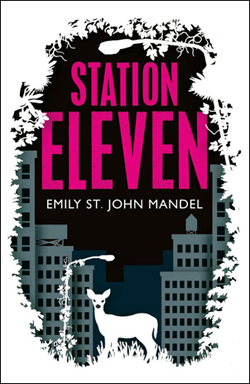
Station Eleven

Emily St. John Mandel’s Station Eleven. From my review:

Pick it up. It’s really worth it. If you love post-apocalyptic stories, you’ll read it anyway. If you don’t, maybe it will show you that not every book about the end must be traumatic. Certainly not one that makes you grateful for everything we have and, ultimately, shows that it’s possible to find beauty, no matter what will happen to our world. Nothing illustrates the message of the book better than the reversal of Sartre’s famous quote L’enfer c’est les autres – Hell is other people. In the novel Kirsten thinks that he’s wrong. She has come to the conclusion that hell is the absence of people you feel close to.

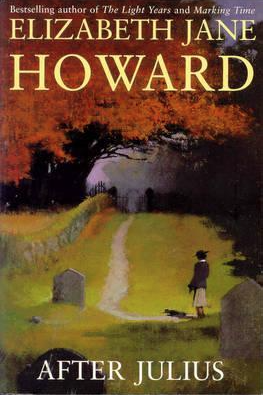
After Julius

Elizabeth Jane Howard’s  After Julius. From my review:

I found it hard to believe at times that this book was written in 1965. The open discussion of abortion and sexuality seemed far more modern. It made me wonder if we’re not living in more prudish times now.

Before ending this post I have to mention Elizabeth Jane Howard’s descriptions. They are stunning. When she describes a room, a scene, clothes, anything, she makes full use of these descriptions. It’s never just a random description but it always contributes to the understanding of a character, enhances the mood, sets the tone.

It’s still early but I wouldn’t be surprised if this book would be among my best of this year. Since she reminded me of many writers I absolutely love —Elizabeth Taylor, Rosamond Lehmann, Jean Rhys, Elizabeth Bowen — I know I’ll be reading more of her.

The Leopard

Giuseppe Tomasi di Lampedusa’s Il Gattopardo – The Leopard From my review:

I haven’t done this book any justice. It would deserve a whole series of posts. One could say so much about all the individual elements. I’m sure I’ll re-read it some day. Maybe I’ll write a series then. For the time being I would just like to urge everyone who hasn’t read it yet to do so.

I expected a great novel, a novel that I would love, but I didn’t expect it to be this subtle and nuanced, this melancholic and funny. It’s truly one of the greatest works of literature.

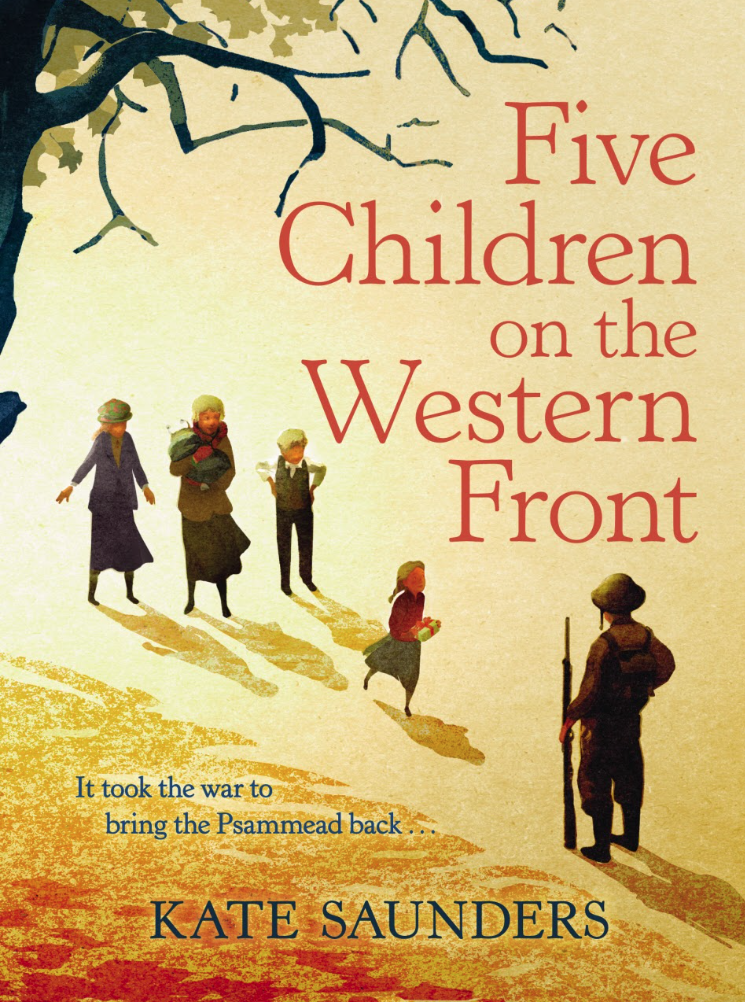
Five Children on the Western Front

Kate Saunder’s Five Children on the Western Front. From my review:

Five Children on the Western Front is a delightful story inspired by E. Nesbit’s famous children’s book Five Children and It. I’m still surprised how much I loved this book. I’m not always keen on sequels of classics, but since I haven’t read Nesbit’s tale yet, I couldn’t compare. And I’m aware that the main character of the book “It” – or Psammead -, the sand fairy, is Nesbit’s creation and not Saunders’, nonetheless her book offers many new elements.

( . . . )

I really recommend this novel. It’s charming and sad. I thought she did well not to modernize it. The children sound like children of the time, which gives the story a nostalgic feel.

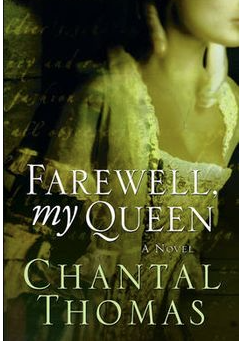
Farewell, my Queen

Chantal Thomas’  Farewell, my Queen – Les Adieux à la reine. From my review:

Farewell, my Queen is unlike any other Marie Antoinette novel I’ve read. It could only have been written by someone who has done extensive research. Still, it’s moving and nostalgic and really beautiful. It’s almost as good as my favourite historical novel L’allée du Roi  – The King’s Way by Françoise Chandernagor, which tells the story of Mme de Maintenon. The two novels complement each other, as we see Versailles still under construction in The King’s Way and abandoned in the later book.

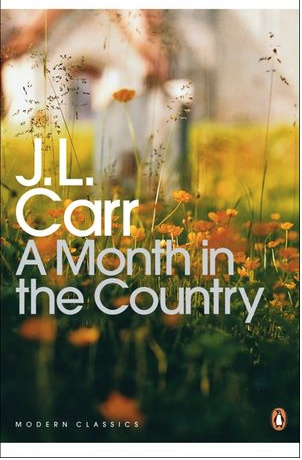
A Month in the Country

J. L. Carr’s A Month in the Country. From my review:

I can’t praise this novel enough and would really like to urge everyone to read it. It’s not only a joy to read but illustrates what great writing can do. It will be on my “best of list” at the end of the year and I might even add it to my all-time favourites.

I’ll end with one of my favourite quotes

It would be like someone coming to Malvern, bland Malvern, who is halted by the thought that Edward Elgar walked this road on his way to give music lessons or, looking over to the Clee Hills, reflects that Housman had stood in place, regretting his land of lost content. And, at such a time, for a few of us there will always be a tugging at the heart— knowing a precious moment gone and we not there.

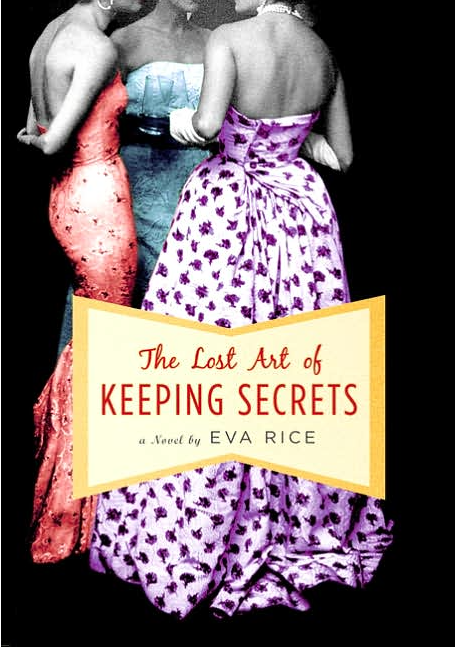
Lost Art of Keeping Secrets

Eva Rice’s  The Lost Art of Keeping Secrets. From my review:

The Lost Art of Keeping Secrets is a smart, charming, exuberant book, filled with witty, endearing and eccentric characters, whose sharp insights, clever repartee, and uncrushable optimism are a delight to follow. If you need some intelligent cheering up—this is the book for you.

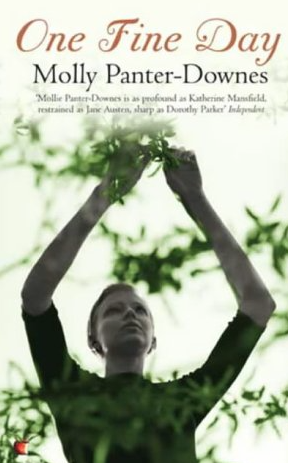
One Fine Day

Mollie Panter-Downes One Fine Day. From my review:

One Fine Day is intense and lyrical, a novel for those who like introspective books and don’t need a lot of action. But it’s also masterful because of the delicate way Mollie Panter-Downes uses motifs and other recurring elements that reinforce the themes of loss, change and – more positively – transformation. And how she juxtaposes the lives of her two main characters, who undergo, in one single day, a whole transformation, believing at first that they each want what the other has – an independent life, leisure to savour what a day brings -and then discover – it’s already there – they just have to grab it.

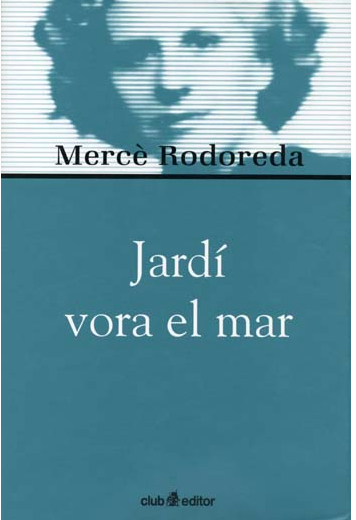
Jardì vora el mar

Sorry, this one hasn’t been translated yet.

Mercè Rodoreda’s Jardí vora el mar. From my review:

The Garden of the Finzi-Continis is easily one of my top ten favourite novels. I also love The Great Gatsby. I enjoyed Rodoreda’s book a great deal, but I only loved the descriptions of the garden. In choosing a gardener as her narrator, as wonderful a character as he may be, we stay much more spectators of the characters, are never fully immersed. We only see what they do when they are outside; we never see them interacting inside of the house. Most of the things we learn, are things the gardener himself was told by someone who heard it from someone. Seeing characters from afar, doesn’t allow to get as close to them as we would wish. Plus, the main protagonists change. Every summer, someone else gets close to the gardener, visits him in his small house. Those are the most intimate moments in the book, the ones, other than the descriptions of the garden, that I enjoyed the most. It’s not always good to compare a book with such famous novels as The Great Gatsby or The Garden of the Finzi-Continis, but in this case it helped me understand, why Rodoreda’s book left me a little cold, although it’s a fantastic book that I might even re-read some day.

Of Kids and Parents

Emil Hakl’s Of Kids and Parents. From my review:

As I said, I’m really grateful Stu suggested this book. I loved every moment of it. It’s so rich, intense, and full of life. But also highly intelligent and lucid. It says a lot about being human and getting older. About history and how it repeats itself again and again. And about the humans who think they are the crown of creation while they are not. And I shouldn’t forget to mention that, at times, it’s a very funny book.

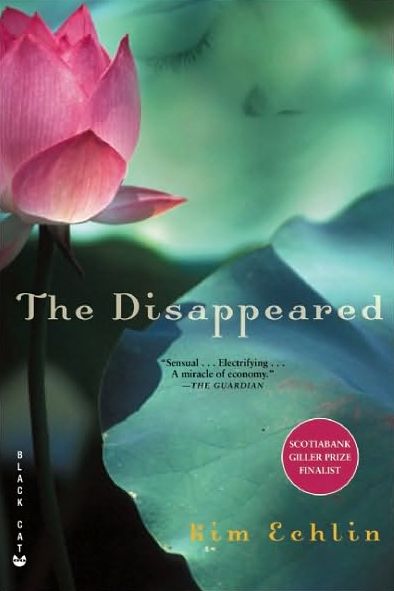
The Disappeared

Kim Echlin’sThe Disappeared. From my review:

The book explores the question of how much we can really understand of a foreign country. I liked that Anne never accepted to stay an outsider. She wanted to be part even if that meant that she put herself in danger.

The Disappeared isn’t easy to read but I loved this haunting book. It’s an amazing achievement, an intense, lucid, lyrical, and compassionate novel about a devastating conflict and a love that surpasses everything.

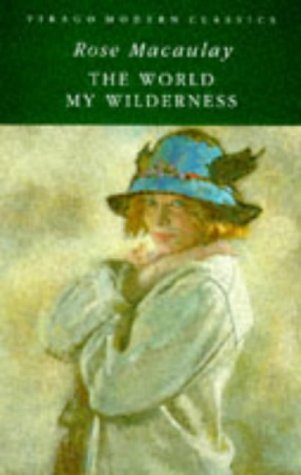
802630-5

Rose Macaulay’s The World My Wilderness. From my review:

I expected The World My Wilderness to be a lot like Mollie Panter-Downes One Fine Day but it’s much more like a novel by Colette. Helen herself reminded me a lot of Colette and some of her heroines. She’s such an uninhibited, freethinking, sensual woman. While Helen is a cheerful woman, in love with life and love, she’s also a tragic figure because she was deeply in love with her second husband.

The World My Wilderness is also excellent in the way it describes post-war London with its ruins and struggling population. Everything is still crumbling—the houses and the society. It’s a world in change in which destruction is found right along a wild, mysterious beauty.

*******

As you may have noticed I decided to leave out the crime novels, although in terms of thrillers and crime, the year wasn’t bad at all. I even discovered four authors I really liked and want to read more of: Phil Rickman, Elly Griffiths, Louise Millar, and Laura Kasischke.

How was your reading year?

Boston Literary Magazine – Winter Issue 2015

BLM

I guess this is what happens when you write for years, never sending out anything and then decide – it’s time.

I feel very fortunate and glad to share more good news. My quick fiction piece Freeze Frame has been published in the Winter Issue of Boston Literary Magazine.

It’s a great issue with wonderful short fiction, prose poems, and poetry. My short piece is part of a cycle I’m working on.

Here’s the link, should you like to read it. It’s very short.