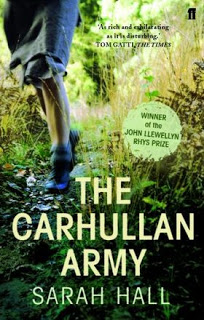
Sarah Hall: The Carhullan Army (2007)

Carhullan

Set in the part of England once known as The Lake District and frequented by hordes of landscape hungry tourists, The Carhullan Army is narrated by a young woman who has adopted the name Sister. Britain after its union with the United States and numerous unsuccessful foreign wars, has found itself in the grip of a severe fuel crisis and the country is now under the control of a severe body known as The Authority. All fire-arms have been handed over to the Government and all women have been fitted with contraceptive devices; this Britain of the near-future is brutal and very-near desperate.Sister’s only hope — or so she thinks — lies in finding the Carhullan Army: a mythical band of women who lives a communal existence in the remote hills of Cumbria.

I came across Sarah Hall’s name many times in the past months. First I read a review of The Carhullan Army on Vishy’s blog (here) and immediately thought I’d love to read it. I later saw that Hall won the John Llewellyn Rhys Prize for The Carhullan Army, the Commonwealth Writer’s Prize for Hameswater and was shortlisted for the Man Booker for The Electric Michelangelo. Her short stories are said to be very good too.

The Carhullan Army is a dystopian novel. It has been called A Handmaid’s Tale for our times. I can’t confirm whether that’s the case as I haven’t read Atwood’s novel yet, but it’s certainly not a genre novel, it’s highly literary.

The Carhullan Army  is set in a bleak Britain, which is ruled by the so-called Authority. The system has collapsed due to a fuel crisis. People live like cattle, sharing small apartments. Some things are strictly regulated like work and reproduction, others are forbidden, like leaving the town. People are depressed, many use drugs. Relationships collapse, love dies. “Sister”, how the narrator calls herself, can’t take this anymore. She’s heard of Carhullan. Somewhere in the mountainous region of the Lake District lives a group of women autonomously. They have a leader, Jackie, a very charismatic figure, but other than that, they are free. Sister doesn’t know that much about the place, only that what she has heard. The rest is a mix of her imagination, her hopes, her dreams.

The place sounded utopian, martial or monastic, depending on which publication was interviewing, and what angle they wanted to push.

Sister is sure that her life will improve and that the women will welcome her, commend her for her courage to leave. But things don’t exactly go like that. The way Sister is “welcomed” is a huge disappointment, a shock even. It will take more than simple resilience to come to terms with this. But once she’s proven she isn’t a spy, nobody is following her and that she’s truly interested in living at Carhullan, she’s accepted.

Sister is a complex narrator but Jackie, the leader, is even far more complex. What Jackie has created at Carhullan is as amazing as it is scary. The women are able to provide for themselves. They plant, gather, and hunt, and – even far more important – they have an army. An army which has been trained by ex-soldier Jackie who is a severe drill instructor. She’s fierce and demanding, charismatic and unforgiving. Most women know that they might need to defend themselves some day and for many it is a special distinction and a great honor to be chosen for the army, others however think Jackie goes too far. Sister would love to be part of the army, but she has to wait a long time.

In Jackie Sarah Hall has created a multilayered personality. She combines the traits of a cult leader, of a fanatic, a saviour, a soldier and a hero. She never questions the use of violence, which, for me, was the most difficult part of the book. I never thought this was a utopian society, but I never thought they were that misguided either. Given the circumstances the development was quite logical but they were not free. Every single of Jackie’s decisions is an answer to the Authority and the end of the book makes this very clear. Sister idealizes Carhullan when she goes looking for it, the reader thinks it’s ideal at first, but towards the end we understand that Carhullan is part of the system as well. There would be no Carhullan, at least not the one we see here, if the society had not reached an endpoint.

Here’s Jackie talking to Sister:

“…. I just want to get to the bottom why these things go on. I’m a dark fucking tourist, Sister, I like going to these places. It’s interesting to me. I’m interested in what holds people back. And what doesn’t. And how far these things extend….”

I think this illustrates my point. Jackie is raw, she’s violent and she’s never free of questioning the system, she has an urge to explore it and in doing so stays tied to it.

The Carhullan Army explores many other themes, Lesbian love, autonomous living, the nature of cults and fanatics, totalitarianism and terrorism. Sarah Hall writes well, her sentences are limpid, simple, yet her vocabulary is rich and evocative.

The story is told like a confession, which has been recorded. Some of the files are recovered, some are corrupted. I thought tha approach worked well.

It’s a book that made me feel very uncomfortable. I found it had a bit of a Lord of the Flies vibe. The place Sarah Hall describes isn’t a gentle haven, it’s a rough world, in which people have to fight for their survival. The harsh landscape, the difficult situation has changed them. They swear, they fight. They do have camaraderie and loyalty, even love,  but it’s all very raw.

I am glad I’ve read The Carhullan Army. I think it’s excellent and thought-provoking but it’s depressing as well. I wouldn’t want to live in neither of the worlds Sarah Hall has created.

Have you read any of Sarah Hall’s novels or short stories?
Literature and War Readalong July 29 2013: Children of the New World – Les enfants du nouveau monde by Assia Djebar

Children of The New World

Assia Djebar’s novel Children of the New WorldLes enfants du nouveau monde is the first novel about the war in Algeria in this readalong. Assia Djebar is one of the most important, if not the most important North African writer. She is also a translator, essayist and filmmaker.

I’ve been meaning to read her for years as I got other books by her on my piles and I’m glad to finally get a chance to do so.

She was the first writer from the Maghreb to be elected to the Académie Française in 2005. Djebar is known to be anti-patriarchal and anti-colonial; her novels focus on women’s lives. She writes in French, not in Arabic.

Children of the New World is about the war in Algeria from the point of view of the women.

Here are the first sentences

In the old Arab quarters at the foot of the mountain the whitewashed houses all look alike. Before the city grew larger, this was the only place where affluent families would come to find a bit of cool air, near the b rooks and orchards at the end of spring. Each home is at the end of a cup de sac, where, after wandering through a maze of silent little alleyways, one must stop. All that can be heard is some vague whispering suddenly interrupted by the shrill cries of children, whom the mothers are trying to keep at home, but to no avail. The military guard can show up any moment. Then there is barely enough time to gather the children and muffle their voices behind closed doors.

*******

The discussion starts on Monday, 29 July 2013.

Further information on the Literature and War Readalong 2013, including all the book blurbs, can be found here.

Jeanette Walls: The Silver Star (2013)

The Silver Star

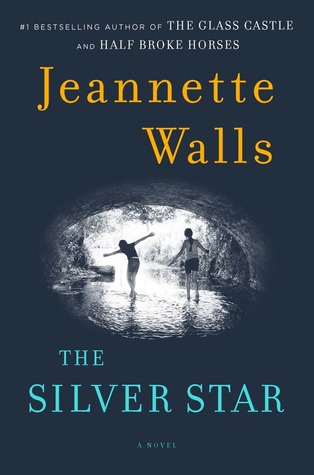
I still remember when Jeanette Wall’s The Glass Castle came out. I devoured it and absolutely loved it. I was a bit disappointed to find out her second book, Half Broke Horses, wasn’t a memoir but a novel. I bought it but never read it. Last week I got her latest, The Silver Star, as a present and just finished it yesterday.

If you know Jeanette Walls, The Silver Star will not surprise you. Like in her memoir we are introduced to some really bad parenting, children who have to cope on their own, a murky family history and abusive grown-ups.

Some writers always return to familiar territory, mining their lives and telling a similar story over and over again. I don’t mind that when it is well done. And Jeanette Walls writes well. Her writing has an almost cinematic quality, her way of conjuring up a scene is very powerful.

Bean and Liz are 12 and 15 respectively when her single mum has a break down and leaves the two girls alone, with just about enough money for a month. Their mother is 36 but still a wannabe singer/songwriter/actress. Nothing she tries ever seems to work out and all of her plans invariably end in disaster. That she disappears for a couple of days is nothing new, but for a whole month is a novelty. When social services turn up in front of the house, the girls decide to go to their mother’s hometown and see if their uncle will take them in.

Their mother is originally from a small town in Virginia. The family used to be very rich but all they have left is a decaying mansion. The girls don’t know why their mother left right after Bean was born. They also don’t know who their respective fathers are.

When they turn up on uncle Tinsley’s doorstep he isn’t too thrilled at first, but eventually he gives in and lets the girls stay with him. It turns out that Bean and Liz really love the small town and settle in quickly. They make new friends, get to know Bean’s father’s family and have a great time. Their mother comes to visit but it ends in a huge drama.

When the local bully and mill supervisor Maddox tries to rape Liz, things escalate.

The book is set in the 70s; the Vietnam war and racial tensions are important topics. But gender is maybe even more important. There is an instance in which To Kill a Mocking Bird is mentioned and that’s no coincidence. There is a parallel to the novel, as in The Silver Star there is also a trial. Only with a very different outcome. Afro-American’s are still not treated like white people but women are treated even worse.

What I really liked about this book is what it says about parenting. It is obvious that Bean’s and Liz’s mother is incapable of taking care of her girls but despite this I was wondering how bad her parenting really was. She is often absent, not there when they need her, she’s “bonkers” as both girls say but she is kind and raises girls with a very strong self-esteem. I don’t try to say it’s OK for parents to just abandon their children but as a matter of fact, they were quite capable of taking care of themselves and if she’d been there, the attempted rape would still have happened. She is far from an ideal mother, she can’t cope and went through a lot of awful things but both girls are strong and very resilient. Many children who have parents who never abandon them, and provide for them materially, nevertheless crush their children’s self-esteem, abuse and neglect them emotionally. I find that far worse.

I saw that this book has received a lot of negative reviews on amazon (A lot of readers hated it because of the mother. I really wonder if they are all that perfect). Sure, it’s similar to her other books but I thought it was very enjoyable. It’s warmhearted and humorous. I loved the two girls who are very different, their uncle, and even the mother is fun as a fictional character. I’m glad I’ve got Half Broke Horses already. I’ll certainly read it soon.

Jan Terlouw: Winter in Wartime – Oorlogswinter (1972) Literature and War Readalong June 2013

Winter in Wartime

Dutch author Jan Terlouw’s award-winning novel Winter in Wartime  (Oorlogswinter), which has been made into a movie, is a book for YA. It tells the story of 15-year old Michiel and is set during the hunger winter, in the Netherlands in 1944.

Michiel lives in a Dutch village with his parents, older sister and younger brother. His father is the mayor of the village. Like the rest of the Netherlands, their village is occupied by the Germans. It’s obvious for everyone that the war will come to an end soon and that the Germans are losing it. However, instead of giving up, they intensify their hostile activities; they search houses, arrest, torture and shoot people.

The village is divided, some are collaborating, some are suspected to collaborate, while others are in the resistance. Michiel’s parents are anti-German; they are good people who try to help those who have less, as much as possible. Every night they open their doors to distant relatives, people on the run, displaced persons, provide shelter and food for one night. Uncle Ben who is in the resistance is one of the regulars.

Michiel has an outsider position. He isn’t really a child anymore but doesn’t seem old enough for resistance work. When Dirk, an older boy who has joined the resistnace, asks him to deliver a letter, should he not return from a mission, Michiel feels honoured.

That same day his father and a group of other people is arrested because someone has killed a German soldier. Some of the men who are arrested will be hanged. When Dirk doesn’t return and Michiel fails to hand over the letter, he opens it and discovers that Dirk has been hiding a wounded British pilot. What should he do now? Who will help him? Is there anyone he can trust? That’s what you will discover if you decide to read Winter in Wartime.

Towards the end of the book (p. 121) Michiel remembers something his father said

Michiel often thought of something his father once said: “In every war dreadful things happen. Don’t think that it is only the Germans who are guilty. The Dutch, the British, the French, every nation has murdered without mercy and perpetrated unbelievable tortures in times of war. That is why, Michiel, you shouldn’t allow yourself to be misled by the romance of war, the romance of heroic deeds, sacrifice, tension and adventure. War means wounds, sadness, torture, prison, hunger, hardship, and injustice. There is nothing romantic about it.”

This short paragraph is central and summarises the theme of the book. The novel looks exactly into this and tests it. While the story confirms that war is horrible, it still shows that heroism is possible. There will always be courageous and kind people in every war, people who will try to stay good and do good.

This is a book for young people and I was very interested to see how WWII would be handled. In all the resistance books and movies torture plays an important role. How would that be handled for children. I’d say Terlouw did a great job. He was explicit but not gruesome. Not for one second we think it may not have been as bad but still he isn’t too explicit.

Books for children and YA always have a message. A lot of that message is captured in the quote above but there is another central theme, which is illustrated too – not every German was bad. No people is bad as a whole.

I think Terlouw’s book is well done, it captures he Netherlands during the winter of 44 very well. The hunger, the masses of  fleeing people, the occupation, the suspicions, all this is well drawn. The tone isn’t depressing as the end of the war is in sight. Horrible things happen still but there is a lot of hope.

I saw the movie a few years ago that’s why I possibly didn’t like the novel as much as I would have if I hadn’t known the story already. It isn’t one of my favourite readalong titles but it’s still well worth reading and, as a children’s book, I’d say, it’s excellent.  Don’t miss it if you’re interested in WWII, occupied Holland, the Dutch resistance, and are looking for all of these topics done in a way that is appropriate for younger readers.

Other reviews

Anna (Diary of an Eccentric)

Danielle (A Work in Progress)

Iris (Iris on Books)

Judith (Reader in the Wilderness)

Movie review

Kevin (The War Movie Buff)

*******

Winter in Wartime was the sixth book in the Literature and War Readalong 2013. The next is the novel is Children of the New World aka Les enfants du nouevau monde on the war in Algeria by Algerian writer Assia Djebar. Discussion starts on Monday 29 July, 2013. Further information on the Literature and War Readalong, including the book blurbs can be found here.

Harriet Lane: Alys, Always (2012)

Alys-Always

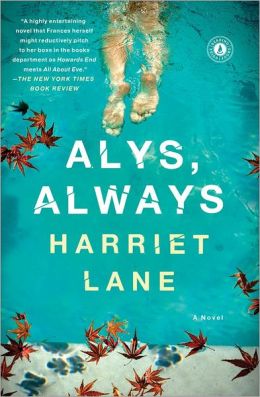
Litlove reviewed Harriet Lane’s first novel Alys, Always a couple of weeks ago (here) and it sounded very good. A bit like Ruth Rendell only even more literary. In any case I was curious and had to read it.

Frances drives back home to London from a visit at her parent’s house. It’s winter, cold and dark when she sees something strange on the side of the road in a forest. It’s a car accident. The driver is still alive and Frances stays with her until the ambulance arrives. She only speaks a few words with the woman but those words tell her a lot about her. She sounds like she comes from a well-off family and lives a life of ease. The choice of words, the intonation and the accent tell her all this. Frances may be a mousey looking woman but she’s highly perceptive and sharp.

A little while later the police inform her that the woman, Alys, has died. They ask her whether she is willing to talk to the family but Frances doesn’t feel up to it. She only decides to do it after discovering that the woman whose final moments she witnessed was the wife of one of the most highly acclaimed British writers.

Frances lives an invisible life. She isn’t unhappy but there is nothing that stands out. She is single, doesn’t have a lot of friends, doesn’t care for her family and her job for the book section of a big newspaper is less than fulfilling. When she is offered the opportunity to meet someone famous, she seizes it and with a cold, sly determination, she manages to use every little thing that comes her way.

I wouldn’t call Frances an unreliable narrator. On the very contrary. But she is sly. Calculating, dissecting. Everything she sees is carefully evaluated, assessed and we follow her astonished, wondering all the time what her intentions are and where they will lead her.

It’s fascinating and a bit creepy. I wouldn’t call her a likable person at all but in way she’s understandable and by the time the book ends, we’re glad we didn’t meet her or get in her way.

I wouldn’t exactly compare this novel to Notes on  Scandal but it is written in the same vein. It has also a similarity with Rendell’s A Judgement in Stone. The difference lies in the psychological believability and the writing. Alys, Always wasn’t entirely believable or rather, Frances was very believable but the people around her far less so. However, this small flaw is minimized by the writing. Harriet Lane writes beautifully and that’s why I’d say, the book is more literary than Rendell. Her descriptions are subtle and lyrical, the mood and atmosphere of the book are quiet and cool, the pace is relaxed. It’s eerie, but in a gentle way. Opening the pages and entering the world of Alys, Always is like walking through a huge stylish house in which every detail is carefully selected and arranged. There is only this slightly cool breeze coming from an open French window that makes you shiver just a tiny bit.

If I had to compare this book to a flower, I’d compare it to a white calla.

Calla

On the surface Alys, Always is a novel about a woman who knows how to exploit an extraordinary situation but underneath it says a lot about fate and narcissism. As Frances says in the novel, “listening is a dying art form” and because all of the characters in this novel are to some extent narcissistic, they want to be heard and seen and would never question that someone could be far less interested than they pretend to be.

I really hope Harriet Lane is going to write another novel as I liked Alys, Always a great deal. The writing was so beautiful, it made me re-read several passages more than twice before I moved on.

Philip K. Dick: Do Androids Dream of Electric Sheep? – Blade Runner (1968)

Do Androids Dream of Electric Sheep

The movie Blade Runner is one of my favourite movies. I liked it so much that I never re-watched it but the mood and the atmosphere and some of the pictures stayed with me. I always meant to read the book it was based on but always forgot about it. After reading Danielle’s review a while back (here) and Brian’s insightful commentary a few weeks ago (here) I thought I really need to do it now. I also did a much more daring thing, I re-watched the movie. Luckily my courage wasn’t punished. It’s still one of my favourite movies of all time. Maybe I even like it more than before.

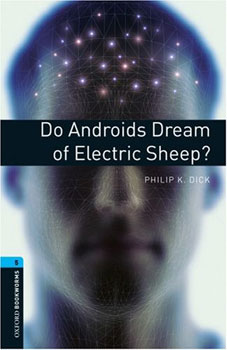
Philip K. Dick’s novel Do Androids Dream of Electric Sheep?  is set in San Francisco, in a bleak post-war society. Only those who cannot afford to leave Earth and emigrate to Mars, stay on. These are people who have either been too damaged by the fallout, the so-called specials or chickenheads, or those who lack money. Plants and animals have been badly damaged and there are hardly any living animals on Earth anymore. It’s a sign of prosperity if you can buy yourself an animal, any animal, a toad, a sheep, a goat.

Rick Deckard is a cop, or rather a bounty hunter assigned to hunt and “retire” androids who have escaped and turned against humans, starting to kill them. A new generation of androids, the Nexus 6, look and act exactly like humans but they don’t feel like humans that’s why a test which measures the emotional response can detect whether someone is an android or not. What complicates matters is that some androids have received false memories and don’t know that they are androids.

Deckard’s salary isn’t high but he receives a bonus for every retired android. 6 of these Nexus androids have escaped and need to be hunted. Some of them are quite dangerous. He hopes retiring them will allow him to finally buy a real animal and not just an electric sheep.

I thought it was extremely interesting to read this book and I didn’t expect it to be the way it was. To some extent it’s an almost straightforward noir novel, of course with a sci-fi twist, but it still works like many other bounty hunter or PI novels. But that is only one part, the part that was kept for the movie. The other part is more philosophical and at times a bit confusing. The people in the novel can use an empathy box and also use mood altering devices. The empathy box lets them experience what Mercer, a god-like figure, experiences. Empathy is the key word in this novel. What differentiates the humans from the androids is empathy but even the humans lack it and need to be reconnected to the empathy box. At least that’s how I understood it. What makes a human human is another important question. While the humans call destroying androids “retiring”, the androids see it as getting killed. They feel a real horror of death. It is Deckard’s dilemma that he can no longer pretend that he feels as if they were just machines.

Ridley Scott used the noir elements and turned them into something that has been called cyberpunk. His movie is set in a LA that looks like Hong Kong in which it is constantly night and raining. It’s quite a melancholic movie. The hunter and the hunted are both losers, the characters are much more complex than in the book.

I didn’t expect book and movie to be alike but I didn’t expect them to be this different. I absolutely love the movie but I didn’t love the book. Don’t get me wrong, I liked it but it’s pale in comparison. I found it much colder, and it lacked the mood and atmosphere of the film. The androids in the movie seem more human while some of their acts in the book made me despise them.

Brian has written an in-depth analysis in which he focusses on the philosophical aspects of the novel. I’ve read the book for the first time and certainly didn’t get all of it. So if you’d like to know more about those aspects here is the reviw. And here another review from Anna.

Rachel Klein: The Moth Diaries (2002)

The Moth Diaries

Did you like being an adolescent? Looking back I can’t say it was much fun. I would even say it was pretty awful. A whole lot of insecurities, suffering and drama. When I studied cultural anthropology some years later we read Margaret Mead’s Coming of Age in Samoa, which was her first publication. At the time when she wrote it, cultural anthropology was seen as a means to better understand Western culture and society. When she went to Samoa Mead’s wish was to investigate adolescence in another culture and to see how much of what girls in the US went through was rooted in the culture. Pretty much everything that is experienced as awful when growing up in the US or Europe was missing in Samoa. While her research was later criticized for being to idealizing, it still contains a lot of valuable information. Maybe Samoa wasn’t the idyllic paradise she saw in it but the young Samoan girls decidedly didn’t suffer like many girls did and still do in Western societies.

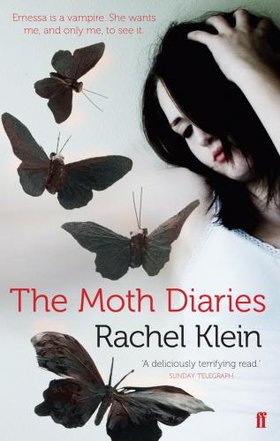
The Moth Diaries depicts adolescence in its most dysfunctional forms. Obsessions, anorexia, self-inflicted wounds, suicide. It is an intense and intriguing book, a painful story told by an unreliable narrator, in form of diary entries. The microcosm of a boarding school, set in an old Gothic looking building adds further depth to the story.

Her psychiatrist later tells the narrator that she suffered from “borderline personality disorder complicated by depression and psychosis”.  The prologue tells us that she has left this behind. But is she really cured, is she really better? What prize did she pay for that? And was everything she experienced and witnesses just the output of a vivid imagination?

The narrator’s father has committed suicide. Her mother cannot deal with an adolescent and sends her to boarding school where the narrator forms a close relationship with another girl, Lucy. Returning after a longer holiday break, the narrator must realize that her best friend is more interested in the new girl Ernessa. Ernessa is pale and mysterious, she never eats or sleeps and the narrator is convinced that she is a vampire.

What is interesting in the way this is told is how the book manages to show that when you are alone during an important phase of your life, isolated even, and you are surrounded by suffering that you don’t understand, you may end up interpreting facts in a fantastical way. Or, to say it differently, you may have a psychotic episode.

While books like Twilight and The Vampire Diaries, tell a normal college story spiced up with vampires, The Moth Diaries does exactly the opposite. What really goes on in this boarding school, the obsessive dieting that turns into self-inflicted starvation, the claustrophobic friendships that turn into erotic relationships, the mobbing, all this is much more painful than the vampires populating contemporary high school dramas could ever be. Whether or not Ernessa is a vampire, is ultimately not that important.

What made me feel particularly uncomfortable is how the grown-ups deal with the girls in this book. With the exception of one or two teachers, they are all dysfunctional and abusive.

The Moth Diaries is an eerie and uncanny depiction of adolescence with a very Gothic feel. It is full of  inconvenient emotions, told by a narrator who is confused but at the same time extremely wise and insightful. One could call The Moth Diaries a contemporary and female version of The Catcher in the Rye. I found it painfully poignant.

The Moth Diaries has been made into a movie. Has anyone seen it?