Balzac: Le Colonel Chabert aka Colonel Chabert (1832/1844)

Balzac’s radiant story recounts the history of Colonel Chabert, a disenfranchised hero of the Napoleonic wars. Left for dead on the battlefield of Eylau, Chabert has spent years as an amnesiac in an asylum. The novel begins with his return to the life he left behind: only to discover that in his absence, his entire life – family, society, identity – has changed. With Napoleon deposed, France’s aristocracy has returned to power ‘as if the Revolution never occurred’. With Chabert supposedly dead, his wife is now married to a Count. Sickened by his wife’s pretence not to recognise him, and the titled society which spurns his former meritorious deeds, Chabert vows to recover his money, his reputation and his name.

A few years back I went through an intense Balzac phase reading one of his novels after the other. Still there are so many left I haven’t read and one of them was Le Colonel Chabert (or Colonel Chabert in English). I always thought it was much longer, probably because the edition I have contains other books as well. Or because of its notoriety. I think it is one of the most famous of his works.

Le Colonel Chabert is one of the books from the Scènes de la vie privée. Those who are familiar with Balzac know that the vast canvas of his work which he called La Comédie Humaine is organized in groups depending on the setting or themes.

Balzac has written an impressive amount of books. Some were serialized and written for the newspaper, like Splendeurs et misères des courtisanes, and the writing is not subtle at all. As wonderful as his plots, characters and topics usually are, his style is occasionally lacking. I was pleased to see that Le Colonel Chabert is, from a purely literary point of view, one of his best. It was published twice, first in 1832 under the name La transaction and then again in 1844.

Colonel Chabert is one of Balzac’s most tragic figures, a man who had everything and lost it all. To a certain extent the figure of Colonel Chabert whose fate is tied to that of Napoléon, also mirrors the emperor’s fate. Like Napoléon himself, he knew fame and glory and lost it all.

The novel opens on a scene of lively banter among several clerks who work for a young and promising lawyer. This scene is Balzac at his very best. With a few words he captures mediocrity. Into this setting enters a man who looks like a ghost. An old and broken man, poorly dressed, weak and ailing. When he asks to see Derville, the young lawyer, they make fun of him. And even more so when he tells them that he is the Colonel Chabert. Everybody knows that this cannot be as the Colonel has died in the battle of Eylau. His much deplored death has even been confirmed by Napoléon himself. His wife has remarried and born two children to a new husband. His fortune has been divided. The man standing in front of them cannot be the dashing looking colonel. This is an old man who seems to have seen nothing but poverty and misery.

The clerks who do not believe the old man send him away and tell him to return at one in the morning, the only hour during which the lawyer receives his clients.

When Chabert returns Derville is gruff at first but he is not only an ambitious young man, he is also very intelligent and kind-hearted. He pities the poor man and allows him to tell his story.

The Colonel who has shown Derville the deep scar on his skull, tells him how he was mortally wounded by a sabre, who almost split his skull in two. Buried under his horse who had been killed, he wasn’t trampled by the fleeing army but left unconscious. When they finally discovered him, they declared him dead and buried him. He regained consciousness later in the grave and managed to dig himself out from underneath corpses, earth and snow. This is a truly creepy scene that reminded me of an Edgar Allan Poe story.

Illustration de Le Colonel Chabert

(La bataille d’Eylau by Antoine-Jean Gros)

Ten years have passed since that episode. Ten years of suffering and erring during which the Colonel wrote to his wife a few times. Hoping to make a better marriage she pretends not to believe that he is alive. Chabert finally decides to ask for help and wants the young lawyer’s assistance in claiming back his wife and his considerable fortune.

His former wife, now the Countess Ferraud, is one of the ugliest characters of Balzac whose novels are full of greedy, vile people.

I will stop my summary here and just tell you that the outcome isn’t exactly what we expect.

I am not sure if it would be ideal to start reading Balzac with Le Colonel Chabert. I usually recommend Le père Goriot or La cousine Bette. Once you are more familiar with Balzac’s themes and characters you will realize how unique this book is. It is very short but extremely complex and a lot of allusions to French history are almost crammed into it. To fully comprehend the story it is good to know something about French history.

I’m looking forward to watch the movie one of these days as it seems to be very good as Guy Savage writes in his review of the book.

My favourite Balzac is Les illusions perdues aka Lost illusions, followed by La cousine Bette aka Cousin Bette. Which one do you like?

Colonel Chabert (Hesperus Classics)

Brené Brown: The Gifts of Imperfection (2010)

Human-behavior researcher and author of I Thought It Was Just Me (2007), Brown has made a career out of studying difficult emotions such as fear and shame. In this latest book, she emphasizes that above all other ingredients of living an emotionally healthy life is the importance of loving ourselves. In the grips of what she took to be a breakdown, or midlife crisis, Brown came to understand she was experiencing a “spiritual awakening” and worked to explore its significance and the interaction of knowing and understanding yourself and loving yourself. She intersperses her own personal journey with research and clinical observations of others of the work of living a “wholehearted” life, or “engaging in our lives from a place of worthiness.” The point is to embrace life and oneself with all the imperfections, releasing the stress of overdoing and overworking. Brown offers exercises for readers to plumb their own emotions and begin to develop the kind of resilience needed to stand up to unrealistic expectations of others and ourselves.


I’m so glad I came upon Brené Brown’s Homepage and from there to her book The Gifts of Imperfection. This is her second book, the first was called I Thought It Was Just Me (But It Isn’t): Telling the Truth about Perfectionism, Inadequacy and Power.

Brené Brown is a researcher, specialized in topics like shame and perfectionism and analyzing how they are linked and keep us from living wholeheartedly. She is an incredibly honest and open person who is able to show her vulnerability.

Wouldn’t it be better if we could be kinder but firmer? How would our lives be different if there were less anger and more accountability?  (p. 17)

The source of this book was a major breakdown that forced her to look at herself and her life. What she found out and shares with her readers is truly invigorating.

Before the breakdown, I was sweeter – judgmental, resentful and angry on the inside – but sweeter on the outside. Today, I think I’m genuinely more compassionate, less judgmental, and resentful, and way more serious about boundaries. (p.16)

The book has two parts. The first is a more theoretical one in which she introduces us to the concept of living a wholehearted life. The key factors are: Courage, Compassion and Connection. Further she emphasizes the importance of Love, Belonging and Being Enough. But what is much more important is that she identifies that there is always something that gets in the way when we try to change. We need guideposts to overcome the hurdle and she provides them. Every guidepost is linked to something that gets in the way and is described in detail.

The Wholehearted journey is not the path of least resistance. It’s a path of consciousness and choice. And to be honest, it’s a little counter-culture. The willingness to tell our stories, feel the pain of others, and stay genuinely connected in this disconnected world is not something we can do halfheartedly. (p.21)

The second part offers a more practical approach and consists of ten very different guideposts: Authenticity, Self-Compassion, Resilience, Gratitude and Joy, Intuition and Trusting Faith, Creativity, Play and Rest, Calm and Stillness, Meaningful Work, Laughter. In the guideposts she provides her own insights, case stories from other people, research data and quotes from a variety of books. She also indicates titles for further reading. Especially those reading suggestions are very valuable and I compiled quite a list of interesting titles.

One of the best and most honest chapters is the guidepost on addiction or numbing as she calls it (Guidepost Resilience). Brené herself was an alcoholic and was also addicted to a great number of other things like over-eating and also the overuse of Facebook and the like.

Another chapter that I appreciated a lot was the one called ” Cultivating Creativity. Letting go of Comparison.”

Comparison is all about conformity and competition. At first it seems like conforming and competing are mutually exclusive, but they are not. (p.94)

The comparison mandate becomes this crushing paradox of “fit in and stand out!” It is not cultivate self-acceptance, belonging and authenticity; it’s be just like everyone else, but better (p.95)

If you like you can visit Brené Brown’s Homepage where you will find her blog as well as a lot of other resources.

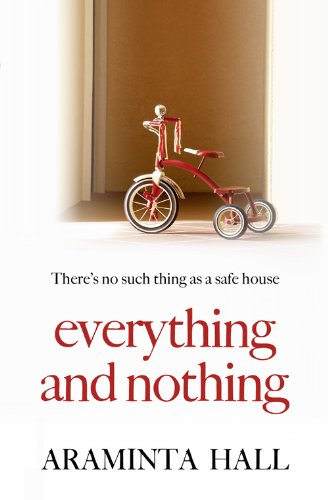
Araminta Hall: everything and nothing (2011) Social Realism and Psychological Suspense

Ruth and Christian are – just – holding their marriage together, after Christian’s disastrous affair a year ago. But chaos beckons, and when the family are suddenly left without any childcare, Agatha comes into their lives to solve all their problems. But Agatha is not as perfect as she seems and her love for the children masks a deeper secret.

I read a review of this book on Lizzy’s Literary Life and something told me I might like it. And I did. It was one of those super fast reads, a book that I could hardly put down. Really riveting. The only complaint I have is that this is labelled as a psychological thriller. Although there is a part of it reminiscent of Ruth Rendell, it is like a background story and not really very gripping. At least not for me. Still I consider this to be a real page-turner for the simple reason that it captures chaotic family life in so much detail and explores some of the questions and problems parents who work full-time would face. I often enjoy descriptions of domestic life although I don’t live anything that is even remotely comparable.

Ruth and Christian both not only work full-time but overtime many days of the week. They both have careers that seem to absorb all of their energy and when they come home in the evening they face total chaos. The place is dirty, sticky and disorderly, the little girl is screaming constantly and throws one temper tantrum after the other. The little boy, at three, still doesn’t eat properly and drinks from a bottle. The nights are nightmares too. Ruth and Christian fight and when they finally go to bed, the girl starts to scream again. She always wakes at midnight and never goes back to sleep.

At the beginning of the novel Ruth knows she isn’t capable of going on like this. She needs a new nanny. And in comes Agatha. We know from the start that something is wrong with her. She lives in daydreams and lies to her employers and to herself constantly. Something bad has happened in her past, a trauma that she cannot overcome and tries to repress with her imagination.

Family life improves considerably after she has started working for Ruth and Christian. She is super organized and makes Ruth feel deficient. To make things worse, Christian accidentally meets the woman he has had an affair with and starts seeing her for drinks.

Something bad, coming from Agatha, is lurking in the background and we know things will go very awry. But as said, this is completely toned down. I was fascinated by Ruth. Christian was not particularly interesting. Just one of those guys who thinks he has the right to have an affair when his wife is pregnant for the second time and is not that much into him during that time.  Ruth shows every sign of a severe depression and what I found interesting is the fact that this did not start right after she had the first baby but several months later. As if the bubble of enchantment that the little baby brought burst suddenly. From that moment on she struggles. I could feel the exhaustion of that woman and I know that this is very realistic. Women around me have mentioned it. If you are unlucky and have a baby that doesn’t sleep well and you need to go to work every morning… Ruth is a journalist and her work is very demanding. There is always someone waiting to jump into her position should she show signs of weakness.

I also hear the type of questioning very often that Ruth utters. Is it OK to work full-time and have children? Is it OK to have someone else looking after them? I think in the book the problem isn’t only that Ruth works full-time but that both work overtime and that she tries for too long to cope with everything else as well. She is afraid that having a nanny means defeat. And she thinks that women like Nigella Lawson are an example for the fact that it is possible to have and do it all yourself.

There is a strange fascination in seeing people at their most vulnerable, when their masks are down. That’s what made this book so riveting for me. And I think the questions it asks are very important.

I would be curious to hear from anyone who has read it.

This was Araminta Hall’s first novel. I really wouldn’t mind reading the next one too.

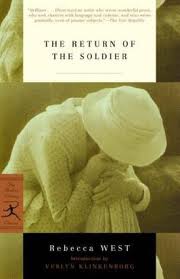
Literature and War Readalong March 25 2011: The Return of the Soldier by Rebecca West

There is still plenty of time for anyone who wants to join the Literature and War Redalong this month to get a copy of Rebecca West’s The Return of the Soldier. It is only 90 pages long which makes it all the more feasible. If all those of you who expressed an interest in this book will read along we might be quite a crowd. We will see. There are at least two different paperback editions available. I got the one from The Modern Library with an introduction by Verly Klinkenborg. The other one is a Virago edition with an afterword by Sadie Jones.

Rebecca West’s book is unique as it was published in 1918, before the war had ended. She tells the story of a returning soldier who suffers from shell-shock. I am particularly interested in this topic and curious to compare her handling of it with Pat Barker’s Regeneration trilogy which is for me still one of the greatest books on WWI, shell-shock and the development of the new medical discipline, psychiatry.

I was very surprised to find out that The Return of the Soldier that seems so well-known in the English-speaking world has not been translated into German. The only two of her books that made it into German are Black Lamb and Grey Falcon and The Fountain Overflows.

Rebecca West was only 24 when she wrote this novel but already an acclaimed journalist and women’s rights activist. This isn’t an account of the front line but purely a story that takes place on the home front.

Shell-shock is extremely typical for most WWI accounts. It seems as if there had never been so many cases of shell-shock in any war as in WWI. Psychologists state that one of the reasons for this lies in the trench warfare. Being in the trenches for such a long time infused the soldiers with a deep feeling of helplessness that makes shell-shock much more probable than any othe type of warfare. The moment the soldiers were allowed to leave the trenches and move about shell-shock was far less frequent.

Here is the link to the Rebecca West Society if you want to find out more about the author, upcoming conferences and events.

The Return of the Soldier has also been made into a movie.

Joseph Roth: Hotel Savoy (1924)

Hotel Savoy

Written in 1924, Hotel Savoy is a dark, witty parable of Europe on the verge of fascism and war.

I read Joseph Roth’s The Radetzky March years ago in school and had sworn at the time that I will re-read it and read as much as I can of this incredible author. A while back I stumbled upon a really nice discovery in a local bookshop, a little slipcase containing seven of Joseph Roth’s novels. It consists of Hotel Savoy (Hotel Savoy) (1924) Hiob (Job) (1930) Radetzkymarsch (The Radetzky March) (1932) Beichte eines Mörders (Confession of a Murderer) (1936) Das falsche Gewicht (Weights and Measures) (1937) Die Kapuzinergruft (The Emperor’s Tomb) (1938) and Die Geschichte von der 1002. Nacht (The String of Pearls) (1939).

Roth is one of three Austrian authors (the other two being Robert Musil and Heimito von Doderer) who wrote about the end of the Danube Monarchy. The end of an era, the changing of the times, is often central in his books.

I decided to read Roth’s books chronologically and started with Hotel Savoy.

What an absolutely wonderful novel this is. Beautifully written, astonishingly varied in style, themes and characters. How can you capture so much in under 120 pages? The style is very different from Radetzkymarsch but not less enchanting. His sentences are very special, often composed of a list of nouns which might have been a challenge for a translator.

I am happy, once more, to shed an old live, like I did so often these past years. I see the soldier, the murderer, the man who was almost murdered, the resurrected man, the captive, the wanderer.

Or this powerful sentence:

I enjoy the floating feeling, calculate how many wearisome steps I would have had to climb if I wasn’t sitting in this luxurious lift, and I throw down bitterness, poverty, homelessness, migration, hunger,  the past of the beggar, throw them deep into the shaft, from where they cannot reach me, the hovering one, ever again.

Hotel Savoy is a “Heimkehrer Roman”, the story of the former soldier Gabriel Dan who after WWI and several years of having been a prisoner of war in a Siberian camp returns to Poland. He is a descendant of Russian Jews and one of his uncles lives in the city in which he stops. He wants to travel westwards to Paris or any of the other big Western cities. As far away as he can get from Russia and a painful past full of deprivations, it seems.

He moves into a room on one of the upper floors of the grand and glamorous looking Hotel Savoy. As pompous as it may seem from the outside, the interior is rundown.

The first three lower floors are reserved to rich people, bankers, aristocrats, factory owners and patrons. The upper floors belong to the poor who cannot pay their rent. After a few weeks their suitcases and luggage is confiscated and they are left completely destitute.

What a colorful group of people they are in those upper floors. Dancers and clowns and people who return from the war or people who have lost everything in one foolhardy transaction. They are eccentrics and lunatics and more than one of them is terminally ill. There is singing and dancing and cheerfulness and a lot of dying going on.

Gabriel hopes to be able to extract some money of his rich uncle, Phöbus Böhlaug, but to no avail. His uncle’s avarice is frightening.

There is nothing else to do for Gabriel than stand at the train station daily and hoping for work. Every other week the train station is flooded by prisoners returning from the camps. One day he meets one of his old comrades the peasant Zwonimir.

What a character, this Zwonimir. Full of life, exuberant, funny and droll. He makes friends easily has a funny sense of humour and detects everything phony in the rich and pompous people around him.

They work hard and enjoy themselves in the evening, drinking copiously, going to cabarets and the vaudeville, walking through the city, exploring the quarters where only Jews live.

I always enjoy novels set in hotels. They are full of interesting characters from the most diverse social backgrounds. In this inter-war period hotels were often the only place where people could stay. It took those who returned from the war an awfully long time to get back to their homes and they had to stay somewhere on the way. Others had lost their houses or just fled the countryside.

It is a fascinating microcosm this Hotel Savoy. The very poor and the very rich rub shoulders.

One of the central episodes is the arrival of Henry Bloomfield an incredibly rich banker who left Europe for America but returns once a year to his hometown. No one really knows why he chooses to come back to this little town when he could stay in Berlin.

While he resides at the Savoy, people cue up to talk to him and present their business ideas hoping he might finance them. Gabriel is lucky and is chosen by Bloomfield as temporary assistant. He will listen to all the stories and sort the valuable ideas out.

This novel has really everything. It is funny, sad, picturesque, touching and bitter-sweet and the ending is perfection. Roth describes people, the hotel and the little town with great detail. And every second sentence bears an explosive in the form of a word that shatters any illusion of an idyllic life. Roth served in WWI and never for once allows us to forget that the horror of one war and subsequent imprisonment have only just been left behind  while the next one is announcing itself already.

I was reminded of other novels set in hotels, pensions or clubs like Muriel Spark’s The Girls of Slender Means, Vicki Baum’s Menschen im Hotel (Grand Hôtel), Elizabeth Taylor’s Mrs Palfrey at the Claremont, Assouline’s Lutetia, Thomas Mann’s Felix Krull and Anita Brookner’s Hotel du Lac.

I am sure there are many more. Do you know any others?

I translated the quotes from the original German. Any mistakes are entirely my own.

Haruki Murakami: Sputnik Sweetheart (2001) aka Sputoniku no koibito (1999)

The narrator, a teacher, is in love with the beguiling, odd Sumire. As his best friend, she is not adverse to phoning at three or four in the morning to ask a pointless question or share a strange thought. Sumire, though, is in love with a beautiful, older woman, Miu, who does not, can not, return her affections. Longing for Sumire, K (that is all we are told by way of a name) finds some comfort in a purely sexual relationship with the mother of one of his pupils. But the consolation is slight. K is unhappy. Miu and Sumire, now working together, take a business trip to a Greek Island. Something happens, he is not told what, and so K travels to Greece to see what help he can offer.

Sputnik Sweetheart was my second Haruki Murakami. The first one I read was South of the Border, West of the Sun which I liked a lot but I was told many times that it wasn’t a typical Murakami.

It was a strange experience to read Sputnik Sweetheart but not because of the book, I didn’t think it was all that weird but my reactions to it were weird as it reminded me of a lot of other books I have read before. Instead of enjoying it my mind started to rush around like a hungry little monkey looking for food and trying to solve the riddles of the 1001 allusions. If I hadn’t been so busy doing this, I would have enjoyed it much more while reading it but looking back on it I think it is a marvelous book. Unusual, original and fascinating. And furthermore, having finished it, I saw that what happened to me, this mad chasing of “clues”, is probably not completely unintentional. I think the author is well aware of our European triggers and pulls them one by one.

I read quite a few reviews who stated that it wasn’t easy to describe what the book is all about. I don’t think that’s true. It’s a pretty straightforward story and you can summarize it in a few sentences. The problem is that wouldn’t do the book any justice as plot line is not Murakami’s main concern.

K, an elementary school teacher, is madly in love with Sumire, a strange, intelligent, loner type girl who wants to become an author. Sumire however falls for Miu, a married woman and 18 years her senior. They meet at a wedding reception and due to a misunderstanding related to the writer Jack Kerouac, Sumire’s favourite author of the month, Sumire calls Miu Sputnik Sweetheart.

Ever since that day Sumire’s private name for Miu was Sputnik Sweetheart. She loved the sound of it. It made her think of Laika, the dog. The man-made satellite streaking soundlessly across the blackness of outer space. The dark, lustrous eyes of the dog gazing out of the tiny window. In the infinite loneliness of space, what could Laika possibly be looking at?

Sensing that a change is needed in Sumire’s life, Miu offers her a job. Part of this job is a trip to Europe. The two women travel from France to Italy and from there to Greece and there Sumire disappears. Miu asks K to come to Greece and help her look for Sumire. He travels to Greece but the whole adventure proves to be futile.That is the story in a nutshell.

The central theme of this novel is loss. In many different forms. And getting lost and being lost, and losing as well as never reaching what we want. The people in this little universe that is Sputnik Sweetheart all chase something. Most of them love someone who loves someone else. They feel trapped and isolated like little satellites circling aimlessly through space.

So that’s how we live our lives. No matter how deep and fatal the loss, no matter how important the thing that is stolen from us – that is snatched right out of our hands – even if we are left completely changed people with only the outer layer of skin from before, we continue to play out our lives this way, in silence. We draw ever nearer to our allotted span of time, bidding it farewell as it trails off behind. Leaving behind a feeling of immeasurable emptiness.

They also chase dreams that seem unreachable. Sumire who wants to become a writer, can’t write a real novel, Miu who wanted to become a pianist had to give up the piano.

And there are the side stories of lost animals. Sumire had  a little tortoise-shell cat that climbs a tree and is never seen again. K had a little dog, his only childhood friend, whom he loses too. And there are the black cats. Since I am an owner of black cats I could relate to this very well. Many of Murakami’s novels are populated by black felines.

K’s and Sumire’s love and friendship is a very beautiful one. They are both loners and bookish people who talk endlessly on the phone. It is sad that Sumire does absolutely not feel attracted to K. Despite the attraction Sumire’s feels for Miu, K is her true love.

I have read a few newspaper articles that came out at the time of the publication of Sputnik Sweetheart in Germany and quite a lot of them stated that Murakami wasn’t really a Japanese author because there are endless references to European culture. It is true, that this is surprising. In this novel, he enumerates many European composers like Mozart and Brahms, and also European performers. Apart from one book, Soseki’s novel Sanshiro, every book, movie or city that is mentioned is European.

Does the fact that a Japanese author cites so many European things make him less of a Japanese writer? I absolutely don’t think so and believe that on the very contrary,  this is a typically Japanese novel. The excellent evocation of futility of beauty for one thing, but then also the mix of genres (adventure story, ghost story, detective and love story) and the quoting of books. And quoting is only one thing, there is also a subtle intertextuality. Does K not remind us of the K in Kafka’s book? And the Doppelgänger motif is reminiscent of a lot of German literature.

Maybe we have to study modern Japanese paintings to be able to get Murakami.

Be it as it may, I’m extremely glad I read this book and am looking forward to the next one.

As a little visual impression of Murakami’s books I attached another Murakami’s work.

Both paintings are by Takashi Murakami.

This was my first Murakami for the Haruki Murakami Reading Challenge. Other reviews of this and other Murakami novels can be found there.

Literature and War Readalong February Wrap up: How Many Miles to Babylon?

I wanted to thank all of you who have participated this month. I loved the book and enjoyed the discussions.

Even though there is also a friendship at the heart of How Many Miles to Babylon? this book is totally different from Susan Hill’s novel Strange Meeting which we read in January. As you can easily see my review doesn’t emphasize the role of the friendship between Alec and Jerry as much as Anna’s or Danielle’s (and here as well) does.

I realized when reading the other posts and a few of the comments that some had a bit of a problem with this novel. There were different reasons for this. For one Alec doesn’t appear to be a very likable character, he was even called a coward by some. For several reasons I never thought of him like that and was wondering why. I realized that from the start, I was totally fixed on his going to be executed. I saw him like some Breaker Morant character (which he isn’t) and thinking he did something that would have this consequence set the tone for me from the beginning. Another point of criticism which, with hindsight, seems fair, is the fact that the WWI elements are toned down. WWI seems to serve more as a pretext for the tragic story and to write about Irish history. WWI itself is rather just a backdrop. I did not mind this at all but can understand that this can bee seen differently.

I think we all equally agreed that the mother in this book was an extremely negative figure, the whole family situation, as Kevin pointed out, is highly dysfunctional.

What I couldn’t really solve was the question about the title. Why did she choose this nursery rhyme as the title for her novel? In an article on the net I found one tiny hint, saying that it did underline the relationship between the soldier and his superior.

On Wikipedia I found this list which enumerates how many times the rhyme has been used in popular culture

In popular culture

In literature

In film

In popular music

  • It is parodied as “How many miles to Babyland?” on Lenny and the Squigtones– a comedy album by the characters Lenny and Squiggy from the 1970s sitcom “Laverne & Shirley”.

This is quite a considerable list. It eludes me why this rhyme is so popular with writers and I am still open for any interpretation why Jennifer Johnston chose it as her title.