Blackwell’s Best Books of 2025

I sometimes order from Blackwell’s, a UK bookshop located in Oxford and regularly get their newsletter.

They just published their best of 2025 and I thought I could share it with you.

Book of the year 2025

Best books of 2025 per month

December

November

October

September

August

July

June

May

April

March

February

January

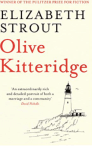
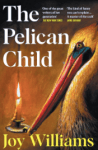
I have been aware of most of them but haven’t read any. I am tempted by Death and the Gardener, The Silver Book, Dream Count, and The Pelican Child.

Did you read any of these? And if so, would you recommend them?

You can visit Blackwell’s here.

Is Heartwood the “Thriller of the Year”?

Every year there’s a book that is called “thriller of the year”. Last year it was The God of the Woods, a book I read and liked but wouldn’t have called a thriller. This year Amity Gaige’s novel Heartwood is called by many critics “thriller of the year”, but, like The God of the Woods, Heartwood could be called a mystery but it’s not a thriller. The pace is too leisurely and there isn’t a dramatic finale in which a perpetrator almost kills his victim.

Heartwood is first and foremost a missing person’s story and a story of mother/daughter relationships. The novel is told from three different points of view. The first is the point of view of the missing person Valerie Gillis whom we get to know through letters to her mother and diary entries she writes while fighting for her survival. The second point of view belongs to Lt Bev Miller, the warden in charge of the search and rescue mission. The third and most interesting is Lena Kucharski’s POV. Lena is an elderly woman who lives in an assisted living facility in Connecticut. She used to be a scientist and loves to forage. Not an easy thing to do for someone in a wheelchair. She’s befriended another much younger forager online and spends her time chatting to him or to another inhabitant of the home.

I’m not exactly outdoorsy, so it would never occur to me to undertake one of these major hikes like the Pacific Crest Trail, but I find it interesting to read about them. The missing person of this book, Valerie Gillis, a nurse who is traumatized and burnt out by nursing during Covid, decides to hike the even bigger Appalachian Trail, a massive hike that takes her through 14 states. Once she arrives in Maine, and just before undertaking the final, possibly hardest part, she goes missing.

Game warden, Lt Beverly Miller has the reputation of finding everyone, but this case proves to be beyond tricky. They don’t exactly know where Valerie went off the trail. Since the terrain she might be in is huge, there are hundreds of volunteers, wardens, canine units and pilots who search but to no avail. And they have to assume foul play.

Elderly Lena Kucharski reads about the search online and for weird reasons thinks at first it might be her own daughter who is missing.

At the center of the story lies the search but all three of the separate narratives circle around the relationships between mothers and daughters. The title of the book comes from Valerie who describes her mum as the heartwood (the hard center inside of a tree trunk) of her life – the thing that holds everything together, gives her stability. Lena has not seen her daughter in years because the daughter made choices she didn’t approve of. Lt. Bev’s story is also a story of an intense relationship but in this case the mother was an addict.

During the hike, Valerie befriends a fellow hiker, an obese Dominican American man who feels responsible for her disappearance. He is convinced that if he hadn’t abandoned the trail because he had to go back to New York, she wouldn’t have left the trail and gone missing. Through his conversations and interviews with the warden’s we learn a lot about the rituals and special camaraderie of the trail hikers.

I found Heartwood enjoyable and readable. I was in the mood for something entertaining and after reading a few good reviews, I thought it might be just what I wanted. It didn’t disappoint but it is an odd beast. Not a thriller, only marginally crime and, to be honest, not exactly literary either. But it was entertaining, and I hadn’t read this type of missing person’s story before. We get such a good impression of what it means to be lost and what it means to give everything to try to find someone. When will you decide that the search is over? How long is a missing person able to survive in the wild? There is a resemblance with Lt Bev’s own story because her mother is in hospice care and there will come a moment when she and her sisters will have to decide whether she should be resuscitated or not.

Lena is by far the most interesting character. Stubborn, cranky, she’s like a light version of Olive Kitteridge. Valerie didn’t really have much depth, but Lt. Bev was likeable and her complicated relationship with her mother, very relatable for me.

To answer the question of the title – no Heartwood is not the thriller of the year but if you’re in the mood for a well-paced, nicely told and engaging story with a mystery at its heart – go for it. Just don’t expect an edge-of-your-seat story or anything very literary.

R.I.P. Lizzy – We Will Miss You

I’m under a great deal of shock. GLM has ended and I just found out my former co-host, who was known under the blog name Lizzy Siddal, has died. Of course, Tony and I knew she was very ill because absolutely nothing would have kept her from GLM. But I didn’t know that she was this ill.

I’m too shaken at the moment to write a proper tribute. Here’s a bit more on Karen’s blog.

R.I.P my friend. I hope you’re at ease, wherever you are.

Christa Wolf – Accident – A Day’s News/ Störfall – Nachrichten eines Tages (1987)

German Literature Month is almost over and we’re closing this year with a GDR week. I chose a book by one of the most famous authors from the former German Democratic Republic. Christa Wolf is the author of Cassandra, Medea, Divided Heaven, No Place on Earth, The Quest for Christa T. and many others. Apart from Medea, I’ve read the ones just mentioned. Cassandra is considered her best, but my favourite is No Place on Earth in which she imagines a meeting between two troubled writers who both committed suicide: Heinrich von Kleist and Karoline von Günderrode.

When Accident came out in 1987, it was praised a lot, but I feel it’s been almost forgotten since then. I don’t see it mentioned very often, which is a shame because it’s very topical.

Most people remember very well what they were doing the day something terrible happened. Almost everyone I know will be able to tell me what they did and where they were on 9. 11.. The disaster at the Chernobyl nuclear power plant was a major incident and those old enough will recollect it very well. It happened on April 16, 1986. I was a bit too young to fully grasp what had happened. And I was living in one of the countries far less affected. What made this disaster so catastrophic for the whole of Europe was the giant cloud. Cities and countries the cloud overflew were affected and when it rained it was particularly bad. The cloud seems to have split and that’s why in the case of Switzerland, the South was affected but not the North. In France, the Eastern part was affected, notably the Alsace region. Since that disaster there are high numbers of people with thyroid problems. There was a conference in Switzerland in 2016 in which doctors shared findings which indicate that there is still a high percentage of cancers in the population which can be linked to the Chernobyl disaster. People closer to the nuclear plant were obviously seriously affected. There’s an area of 30 kilometres around the plant which will be contaminated for thousands of years. The half-life of plutonium is roughly 24’000 years. Kiev, which is only 130 kilometres from Chernobyl, was lucky. The cloud passed them by, but it hit the smaller town of Bila Tserkva where thyroid cancer is very common.

Large portions of Scandinavia, Germany, and many Eastern European countries were also heavily affected but even the South of England was hit.

In her novella Accident Christa Wolf tells the story of that day. The narrator begins her tale by saying she can’t write about what happened in present tense and uses future perfect instead. There is something else going on in her life at that moment about which she writes in present tense. Her brother is undergoing a difficult brain surgery. The story moves back and forth between the things she’s doing, her fear about the cloud and whether it will rain, and her anxieties about her brother. It is a high-risk surgery, and he could potentially lose at least one of his senses.

She also talks to her daughters, a friend, and a neighbour. The interaction with the neighbour adds a WWII element to the story. The parts about the brother are written as if the narrator were speaking directly to him.

She listens to experts talking about the risk of nuclear power plants and listens to the government’s warnings. It’s clear they don’t really know a lot. The people are just advised not to eat any salad, nor to drink milk, and stay in as much as possible, especially should it rain. Children should not be allowed to play outside. We know now that the authorities in Russia lied and that it was far worse than they initially admitted.

I wrote earlier that this is a topical book. Many European countries are moving away from nuclear power. In some countries like Germany the debate is heated. There are so many pros and cons. If nothing goes wrong, it is by far the cleanest source of energy but if it goes wrong, then it is catastrophic. We all know how horrific Hiroshima was, yet the release of radioactive material from Chernobyl was 400 times higher. The accident in Chernobyl happened for two reasons – the plant was old and there was also human failure. Apparently, there are new technologies now that make it far safer. Many countries are developing newer, safer technologies, and smaller plants. In Germany they just blew up two of the cooling towers of the former nuclear power plant in Gundremmingen. Immediately afterwards, there was talk to go back to nuclear power.

The story of the narrator’s brother serves as an illustration for scientific advancement. In the future, machines would be able to perform this kind of surgery which would make it far less risky. The narrator isn’t anti progress or anti science, but it seems she feels that certain technologies shouldn’t have been developed. Nobody can really argue in favour of a hostile use of nuclear power. But at the end of the book, the narrator thinks that there is no greater risk than the risk of a nuclear catastrophe and that this risk alone means one shouldn’t even use this kind of energy in a positive way.

It is a peculiar little book. At times, it felt like she used these very different tenses to make it appear more literary and less like a nonfiction text. I can’t say I enjoyed reading it, but I found it extremely thought provoking. I really wonder what the world would look like if nuclear power didn’t exist.

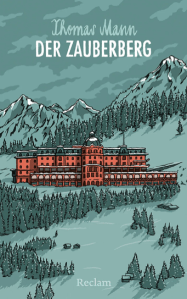
Thomas Mann – The Magic Mountain Part 4 – Time, Boredom, Madness, and Final Thoughts

Time – Boredom – Madness

Thomas Mann said that The Magic Mountain was first and foremost a “Zeitroman”, a novel about time. Time in a double sense. First about historical time and then about the perception of time. There are many passages about time, most of which are written from the point of view of Hans Castorp. The longer he stays at the sanatorium, the more his perception and experience of time change. We all know how time can fly when we do something interesting and almost grind to a halt when we’re bored. Looking back over these periods of time we notice that those stretches of time have the opposite quality now. Periods of time in which we did a lot seem to have lasted longer when we look back, while those in which life is repetitive seem very short. The novel mirrors this in its structure. The first half narrates roughly a year while the second half stretches over the course of six years. The title, “Magic Mountain” also alludes to this near magical quality of time.

During his first weeks and months everything that is offered to the patients is of great interest to Hans and keeps him fully occupied. But the more he’s familiar with the routine and the distractions that are offered, the more he tries to occupy his mind otherwise and find additional ways to pass time. He’s suddenly very interested in biology, anatomy, and botany. Long passages are dedicated to these topics. Apparently, many readers find these passages boring but I thoroughly enjoyed them.

Boredom seems to be something many of the patients are afflicted by and so they try to find all sorts of distractions. Many sneak off during the lying cure and go to Davos to have drinks, play games, and meet other people. I mentioned the affairs they are having, and I would assume many of those are also just a way to pass the endless time. Others, like Clawdia Chauchat, leave when they have had enough and travel either home or to other places but always return after a certain time.

The sanatorium offers distractions like presentations by Dr. Krokowski about various topics; then there are concerts, and festivities at Christmas or during the carnival season. The carnival episode is one of the funniest and craziest in the book and it made me think that possibly “Narrenberg”, The Fools’ Mountain or Mad Mountain might have been a better title. There is this sense of madness and craziness throughout the novel and towards the end, it seems to intensify and can barely be contained. Two characters are introduced late in the novel, Mynheer Peperkorn and a young girl who says to be a medium. Each of them, in their own way, contribute to the intensification of wackiness. Settembrini who is always the voice of reason in the novel and who feels responsible for Hans, warns him about both.

There is always this sense of the sanatorium being outside of the real world which contributes to these feelings of alienation and madness. Hans Castorp identifies strongly with the world “up there” and wants nothing to do with the world he left behind. While Settembrini also stays at the sanatorium during the first chapters, he moves down to Davos later because he cannot afford to stay at the Berhof any longer. That’s where he meets Naphta who is also ill but not rich enough for the Berghof. This may be one of the reasons why Settembrini isn’t affected by the folly that comes with prolonged stay at the Berghof. He’s also still in contact with the world outside as he’s working on a book. He has a keen interest in what is going on in the world and tells Hans about it and warns that a catastrophe is coming.

When Hans has been at the sanatorium for many years, everyone seems to become more restless, more bored and people throw themselves on all sorts of hobbies. Collecting stamps, trying every chocolate available, listening to music, and participating in seances.

Things accelerate and finally the big clash comes – the war breaks out. Everyone has to leave and those young enough like Hans Castorp are sent to the front.

Final Thoughts

I read a lot but unfortunately many of the books are gone from my memory by the end of the year. That said, I’m not likely to forget this book. It’s so unusual and wild. And I absolutely love the way Mann writes. His sarcasm and wit are unparalleled. I hope it comes through in the translations. It would be sad if it didn’t.

As funny as the beginning is, there’s always a sense of unease. We see all these people from all over the world, Germany, Russia, France, Italy, South America, Poland. . . .  and we know, only a few years later, sitting together peacefully will no longer be possible.

I highly recommend this book to anyone who loves Mann, to those who want to read one of the great novels of German literature, but also to those who love books about microcosms of society as we find them in hotel novels. In many ways, The Magic Mountain is like an exaggeration of the hotel novel. Hotel novels wouldn’t have such an appeal if they were not also novels with memorable characters and The Magic Mountain certainly offers many such characters.

If you’ve read it, which was your favourite episode or element? I thought that one of the strongest was Hans Castorp’s skiing expedition, one of the funniest when he explores Clawdia’s painting. But there are also tragic parts that are very affecting, especially the end. I won’t mention these episodes so as not to spoil the book any further.

In October, I was tempted to go to the “Berghof, or rather hotel Schatzalp as it’s called, for a few days. Schatzalp opened as a luxury sanatorium in 1900, but has been a hotel since 1953. In the end, I couldn’t go but maybe next year.

Thomas Mann – The Magic Mountain – Part 3 Illness, Therapy, and Death

Illness – Therapy – Death

Set in a lung sanatorium, The Magic Mountain is not only a novel about time (which I will discuss in part 4) but also a novel about illness. Not just any illness, but tuberculosis, an illness that was almost incurable at the time. Hans Castorp arrives in 1907 and will only leave because the war breaks out in 1914. The first antibiotic to work against TB was only discovered in 1940. Penicillin, which was  discovered in 1928, did not work against TB.

I remember thinking the whole time while reading about the therapy that Mann was writing satire. I could really not believe any of this to be true. It sounded too wild. Behrens, the head of the clinic, came across as charlatan and Dr Krokowski, the psychoanalyst who helps the patients with the psychological side of their illness, felt like a caricature of Freud.

The most important part of the therapy described in the novel is the reclining cure. The patients must lie for six hours per day on their balconies. Three times per day for two hours after the main meals, to be precise. Even in winter, with temperatures that were below zero, they had to follow this strict regime. All the patients developed a special system to wrap themselves in blankets and costly fur bags. Because the balconies were open at the front and one could easily climb from one to the next, some of the naughtier patients used these breaks to visit each other for other than therapeutic reasons. I won’t elaborate but let’s just say, there’s a lot of erotic tension all through the novel, and many of the patients have affairs.

Lying in the cold air for hours seemed wild to me but not wilder than the so-called collapse therapy which included pneumothorax, diaphragmatic paralysis, and thoracoplasty surgery. The collapse therapy had dramatic and unpleasant side effects which are described in detail. It was applied because it was meant to give the lung a rest.

As I mentioned before, I had a hard time believing these were real therapies, but the depiction of these wild practices is actually very accurate.

I found an article online about an event at the Thoraxklinik Heidelberg which took place this summer to celebrate Thomas Mann’s 150th anniversary. The article focuses on the therapies described in the novel and states that they were the only successful methods at the time.

TB has resurfaced since 2017 in Germany, with numbers climbing slowly every year. Apparently, TB is the infectious disease that has claimed the most deaths. One third of the world population is currently infected, however, in many the illness lies dormant.

When the book was published in 1924 there was outrage among the doctors who read it. They felt it was a very unfavorable depiction of the therapy. They also felt that the real doctor who inspired Mann to create Behrens’ character should sue Mann. Thomas Mann got his inspiration because his wife spent a few months at the Berghof. She was initially diagnosed with TB, although she was never really afflicted.

Mann said in his defense that he didn’t mean to criticize the therapy but that his book had to be seen as a social commentary. He criticized what he called high luxury sanatorium for the ultra-rich. In his opinion, the doctor in charge was thinking more about money than the patients’ cure that’s why he continuously prolonged their stay.

We don’t hear about many people who are cured from TB in the book. The majority seems to get worse and many die. But while death is a constant companion, it has become the custom to pretend it doesn’t happen. Patients notice that seats at tables were suddenly empty and quickly reoccupied by new arrivals, but they don’t mention it. It was all hush hush and the descriptions of the way the dead people were secretly being removed from the sanatorium are rather grotesque. Hans makes fun of this until he begins to know the people who are about to die or have died. Unlike most of the other patient’s, Hans decides not to ignore the deaths and those who are in the final stages of the illness, but to visit some of the moribund. While death is initially seen as something almost comical in the novel, it becomes more and more tragic as the book progresses. But not everyone dies of the illness. There are characters who choose to end their own life.

As mentioned before, Mann intended this to be social criticism of the capitalist prewar society. Hans, or the narrator, sometimes mention prices and even if we were speaking about current Swiss francs, some of these are exorbitant. The Berghof might not offer a cure but it’s certainly a most lucrative and luxurious establishment. Behrens’ greed becomes particularly apparent when he administers extremely expensive oxygen doses to patients who have less than hours to live. Some of the patients know probably very well that they are overpaying their stay but feel it’s justified because only very few can afford this. It’s a bit like they were staying at one of those exclusive clubs not everyone can join or afford.

Illness is also a motif, a symbol, and its use in the book is far more complex than what I’ve described above. There’s a philosophical analysis of it too and, I’m pretty sure, it was also meant as a metaphor for the times. The world was getting sicker and sicker and soon this sickness would lead to mass deaths.

Thomas Mann – The Magic Mountain – Part 2 The Story and The Characters

The story – The characters

Hans Castorp, a young engineer, travels from Hamburg to the sanatorium Berghof located above Davos, in Switzerland. His cousin, Joachim Ziemssen has been staying at the sanatorium for several months because, like the majority of the patients or guests at the Berghof, he suffers from tuberculosis. Hans Castorp is an orphan, has even lost his grandfather with whom he grew up and Joachim is one of the last relatives he has left. The cousins are very different. Joachim, who was in the army before he got ill, is upright and quiet and filled with an unshakable sense of duty. Hans Castor is the livelier of the two. He’s curious, easily enthusiastic and at times silly and naive. Nothing is further from his character than the army, but he admires Joachim for his calling, for knowing exactly which place in this world he must occupy.

When Hans first arrives, he finds almost everything hilarious. The therapy, the many people from different countries, the eccentric doctors, the strict rules. Hofrat Behrens, who is in charge of the Berghof tells him that he would profit from taking part in Joachim’s therapy. He finds him a little pale. Maybe he is ill without knowing it. Since his arrival Hans has been feeling off. His face is burning, he’s lacking stamina when they go for walks and when he finally takes his temperature, he seems to be running a low fever. Behrens soon declares that he has to stay. He can’t go back after three weeks. He should stay at least several months. Anyone else would probably be devastated but to Hans Castorp, who is something like a drifter and doesn’t really know what to do with his life, it comes as a relief. Truth be told, he loves staying at the sanatorium. It has so much to offer and for someone as curious and directionless as Hans Castorp, it offers not only entertainment, but sense and purpose. The days are rigorously structured, the food is abundant, the other guests are interesting. And then there’s Clawdia Chauchat, a fascinating, beautiful woman with mysterious eyes and the infuriating habit to bang doors. What makes Clawdia so special to Hans is that she reminds him of his first love interest, a boy he went to school with. Clawdia notices soon that Hans is attracted to her and sometimes flirts with him. At other times, she pretends not to see him. Poor Hans. His infatuation is so intense, it becomes a folly. When he finds out that Behrens paints her portrait, he feigns great interest in art to see the painting. What follows is one of the most hilarious chapters in the whole book.

The many meals the patients take in the dining room are an important part of life at the Berghof. There are ten round tables and at each there are at least ten people dining together. The meals are frequent and usually composed of at least five courses. The guests seem grouped by country of origin or by languages. Two of the tables are the “low” and the “high” Russian table. Clawdia, who is not only Russian, but very rich, sits at the “high” Russian table.

Apart from Hans Castorp and Joachim Ziemssen, there are at least six other main characters. Settembrini and Naphta, Hofrat Behrens and Doktor Krokowski, and Clawdia Chauchat and Mynheer Peperkorn. Thomas Mann said that each character represented a specific type and so it’s not surprising that they do occasionally seem like caricatures. The two characters that take up the most space are the two diametrically opposed characters Settembrini and Naphta. Settembrini is introduced early on, while Naphta will appear much later. They are both not exactly likable and most of the difficulty of the book is due to them. Settembrini who likes Hans very much and senses his naivety takes it upon himself to instruct him on a wide variety of topics from humanism to literature to politics. It’s Settembrini who reminds Hans that there’s still a world out there, that things are getting darker, that conflict is looming. Naphta is the exact opposite of Settimbrini who, despite being annoying, is a positive figure. Naphta is a dark character who loves to provoke Settembrini. Their discussions and disputes occupy large portions of the second part of the book and were at times quite challenging. If one wanted to simplify one could say, Settembrini represents life, while Naphta represents death. Or God and the devil.

Hofrat Behrens is an imposing figure. He’s a bit like the director of an orchestra and his patients are his musicians. He’s running a tight ship and whenever someone gets worse or just not better, he immediately orders a few more months of stay. Hardly anyone protests. They see him as a godlike figure, one who rules over life and death. I will say more about him when I’ll write about illness and therapy.

The last big character to be introduced, is Mynheer Peperkorn. He makes a massive impression on everyone, especially Hans Castorp because he’s such a larger than life character. Initially, he comes across as rather ridiculous and the reader doesn’t really understand the fascination but, in the end, he proves to be a rather tragic character.

While not exactly as important as those I’ve just mentioned, there are many minor characters who are very essential too. There is silly Frau Stöhr who says the stupidest things or Hans’ uncle Tienappel who flees in horror because he finds the place so bizarre. There are many more. Some are very funny, some are tragic, some are ascetic, others lustful. Some stay a few weeks, some stay years and many will never leave.