Readalong – Grande Sertão:Veredas – The Devil to Pay in the Backlands by João Guimarães Rosa

GSVlogo_jpg

Last year Richard (Caravana de recuerdos) mentioned João Guimarães Rosa’s novel Grande Sertão (1956) on his blog and since I wasn’t familiar with the book but saw it was called a Brazilian Ulysses, I had to get it. I bought what seems to have been one of the last copies available in German. Sure, I could have bought it in French or English but for some reasons, I thought German might be just as good. After having read the first ten pages I think I might have been wrong. Grande Sertão is a groundbreaking work of Brazilian literature and much of that comes from the fact that it uses oral traditions to create something new. It’s what is called “Oralisierung” in German. (I couldn’t find the quivalent in English.Would it be “Oralization”?) Obvioulsy it is meant to sound like a long monologue of someone using a not very sophisticated but colorful spoken language. And that’s where I have a problem. The spoken German rendered in the translation doesn’t sound like spoken German but it seems to mimic the Brazilian. I hope I’ll get used to it.

Despite my reservations regarding the German translation, I think this is a very interesting book and when I saw that Richard (Caravana de recuerdos), Rise (in lieu of a field guide), Miguel (St. Orberose) and Scott (seraillon) co-host a readalong of the book in May I signed up immediately. At the moment there are still more hosts than participants, so you might want to consider rebalancing that a bit and sign up as well. It might not be easy to find a copy but maybe the one or the other already has one somewhere and was just waiting for the right moment. And there are libraries who might have it too.

Here’s the synopsis on wikipedia

If you’d like to sign up. Here are the intros of the hosts:

Richard

Rise

Scott

Miguel

The discussion takes place during the last week of May 2013.

Do you know the novel? Will you join?

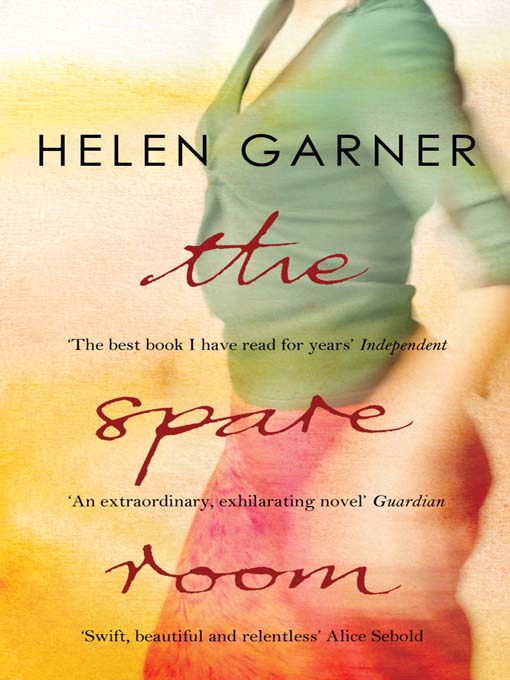
Helen Garner: The Spare Room (2008)

untitled

Helen Garner’s The Spare Room was one of the books I found at work. I started it immediately and finished it almost in one sitting. Garner has chosen a difficult topic and written about it beautifully. Despite the sad topic, it’s an uplifting book.

Helen’s friend Nicola is very ill. She has stage four metastatic cancer. This means it’s terminal. Chances that she will recover are less than minimal. Looking for a miracle cure she asks her friend if she can stay with her in Melbourne for three weeks. Helen doesn’t know any details. She doesn’t know that Nicola is in denial. She just wants to help her friend and accepts.

Nicola always used to believe in alternative medicine. But what works for all sorts of ailments, does not work for terminal cancer. Many late stage cancer patients cannot accept the fact that they are dying which makes them an easy prey for frauds and con men. The clinic Nicola will visit during her stay is not much different. The cure has no value but terrible side effects. And it costs a fortune. What Nicola would really need is palliative care but she thinks getting palliative care will speed up her death.

Caring for her friend is beyond Helen’s strengths. Like Nicola, she is over 60 and washing sweaty bed sheets every night, seeing her friend in horrible pain and denial sucks all her energy from her.

“It’s just that in my work,” said Carmel, “I’ve learnt that there are people who never, ever face the fact that death’s coming to them. They go on fighting right up to their last breath.” She paused. “And it is one way of doing it.”

This must sound like a bleak story but it’s not. It’s honest and even funny, stripped of everything but the bare reality. The worst part is that the two women have to live a fake relationship as Nicola doesn’t want to accept she will not be cured. She smiles constantly, pretending everything is alright. She doesn’t want to feel her emotions and in doing so triggers them in others. All those who care for her feel desperate, sad and angry while she keeps on grinning.

When Helen is at the end of her strength, she confronts her demonstrating that sometimes you really have to be cruel to be kind. When they finally speak openly about the fake cure and the probability that Nicola will die, things get better and they are able to live moments of true friendship again.

Oh, I loved her for the way she made me laugh. She was the least self-important person I knew, the kindest, the least bitchy. I couldn’t imagine the world without her.

I devoured this book. Its spare prose is beautiful. Its honesty was soothing.

I’ve seen this happen quite a few times around me. People get very ill, terminally ill but until the last moment they deny it. No real conversations are possible and what little time is left is spent chasing a miracle cure.

But Garner goes one step further. She also writes about the caregiver and how incredibly strong you must be to perform the tasks which are needed. How much you may come to hate the person who depends on you because it’s so tiring and stressful.

The Spare Room is astonishing because it’s so well written and manages to be ultimately uplifting through its gentle humour, honesty and in  showing what true friendship can achieve.

This review is my first contribution to the Aussie Author Challenge 2013

Aussie-Author-Challenge-2013

We all know that search engines work in mysterious ways that’s why I add this caveat: 

For anyone reading this who is afflicted by cancer or has friends or family who are ill, please be aware, that the case in this book is not just a simple case. It’s a stage four metastatic cancer. I’m saying this because I don’t want to rob anyone of their hope. Many cancer patients, especially when their illness has been discovered early on, can be cured, notably when the tumour is operable. There are but a few types like the very aggressive malignant glioblastoma multiforme which leave you with hardly any chance.

Bookish Luck

Underworld

Someone at work had the idea to install a corner for abandoned books in the coffee area. People who want to get rid of their books can leave them on some shelves. Of course I had to have a look. Within a few days the shelves were crowded. Surprisingly there were more unread than read books. Most of the books which showed signs of having been read before were by authors I’m not interest in but there were quite a few brand new copies of books I had wanted to buy anyway or which looked interesting. So over the last weeks I’ve been adopting quite a few of them.

Here’s the booty:

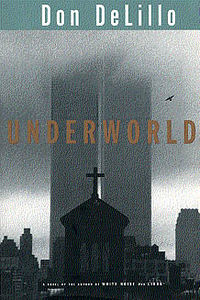
Underworld

Don DeLillo – Underworld

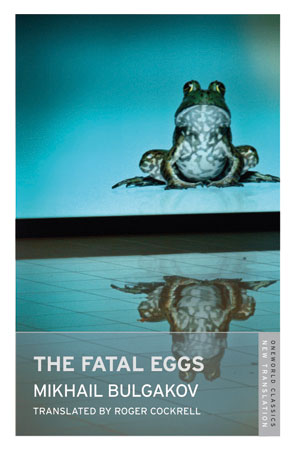
Fatal Eggs

Mikhail Bulgakow – The Fatal Eggs

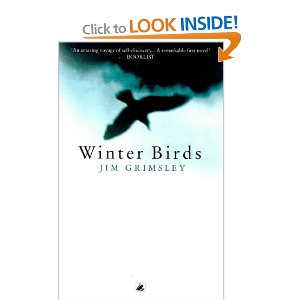
Winter Birds

Jim Grimsley – Winter Birds

untitled

Helen Garner – The Spare Room

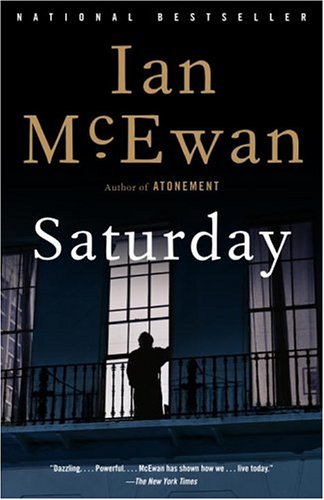
Saturday

Ian McEwan – Saturday

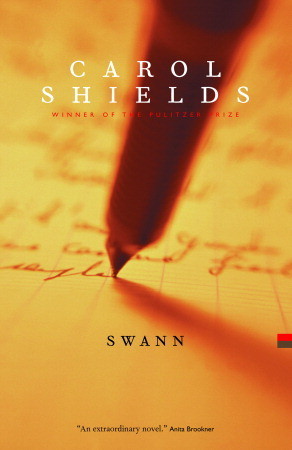
Swann

Carol Shields Swann

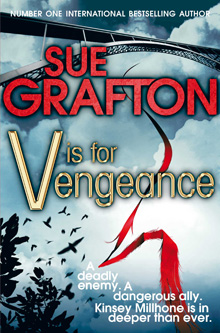
v-is-for-vengeance

Sue Grafton  – V is for Vengeance

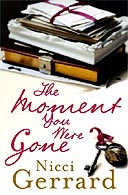
The_Moment_You_Were_Gone

Nicci Gerrard – The Moment You Were Gone

I think I was very lucky.

While I’ve never heard of Jim Grimsley before, I’ve already started Helen Garner’s  The Spare Room which had been on my wish list anyway. I was so pleased to find it. I absolutely love it and will review it shortly. If it wasn’t so bulky, I’d be tempted to start Underworld next.

Do you know the books? Have you read any of them?

Carrie Vaughn: Kitty and the Midnight Hour (2005)

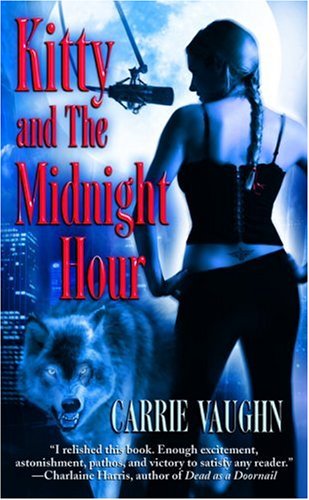
kitty 1

As regular readers of this blog know, I have a weakness for urban fantasy and I like to start new series. Often I stop reading them after volume 2 or 3 but that doesn’t matter much.

I’ve read a lot of good things about Carrie Vaughn’s  Kitty Norville series and thought I give it a try and read the first book in the series Kitty and the Midnight Hour. I didn’t regret it, it’s a breezy, fun read with a lot of elements which are typical in urban fantasy or paranormal crime but also infused with a nice dose of originality.

Kitty has two important features. She’s a radio DJ and she is a werewolf. Usually she works the night or rather the midnight shift at the radio station. It isn’t the most popular show until she has the uncanny idea to transform it in a late-night advice show for supernatural beings. Who would have thought that there are so many vampires, werewolves, shape shifters and what not in Denver? And that they all are in need of advice?

Kitty is still a young werewolf and as such at the bottom of the pack. Her new show and subsequent success upset the pack dynamics considerably and soon she must fear for her life. Someone is after her and wants her dead. On top of that there is a killer on the loose. A rogue werewolf who kills randomly.

While I wouldn’t say this is as well written as Kelley Armstrong’s’ truly great series, it’s a fun read. Kitty is very smart and witty and a lot of cultural references will even appeal to the more sophisticated reader. I also liked that Kitty didn’t just fit in but actively fought pack dynamics which demand that she, as the youngest female member, has to please the alpha males whenever they like. Kitty is too intelligent, strong and determined, to just accept things the way they are and always used to be. If it means to break with tradition to fight for her rights, so be it.

The idea of the “Midnight Hour” was what made this series stand out as it’s truly funny.

I might pick up book two in the series as the combination of witty humour, a strong endearing heroine and a gripping crime made for a very entertaining read.

Not everyone’s cup of tea but lovers of werewolf novels, fans of paranormal crime and urban fantasy should give it a try. It’s one of the best of its kind. For those who like their series with different paranormal creatures, yes, there are vampires as well.

Literature and War Readalong March 28 2013: The Heat of the Day by Elizabeth Bowen

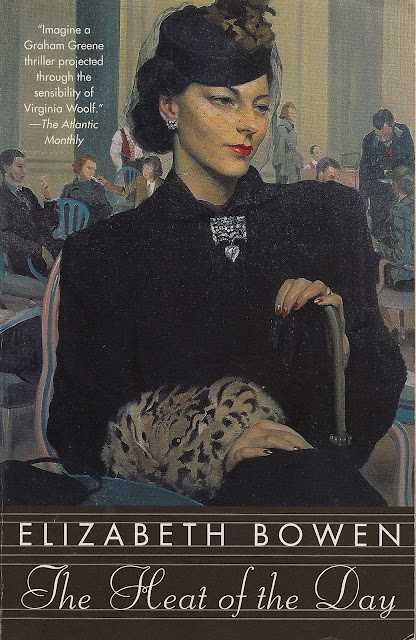
The Heat of The Day

March is Elizabeth Bowen month for me. I’m reading her short stories and Victoria Glendinning’s Bowen biography. It’s time to get to one of her novels and I’m looking forward to reading The Heat of the Day. In the foreword to her biography Glendinning writes

She is to be spoken of in the same breath as Virginia Woolf, on whom much more breath has been expended. She shares much of Virginia Woolf’s perception and sensibility: but Elizabeth Bowen’s perception and sensibility are more incisive, less confined, more at home in the world as well as in world’s elsewhere.

The Heat of the Day is set in London in September 1942. It’s called “a noir” which isn’t exactly a genre I would have expected from Elizabeth Bowen but she has a knack for the mysterious and less obvious which, I’m sure, will make this a great read.

Here are the first sentences

That Sunday, from six o’clock in the evening, it was a Viennese orchestra that played. The season was late for an outdoor concert; already leaves were drifting on to the grass stage – here and there one turned over, crepitating as though in the act of dying, and during the music some more fell.

*******

The discussion starts on Thursday, 28 March 2013.

Further information on the Literature and War Readalong 2013, including all the book blurbs, can be found here.

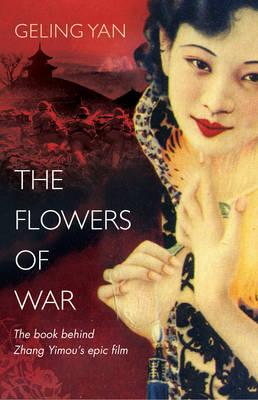
Geling Yan: The Flowers of War – Jingling Shisan Chai (2006) Literature and War Readalong February 2013

The Flowers of War

Geling Yan’s novel  The Flowers of War – Jingling Chisan Chai is set in Nanking in 1937 during The Rape of Nanking or The Nanking Massacre, when the city was occupied by Japanese troops. The story which is inspired by true events takes place in the compound of an American church. Father Engelmann hides a group of school girls and when some prostitutes from the nearby brothels climb over the wall, he hides those as well. Later, three Chinese soldiers, two of which are badly wounded will also come and seek refuge. Their presence endangers the others greatly.

The Rape of Nanking is one of those horrific events which are hard to imagine and I was very curious to see how the author would handle this. I must say she’s written an amazingly powerful and beautiful book which gives us a good impression of what has happened without dragging the reader down too much. Still, especially due to the very sad ending, we never doubt for one minute how atrocious this must have been, notably for women.

Having a group of beautiful and very seductive prostitutes hide in the compound also leads to comical moments. The girls are still very young and pious and hate “those women” with a vengeance. The prostitutes on the other hand love to provoke and shock the priests and the girls.

In the beginning of the novel nobody expects that the Japanese occupation will turn into such a nightmare and Father Engelmann frequently says that he knows the Japanese to be very polite and expects that they will stay civilized and follow the Geneva Convention. When rumours of rapes and executions are spread he learns that he was wrong.

Because the church is neutral territory, Engelmann lives under the assumption that they are all safe inside of the compound. Safe but hungry because there is hardly any food left in Nanking. However Engelmann is wrong and the end of the story is harrowing. The Japanese don’t only enter the compound because they are looking for food but also because they are looking for women. It is known that the Japanese took female prisoners and used them as so-called “comfort women” and turned them into prostitutes or rather sex slaves.

I didn’t expect to love this book so much but I did. Geling Yan tried to show that war brings out the worst in people but also the best. It explores different moral choices and questions what is really good and what is bad. In the end, the prostitutes who are seen as bad, are the ones who prove to be capable of the greatest kindness and compassion.

The characters are very well-developed. We learn the back story of almost all of the characters and truly care for them by the end. There are numerous moments in which two people are listening and caring for each other and manage to share true beauty despite of the mayhem that is raging outside.

It occurred to Fabio that he might stop drinking if he had someone to tell his troubles to. A listening face like hers was intoxicating enough.

I thought this was one of the most subtle books on war I’ve read so far. It’s written in a very simple, straightforward and engaging way and tells a story of beauty, humour, sacrifice, compassion and hope without ever letting us forget the horrors or minimizing them. The biggest strength were the many characters which came alive in a few sentences.

When I choose a book for the readalong I tend to focus on the war aspect but ultimately The Flowers of War has a lot to say about the precarious condition of women.  The stories of the prostitutes are heartbreaking. It’s also well shown how conditioning makes other women, in this case the girls, hate them because of their trade. They are treated like the scum of the earth although they are good-hearted and kind and in most cases had no other choice. Many come from poor families and have been sold to brothels at a very young age.

One of the core messages of the book is captured in this quote in which Father Engelmann speaks to one of the Chinese soldiers who hides in the compound

“God used him to give me inspiration. He wanted me to save myself by saving others. God wants people to help each other especially when they are injured or weak. I hope you will trust in God. It is God you should trust, not weapons, when you are powerless to control your fate, as you are now.”

I’m looking forward to read what others thought of this novel. I liked it a great deal.

Other reviews

Book

Anna – Diary of an Eccentric

Danielle – A Work in Progress

JoV’s Book Pyramid

Movie

The Flowers of War – Novia (Polychrome Interest)

Book and Movie

Kevin (The War Movie Buff)

*******

The Flowers of War was the second book in the Literature and War Readalong 2013. The next is The Heat of the Day by Irish writer Elizabeth Bowen. Discussion starts on Thursday 28 March, 2013. Further information on the Literature and War Readalong, including the book blurbs can be found here.

Julia Strachey: Cheerful Weather for the Wedding (1932)

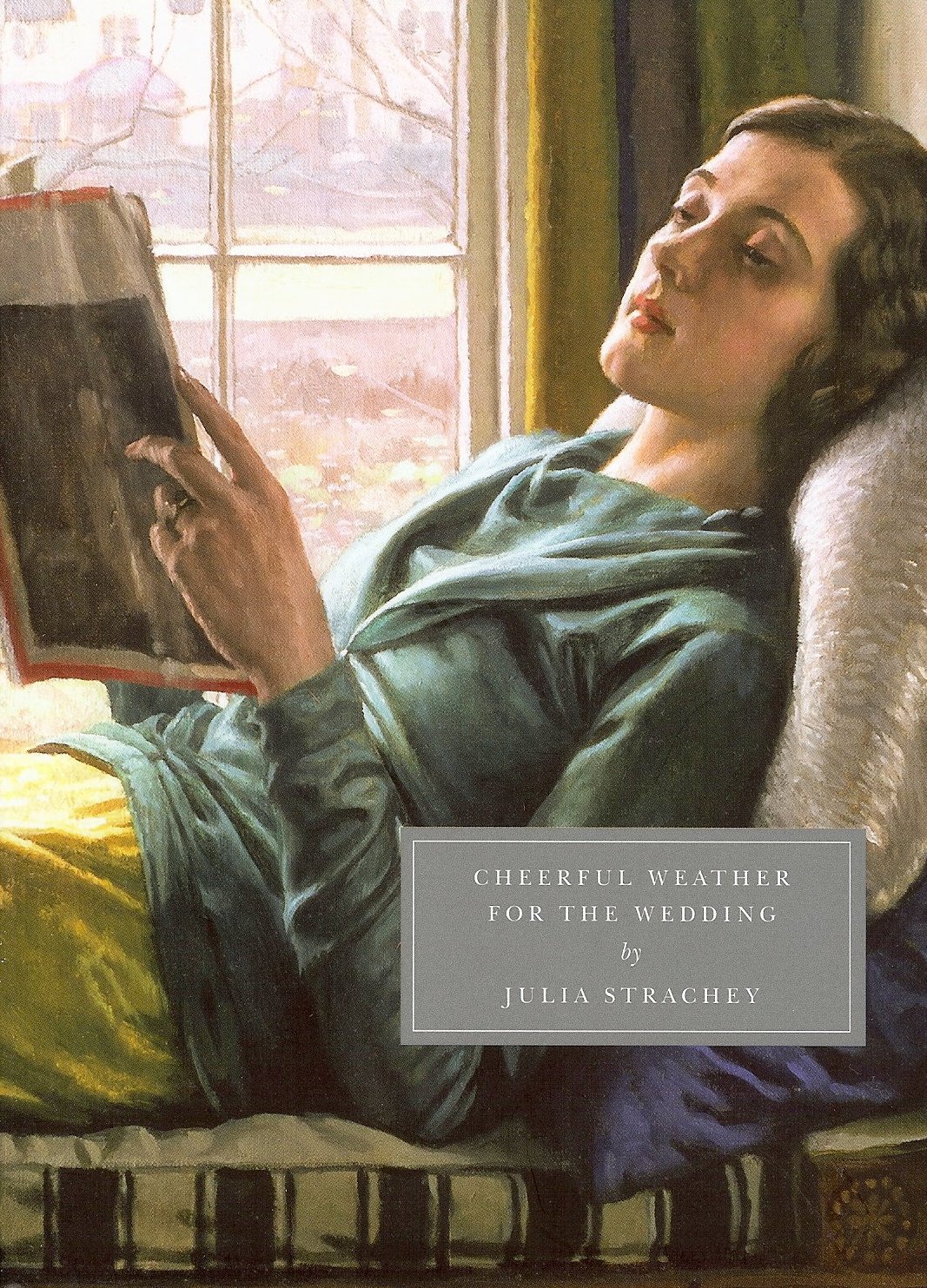
Cheerful Weather

It seems my reading is very influenced by Danielle’s these days as this is the second book in a row I bought after having read an appealing review on her blog.

Cheerful Weather for the Wedding is an absolutely delightful little book; charming but still witty, filled with dry humour, detailed descriptions and quirky characters.

On the cover it is compared to Katherine Mansfield, E.M. Forster and Stella Gibbons which is apt but isn’t giving Julia Strachey enough credit for her originality.

A very crisp March morning slowly turns into a gloriously bright but chilly day. Dolly is about to get married to the Hon Owen Bingham who is eight years her senior. While she is getting ready in her room upstairs, the guests arrive and gather downstairs. Among the guests is Joseph with whom Dolly has spent a wonderful summer and possibly a love story.

The closer we get to the wedding the more things go topsy-turvy. Mrs Thatcham, Dolly’s mother, who is a very muddle-headed person assigns the same room to different people, the young cousins of Dolly chase and tease each other loudly, Dolly empties a bottle of rum, Joseph starts crying and in the end Dolly and Joseph are caught by Dolly’s soon-to-be husband in something that looks like an embrace.

Reading this book is like watching a dance on a slightly crowded dance floor. While all the dancers know their moves, they get into each other’s way, bump into each other and what we get to see is graceful chaos.

The character portraits are very witty. Dolly and Kitty’s mother, Mrs Thatcham is such an airhead. While there is huge drama going on behind the scenes, she wouldn’t even notice it, if it was brought to her attention. All she seems to care about is that there is cheerful weather for the wedding. Dolly and Joseph’s relationship is a mystery. We really wonder whether she is doing the right thing in marrying Bingham.

The people and their drama unfold within pages full of delicate descriptions which reminded me of Virginia Woolf’s early work. There are descriptions of the way light falls into a room through fern pots and colors it in a greenish hue, of the shades of dresses, the shape of a flower, the pattern on a lampshade. These are delicate and exquisite descriptions which paint a wonderfully rich picture.

Cheerful Weather for a Wedding is a most enjoyable little book which I can recommend to anyone who likes the writing of the early Virginia Woolf or E.M. Forster, infused with a dose of dry wit.

The novella has just been made into a movie starring Elizabeth McGovern (Downton Abbey) as Mrs Thatcham. I was very keen on watching it but it has received an incredible amount of bad reviews and an IMDb rating of 5.1.

Has anyone seen the movie?

And has anyone read other books by Julia Strachey?