I’m Back – Moroccan Impressions

P1040261

I’m back. Almost. It seems that whenever I travel somewhere my body returns earlier than the rest. So while I’ve been back for a couple of days, I’m still somehow stuck in Morocco. Peculiar. Does that happen to anyone else?

I enjoyed it a great deal but it was stressful. We did such a lot and met so many people as we travelled with different people who knew other people in Marrakech and Essaouira. I suppose I’ve seen a few things tourists usually do not see like work shops in which they make wooden boxes and furniture and such.

The temperature was quite high in Marrakech, 38°/100°, while it was cool and very windy in Essaouira, 19°/66°. I was worried it would be too cold in Switzerland but the last couple of days the temperature was around 25°/77°.

I took a lot of pictures in Marrakech but hardly any in Essaouira. What follows are just a few impressions.
P1040264

P1040029

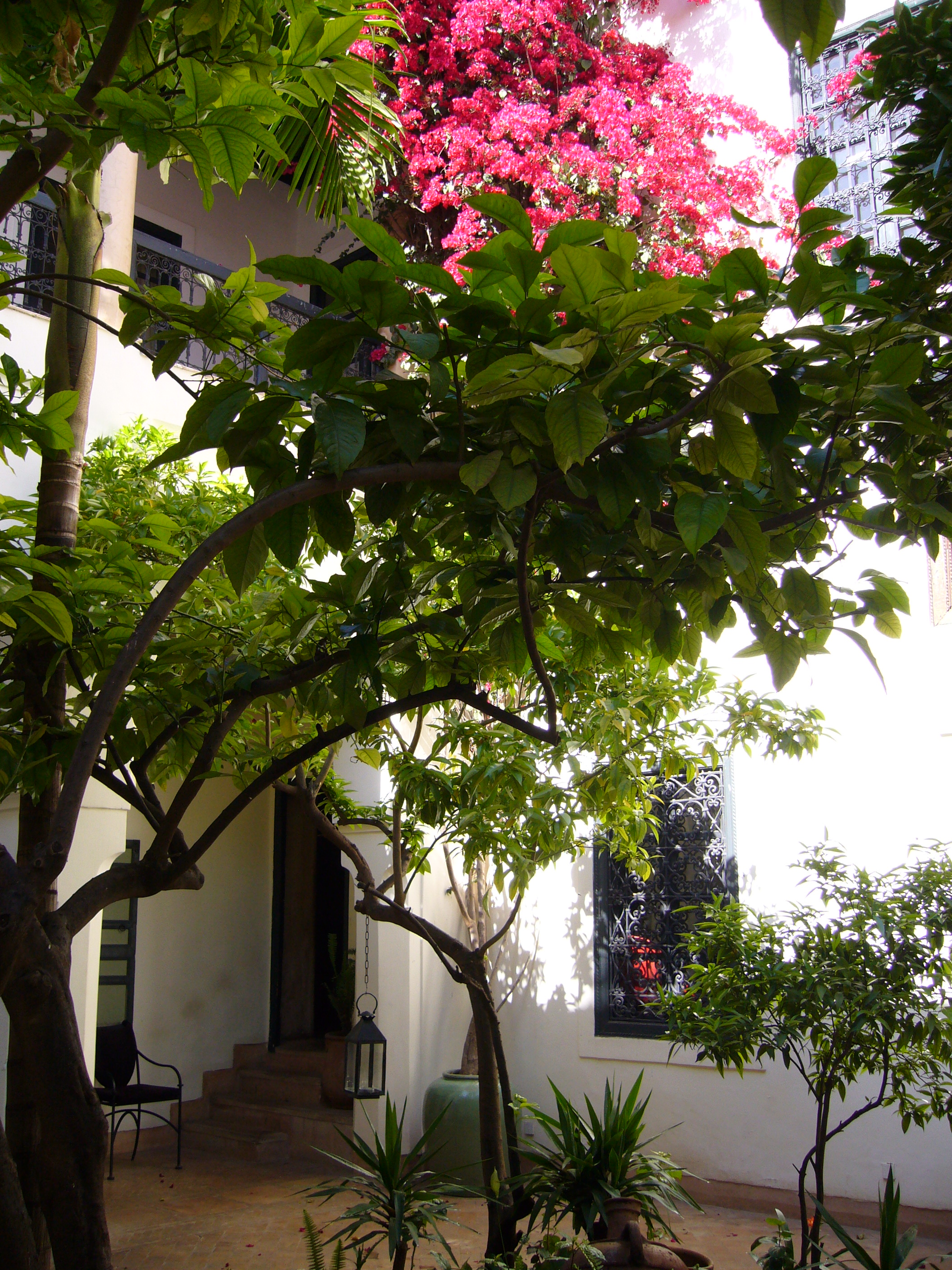
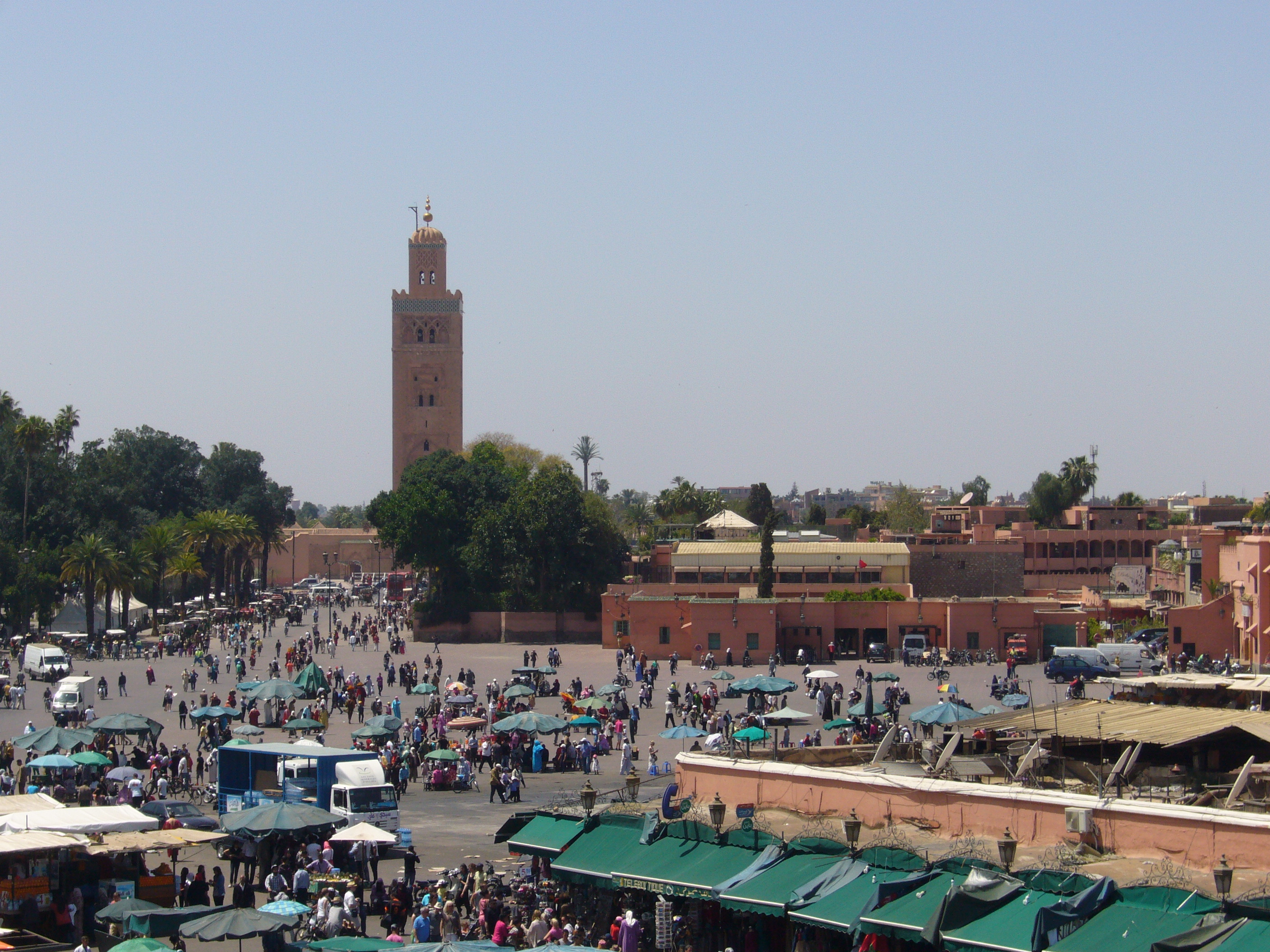
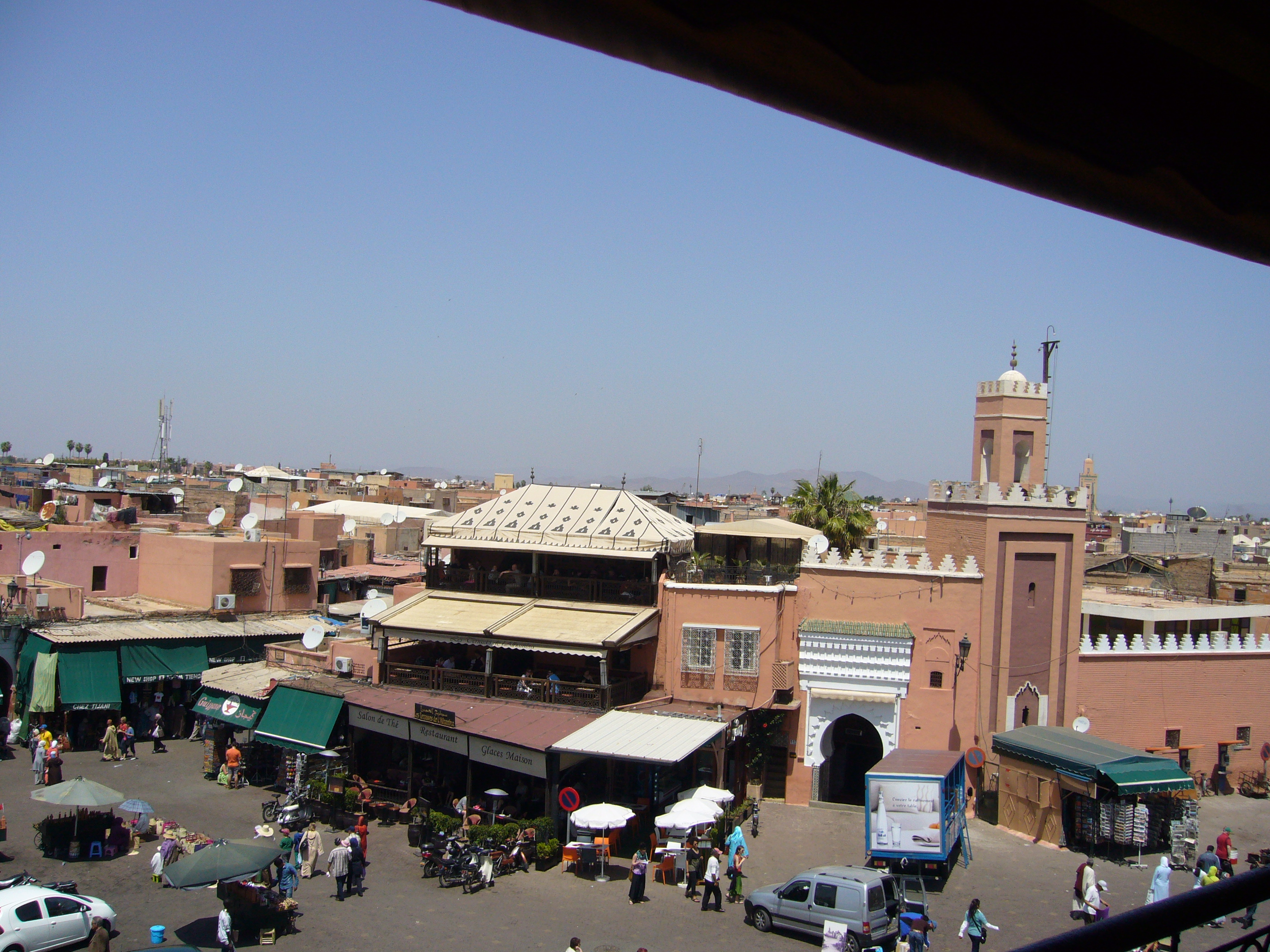
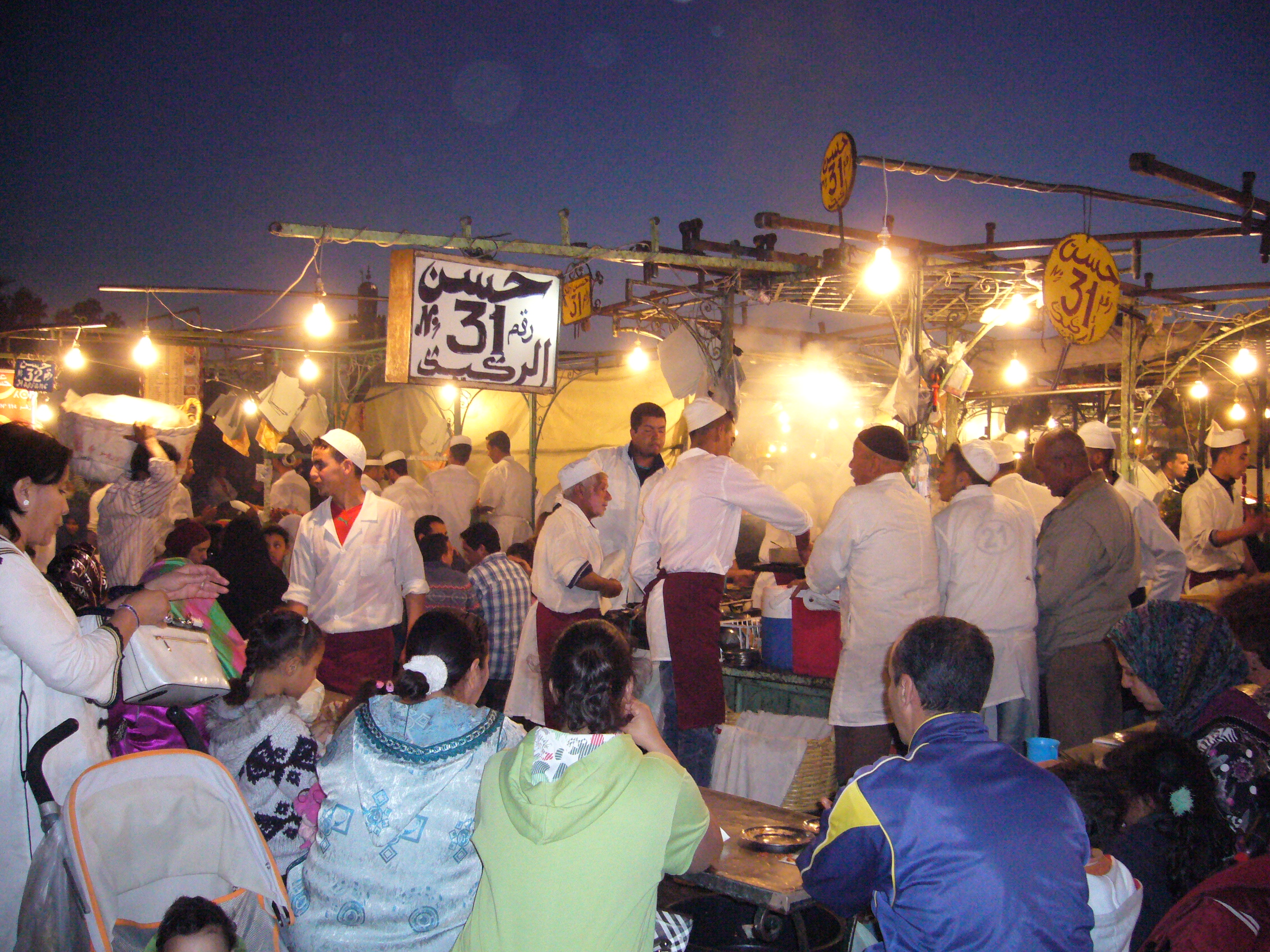
The top picture and these pictures show the famous place, Djemma el Fna, in the heart of Marrakech. The city is divided into two halves, a modern one and the old part with the Medina and covered souks. The place is just located in front of the souks, in the old town. A feature of Marrakech that I like a lot is that there are ramparts around the whole of the old town.

During the day there is some activity but it’s at night that the place really comes to life. I wouldn’t say that it’s a beautiful place as such but it’s incredibly interesting as time seems to have come to a standstill here. There are numerous people performing acts with animals, like medieval jugglers, others are selling things, offering henna tattoos. At night hundreds and hundreds of food stalls offer various food. Mostly grilled meat, fish and vegetables. The place is quite noisy as people laugh and shout, drums and flutes are ebing played. It’s picturesque and colorful to say the least.
P1040124

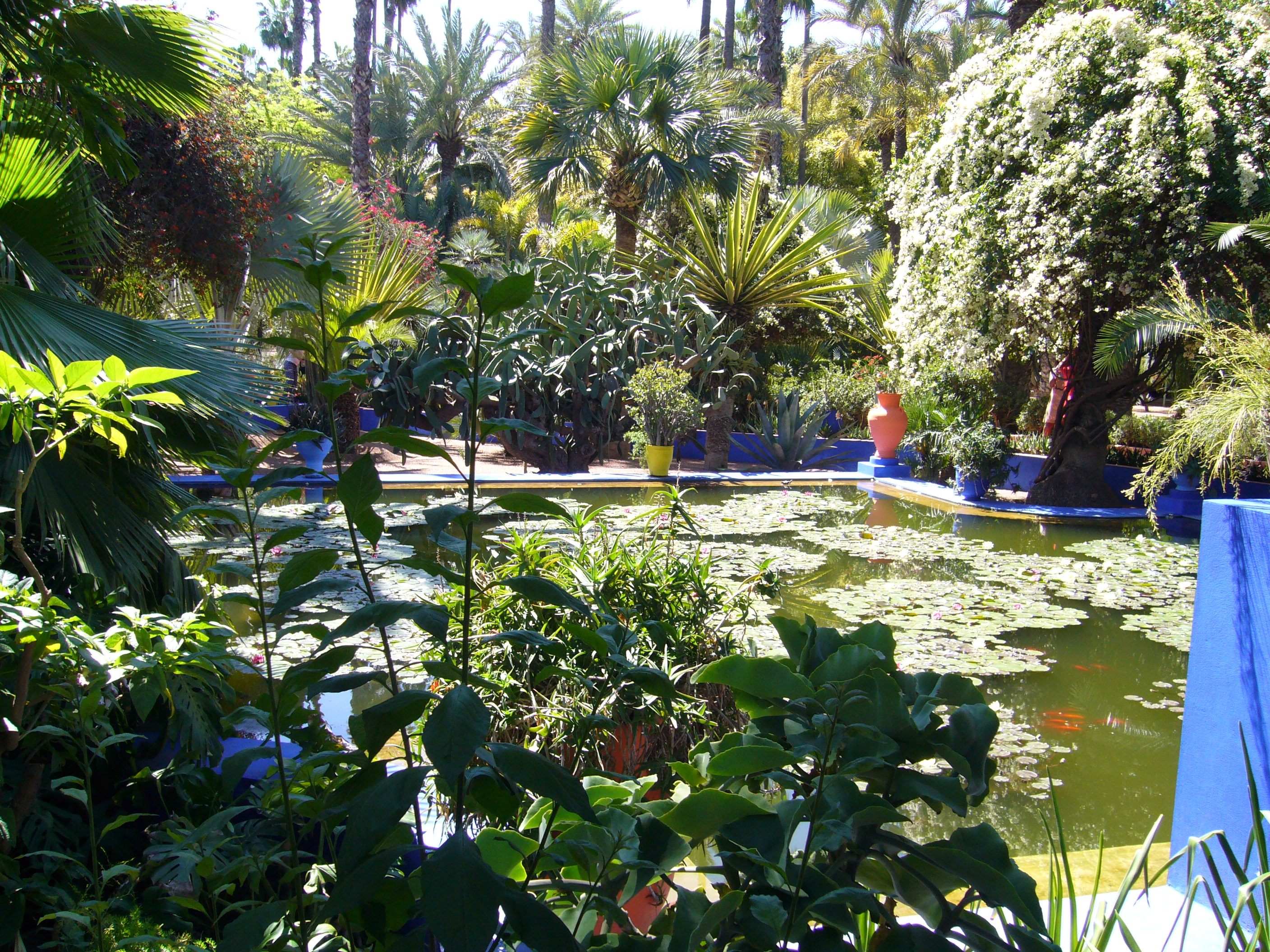
The Jardin de Majorelle which belonged to Yves St Laurent, is a big attraction and very beautiful. Since I’ve been there ten years ago it has been redecorated and the colors were stunning and intense.

P1040091

I don’t think I’ve ever seen so many and such big Bougainvillea bushes.
P1040082

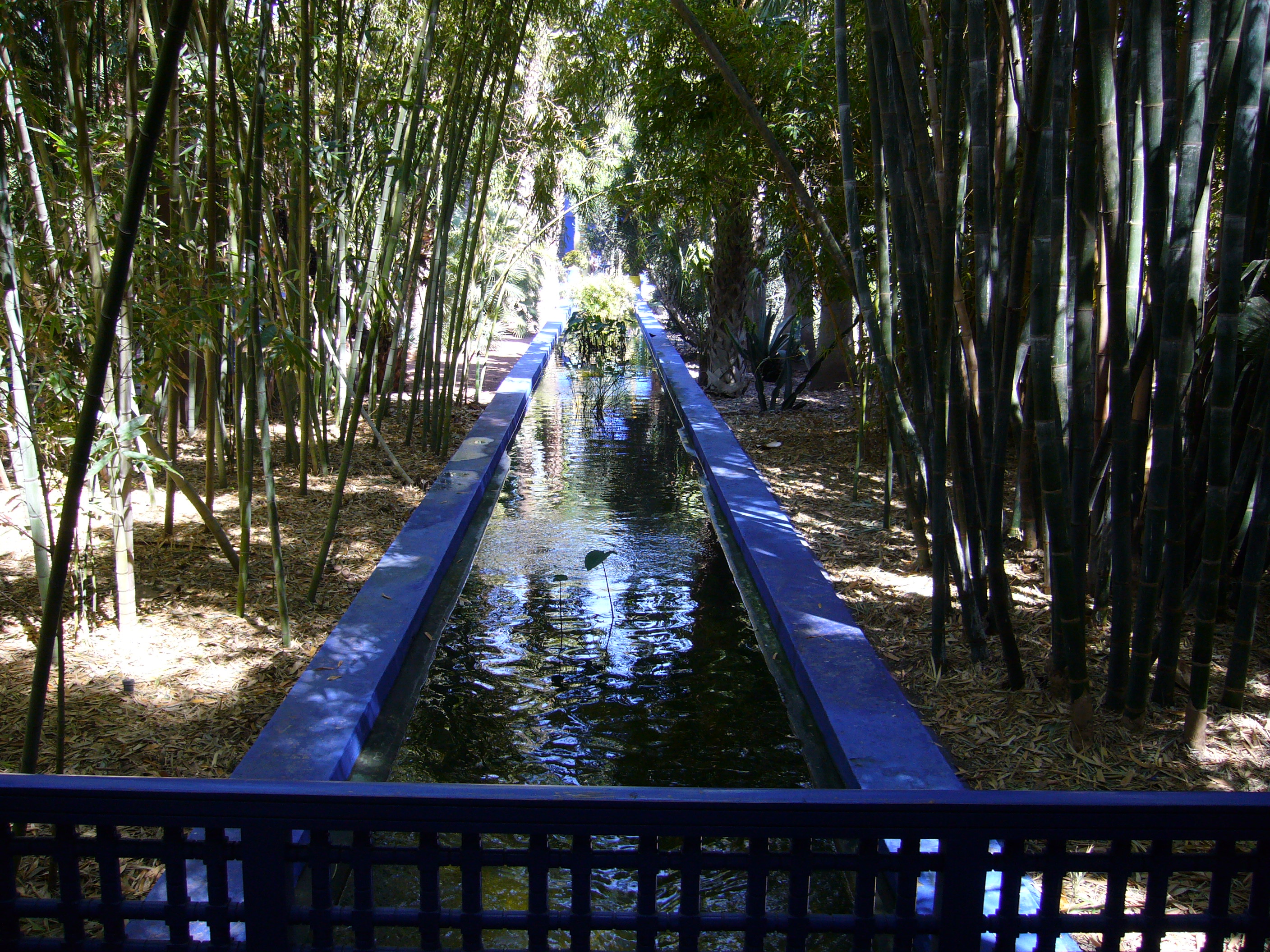
It’s lovely to stand under the bamboo and listen to the wind softly rustling in the leaves.
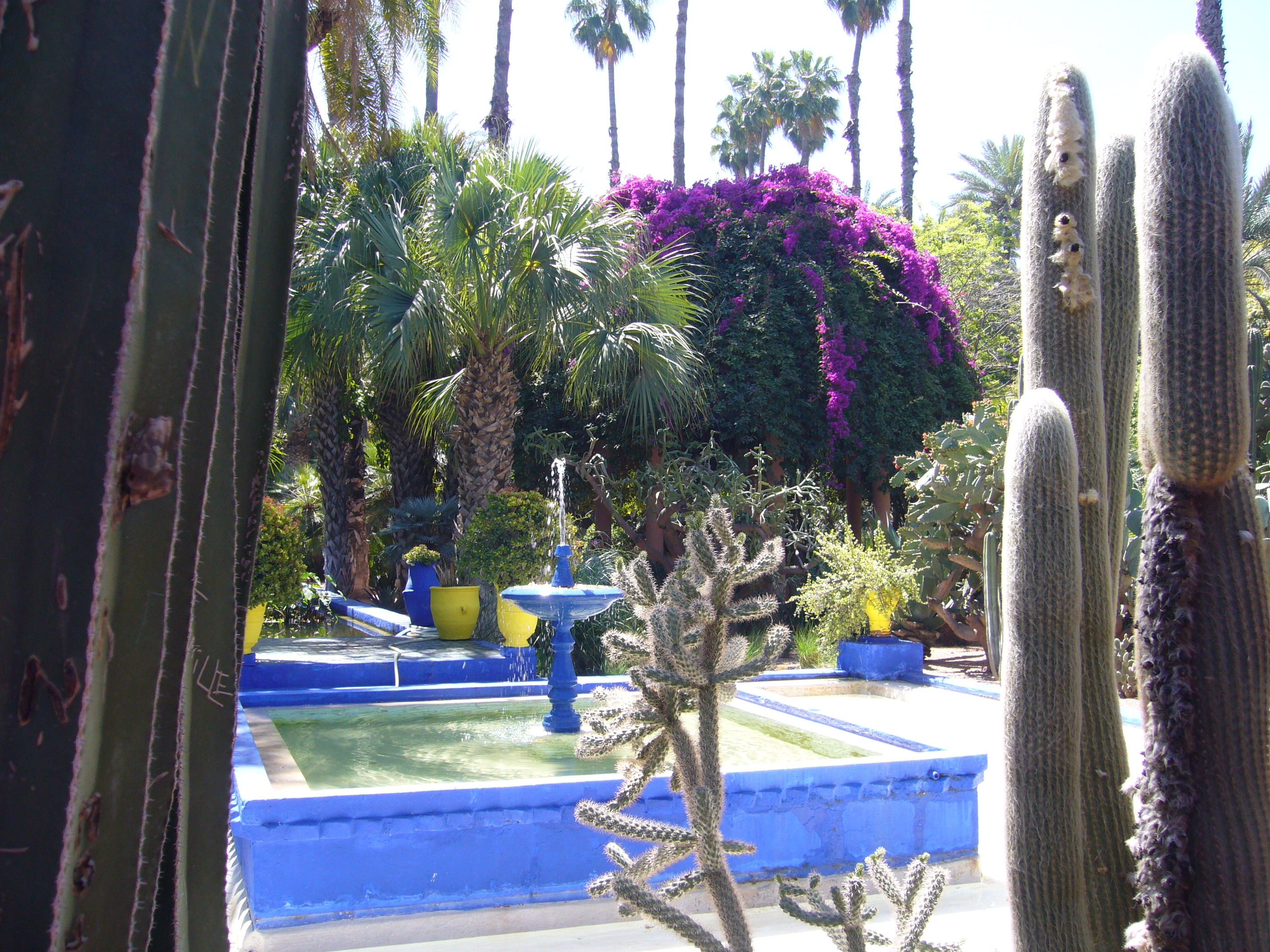
P1040152

There are various ponds and fountains in the garden.
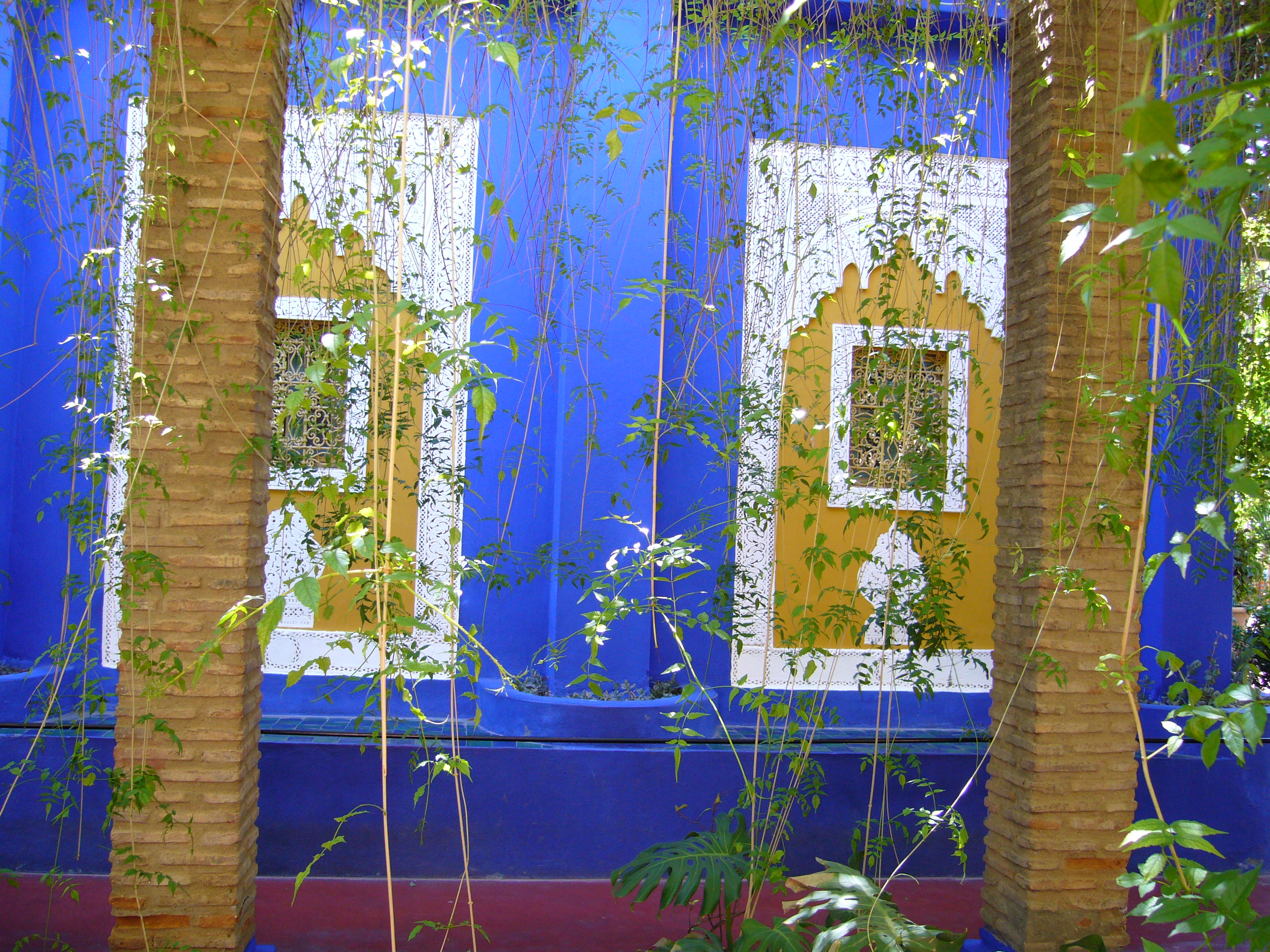
P1040118

The main colors the buildings are painted in are Yves Klein blue, yellow, green and white.
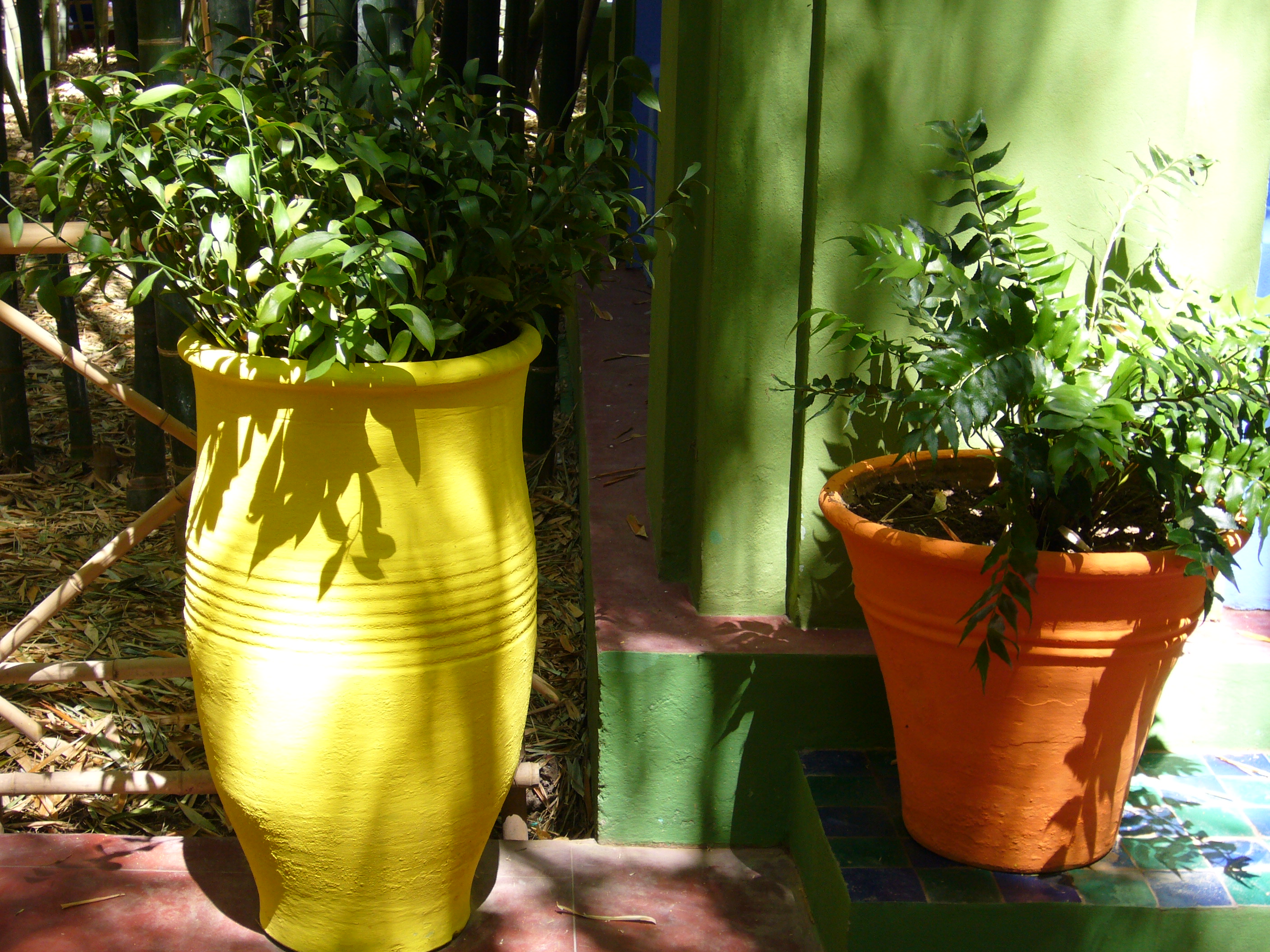
P1040144

Hotel Garden

We stayed in a Riad in the heart of the medina. A stunning place which received a lot of media coverage in Germany and Switzerland. It belonged to the German ambassador in Marrakech and was transformed into a guest house after his death. This is the hotel garden.
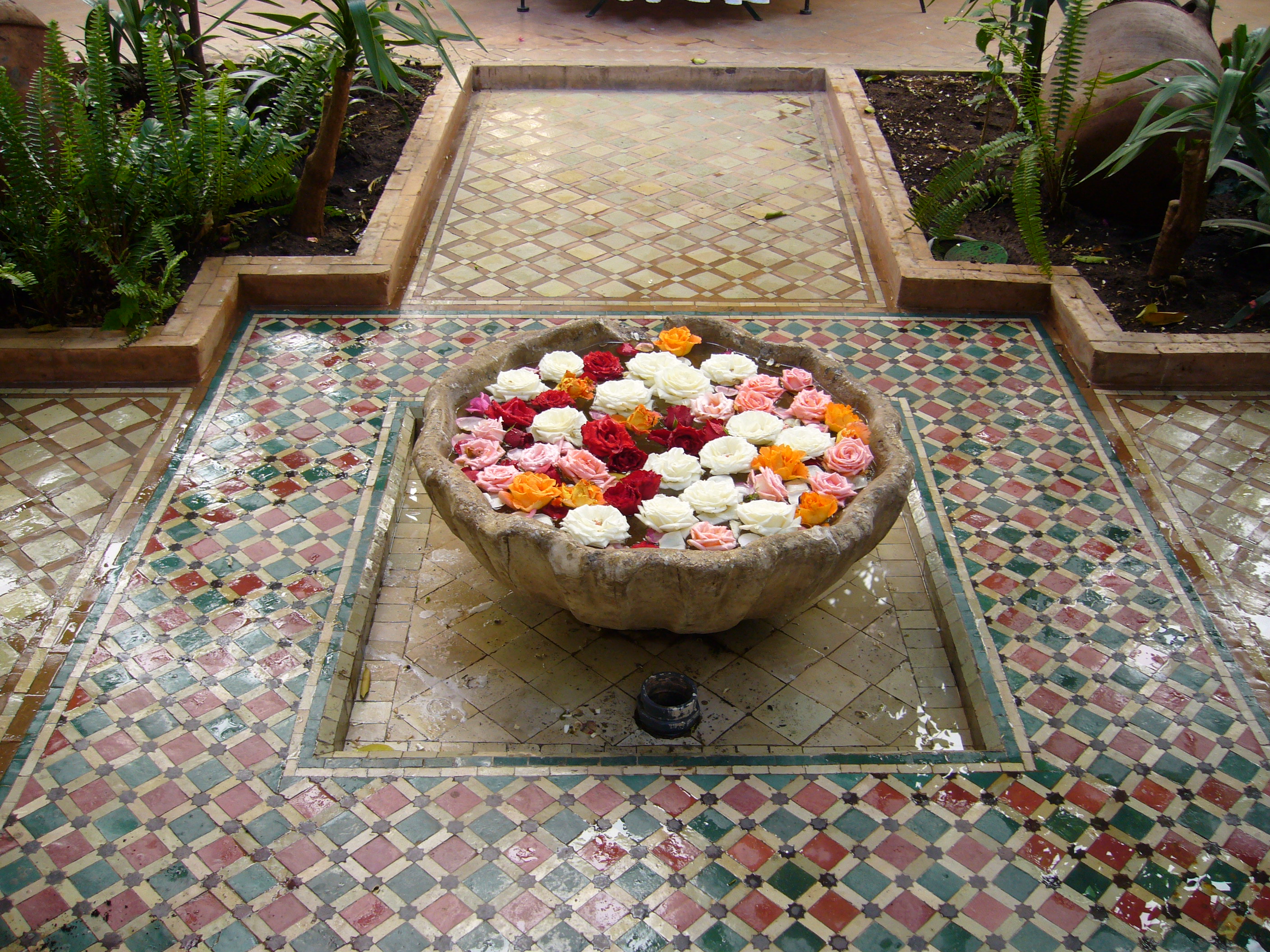
P1030988

The center piece of the hotel garden.
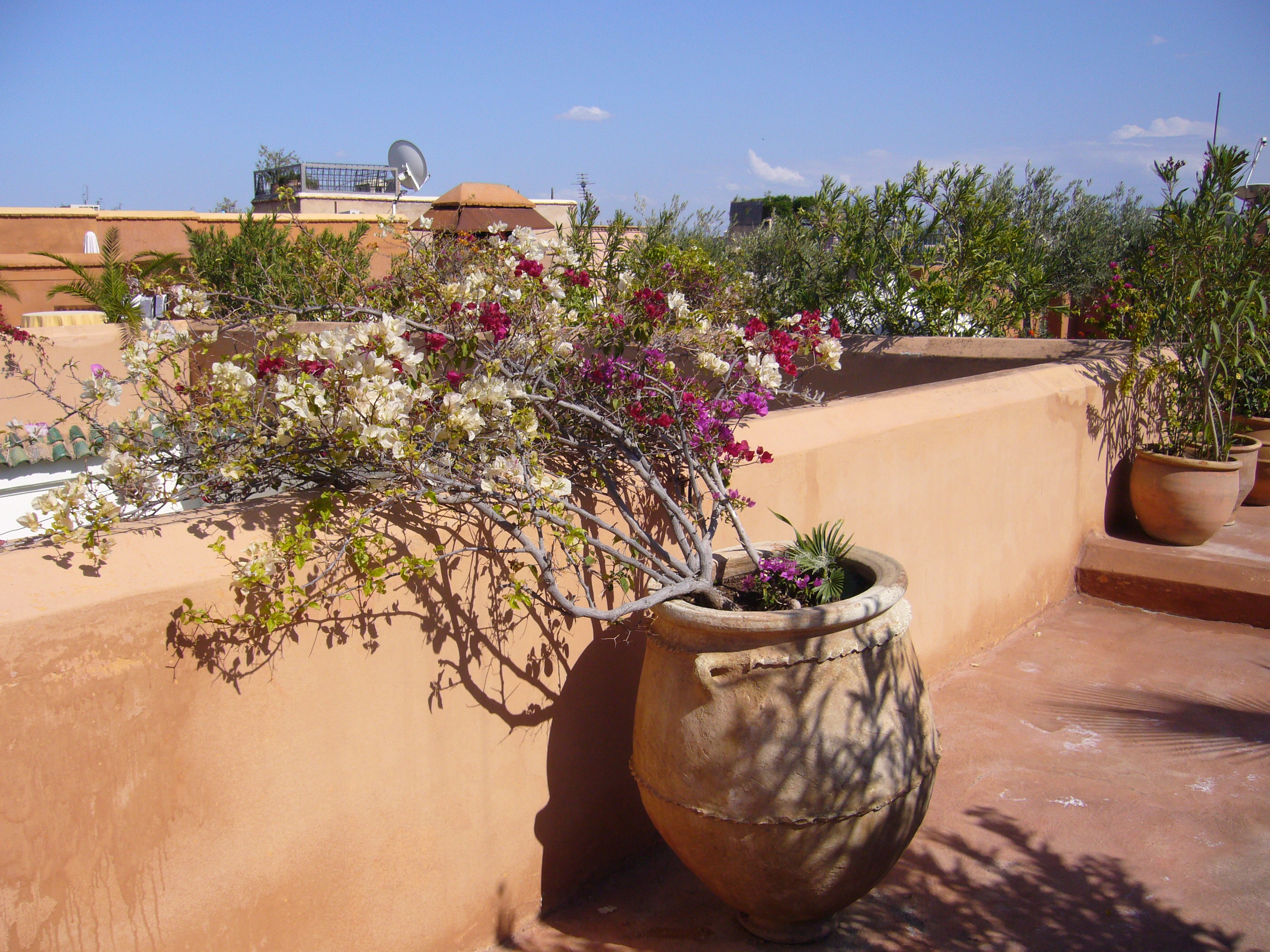
Roof of Riad

A view over the roof of the hotel.

P1030944

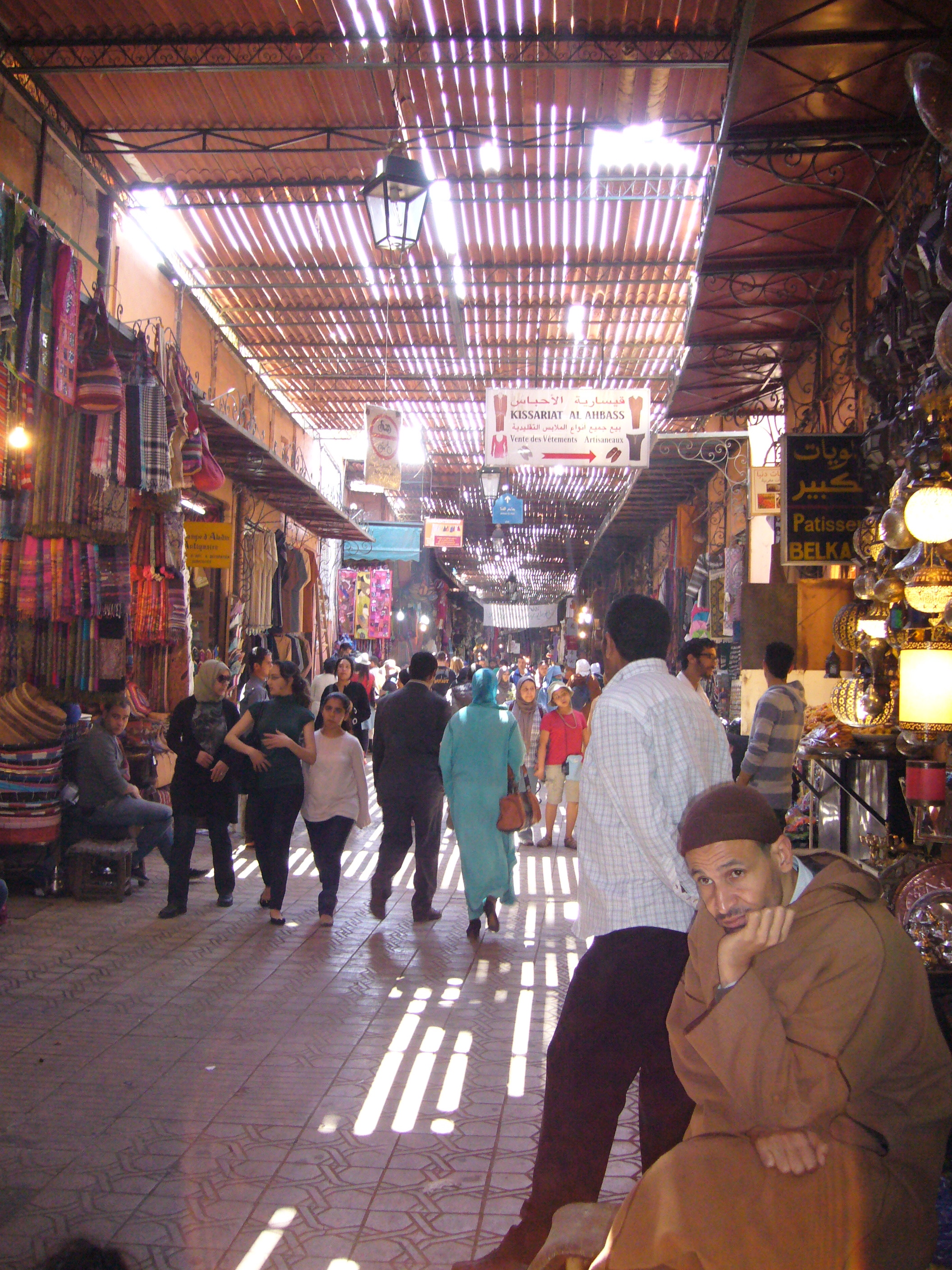
The entrance to the souks. For some vendors business was a bit slow that day.
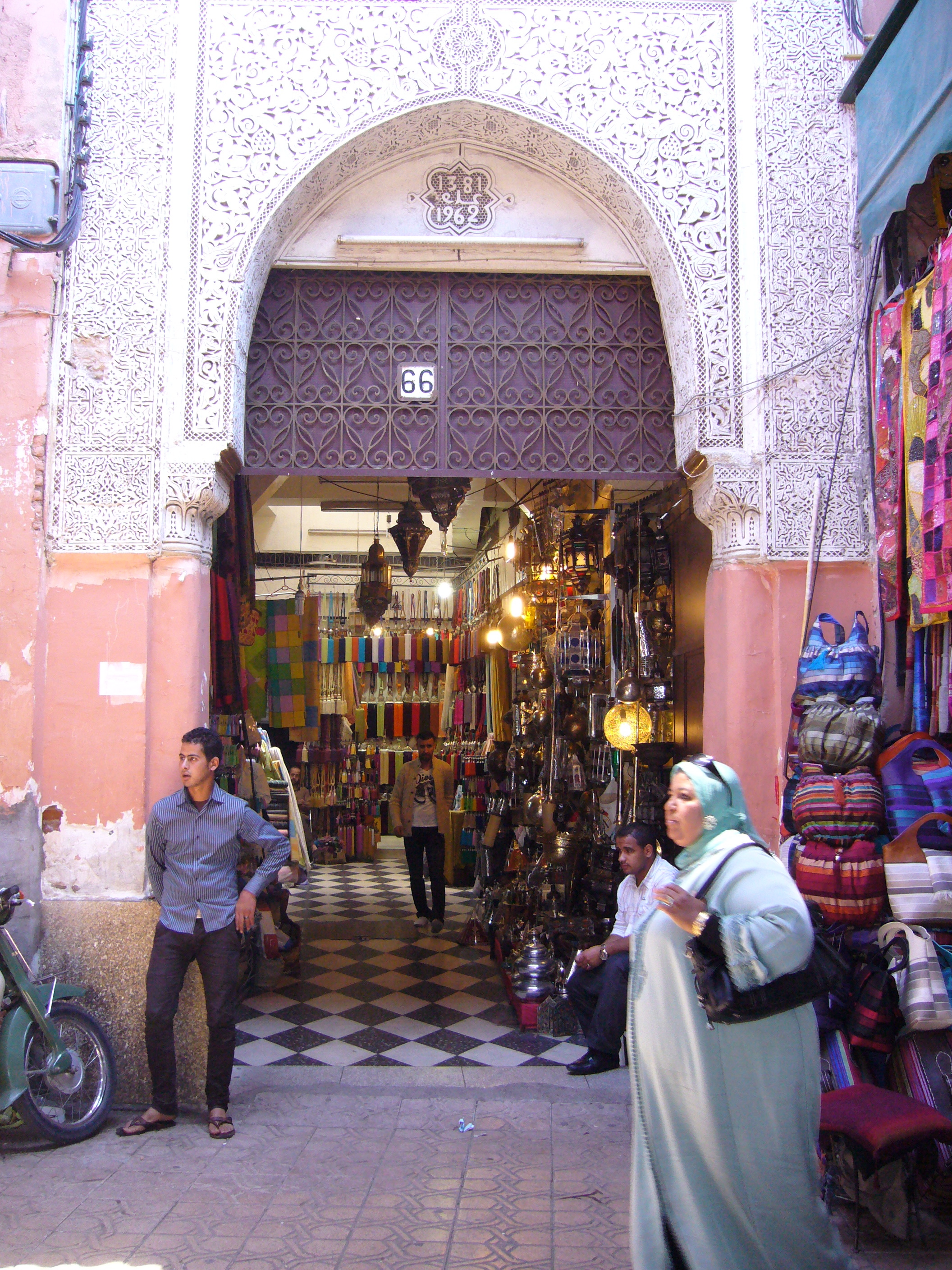
P1030947

One of the many beautiful gates in the medina.

The medina is a giant market. You can find a lot of lovely things in many different materials. Woodwork, spices, fabrics, jewellery, food.
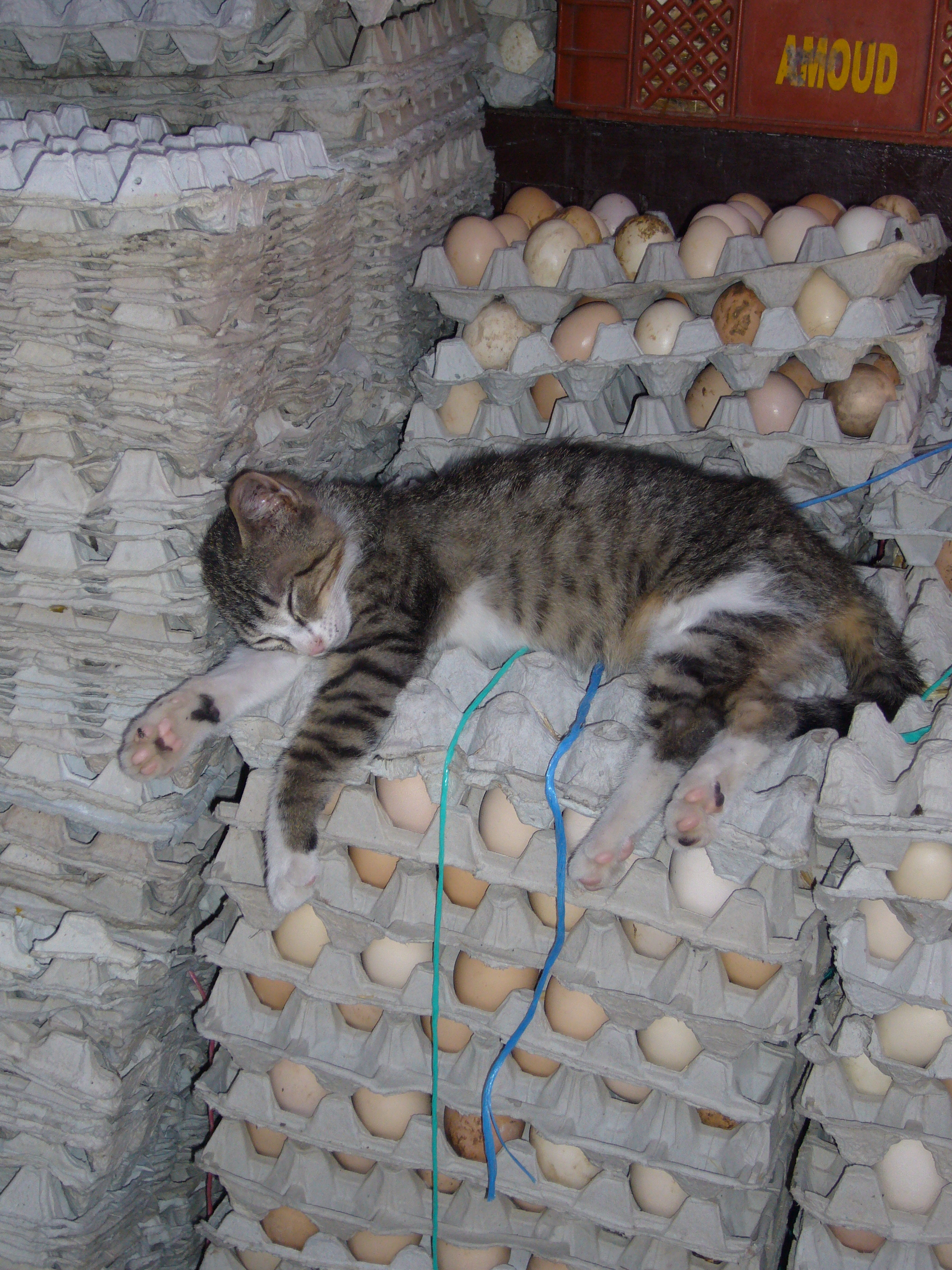
Cat in Medina

This little kitty was sleeping peacefully in the middle of the poultry market. I didn’t take pictures of the market. It wasn’t a pretty sight.
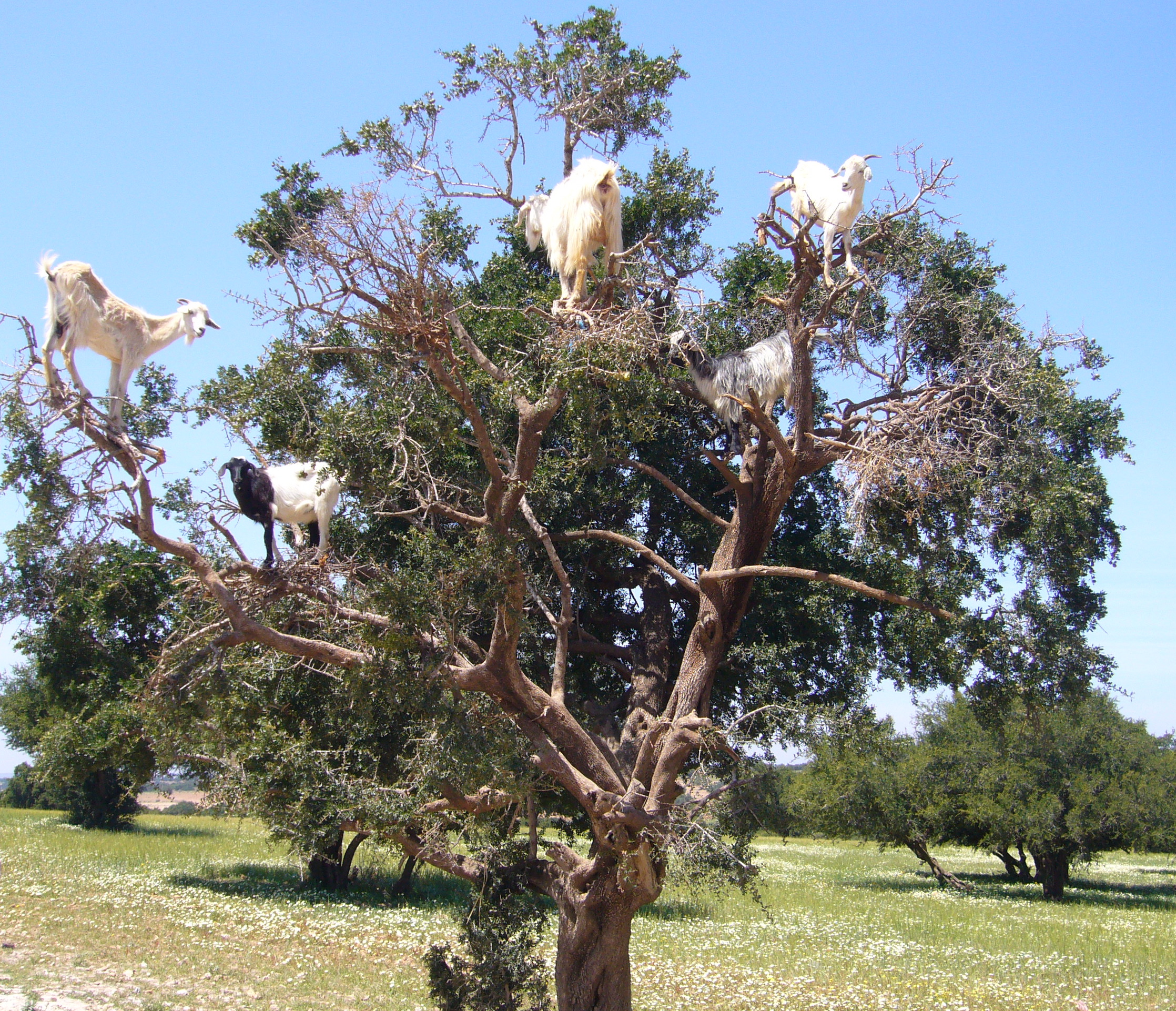
P1040216

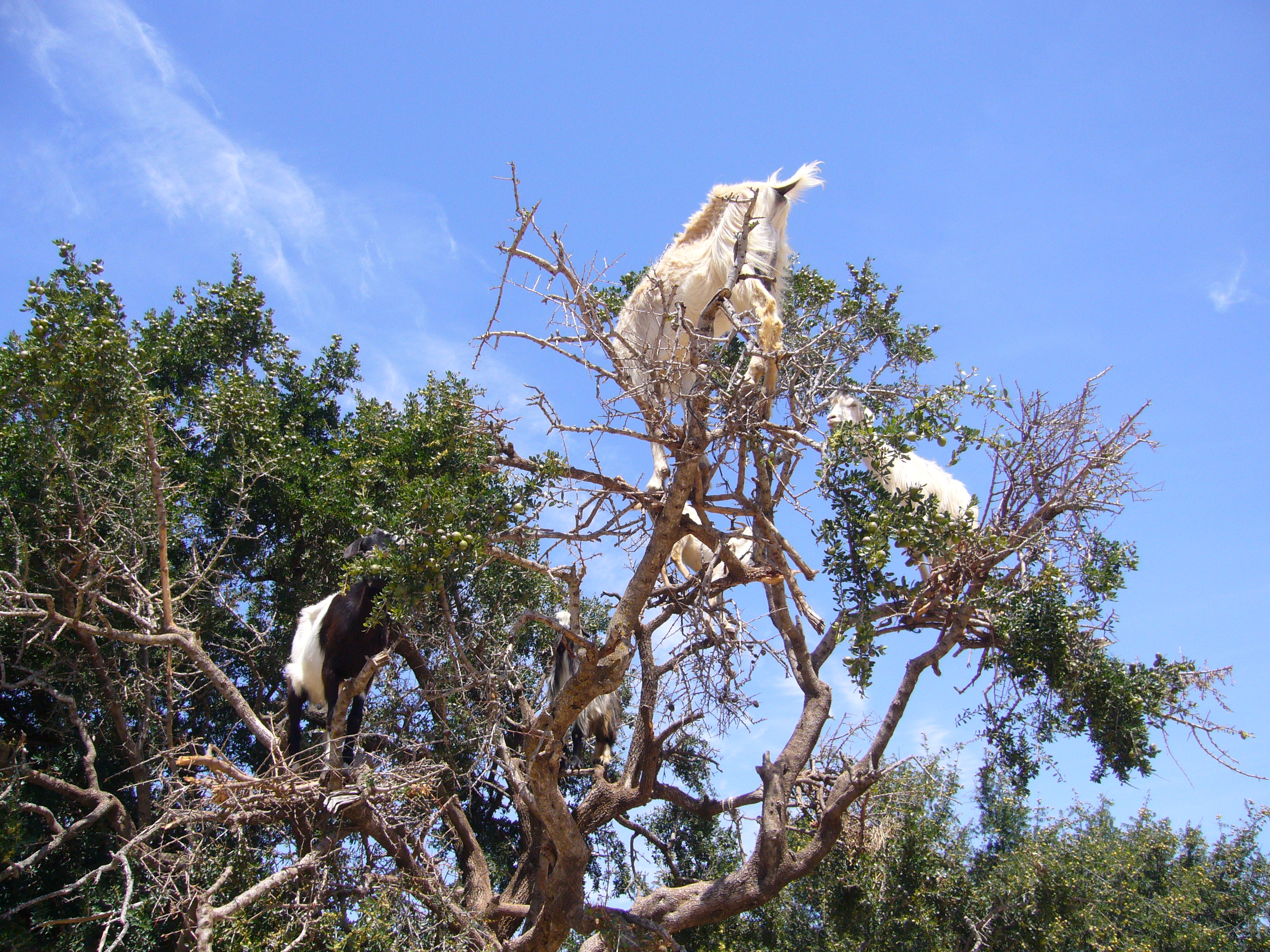
This is a sight you don’t see every day. On the road to Essaouira you find Argan trees. The fruit look like big olives. They are used for making argan oil which is very fashionable at the moment. Even big cosmetic lines like L’Oréal use the oil. It can also be used like olive oil for salad. It tastes very different though, a bit like walnut oil.

The goats climb these trees as they are very keen on the fruit. Along the road you will see many a tree covered in goats. So funny.
P1040219

I didn’t know goats could climb so well.
P1040230

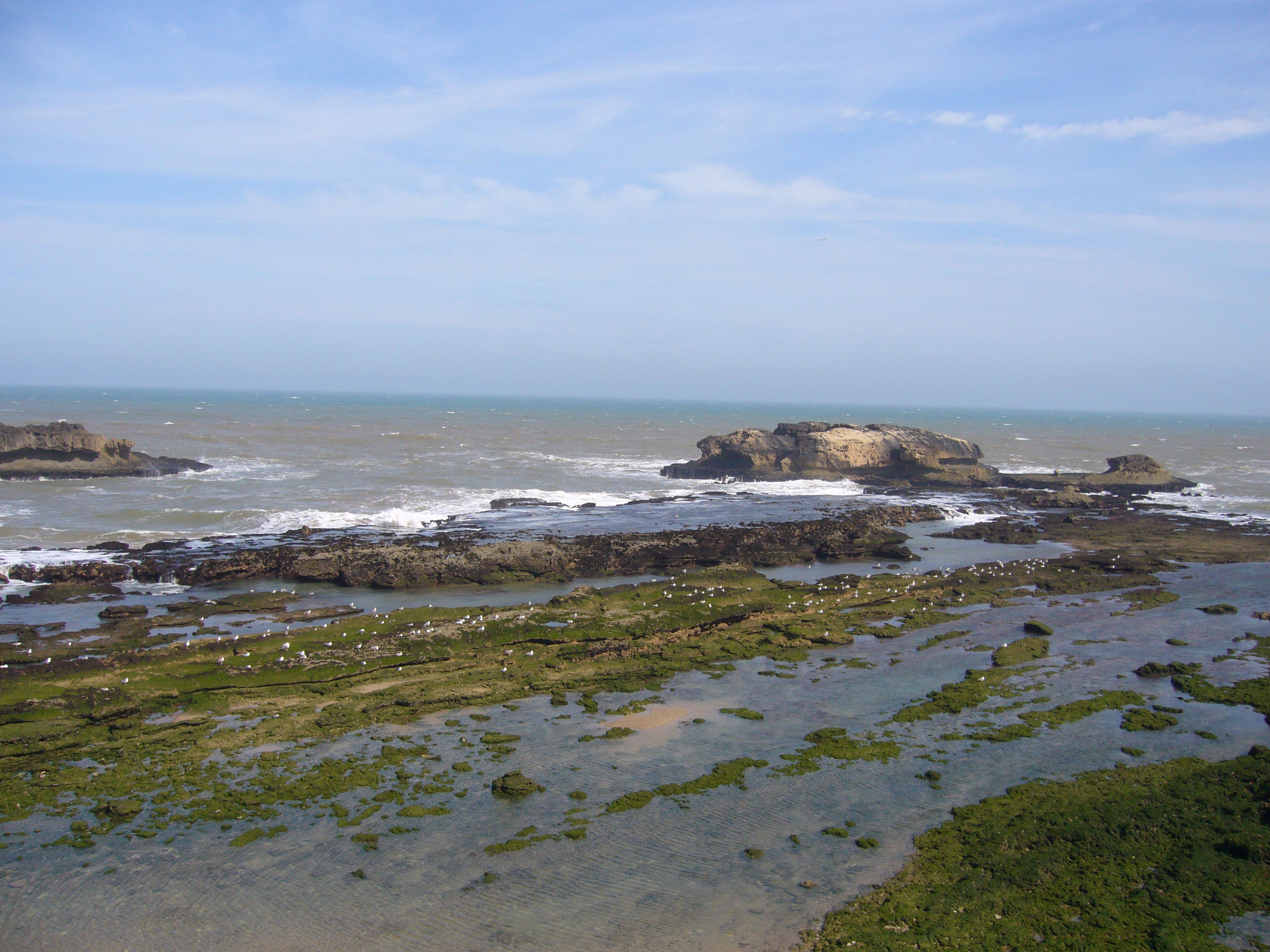
Essaouira is located on the Atlantic ocean. This is the view from the hotel room. The guest house we stayed in belongs to Swiss people who built it two years ago, practically into the ocean. At night the waves can come as high as the second story windows.
P1040245

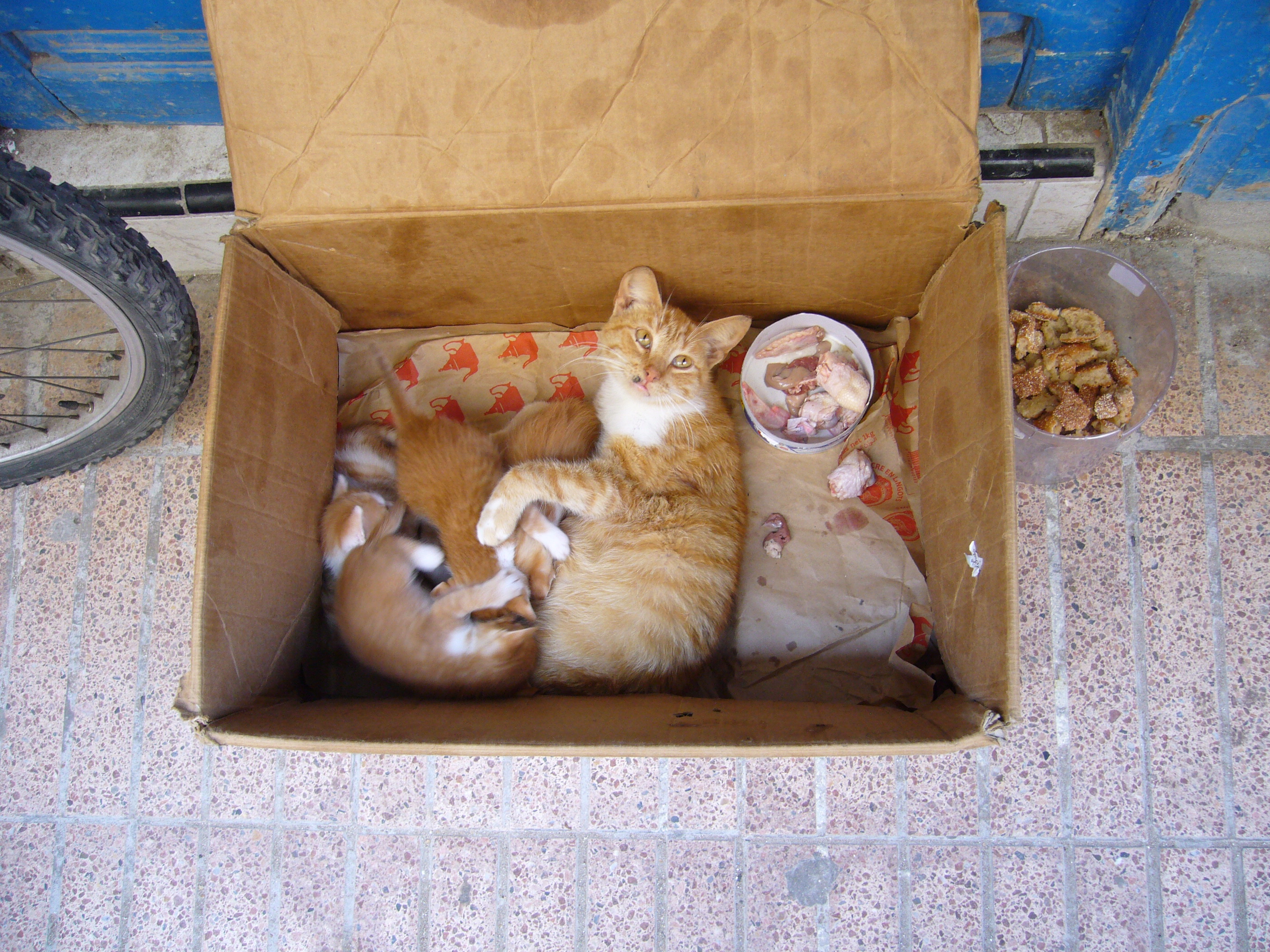
The streets in Marrakech and Essaouira are swarming with cats. Most of the cats I saw in Marrakech were very ill and starving. In Essaouira you always saw some food that was left for the cats. They looked quite healthy. I saw numerous boxes like this one with many kittens. The cutest was a box which three female cats shared with their offspring. A total of 16 kittens. Unfortunately it was impossible to take a picture. They moved too much.

That’s all for now. I hope you enjoyed it.  I might share a few pictures from Essaouira in another post.

I’ll be visiting your blogs shortly. I noticed some of you were busy.
Moroccan Literature and A Blogging Break

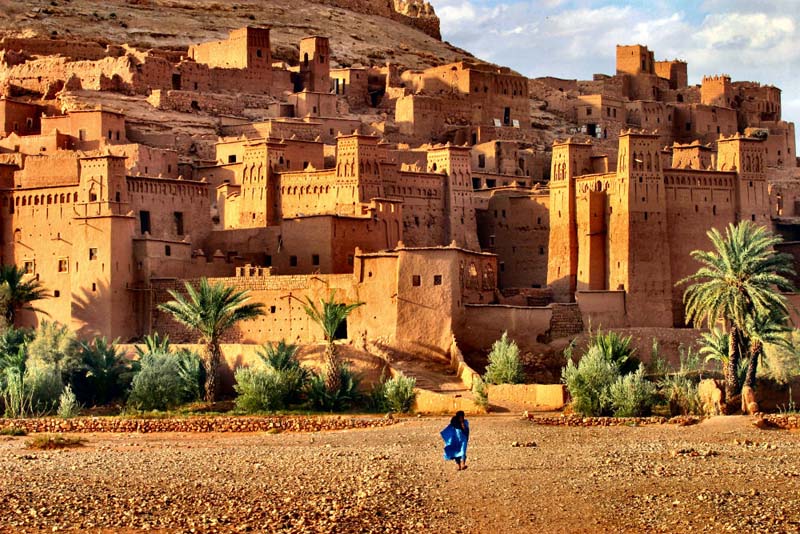
Picture taken from www.trekearth.com

Picture of the Kashbah Aït Benhaddou taken from http://www.trekearth.com

This is just a quick post to let you know I’m taking a blogging break. I’m not sure for how long but I will certainly be back in time for the readalong at the end of the month.

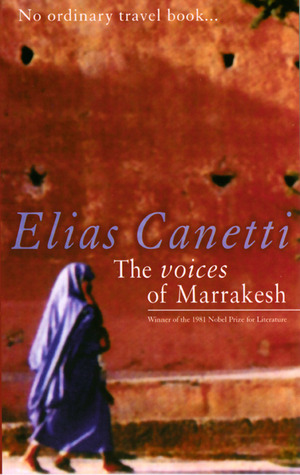
Canetti

Some of you know that one of the reasons for the break is that I’m travelling to Morocco. To Marrakech to be precise. The first time I’ve been to Morocco was in part because of so many European and American writers like Paul Bowles, Elias Canetti, Esther Freud, who loved Morocco and especially Marrakech. The way they described the city made me think I would love it. At first I was disappointed as it was so different from what I had imagined but then I went back and saw the “real” Marrakech and fell in love. I wonder how it will be this time. This trip will be special as I’m travelling with someone who has been there before, someone who has never been there and someone who was born there. It will be interesting to see the city through so many different eyes. From Marrakech we will travel to Essaouira which is on the coast and stay there for a couple of days.

I’m looking forward to this trip as the temperature here is still around 6°C/42,8°F, while in Morocco it should be around 27°C/80,6°F.

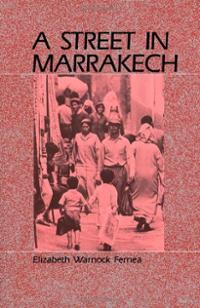
a-street-in-marrakech-elizabeth-warnock-fernea-paperback-cover-art

Another reason why I wen to Marrakech for the first time was Elizabeth Fernea. While studying at the university I took a course on travel memoirs written by cultural anthropologists. One of the titles that made a huge impression was A Street in Marrakech. I’d love to read it again. It’s a fascinating account and a well-written book that captures the magic of living in another culture and the sorrow to leave it again.

The other day I thought it was appalling that I haven’t read any Moroccan writers other than Tahar Ben Jelloun. There are so many, however not all of them have been translated. To put myself in the mood for the trip I compiled a small list.

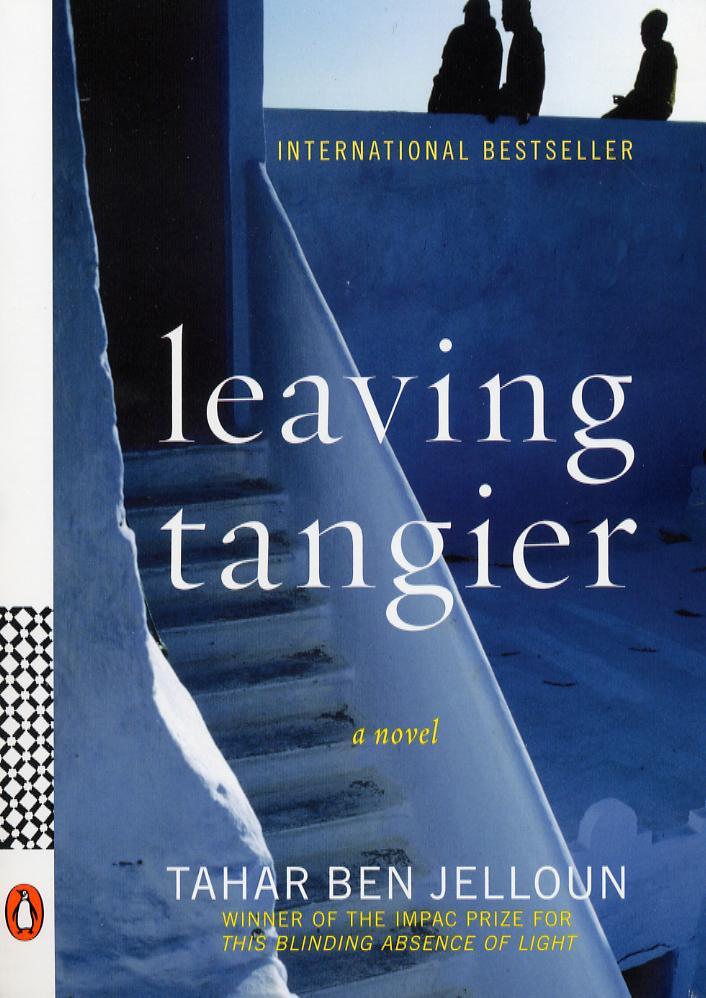
Tahar-Ben-Jelloun-Leaving-Tangier

Tahar Ben Jelloun – Leaving Tangier

Ben Jelloun is probably the most famous Moroccan writer. His books are short and lyrical. He has written a lot. Many of his books have been translated.

Laila Lalami

Laila Lalami Hope and Other Dangerous Pursuits

Lalami is  new to me. Her books received much praise. She lives in the US and writes in English but was born in Morocco.

For-Bread-Alone

Mohamed Choukri – For Bread Alone

Mohamed Choukri’s autobiographical novel is a classic. It has been translated by Paul Bowles. It’s an account of poverty and hardship, written in powerful prose.

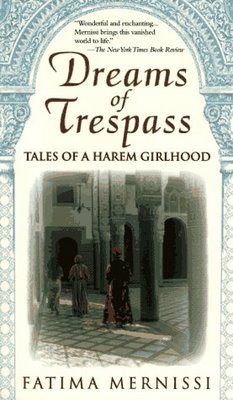
Dreams_Trespass

Fatima Mernissi – Dreams of Trespass: Tales of a Harem Girlhood

I bought this years ago but have still not read it. Mernissi writes in English. I’ve read other memoirs by women who grew up in a harem. They are worth reading as we discover a world we would otherwise never see.

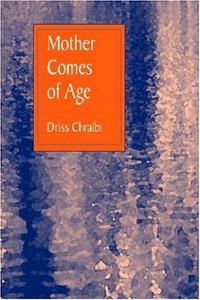
mother-comes-age-driss-chraibi-paperback-cover-art

Driss Chraibi’s novel Mother Comes of Age is another classic which I’ve bought some time ago. It is said to be one of the most important Moroccan books.

I hope this post will tempt the one or the other to pick up a Moroccan writer in the future.

I know that some of you are curious to see what books people will read when travelling or on holidays. While I have a kindle I will not go anywhere without real books. These are the candidates I’m taking with me:

Asmara

I’ve already started Asmara et les causes perdues. Jean-Christophe Rufin has won the Prix Goncourt for his novel Rouge Brésil or Brazil Red. Unfortunately Asmara hasn’t been translated.

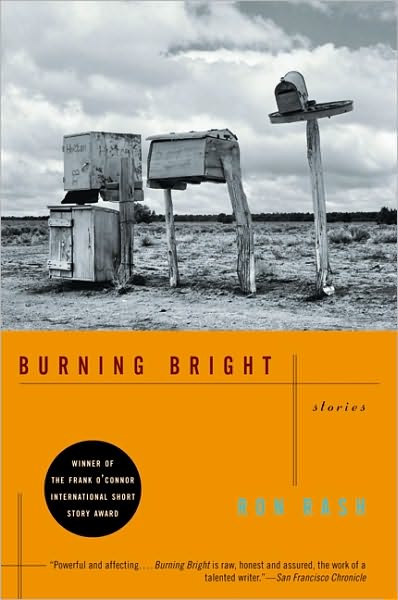
burning bright - ron rash

Ron Rash has been on my radar for a while. Before reading his novel The Cove I wanted to explore his shorter fiction. Burning Brigth has received some prestigious prizes.

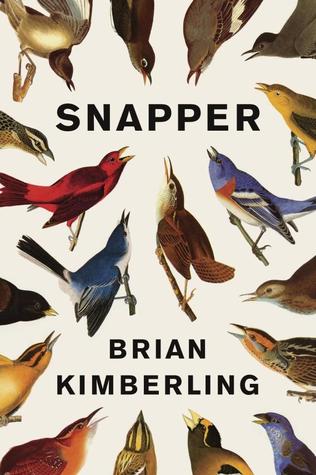
Snapper

I just received Brian Kimberling’s first novel Snapper from Random House and since it sounds so good, I’m going to read this soon.

You certainly wonder why I’m not taking any of the Moroccan books. I’m weird that way, I keep those for when I’m back.

Take care everyone. I’ll be back in a couple of weeks.

Literature and War Readalong April 29 2013: The Wars by Timothy Findley

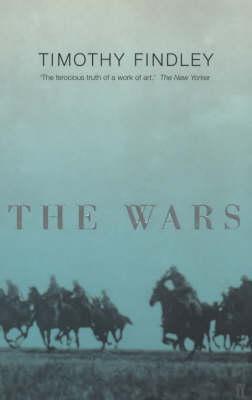
The Wars

On my intro post to the Canadian Book Challenge John, the host of the challenge, suggested I read Timothy Findley’s The Wars. There are quite a few Canadian WWI novels and this is said to be a Canadian classic.

Tomothy Findley wrote novels, plays, short stories and non-fiction. Many of his novels received prestigious prizes.On the back of my copy it says that he is Canada’s greatest living writer. That was back when the book was printed, in 2001. Findley died in 2002.

I must admit the first sentences make me feel anxious. Horses in WWI novels and movies are hardly ever a cheerful thing.

Here are the first sentences

She was standing in the middle of the railroad tracks. Her head was bowed and her right front hoof was raised as if she rested. Her reins hung down to the ground and her saddle slipped to one side. Behind her, a warehouse filled with medical supplies had just caught fire. Lying beside her there was a dog with its head between his paws and its ears erect and listening.

*******

The discussion starts on Monday, 29 April 2013.

Further information on the Literature and War Readalong 2013, including all the book blurbs, can be found here.

Karen Thompson Walker: The Age of Miracles (2012)

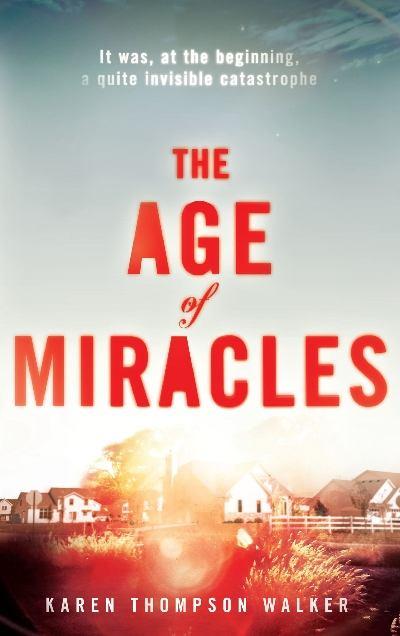
The Age of Miracles

Ever since Jacquelin Cangro reviewed The Age of Miracles, I felt like reading it. I assumed I would like it but I didn’t expect that I would love it so much. It may seem odd to love an “end of the world” story but The Age of Miracles is so much more. It’s as much the story of a disaster as a coming-of-age tale, an exploration of how we adapt to change and a meditation on the fragility of life on earth. Plus the tone of the whole book is lovely and nostalgic.

The Age of Miracles is told by 11-year-old Julia, an only child who is a bit of a loner and a keen observer. Suddenly, one day, they hear on the news that the rotation of the earth has slowed down and as a result the days have grown longer. At first this is minimal but gradually the days and nights extend until, at the end of the novel 72 hour days are followed by 72 hour nights.

The consequences are massive. Many animals and plants die. After a few months, it’s dangerous to go out during daytime as the sun’s radiation can be fatal. Plants only grow in hot houses, people need protection at all times.

Early on the government decides to disregard daylight and to stay on the usual 24 hour clock time. Opposing groups find this unacceptable and adjust to the sunlight. They stay awake longer, sleep longer. Soon there is hostility between those groups and most of the day timers flee after a while and live in communes outside of the cities.

Julia describes all this in great detail. She’s worried but is also surprised how quickly people get used to these changes. But there are many other things on her mind. She was always a loner but the slowing makes her lose even more friends. She is secretly in love with Seth Moreno who is also a loner  which makes it difficult for them to become friends but once they overcome some obstacles, they spend every minute together.

The tone of Julia’s voice and some hints, indicate that she tells this story looking back. It’s the grown-up Julia who tells about the year during which the biggest changes, in the outside world and in her personal world, take place. It’s the year of her first love, of the near collapse of her parent’s marriage and also the year in which everything anyone took for granted disappears forever.

I know that some people found the book alarming because it obviously touches on subjects like climate change and natural disasters. I was more touched by Julia’s personal story, by the tone of her voice which was infused with sorrow. There are as many scenes of great beauty as there are scenes of damage and loss. Ultimately this is a melancholic story about a long goodbye, goodbye from people, things and habits.

When I started reading, I was a bit afraid, the book would be gimmicky. It’s not. It’s a quiet, moving tale. The unusual event is just a means to tell a much deeper story; a story of change, loss and sorrow inherent to all of our lives.

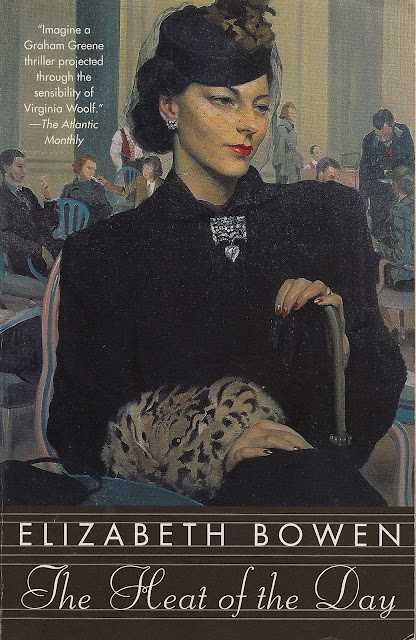
Elizabeth Bowen: The Heat of the Day (1948) Literature and War Readalong March 2013

The Heat of The Day

Elizabeth Bowen’s The Heat of the Day introduces us to London during WWII. The novel starts on a Sunday in 1942 and ends exactly two years later. London is a ghostly city. Many houses are but ruins, other’s are abandoned. People’s lives have changed, relationships are formed much more quickly but they end as abruptly too. Social differences become smaller, the society is less strict as a whole. Everything is perceived more intensely. The seasons, the hours of the day, the light. The beauty and spookiness of the time is captured in evocative passages like the one below.

Out of the mists of morning charred by the smoke from ruins each day rose to a height of unmisty glitter; between the last of sunset and first note of the siren the darkening glassy tenseness of evening was drawn fine. . . . The diversion of traffic out of blocked main thoroughfares into byways, the unstopping phantasmagoric streaming of lorries, buses, vans, drays, taxis past modest windows and quiet doorways set up an overpowering sense of London’s organic power–somewhere here was a source from which heavy motion boiled, surged and, not to be damned up, forced itself new channels.

The very soil of the city at this time seemed to generate more strength: in parks the outsize dahlias, velvet and wine, and the trees on which each vein in each yellow leaf stretched out perfect against the sun blazoned out the idea of the finest hour. Parks suddenly closed because of time-bombs–drifts of leaves in the empty deck chairs, birds afloat on the dazzlingly silent lakes–presented, between the railings which girt them, mirages of repose. All this was beheld each morning more light-headedly: sleeplessness disembodied the lookers-on.

In reality there were no holidays; few were free however light-headedly to wander. The night behind and the night to come met across every noon in an arch of strain. To work or think was to ache. In offices, factories, ministries, shops, kitchens the hot yellow sands of each afternoon ran out slowly; fatigue was the one reality. You dared not envisage sleep.

The main story centers on Stella, her lover Robert, her son Roderick and the intelligence agent Harrison. The side story involves two girls, Louie and Connie. It’s a peculiar story. Harrison visits Stella one night and tells her that Robert is a spy working for the Nazis. Harrison could protect him to some extent if Stella was willing to become his lover.

It’s hard to imagine what it would feel like to hear something like this about the man you love. Stella doubts it at first but Harrison has proof and after a few months she accepts it and confronts Robert.

I’m not exactly sure why Elizabeth Bowen chose this topic or why she chose to paint the portrait of a likable Nazi spy. I didn’t feel this was believable at all.

If you put the story aside and concentrate on other elements, you will find an excellent description of wartime London. I liked the many side stories far more than the main story as such. The female characters are all interesting. There is Stella who was perceived as a fallen woman as it was said she had walked out on her husband. Nettie, the wife of a distant Irish uncle lives in a home for mentally ill patients but is perfectly fine. Louie sleeps with various men, to feel closer to her husband who is stationed in India. The status of women has changed a lot at the time, the society is less rigid, many could finally break free,

Robert, although far less of a character than most women in this novel, is interesting because he symbolizes the wounded men who came back after Dunkirk, unfit for future service. Many of these men must have been very bitter. I’m not sure though that an experience like this would have pushed many to become Nazi spies.

All in all this was a disjointed reading experience. I liked the atmosphere and the mood, didn’t care for the story and often had the feeling Elizabeth Bowen cannot write novels. As much as I liked her shorter prose and could forgive her for many convoluted sentences, in this book she went too far. According to Glendinning’s biography, her editor changed many sentences and told her many times to work on them. It’s not that they are long – long sentences hardly bother you when you read German or French literature – but the structure is weird. Let me give you a few examples.

In the street below, not so much a step as the semi-stumble of someone after long standing shifting his position could be, for the fist time by her, heard.

Or her way to break up dialogue and add long complicated tags

“This is certainly,” she agreed, with the affability of extreme disdain, “rather a point.”

This one is hilarious

“Absolutely,” he said with fervour, “not! Though you know I do wish I knew what’s rattled you.”

While I would still recommend to read The Heat of the Day for many different elements, I’m not so keen on reading another of her novels soon unless someone tells me there is one in which the sentences are not as contorted. For the time being I’ll stick to the short stories.

Other reviews

Anna (Diary of an Eccentric)

Lizzy (Lizzy’s Literary Life)

TBM (50 Year Project)

*******

The Heat of the Day was the third book in the Literature and War Readalong 2013. The next is the WWI novel The Wars by Canadian writer Timothy Findley. Discussion starts on April 29, 2013. Further information on the Literature and War Readalong, including the book blurbs can be found here.

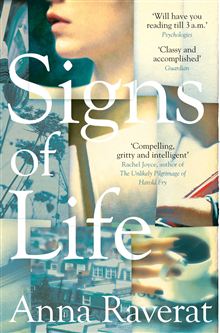
Anna Raverat: Signs of Life (2012)

signs-of-life-

Ten years ago, Rachel had an affair. It left her life in pieces. Now, writing at her window, she tries to put those pieces together again. She has her memories, recollections of dreams, and her old yellow notebook. More than anything, she wants to be honest. Rachel knows that her memory is patchy and her notebook incomplete. But there is something else. Something terrible happened to her lover. Her account is hypnotic, delicate, disquieting and bold. But is she telling us the truth?

A review on Litlove’s blog a few weeks ago led me to Anna Raverat’s novel Signs of Life. I’m glad I discovered it, I liked it very much,

Ten years ago Rachel had a disastrous love affair. She was in a relationship with Johnny, content and maybe a bit bored. Carl was new in Rachel’s company. She wasn’t really attracted, Johnny was far more handsome, but maybe she sensed Carl was a “bad boy”, maybe she wanted to escape routine. One evening they kiss and from there they slide into a passionate affair, even though Rachel doesn’t really want that.

We know from the beginning that things go horribly wrong in the end but we don’t know what happened. Even Rachel doesn’t know everything. At the end of the affair she has a breakdown. She is hospitalised; trauma, stress and medication blur everything. Now, ten years later, she decides to write down the whole story, tries to make sense.

The story Rachel tries to write down is fragmented because her memories of what happened ten years ago are fragmented. And that leads us straight to one of the major topics of this novel. How does memory work?

Perhaps it never did snow that August in Vermont; perhaps there never were flurries in the night wind, and maybe no-one else felt the ground hardening and summer already dead even as we pretended to bask in it, but that was how it felt to me, and it might as well have snowed, could have snowed, did snow. Joan Didion

Might as well have; could have; did. The movement from possibility to certainty in the sentence is exactly how it works in the head; this is how imagination merges with memory, how dreams get confused with facts; why reality sometimes feels so unreal. The extract is from Joan Didion’s On Keeping a Notebook. It unlocked my own imagination; something in me resonated strongly and I wanted to use that, the feeling of recognition, almost of ownership, when you read something and think, that’s exactly the way I feel! And a feeling of entitlement slips in. I started with her line, took some words of, pegged others on – I wanted to absorb the sentence fully, make my own version.

The narration jumps back and forth in time, and precisely this fragmentation is what I liked so much. We don’t only discover a story, we discover how memory works. How things are altered, embellished, imagined.

The result is authentic. We take part in discovering the truth. Rachel took notes during the affair but she left out a lot. Reading was and is important to her. The books and stories she reads influence the way she perceives what happens. The final tale she tells is a patchwork made of different material.

Signs of Life is fascinating and gripping at the same time.  The end was to some extent what I had expected but still surprising enough to be memorable. And we wonder whether Rachel is not after all a very unreliable narrator.

I’m often annoyed by book covers so it’s worth mentioning what a great exception this cover is. It’s rare that a cover fits a book so well. How to better represent a fragmented story than by using a collage of photos that illustrate various moments in the book. The only pictures missing here are that of a cat and of a woman writing.

Apart from depicting how memory works, Signs of Life is an excellent psychological study. It shows how some choices may alter our lives forever and that we are not always fully in charge. Intense emotions may push us to do things we don’t want to do and we may find that our life has fallen apart, is shattered and broken.

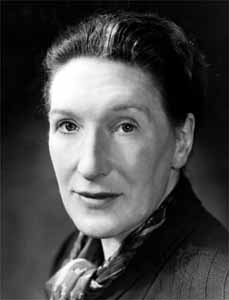
Some Short Stories by Elizabeth Bowen – Mrs Windermere – The Demon Lover – A Day in the Dark

Bowen,_Elizabeth

In the foreword to her Elizabeth Bowen biography, Elizabeth Glendinning names what she thinks are Elizabeth Bowen’s best short stories:

The Disinherited

A Summer Night

Mysterious Kôr

The Happy Autumn Fields

Ivy Gripped the Steps

A Day in the Dark

 Mysterious Kôr is the first story I read by Bowen and it’s really an amazing story. I read and reviewed Summer Night last year. Unlike so many other short stories I’ve read over the course of a year it has stayed with me or, to be more precise, it’s atmosphere and imagery have stayed with me. The story is somewhat blurred by now. For this year’s Irish Short Story Month I decided to read three stories, each belonging to another chapter in the Collected Stories. Mrs Windermere is among the first stories. The Demon Lover is one of the wartime stories and A Day in the Dark is a post-war story.

When you read Bowen you will always find similarities in all of her stories whether she wrote them early in her career or later. The three stories I’ve read are very different but in each you will find lush atmospherical descriptions and a strong emphasis on emotions and mood. There is also an element of mystery in all three of them. A lot is only hinted at, remains a secret. A Day in the Dark, the most complex of these stories adds something new. It has a strong  metafictional element.

Mrs Windermere is the most playful of the three stories. The mystery lies in the character of Mrs Windermere, an elderly independent single woman who meets a young married woman in the streets. They spent some time together in Italy. The young woman is fascinated and intimidated by Mrs Windermere. Mrs Windermere seems to see through people, reads their lives in the palms of their hands. Not only is she very outspoken, she seems to question the way the young woman lives. Why having married if you could have been free? is what she seems to ask. She senses that the young woman’s life is missing something and tempts her to explore something new, maybe have an affair. A very feminist story for its time.

The Demon Lover combines a ghost story with the depiction of war-time London. The result is uncanny. Imagine there is a war and you flee the city, leaving everything behind; your house, your possessions. One afternoon you’re back in London and go to your abandoned house to pick up some things. The house has a ghostly feel, nobody has been there for a long time and it is surrounded by house ruins and other abandoned places. You go from room to room as if you were walking not only through your house but through the life you’ve left behind. And suddenly, someone from you distant past reappears.

After having read The Demon Lover I understand why all of Bowen’s war-time stories set in London are either ghost stories or stories with a ghostly feel. Those abandoned houses exude a great loneliness and seem to be creatures waiting for their life to resume.

The narrator of A Day in the Dark looks back on her teenage years and tells a story that took place one afternoon, a long time ago. She was a young girl, living with her uncle. She has a crush on him and their relationship is very close. It’s never said that they are having an affair but the possibility of it is palpable. On that afternoon she visits a rich woman. She has to give her back magazines her uncle has borrowed. The woman hints at things the young girl doesn’t understand.

It’s a very complex, and multilayered story. The characters are revealed through small hints and descriptions. The way it is written is meta-fictional as the narrator intrudes, points out what could have been described and remembered otherwise.

A Day in the Dark is a very dense and mysterious story. Reading it was like eating an exotic fruit for the first time. It’s nice but so strange that one wonders continuously whether one really likes it and why and tries to put into words how it tastes. It’s one of those short stories you could read again and again and would still have unanswered questions, new possible interpretations. I loved it.

This post is a contribution to Mel’s Irish Short Story Month.