Alexis M. Smith: Glaciers (2012)

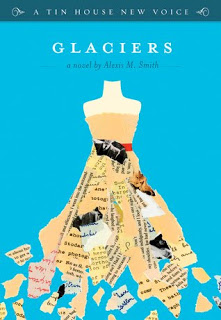
Glaciers

The books I enjoy the most connect me to something inside of me which is elusive and hard to reach because it deals with those fleeting feelings that are hard to put into words, those emotions which escape before we can describe them. Glaciers is a book like that. It has a dreamlike quality but at the same time the descriptions are crispy-fresh, delicate but with sharp contours; the writing is cool but never cold, fragrant but not overpowering.

I hadn’t heard of Alexis M Smith before reading the review of Glaciers on Litlove’s blog (here). Smith is one of the Tin House New Voices and since Tin House is the only magazine I read regularly I was particularly keen to discover this author.

Summarizing this book isn’t doing it any justice. Not much happens. It’s pure slice of life writing. The book describes a day in the life of library worker Isabelle.  She was born in Alaska, dreams of going to Amsterdam but lives in Portland of which she says

“Walking home, she thinks Amsterdam must be a lot like Portland. A slick fog of a city in the winter, drenched in itself. In the spring and summer; leafy undulating green, humming with bicycles, breeze-borne seeds whirling by like galaxies. And in the early glorious days of fall, she thinks, looking around her, chill mist in the mornings, bright sunshine and halos of gold and amber for every tree.”

We follow her through a whole day, see her small rituals at work, her love for vintage clothes and postcards, her dreamlike states in which she imagines another life for herself and for other people. She’s in love with Stoke but he doesn’t seem to love her back. She meets her best friend Leo and they spend an evening at a party with quirky artists and actors and they all tell each other stories.

In a few flashbacks we learn about Isabelle’s past, her family, her passions, her fears. In only one day Isabelle experiences more emotions than many people in months. There is happiness and love, despair and disappointment, hope and elation, fun and routine. And stories, stories, stories.

I’ve read similar stories but what really makes Glaciers stand out is the writing. Smith uses almost no conjunctions, the sentences are stripped of anything superfluous but it still feels colourful, albeit in a gauzy kind of way. It’s the bookish equivalent of cherry blossoms. Am I making any sense? Be it as it may,  I really hope many of you are going to read this little marvel and will enjoy it as much as I did.

Will Schwalbe: The End of Your Life Book Club (2012) A Memoir

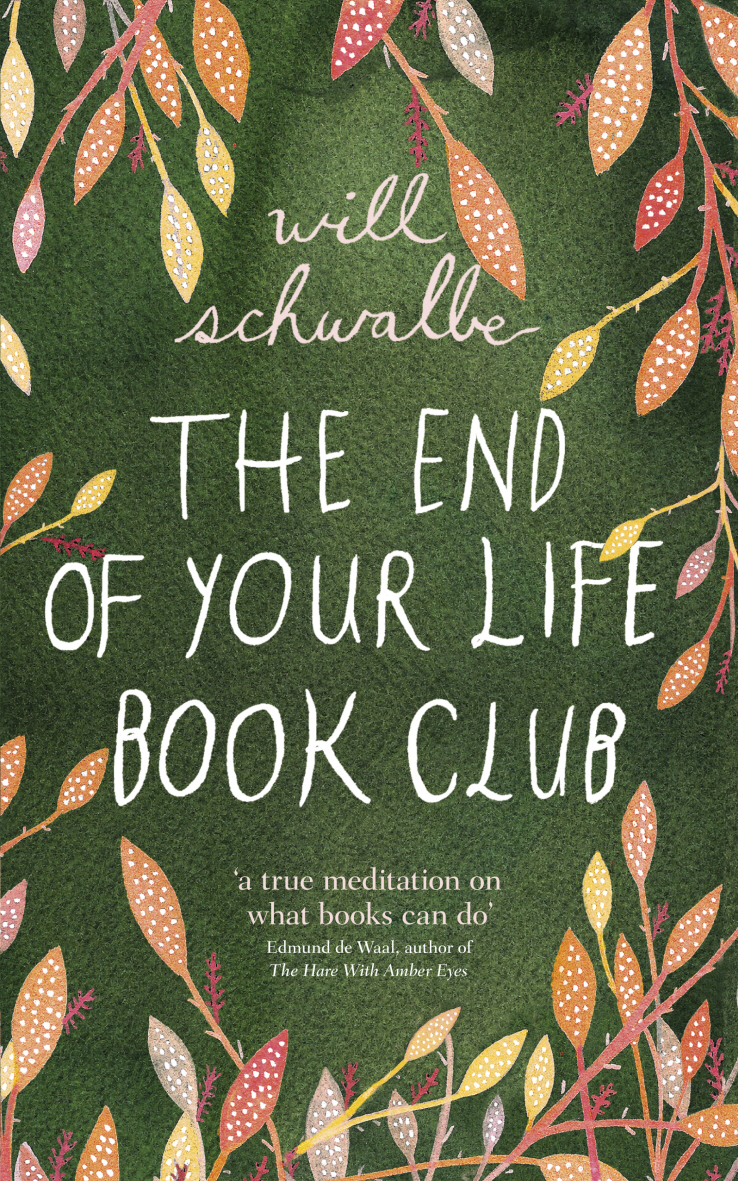
End of Your Life Book Club

Will Schwalbe’s memoir The End of Your Life Book Club is one of those books that needs a review because it’s hard to tell from the blurb what it is about. Sure, it’s about books and the love for books and a beautiful friendship between a mother and son, but more than that it’s about an amazing woman and her terminal illness. People who pick this up may think, like I did, that it was to a large extent about books, which isn’t the case. Books are mentioned on every other page, but the largest part is about Schwalbe’s mother, her life and her battle with pancreatic cancer.

Will Schwalbe and his mother always loved to read and discuss books, but when she is diagnosed with pancreatic cancer and has to undergo regular chemo therapy, they decide to use the time they spend together at the hospital discussing books they have both read and that’s how they start The End of Your Life Book Club. The beginning of each chapter is dedicated to the book they have been reading and the discussion they have. The book choices are varied and I loved reading about them. Continental DriftCrossing to Safety, The Painted Veil, Olive Kitteridge, The Girl with the Dragon Tattoo, Brooklyn,The Elegance of the Hedgehog are but a few books they read, discuss and enjoy.

After this usually brief paragraph about books, Schwalbe leads us directly to his main topic: his mother. His mother must have been a very courageous woman. She travelled from one hot spot to the next for the Women’s Refugee Committee. She helped refugees all over the world and put herself in great danger to do so. She was a fighter but at the same time she was a genuinely kind woman and to read about her and the love the people felt for her is quite beautiful.

What will not be everyone’s cup of tea is the detailed description of the therapies, the side effects and the battle to just live a few months longer. Pancreatic cancer is mostly terminal and most people don’t have much more than a few months after the diagnosis. Schwalbe’s mother was lucky, she lived a full two years. Years that she lived to the fullest, not missing any opportunity to enjoy life and do good. This is quite admirable. I liked her belief that you should never look away from what is bad in our world but always strive to do good.

I feel heartless writing this but the book did not work for me. I have no problem to read about terminal illness. I read the memoir written by Susan Sontag’s son and found it excellent. So that’s not the reason. And of course I love reading about books but in a way, I felt this memoir was too personal. There were too many details added that just didn’t mean anything to me, because it’s not my mother or someone I know. She ate this and liked it, she drank that and couldn’t swallow… She saw these friends and those grandchildren… There were just too many mundane and ordinary details that are only significant when you know a person. Since they wrote a blog about her illness to keep family and friends updated, I suspect, large portions of this book were based on those entries. This may be a reason why the writing was a bit bland.

I think this is a book which could be of great help if you have a friend or relative who has cancer, especially pancreatic cancer. It shows extremely well and in a lot of detail what can be done, what the side effects of some of the therapies are and when you have to decide to let go. As a book on cancer it’s great. As a book about one person’s mother, it’s too personal and as a book about books it is a let down. It says it’s about books and reading but they rather form a bracket around the rest.

Still I’ve discovered a few titles I didn’t know and would like to read:

Victor Lavalle’s Big Machine

Reynold Prices’s Feasting the Heart

Danyal Mueenuddin In Other Rooms, Other Wonders

There was also one book I know I will not be able to read and that is  Mariatu Kamara’s The Bite of the Mango (look it up and you’ll know why). Reading about it made me sick.

Have you read any of these?

Daniela Krien: Someday We’ll Tell Each Other Everything – Irgendwann werden wir uns alles erzählen (2011)

Someday

Daniela Krien’s debut novel Someday We’ll Tell Each Other Everything (German title: Irgendwann werden wir uns alles erzählen) was a success in Germany and has already been translated into 15 languages, one of which English. That’s why I thought I’d like to see for myself if it’s really that good. I’m not sure the book won me over as a whole, but I liked a lot of the elements and the end packs a real punch.

The narrator Maria is a young woman of 16 who is living with her boyfriend Johannes on his family’s farm. It’s 1990 and the Berlin wall has just fallen. The novel begins shortly before the reunification of Germany. What makes the story interesting is that it’s set in Eastern Germany and that we see the end of the former Democratic Republic through the eyes of the people who lived there. The author grew up in the country, in the former DDR, so she knows what she’s writing about.

It’s odd that Maria is living with her boyfriend’s family and not with her own but we learn later that the mother has been left and that Maria can’t stand her sadness anymore. It’s far livelier on the Brendel’s farm. But even though it’s livelier, there are tensions as well, and just like in her own family, there are family secrets.

Maria and Johannes are still going to school but Maria stays at home most of the time, hiding somewhere, reading Dostoevsky. She’s often sad as well, prone to mood swings, but she is a keen observer and a kind girl. She want’s to help and make her stay worthwhile for everyone.

Not far from the Brendel’s farm is the farm of the Henners. Henner is a forty-year old guy, a brute, as they say, a man whose wife couldn’t stand his company anymore and who has left him. He’s said to be violent and drinks like a fish. He comes to the Brendel farm occasionally because they have a small farm shop. Maria watches him and Marianne, Johannes’ mother. Marianne seems to have a bit of a crush on him. Maria herself is fascinated and before long, without thinking of the consequences, she’s having an affair with him.

Their love affair is one of those dark maelstrom passions. They try to fight it but to no avail. Maria feels extremely guilty, but at the same time she cannot let go. What they share is too deep. It’s passionate, violent, but it’s also more than that. Henner opens up, tells her his life story.

At first their affair is all about sex but later they are content to just read Dostoevsky and Trakl together. Henner even tries to get sober.

They way this is told is quite appealing. The beginning is strange but after a while, you feel sucked in and read more and more quickly.

I have never read a novel about the end of the former Democratic Republic from the point of view of someone who lived “over there”. I really liked how Daniela Krien captured this. Just imagine: one day the authorities decide that your country will not exist anymore. Even though it might be for the better, it would still be a shock. There are many small details which show that and they are well rendered.

I was surprised that Maria was allowed to live with her boyfriend’s parents and that they shared a room and a bed, but then I remembered that the attitude towards sexuality is said to have been much more liberal in the former Democratic Republic. I watched a talk show on German TV a few years ago with athletes from the ex-DDR and they mentioned that for them one of the strangest things was how sex was handled in Germany. They said they preferred partenrs who came from the former Democratic Republic because they were more liberated. Judging from this novel it certainly seems as if there had been quite a difference.

The title is a Dostoevsky quote taken from the Brothers Karamazov. The book contains a few quotes from Dostoevsky, others are taken from Hamsun. Henner repeatedly quotes Trakl’s poem Song in the Night. Trakl is an Austrian poet. His poems are beautiful but gloomy.

If you like dark love stories you’d like Someday We’ll Tell Each Other Everything. You might equally like it if you have an interest in country life or life in the former Democratic Republic of Germany. The style is quite simple, most sentences are short. It’s not subtle but it works. The whole story is carried by the narrative voice, which I found haunting. The end alone makes it worth to read the book.

Sarah Hall: The Carhullan Army (2007)

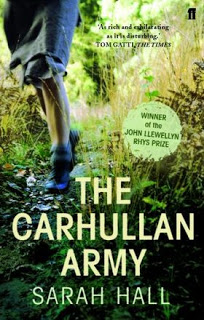
Carhullan

Set in the part of England once known as The Lake District and frequented by hordes of landscape hungry tourists, The Carhullan Army is narrated by a young woman who has adopted the name Sister. Britain after its union with the United States and numerous unsuccessful foreign wars, has found itself in the grip of a severe fuel crisis and the country is now under the control of a severe body known as The Authority. All fire-arms have been handed over to the Government and all women have been fitted with contraceptive devices; this Britain of the near-future is brutal and very-near desperate.Sister’s only hope — or so she thinks — lies in finding the Carhullan Army: a mythical band of women who lives a communal existence in the remote hills of Cumbria.

I came across Sarah Hall’s name many times in the past months. First I read a review of The Carhullan Army on Vishy’s blog (here) and immediately thought I’d love to read it. I later saw that Hall won the John Llewellyn Rhys Prize for The Carhullan Army, the Commonwealth Writer’s Prize for Hameswater and was shortlisted for the Man Booker for The Electric Michelangelo. Her short stories are said to be very good too.

The Carhullan Army is a dystopian novel. It has been called A Handmaid’s Tale for our times. I can’t confirm whether that’s the case as I haven’t read Atwood’s novel yet, but it’s certainly not a genre novel, it’s highly literary.

The Carhullan Army  is set in a bleak Britain, which is ruled by the so-called Authority. The system has collapsed due to a fuel crisis. People live like cattle, sharing small apartments. Some things are strictly regulated like work and reproduction, others are forbidden, like leaving the town. People are depressed, many use drugs. Relationships collapse, love dies. “Sister”, how the narrator calls herself, can’t take this anymore. She’s heard of Carhullan. Somewhere in the mountainous region of the Lake District lives a group of women autonomously. They have a leader, Jackie, a very charismatic figure, but other than that, they are free. Sister doesn’t know that much about the place, only that what she has heard. The rest is a mix of her imagination, her hopes, her dreams.

The place sounded utopian, martial or monastic, depending on which publication was interviewing, and what angle they wanted to push.

Sister is sure that her life will improve and that the women will welcome her, commend her for her courage to leave. But things don’t exactly go like that. The way Sister is “welcomed” is a huge disappointment, a shock even. It will take more than simple resilience to come to terms with this. But once she’s proven she isn’t a spy, nobody is following her and that she’s truly interested in living at Carhullan, she’s accepted.

Sister is a complex narrator but Jackie, the leader, is even far more complex. What Jackie has created at Carhullan is as amazing as it is scary. The women are able to provide for themselves. They plant, gather, and hunt, and – even far more important – they have an army. An army which has been trained by ex-soldier Jackie who is a severe drill instructor. She’s fierce and demanding, charismatic and unforgiving. Most women know that they might need to defend themselves some day and for many it is a special distinction and a great honor to be chosen for the army, others however think Jackie goes too far. Sister would love to be part of the army, but she has to wait a long time.

In Jackie Sarah Hall has created a multilayered personality. She combines the traits of a cult leader, of a fanatic, a saviour, a soldier and a hero. She never questions the use of violence, which, for me, was the most difficult part of the book. I never thought this was a utopian society, but I never thought they were that misguided either. Given the circumstances the development was quite logical but they were not free. Every single of Jackie’s decisions is an answer to the Authority and the end of the book makes this very clear. Sister idealizes Carhullan when she goes looking for it, the reader thinks it’s ideal at first, but towards the end we understand that Carhullan is part of the system as well. There would be no Carhullan, at least not the one we see here, if the society had not reached an endpoint.

Here’s Jackie talking to Sister:

“…. I just want to get to the bottom why these things go on. I’m a dark fucking tourist, Sister, I like going to these places. It’s interesting to me. I’m interested in what holds people back. And what doesn’t. And how far these things extend….”

I think this illustrates my point. Jackie is raw, she’s violent and she’s never free of questioning the system, she has an urge to explore it and in doing so stays tied to it.

The Carhullan Army explores many other themes, Lesbian love, autonomous living, the nature of cults and fanatics, totalitarianism and terrorism. Sarah Hall writes well, her sentences are limpid, simple, yet her vocabulary is rich and evocative.

The story is told like a confession, which has been recorded. Some of the files are recovered, some are corrupted. I thought tha approach worked well.

It’s a book that made me feel very uncomfortable. I found it had a bit of a Lord of the Flies vibe. The place Sarah Hall describes isn’t a gentle haven, it’s a rough world, in which people have to fight for their survival. The harsh landscape, the difficult situation has changed them. They swear, they fight. They do have camaraderie and loyalty, even love,  but it’s all very raw.

I am glad I’ve read The Carhullan Army. I think it’s excellent and thought-provoking but it’s depressing as well. I wouldn’t want to live in neither of the worlds Sarah Hall has created.

Have you read any of Sarah Hall’s novels or short stories?

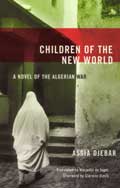
Literature and War Readalong July 29 2013: Children of the New World – Les enfants du nouveau monde by Assia Djebar

Children of The New World

Assia Djebar’s novel Children of the New WorldLes enfants du nouveau monde is the first novel about the war in Algeria in this readalong. Assia Djebar is one of the most important, if not the most important North African writer. She is also a translator, essayist and filmmaker.

I’ve been meaning to read her for years as I got other books by her on my piles and I’m glad to finally get a chance to do so.

She was the first writer from the Maghreb to be elected to the Académie Française in 2005. Djebar is known to be anti-patriarchal and anti-colonial; her novels focus on women’s lives. She writes in French, not in Arabic.

Children of the New World is about the war in Algeria from the point of view of the women.

Here are the first sentences

In the old Arab quarters at the foot of the mountain the whitewashed houses all look alike. Before the city grew larger, this was the only place where affluent families would come to find a bit of cool air, near the b rooks and orchards at the end of spring. Each home is at the end of a cup de sac, where, after wandering through a maze of silent little alleyways, one must stop. All that can be heard is some vague whispering suddenly interrupted by the shrill cries of children, whom the mothers are trying to keep at home, but to no avail. The military guard can show up any moment. Then there is barely enough time to gather the children and muffle their voices behind closed doors.

*******

The discussion starts on Monday, 29 July 2013.

Further information on the Literature and War Readalong 2013, including all the book blurbs, can be found here.

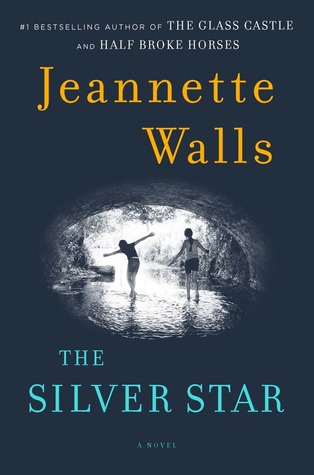
Jeanette Walls: The Silver Star (2013)

The Silver Star

I still remember when Jeanette Wall’s The Glass Castle came out. I devoured it and absolutely loved it. I was a bit disappointed to find out her second book, Half Broke Horses, wasn’t a memoir but a novel. I bought it but never read it. Last week I got her latest, The Silver Star, as a present and just finished it yesterday.

If you know Jeanette Walls, The Silver Star will not surprise you. Like in her memoir we are introduced to some really bad parenting, children who have to cope on their own, a murky family history and abusive grown-ups.

Some writers always return to familiar territory, mining their lives and telling a similar story over and over again. I don’t mind that when it is well done. And Jeanette Walls writes well. Her writing has an almost cinematic quality, her way of conjuring up a scene is very powerful.

Bean and Liz are 12 and 15 respectively when her single mum has a break down and leaves the two girls alone, with just about enough money for a month. Their mother is 36 but still a wannabe singer/songwriter/actress. Nothing she tries ever seems to work out and all of her plans invariably end in disaster. That she disappears for a couple of days is nothing new, but for a whole month is a novelty. When social services turn up in front of the house, the girls decide to go to their mother’s hometown and see if their uncle will take them in.

Their mother is originally from a small town in Virginia. The family used to be very rich but all they have left is a decaying mansion. The girls don’t know why their mother left right after Bean was born. They also don’t know who their respective fathers are.

When they turn up on uncle Tinsley’s doorstep he isn’t too thrilled at first, but eventually he gives in and lets the girls stay with him. It turns out that Bean and Liz really love the small town and settle in quickly. They make new friends, get to know Bean’s father’s family and have a great time. Their mother comes to visit but it ends in a huge drama.

When the local bully and mill supervisor Maddox tries to rape Liz, things escalate.

The book is set in the 70s; the Vietnam war and racial tensions are important topics. But gender is maybe even more important. There is an instance in which To Kill a Mocking Bird is mentioned and that’s no coincidence. There is a parallel to the novel, as in The Silver Star there is also a trial. Only with a very different outcome. Afro-American’s are still not treated like white people but women are treated even worse.

What I really liked about this book is what it says about parenting. It is obvious that Bean’s and Liz’s mother is incapable of taking care of her girls but despite this I was wondering how bad her parenting really was. She is often absent, not there when they need her, she’s “bonkers” as both girls say but she is kind and raises girls with a very strong self-esteem. I don’t try to say it’s OK for parents to just abandon their children but as a matter of fact, they were quite capable of taking care of themselves and if she’d been there, the attempted rape would still have happened. She is far from an ideal mother, she can’t cope and went through a lot of awful things but both girls are strong and very resilient. Many children who have parents who never abandon them, and provide for them materially, nevertheless crush their children’s self-esteem, abuse and neglect them emotionally. I find that far worse.

I saw that this book has received a lot of negative reviews on amazon (A lot of readers hated it because of the mother. I really wonder if they are all that perfect). Sure, it’s similar to her other books but I thought it was very enjoyable. It’s warmhearted and humorous. I loved the two girls who are very different, their uncle, and even the mother is fun as a fictional character. I’m glad I’ve got Half Broke Horses already. I’ll certainly read it soon.

Jan Terlouw: Winter in Wartime – Oorlogswinter (1972) Literature and War Readalong June 2013

Winter in Wartime

Dutch author Jan Terlouw’s award-winning novel Winter in Wartime  (Oorlogswinter), which has been made into a movie, is a book for YA. It tells the story of 15-year old Michiel and is set during the hunger winter, in the Netherlands in 1944.

Michiel lives in a Dutch village with his parents, older sister and younger brother. His father is the mayor of the village. Like the rest of the Netherlands, their village is occupied by the Germans. It’s obvious for everyone that the war will come to an end soon and that the Germans are losing it. However, instead of giving up, they intensify their hostile activities; they search houses, arrest, torture and shoot people.

The village is divided, some are collaborating, some are suspected to collaborate, while others are in the resistance. Michiel’s parents are anti-German; they are good people who try to help those who have less, as much as possible. Every night they open their doors to distant relatives, people on the run, displaced persons, provide shelter and food for one night. Uncle Ben who is in the resistance is one of the regulars.

Michiel has an outsider position. He isn’t really a child anymore but doesn’t seem old enough for resistance work. When Dirk, an older boy who has joined the resistnace, asks him to deliver a letter, should he not return from a mission, Michiel feels honoured.

That same day his father and a group of other people is arrested because someone has killed a German soldier. Some of the men who are arrested will be hanged. When Dirk doesn’t return and Michiel fails to hand over the letter, he opens it and discovers that Dirk has been hiding a wounded British pilot. What should he do now? Who will help him? Is there anyone he can trust? That’s what you will discover if you decide to read Winter in Wartime.

Towards the end of the book (p. 121) Michiel remembers something his father said

Michiel often thought of something his father once said: “In every war dreadful things happen. Don’t think that it is only the Germans who are guilty. The Dutch, the British, the French, every nation has murdered without mercy and perpetrated unbelievable tortures in times of war. That is why, Michiel, you shouldn’t allow yourself to be misled by the romance of war, the romance of heroic deeds, sacrifice, tension and adventure. War means wounds, sadness, torture, prison, hunger, hardship, and injustice. There is nothing romantic about it.”

This short paragraph is central and summarises the theme of the book. The novel looks exactly into this and tests it. While the story confirms that war is horrible, it still shows that heroism is possible. There will always be courageous and kind people in every war, people who will try to stay good and do good.

This is a book for young people and I was very interested to see how WWII would be handled. In all the resistance books and movies torture plays an important role. How would that be handled for children. I’d say Terlouw did a great job. He was explicit but not gruesome. Not for one second we think it may not have been as bad but still he isn’t too explicit.

Books for children and YA always have a message. A lot of that message is captured in the quote above but there is another central theme, which is illustrated too – not every German was bad. No people is bad as a whole.

I think Terlouw’s book is well done, it captures he Netherlands during the winter of 44 very well. The hunger, the masses of  fleeing people, the occupation, the suspicions, all this is well drawn. The tone isn’t depressing as the end of the war is in sight. Horrible things happen still but there is a lot of hope.

I saw the movie a few years ago that’s why I possibly didn’t like the novel as much as I would have if I hadn’t known the story already. It isn’t one of my favourite readalong titles but it’s still well worth reading and, as a children’s book, I’d say, it’s excellent.  Don’t miss it if you’re interested in WWII, occupied Holland, the Dutch resistance, and are looking for all of these topics done in a way that is appropriate for younger readers.

Other reviews

Anna (Diary of an Eccentric)

Danielle (A Work in Progress)

Iris (Iris on Books)

Judith (Reader in the Wilderness)

Movie review

Kevin (The War Movie Buff)

*******

Winter in Wartime was the sixth book in the Literature and War Readalong 2013. The next is the novel is Children of the New World aka Les enfants du nouevau monde on the war in Algeria by Algerian writer Assia Djebar. Discussion starts on Monday 29 July, 2013. Further information on the Literature and War Readalong, including the book blurbs can be found here.