Literature and War Readalong December 30 2011: Cold Mountain by Charles Frazier

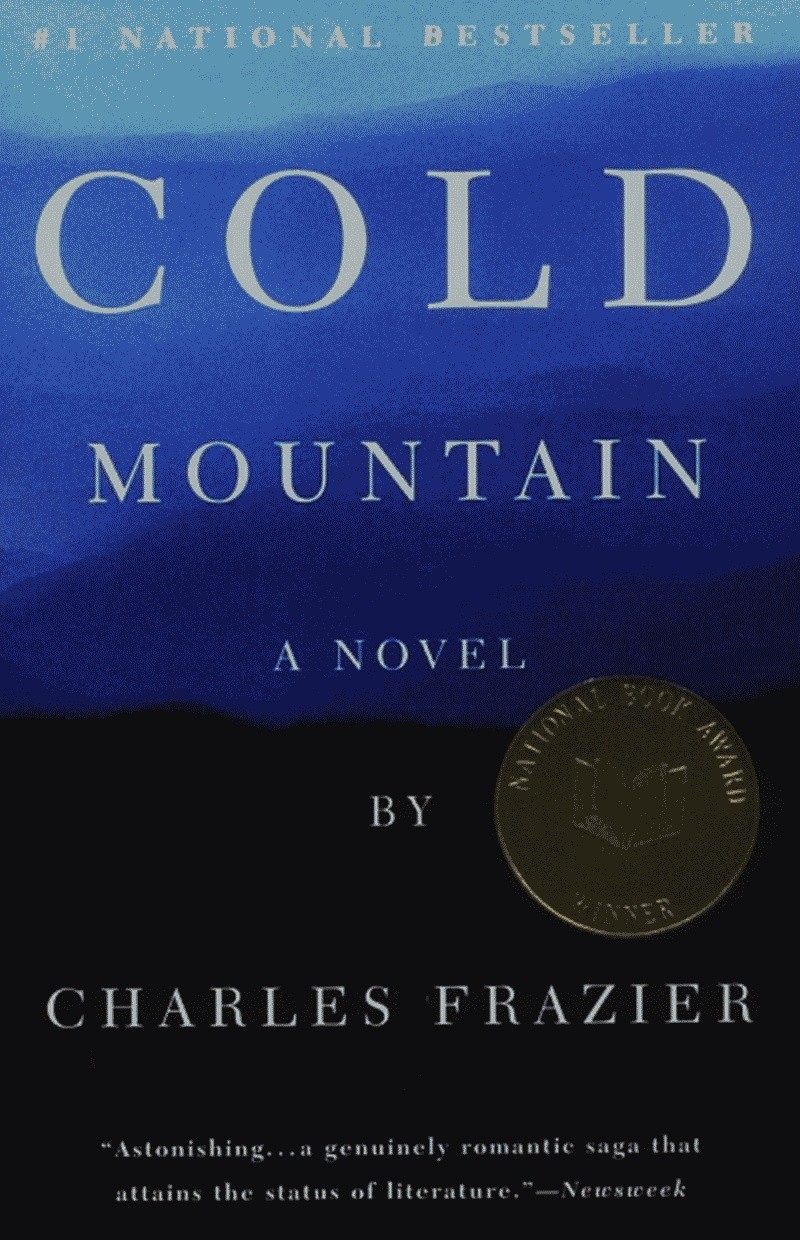
While I’m busy collecting the titles for next year’s Literature and War Readalong I should not forget to make you aware that there is still one more book on the list for 2011. Initially I had chosen two books on the US Civil War but German Literature Month made me remove The Killer Angels from the list.

This year’s last readalong title is Charles Frazier’s Cold Mountain. I’ve watched the movie a while back but don’t remember all that much apart from a stunning cinematography. I’ve heard a lot of good things about the novel and especially the friendship between the two women is said to be very compelling so I’m really looking forward to reading it and find out if I will like it or not. For some reason I think it’s a particularly good choice for December.

For those who have no idea what it’s all about and whether or not it’s worth joining here’s the blurb.

Charles Frazier’s debut novel, Cold Mountain, is the story of a very long walk. In the waning months of the Civil War, a wounded Confederate veteran named Inman gets up from his hospital bed and begins the long journey back to his home in the remote hills of North Carolina. Along the way he meets rogues and outlaws, Good Samaritans and vigilantes, people who help and others who hinder, but through it all Inman’s aim is true: his one goal is to return to Cold Mountain and to Ada, the woman he left behind. The object of his affection, meanwhile, has problems of her own. Raised in the rarified air of Charleston society, Ada was brought to the backwoods of Cold Mountain by her father, a preacher who came to the country for his health. Even after her father’s death, Ada remains there, partly to wait for Inman, but partly because she senses her destiny lies not in the city but in the North Carolina Blue Ridge.

German Literature Month – Effi Briest Group Read Week III

The picture is taken from the latest film version Effi Briest (2009) starring Julia Jentsch and Sebastian Koch as Effi and Instetten. Here is more about the movie including trailers and pictures.

This is the final week of our Effi Briest Group Read. The questions have been provided by Lizzy. Please, if you haven’t read the book, don’t read the answers. They are not spoiler free.

Why do you think Effi kept Crampas’s letters?

I was wondering exactly this the whole time. Why did she keep those letters? On the other hand it is understandable. They were probably full of flatteries and compliments that she enjoyed re-reading. Knowing Instetten it was very unlikely he would search her things. It was a pure accident that he found them. I think it clearly shows that she thought he really wasn’t too interested in her or she wouldn’t have been so careless. If she’d been married to a man who seemed to have been in love with her and very jealous, I doubt, she would have kept them.

Did Innstetten have a choice?

Yes, I really think he did have a choice. The man he called, who would be his second, advised against it as well. Hee could just have pretended he never found those letters. In the end, I believe, he doubts his own choice. If he had found out while it happened, I think one could debate, whether or not, he had a choice, but six years later…

Are there any events in this final section that make you feel outraged?  Is that how Fontane wants you to feel?

I was not outraged, it made me very sad. My feeling for Effi was stronger than a feeling of outrage. I thought it was utterly pointless. Wasted lives, for nothing else but pride.

Is there a villain in this piece?

The mother is the worst character, closely followed by Instetten. I could imagine that her decision to be so hard on Effi was because she wondered how Effi could have cheated on a husband she would have loved to have. But precisely this history between her and Instetten might have been part of the source why Instetten never really opened up to Effi. I think that a lot of social injustice could have been stopped earlier if the members of a given society didn’t tacitly endure the rules – or even reinforce them – and I find it especially horrible when mothers think their daughters or sons should go through the same experiences they had to go through, no matter how bad they were. It’s as if the mother was thinking “If I was able to endure it, you should be able too.”     

The lot of the real-life Effi, Elizabeth von Plotho, was a much happier one. Why do you think Fontane made the outcome for Effi much harder?

To prove a point, I guess. He clearly condemns the ways of Prussian society, the regulations and rules. To make it crystal clear the ending had to be more drastic.

Were you surprised by the ending?

The first time I read it I was shocked. I don’t know how I thought it would end but not the way it did. Not after such a long time. I’m outraged to think what consequences adultery had for women in these days.

Where would you place Effi in the pantheon of C19th fictional adulteresses?

I found Mme Bovary very annoying and never really had any feeling for her. In the case of Anna Karenina I thought the book was so much more about Vronsky and Lewin than about her but to a certain degree she is more tragic as she loves Vronsky. Effi doesn’t love Crampas. The tragedy in Effi is very different. I think what makes it so harrowing is that it seems so pointless. More than 6 years have passed since the affair and if Instetten hadn’t found the letters accidentally, nothing would have happened.

Do you think you would ever reread Effi Briest?

Yes, I think so. In a few years, I can see myself re-read it.

German Literature Month – Effi Briest Group Read Week II

This is the second week of our Effi Briest Group Read. This week the questions have been sent out by me.

What strikes you most in this novel,  what do you like or dislike the most?

What strikes me personally most is that I don’t dislike anything. I find no superfluous words, no false tones in this novel. I think it’s an incredibly accomplished book that is as moving the second time as it was the first time I read it.

I really love everything about the book but I do have pretty strong reactions towards some of the characters. Instetten is for me, this time, a pompous insufferable git. I truly hate people who think they are superior. He patronizes Effi wherever he can. He is very rigid and follows rules and orders.

Do you think Fontane likes Effi? Whose side is he on?

I was wondering very often and think, he must like her a great deal or I wouldn’t feel for her. As a person she is quite opposite to myself or people I’m usually interested in, now as well as when I was 17. She isn’t introspective but fun-seeking. I think if Fontane didn’t like her, I wouldn’t feel the way I feel about her. She is a bit like a little animal that needs protection.

What do you make of the story of the Chinese and the haunted house. How would you interpret it? And what about Crampas’ interpretation?

I’m surprised how important this story is as this is something I had completely forgotten although I love a good ghost story. I think Effi is extremely isolated and all sorts of things play tricks on her mind. I also think it’s foreshadowing things to come but for fear of spoilers I’m not going to elaborate on this.

Crampas interpretation strikes me as spot on and it does enforce my negative feelings for Instetten. Wanting to educate or drilling Effi is so like him.

Descriptions are an important part in Effi Briest. How do you like them and how important do you think they are for the novel?

This question is tied to the next one. I had a feeling that the novel moves back and forth from outdoor to indoor scenes and in the outdoor scenes the descriptions are very important.

The region in which Kessin is located bears a lot of dangers for humans. There are the marshes that can swallow you, the snow can cut you off from the outside, the storms make ships sink. This seems very symbolic and full of foreboding.

The contrast between the loveliness of Effi’s family’s garden compared to the bleak landscape around Kessin emphasizes her loneliness. She would need a welcoming home but the house she lives in scares her as well.

The descriptions of the outside world also seem to point to things to come and the night in which Effi and Crampas sit together in the carriage and almost sink into the “Schloon” (that’s the German expression and I have no clue what the corresponding English word is, I guess marsh) seems full of foreboding.

It struck me while I was reading this novel how Fontane pairs descriptions of cozy and scary. Did you notice this as well and if so, what did you make of this?

For a tormented soul like Effi’s the idea that feet are running over her head and that she is all alone in the dark unwelcoming house in Kessin is very scary. I found the whole novel much more “gothic” this time around than when I first read it. The contrast to her family home, in which everything was cozy is very striking.

Another scene where I saw this pairing was when she walks in the wood with Crampas and it begins to snow. It might be a scary idea usually to be snowed in but Effi mentions a poem set druing the war, in which an old woman was snowed in and the snow-covered her up so the soldiers couldn’t find her. The idea warms Effi, she feels that being snowed in means being sheltered from the outside world.

What do you think of Crampas?

I didn’t think Crampas was such an unlikable character but he is a very irresponsible man. He should have thought of Effi and not start something with her. Of course he is trapped in a loveless marriage as well but he doesn’t seem to love Effi either. He is clearly a player. He likes to break rules and says so early on. I think it’s maybe as much about having an affair for him as about doing something forbidden. Still in the scenes in which we see them together he is far nicer to Effi than her husband and she seems a more mature person in his presence, not a little child that fears to be criticized at any moment.

Fontane chose to describe more than one Christmas in this novel, what do you think Christmas signifies?

Christmas is traditionally a family holiday. There is more than one Christmas in the novel and they are all slightly different. They do mark the passing of time but also show what it means for Effi to have left Hohen-Cremmen. Her first Christmas is a very lonely one. The second is slightly better but she misses her family. What struck me is that there was no attempt at spending Christmas together. I found that unrealistic. I can’t imagine a reason why they didn’t visit Effi’s parents. It felt like a punishment when I read it, as if she was an outcast.

What kind of mother is Effi?

I think she is quite a devoted mother. The child turns her into a grown up but, as it was usual then, someone else, in this case Roswitha, spends much more time with the child.

Where will the novel go from here? What do you think will happen next?

As I have read it before I’ll skip the question of course.

Please leave a link to your post in the comments section or in the Mr. Linky. (To see the participants, you have to click on Mr Linky).

German Literature Month – Effi Briest Group Read Week I

This is the first week of our Effi Briest Group Read. The questions have been provided by Lizzy (here is her post).

I’ve read Effi Briest before and liked it a lot. I was eager to find out what I would think of it this time. Out of the three tragic heroines – Mme Bovary – Anna Karenina and Effi Briest – she was always my favourite. I’m glad to discover a book that I like even more than the first time I read it and a heroine that touches me even more deeply. This is strange as I have nothing in common with Effi. And it is also interesting as once more it shows that there is no such thing as a spoiler in literature. On the very contrary, to know the outcome gives you a chance to pay more attention to other things than plot.

1: Welcome to the 1st German Literature Month Readalong!  Had you heard of Theodor Fontane and Effi Briest before now?  What enticed you to readalong with us?

I think I will skip this question.

2:  Which edition/translation are you using and how is it reading?

I’m reading a German paperback edition. It has an appendix of 100 pages but I didn’t read them this time around.

3:  Is the novel living up to your expectations?

As I wrote in the intro, I read this before and liked it a lot. For me to re-read a book it needs some very specific elements. Liking isn’t one of them. I didn’t “like” Mme Bovary but I read it three times. I did however like Effi Briest but it’s also a very subtle novel, a novel from a mature author, one of the best of German literature, it offers a lot, still, re-reading is the ultimate test. And it passed the test. It’s as wonderful as the first time or even better. I was much more attentive than when I read it 6 or 7 years ago.

4:  What do you make of Effi Briest and Baron von Innstetten.   What motivates them?  What do you make of their match?

It has been said that Effi was very much the product of her upbringing. I tought this is obvious in the way she speaks about this marriage. I think she is very estranged from herself and doesn’t really know what she wants for herself, although, she has an idea. She isn’t an intellectual, she knows as much. Effi isn’t a contemplative heroine who likes to read and brood, this is a lively young girl who likes entertainment and fun, yet society and her family want her to be successful and successful means attract a successful husband. As she says “Anyone is the right one as long as he is aristocratic, has a high position and is looking good”. I wasn’t sure what to think of Instetten at first. I thought for a while that he wasn’t so bad but he is very condescending. There are these little remarks about Effi’s intellect that are extremely hurtful. He belittles her constantly, even when he pays her a compliment it’s a trapdoor.

5:  How are you reacting to Effi’s parents?

“Das ist ein zu weites Feld” or “This is a vast field” (I don’t know how it is translated) is the pet sentence of Effi’s father. He uses this sentence constantly all through the novel and I think a person like this in real life would drive me up the wall. He avoids every conversation of problematic topics but the sentence also shows that he is well aware that things are not as they seem. Of the two (mother and father), he is the more likable and also the much more understanding. It’s the mother I  have a real problem with. It’s this attitude of having your own child experience what you went through, for the sake of society, that I find revolting. She infuriates me. She knows very well that poor Effi is far too young for Instetten.

6:  Are there any secondary characters to whom you are particularly drawn?  Any to whom you are adverse?

I love Frau Kruse and the black chicken and Gieshübler is an interesting person. He is the antithesis for me to all the other characters, someone who stayed good despite adversity and doesn’t pass on the bad things he may have experienced.

7: Effi Briest was originally serialised in 6 parts.  I’m assuming that its 36 chapters were published in 6 monthly parts of 6 chapters each and the novel so far seems to bear this out.  How does the mood of the first part (chapters 1-6) contrast with that of the second (chapters 7-12)?

The first chapters are playful and light. We meet an exuberant Effi, one who does only know good things, is sheltered and child-like. She loves the idea of getting married and climbing the social ladder. She is a bit wary of Kessin, as there might not be a lot of entertainment but she is still looking forward to it. Once she is there that changes rapidly and she feels like an animal in a cage.

8:  We finished our first reading at the end of chapter 15 or the middle of part 3.  Where is Effi in terms of her psychological development and how does this bode for the future?

I think that she has to a certain extent realized that she made a mistake but she hopes for a change through her child.

Please leave a link to your post in the comments section or in the Mr. Linky. (To see the participants, you have to click on Mr Linky. It’s Mr. Linky for wordpress – meaning NOT sophisticated)

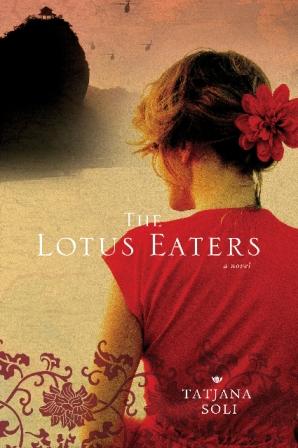
Tatjana Soli: The Lotus Eaters (2010) Literature and War Readalong October 2011

Soli’s debut revolves around three characters whose lives are affected by the Vietnam War. Helen Adams comes to Vietnam in the hopes of documenting the combat that took her brother from her. She immediately attracts the attention of the male journalists in the region, and quickly falls into an affair with the grizzled but darkly charismatic war photographer Sam Darrow. As Helen starts to make her own way as a photographer in Vietnam, drawing as much attention for her gender as for her work, Darrow sends her his Vietnamese assistant, Linh, a reluctant soldier who deserted the SVA in the wake of his wife’s death. While Linh wants nothing more than to escape the war, Darrow and Helen are consumed by it, unable to leave until the inevitable tragedy strikes. The strength here is in Soli’s vivid, beautiful depiction of war-torn Vietnam, from the dangers of the field, where death can be a single step away, to the emptiness of the Saigon streets in the final days of the American evacuation.

For one reason or the other I had a hard time getting into this novel. I struggled for almost 100 pages but all of a sudden I was hooked, fascinated and almost entranced. And I wanted to talk about it. I don’t always feel the urge to talk about what I’m reading but with this book, I felt it because the topics Soli chose are still as conflicting and important today, during any war, as they were at the time, in Vietnam.

The book starts in 1975 with the fall of Saigon and then switches back to 1963 and the moment when the young photojournalist Helen Adams arrives in Vietnam to cover the war. Helen is keen, eager and ambitious and a sensation as she is one of the first women photographers to want to cover a war.

Helen’s character is complex and interesting and through her we see the fascination and problems of this dangerous profession. Helen’s character is based on the stories of real photographers, one of them Dickey Chapelle, one of the first female war photographers who was killed in action.

There aren’t many professions that I find as problematic as war photographer and the novel does a fantastic job at letting us look into their world.

Helen knows from the start that if she wants to become a famous photographer, shoot interesting pictures, she must follow the men into combat. This is not only dangerous, it’s also voyeuristic because the photographers take pictures of everything. Dying soldiers, executed Vietnamese, piles of bodies, screaming children, in short, people during their final moments. They often wonder whether they are more than just vultures, whether it is justified to do what they are doing. On the other hand they get addicted to the high they experience in the heat of the action and the exhilaration that follows an incredible shot that will go on the cover of a magazine and will be seen by the whole word.

Helen and the others constantly oscillate between two states of mind, the selfish drive and the urge to help and reveal to the world what is going on. It seems as if this was a very addictive job and when the novel nears the end and at the same time the end of the war, there is a feeling in the air as if a party was over.

The danger cannot be underestimated. Not only the soldiers, whom Helen gets to like, are killed, many fellow photographers lose their lives as well. One could say the better the picture, the more dangerous the situation was for everyone involved and especially for the subjects.

An older woman from the group, a mother or aunt, screamed and ran forward toward the alcove, and one of the soldiers shot her. Captured on film. The curse of photojournalism was that a good picture necessitated the subject getting hurt or killed.

I was wondering why I always find it much more problematic when someone shoots a photo of a wounded or dying person but have far less of a problem when a reporter only tells or writes about it. Maybe because the dying people lose their privacy. In order to get a good shot, the photographer needs to focus on the pain, to invade the space of the other.

A the heart of The Lotus Eaters is a complex love story or rather the story of a love triangle. I was far less interested in that aspect of the book and that’s maybe why I didn’t like the beginning so much as it focuses a lot on that story line.

Soli manages to give a good feeling for the war. She captures how the war and its perception changed over time, shows how different its meaning was for those abroad, the Americans and Europeans who lived in Vietnam,  as well as for the Vietnamese people. In the beginning the presence of the French can still be felt.

The Americans called it “the Vietnam war”, and the Vietnamese called it “the American war” to differentiate it from “the French war” that had come before it, although they referred to both wars as “the Wars of Independence”. Most Americans found it highly insulting to be mentioned in the same breath with the colonial French.

The descriptions of the city, the country and the jungle are vivid and evocative. For that alone the book is worth reading. I equally liked how she managed to show what it meant for women to cover war. There are no women soldiers and when the female photographers follow a group into combat, they are the only women present which was problematic as well. There were sexual tensions and the fact that the men felt responsible for the women, furthermore they didn’t want to be seen injured or wounded by women.

When Helen goes back to the US for a while, in the late 60s, she tries to make people understand why she does this job. Helen explores her reasons very often and at one point she has to admit it is also because she excels at what she is doing.

“I just went as a lark. It turned into something else. What do you do if you have a hazardous talent, like riding over waterfalls in a barrel? A talent dangerous to your health?” After the question came out of her mouth, she felt embarrassed.

I’m glad I read The Lotus Eaters.  It has many beautiful passages and is very thought-provoking. It gives an in-depth view of one of the most dangerous professions without giving any easy answers. It’s up to the reader whether he thinks they are purely adrenaline addicted vultures or whether they are doing a heroic and admirable job.

I often wonder whether we need those pictures. Do we need to see the horror in detail, up close? Does it help stop wars? In one instance Helen says that every good war picture is an anti-war picture. Is that true and does it justify what they are doing?

I’m curious to hear what others thought.

Other reviews:

Anna (Diary of an Eccentric)


Danielle (A Work in Progress)

Serena (Savy Verse & Wit)

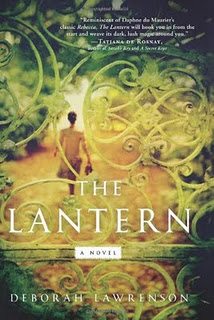
Deborah Lawrenson’s The Lantern – Group Read Week III (Part 5)

The Lantern by Deborah Lawrenson ebook

This is the last week of Carl’s R.I.P. VI group read of Deborah Lawrenson’s The Lantern. This week’s questions have been provided by Heather. Here is the link to the other posts.

Looking back on the novel, I would say this was a very mixed bag for me. I was really curious to read the end for many reasons. I wanted to know how it all tied up and I also thought that I could only say whether I really liked the book once I finished it.

Those who have not read the book at all, shouldn’t read the answers. They contain spoilers.

1. Now that it’s all said and done; what did you think of the book? Did you see the ending coming?

It was a mixed bag. I liked some parts a lot but after having finished I must say, I didn’t like the end at all. The story of the bones was too predictable, the missing girls a bit of a plump red herring and Rachel’s end was far from realistic.

2. What do you think of the characters? Lawrenson took us on a twisty little ride there, I had trouble deciding who was good and who wasn’t for a while there! What do you think of Dom? Of Sabine? Rachel?

I still think Dom was an insufferable character and what he says about Rachel’s death doesn’t even have to be true. Rachel was a troubled mind but we never really know why she became the way she is.

3. Pierre was such a conflicted character. In the end, do you think he killed Marthe and Annette, or did the fall to their deaths because of their blindness?

I’m pretty sure, he killed them. It goes well will all the other cruelties he committed.

4. The book is being compared to Rebecca and Daphne du Maurier’s writing. Do you think the book lives up to that description?

I didn’t see Rebecca in it at all. It’s decidedly not in the same league.

5. Did you have any problems with the book? Narration? Plot? The back and forth between two different characters and times?

I had a huge problem with the police procedurals and the cancer story. They just didn’t sound realistic. This book overflows with descriptions and details but all we get is the word “cancer”. That’s too easy. To feel at least a little bit realistic, we should have heard what type of cancer. Colon cancer, pancreatic cancer, non-small cell lung cancer, leukemia, glioblastoma… What did she have? I think you get the drift. If you can’t call a tree a tree but tell your readers it’s a fig, it’s a pine, it’s a …. then you should be a bit more explicit than that when it comes to an illness like cancer, especially when the person dies of it. This was not believable for me and spoilt the ending of the book.

6. Do you think Lawrenson tied both stories together well in the end? Is there anything she could/should have done differently?

The best part is Bénédicte’s story. I like that ending very well but, as said before the solution to the “serial killer” and Rachel’s end felt wrong, like a cheap trick.

7. One problem I had with the novel is the reliability of the narrators. Do you think any of them were telling the truth? Which ones?

I think Bénédicte and Eve are probably the only truthful ones. Dom’s story could be true or not.

Deborah Lawrenson’s The Lantern – Group Read Week II (Parts 3 and 4)

The Lantern by Deborah Lawrenson ebook

This is the second week of Carl’s R.I.P. VI group read of Deborah Lawrenson’s The Lantern. This week’s questions have been sent by Kailana. Here is the link to the other posts.

This week we read part 3 and 4 of the book. I’m still in two minds about the novel as a whole. There are passages I like and others I don’t but overall I enjoyed parts 3 and 4 much more than parts 1 and 2. They were more mysterious and creepier and I really wanted to know how the book ends that’s why I already finished it but I will not spoil it for those who haven’t read part 5 yet.

Those who have not read the book at all, shouldn’t read the answers. It wasn’t possible to avoid spoilers.

1. The title of this book is The Lantern, and a lantern makes an appearance in both of the stories. In Benedicte’s past, it had a meaning, but what do you think the lantern signifies in her future and in Eve’s story?

For me the lantern is one of the most creepy elements, together with the slender figure Eve sees several times at a distance but who disapears every time she gets closer. The discovery of the bones in the pool was quite creepy as well. At one point I thought it might be Dom who was carrying the lantern and trying to confuse and scare Eve.

2. Carl mentioned scents in last weeks questions, but they have been addressed even more in these sections. What significance do you think scents have in this story overall?

Scents are powerful triggers for memory. A scent can open up a door to a long forgotten past. That seems to be the function of the scents in the novel. For Bénédicte the scents and especially the perfume Lavande de Nuit are tied to Marthe, for Eve, I think, they will forever be her link to the first summer with Dom. And, finally, they capture the essence of the South of France, this very essence that Marthe tried to recreate with her perfume.

3. What do you think of the combining storyline of Marthe? She connects Benedicte, Eve, and Rachel. What do you think will be revealed about this connection in the next sections?

Marthe’s story is the one that fascinates me the most. The other characters in the story seem to feel the same. They are all equally fascinated by her. Her disappearance echoes Rachel’s story.

4. Now that things are beginning to move along, what do you think of the characters? Are any standing out for you? Do you particularly like any? Dislike any?

Of course I totally dislike Pierre. Dom is still without any interest to me. Eve is not very fascinating either but I’m interested in Bénédicte, Marthe and, more surprisingly in Rachel. I also start to feel pity for Rachel. I wonder if Dom ever really understood her. It seems she had issues but usually this type of issues does have an origin. Nobody becomes this obnoxious and dishonest without a reason.

5. What do you think really happened to Marthe and Annette? What do you think the significance of the bones in the pool are to the story? Especially now that it has been revealed that Rachel is also dead.

I was pretty sure they had been killed by Pierre but I didn’t see a connection with Rachel.

6. Do you have any other things you think are significant to talk about? Are there any other predictions to be made for the last two sections of the book?

I’d rather not answer this as I already finished the book.

7. Lastly, what do you think of this book overall? Other than for the read-along, why are you reading it? Is it meeting your expectations?

It’s different from what I expected. I thought I would like the story Eve – Dom – Rachel best but now I realize I’m far more interested in the triangle Marthe – Bénédicte – Pierre. During parts 3 and 4 it met my expectations. I didn’t mind the descriptions anymore and, as I said before, I really wanted to find out the ending and rushed right through the final pages.