Writers in Paris – Literary Lives in the City of Light by David Burke (2008)

No city has attracted so much literary talent, launched so many illustrious careers, or produced such a wealth of enduring literature as Paris. From the 15th century through the 20th, poets, novelists, and playwrights, famed for both their work and their lives, were shaped by this enchanting place. From natives such as Molière, Genet, and Anaïs Nin to expats like Henry Miller, Samuel Beckett, and Gertrude Stein, author David Burke follows hundreds of writers through Paris’ labyrinthine streets, inviting readers on his grand tour.

Writers in Paris may very well be one of the most enjoyable and interesting books I own, one that you can browse, open at random, read from beginning to end or backwards, it will always be great. I don’t even know where to begin to give you a good impression, it is so full of fantastic details.

Burke organised the book by “regions”, so to speak, “The Literary Left Bank”, “The River and Islands”, “The Literary Right Bank”…

What I like best is that you can either follow the traces of an author, be it a Parisian or an expat, or you can find information on books set in Paris, and read about the places described in novels. Each chapter is divided in sub chapters and Burke will indicate who lived in what street, quote excerpts of letters and diary entries, passages of novels and poems.

In the case of Rainer Maria Rilke, Burke, describes the streets and places where the writer lived

On a first stay in Paris during 1902 and 1903, Rainer Maria Rilke lived in a shabby student room at No. 11 rue Toullier, between rue Soufflot and rue Cujas. The house is still there, neat, cream-colored, with weathered shutters. The Prague-born poet was twenty-six years old when he arrived, unquestionably gifted, but emotionally and artistically immature. To him Paris was a sinister place.

But Burke also explores the streets evoked in The Notebooks of Malte Laurids Brigge. Or he describes, where Rilke found inspiration for one of his most famous poems, The Panther, namely at the Jardin des Plantes.

There are many authors mentioned in the book, some famous like Rilke, Balzac, Sartre, Orwell, Hemingway and others who are less well-known like Lautréamont (One sub chapter is called “Lautréamont and Maldoror on rue Vivienne”). Some writers are named repeatedly because they either moved about Paris quite a lot or because their books are set in different streets, different arrondissements.

One sub chapter is dedicated to “The Noble Houses of the Faubourg Saint-Germain”. In this chapter you can find long paragraphs on Proust’s The Guermantes Way or on Edith Wharton’s stay in Paris. But also Edgar Allan Poe’s detective story is set here.

During two years I had an apartment at the Place de la Contrescarpe where Hemingway had his first home in Paris. He describes that stay in A Moveable Feast. I was curious to see who else had lived there at a certain point in time. It seems that François Villon roamed the premises in the 15th century, Mme Vauquer, one of Balzac’s characters, lives here, James Joyce and Valérie Larbaud had an apartment close by. The side streets of the rue Mouffetard, which leads to the Place de la Contrescarpe, are described in great detail in Orwell’s Down and Out in Paris and London. I found this particularly interesting as Emma’s has recently reviewed it (here is the review) and I hadn’t even known before reading her review that Orwell also stayed in Paris for quite a long time.

The river Seine and the islands also play quite an important role in many a book like in Zola’s L‘Oeuvre.  Here is a scene in which the mad painter drags Christine to the river bank.

There he stopped again, his gaze fixed upon the island riding forever at anchor in the Seine, cradling the heart of Paris through which its blood has pulsed for centuries as its suburbs have gone on spreading themselves over the surrounding plain. His face lit up, as with an inward flame, and his eyes were aglow as, with a broad sweeping gesture, he said, “Look! Look at that!”

Other famous writers who have more than one entry are Colette, Proust, Céline, Victor Hugo, Edgar Allan Poe, George Sand, Anaïs Nin and Arthur Miller.

Writers in Paris also contains quite a lot of black and white photos of writers and places, houses and streets.

Here is the homepage of the book with table of contents, lists of authors and some photos.

This is another contribution to  Book Bath‘s and Thyme for Tea‘s event Paris in July.

Quiet Corners of Paris – Paris au Calme by Jean-Christophe Napias (2006)

Quiet Corners of Paris: Unexpected Hideaways, Secret Courtyards, Hidden Gardens

This is one of those books you will appreciate once you know Paris a bit better. When you visit for the first time you want to see the famous places but as soon as you have seen them and get tired of fellow tourists you might enjoy following the tips that you can find in a book like Quiet Corners of Paris – Unexpected Hideaways, Secret Courtyards, Hidden Gardens (you can open it by clicking on the photo).

I think there aren’t many things as magical as being in a big city with all the commotion and traffic, enter a passage, go through a door and find yourself in another world, almost outside of time, like a character in a fantasy novel. Many cities have places like this but they are hard to find.

Quiet Corners of Paris is informative and contains a number of lovely photographs. It’s a small book, rectangular in shape with nice glossy paper.

The book is structured along the different Arrondissements, starting with the first and ending with the 20th. Each arrondissement has other things to offer.

You will find some less well-known museums like the Musée Zadkine, Musée de la Vie Romantique, La Maison Balzac or the Musée Bourdelle, but also a great number of enchanted looking places like the Place Dauphine, the Hôtels du Marais, the Village Saint-Paul.

Parks are also mentioned, you will find the Jardin du Luxembourg and the Parc Monceau as well as the Buttes-Chaumont.

In any case it is a lovely book and will help you discover a hidden side of Paris that is as charming or even more so than the big Boulevards and Avenues.

This is a contribution to Book Bath‘s and Thyme for Tea‘s event Paris In July.

What Ever Happened to Josipovici’s Editor? or How the Disenchantment of the World Became the Divestment of the World

Datei:Klee, Angelus novus.png

A monolingual proofreader or editor isn’t always the best solution as the example of What Ever Happened to Modernism? nicely illustrates.

Let me put one thing straight right away, I have, so far, only read 16 pages of Josipovici’s What Ever Happened to Modernism? and had to frown already more than once. I think that someone who, in the early pages, mentions fellow critic’s books, labelling them as “dreadful”, should be a bit more careful when exposing his own train of thought and how he chooses to underline his theory.

To quote or not to quote? is not the key question. Crucial is how you do it.  In the original language and offering a translation? Or the translation only?

I did not understand why Josipovici does in some cases quote the English translation followed by the original or in other cases followed only by bits of the original and sometimes only the translation. Let’s presume he has his reasons, that I didn’t get and let’s leave it at that but when I come upon a key expression like Max Weber’s “disenchantment of the world” and find the German original expression – in brackets – rendered as Die Entziehung der Welt and not, as it should say correctly, Die Entzauberung der Welt (p. 11), then something must have gone really wrong. There are only two explanations. Josipovicis’ editor doesn’t speak German or he himself doesn’t speak German. If the latter is the case, I have a few additional problems.

How could that happen? How could die “Entzauberung” become die “Entziehung”? The first means “disenchantment” and is the correct term used by Max Weber while the other signifies “divestment”. I think, this is embarrassing. Maybe Josipovici’s book is not dreadful but his German sure is. Entziehung isn’t even a proper noun but a noun that has been built by adding the affix -ung to a verb (entziehen – Entziehung), unlike Entzug. “Entziehen” also signifies “to withdraw”.

Additionally I’m still thinking about his definition of modernism. Modernism, as he writes, should neither be seen as a period nor a style but rather as art that makes its production one of its key themes (yes, I do simplify), self-conscious art that reflects itself, so-called metafiction.  I thought that was the definition of postmodernism. To make something clear here, the term metafiction isn’t used (he is talking about art in general anyway), Josipovici is very accessible, not a complicated writer at all. He is neither a Blanchot, Derrida nor a Barthes. No, the way he writes is very Anglo-Saxon. Funny that.

To be honest, I am,  among other things, a linguist with a fondness of Freudian slips and that is why I will finish Josipovici’s book. I appreciate things that make me laugh.

On a more generous note, I would say that, early on, Josipovici has, unconsciously and through a lapse, revealed what he really wanted to write about which isn’t the disenchantment but the divestment of the world. Or rather the divestment of literature. I do agree with his subconscious. I think, literature doesn’t suffer so much from being too modernist or not modernist enough but because it buys too much into consumerism.

By the way, I’m not a native English speaker and I didn’t have a proofreader. Mistakes and lapses are entirely my own.

Datei:Ohne Titel, um 1892.jpg

Rilke’s Letters to a Young Poet (1903-1908) and Romain Rolland on Rilke (1941)

Drawn by some sympathetic note in one of his poems, young people often wrote to Rilke with their problems and hopes. From 1903 to 1908 Rilke wrote a series of remarkable responses to a young would-be poet, on poetry and on surviving as a sensitive observer in a harsh world. An accompanying chronicle of Rilke’s life shows what he was experiencing in his own relationship to life and work when he wrote these letters.

Rilke’s Letters to a Young Poet or Briefe an einen jungen Dichter are very famous. I often heard people mention them. So far I had only managed to read The Notebooks of Malte Laurids Brigge, his only novel, and Rilke’s poems. He has always been one of my favourite poets and I was quite thrilled when the first Rilke Projekt CD came out in Germany. German actors and singer’s recite his poems to music that has been especially composed for the project. Meanwhile there are at least two or three other CDs out.

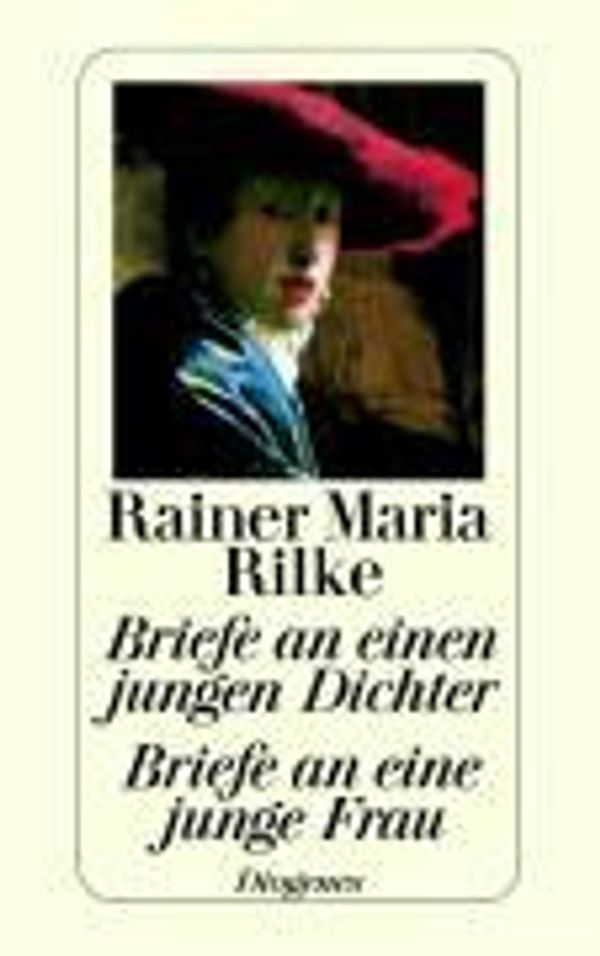
I’ve been reading the book you can see below Briefe an einen jungen Dichter which also contains the Letters to a Young Woman and an essay by Romain Rolland on Rilke.

The essay fascinated me even more than the letters.

Romain Rolland and Rilke were living within walking distance from each other in Paris, Rilke in the Rue Campagne-Première 17 and Romain Rolland on the Boulevard Montparnasse 162. For years they were living close to each other without knowing each other. They were introduced by Stefan Zweig. To read the names of all their mutual friends with whom they met regularly is quite amazing. Stefan Zweig, André Gide, Emile Verhaeren, Auguste Rodin, are but a few. Rilke and Rodin were very close friends and it’s interesting to read how different the two were. Rolland also mentions what an unhappy childhood Rilke had. From 10 to 16 he was at a very strict Military Academy and one can imagine how horrible this rigid discipline must have been for someone so sensitive.

Rolland and Rilke met before WWI and when the war broke out, Rolland left for Switzerland and lived in Geneva while Rilke left for Germany and was finally drafted in 1916. This is something I had either forgotten or didn’t know. Luckily Rilke didn’t have to fight and was working in an archive instead but he lost all his belongings which had remained in his apartment in Paris. His things were confiscated and auctioned, everything, including his manuscripts. What a nightmare. Gide tried to help but it was too late. Nothing was returned to the owner.

After the war Rilke came to live in Switzerland as well, not far from where Romain Rolland stayed. Most of the time Rilke lived at the Château de Muzot.

By that time Rilke’s health had deteriorated considerably and he had to stay frequently at the sanatorium Valmont where he also died. Only shortly before he died it was discovered that he had suffered from some very rare form of leukaemia.

Reading the letters with all this in mind, was quite touching.

A young aspiring poet had written to Rilke asking for advice and over the years Rilke would guide him with his letters. The idea of art and the artist that Rilke describes in his letters is so far from what we see nowadays.

Rilke’s idea of an artist is almost religious and deeply spiritual. First, he advises the young poet, he must try to find out whether being a writer is really his deepest wish. Only if he isn’t able to exist without creating, he should pursue this career. Everything else isn’t true to the soul and will only achieve to produce things devoid of meaning.

Art is good when born of necessity.

He also tells him that loneliness and solitude must be endured. They will transform the soul and lay bare its depth and truth. Most people look for an easy way of life but that isn’t the way of the soul. The soul strives for the difficult and serious.

In one of the first letters he tells the young man to read the novelist that is closest to his, Rilke’s, heart, Jens Peter Jacobsen. I have read Jacobsen’s Niels Lyhne when I was very young, shortly after reading The Notebooks of Malte Laurids Brigge, and I can confirm that it is deeply moving and engaging.

The artist described by Rilke is a pure being of the utmost integrity. This isn’t the realm of creative writing schools and MFA’s (I don’t want to criticize these at all. Our time is a different one). The art created by a being who is capable to endure loneliness and dive into the abyss of the soul or embrace the beauty of inspiration, has a deeply spiritual dimension.

I liked the gentleness of Rilke’s tone, how each and every single word is chosen carefully and especially for the one receiving the letter.

It is interesting to read what he writes about criticism and how to live with being criticized.

The advice he gives in his letters is true and precious but I was, once more, astonished, how much Rilke’s German is different form the one written and spoken nowadays. German isn’t a language that is supervised by a body of language authority like French. The German from only a few decades back sounds quite different from the one in use now.

Rilke is a deeply emotional man and so is his writing. There isn’t the tiniest trace of irony or sarcasm which is a deliberate choice. Rilke writes that a young aspiring poet must stay away from irony as he must explore things that are very serious and deep. Irony will, according to Rilke, never reach the deepest layers of the soul.

Another interesting aspect was what he said about love and men and women. Love, like loneliness, must be endured, he states, it is the most difficult thing in the world. He further says that he doesn’t think that men and women are all that different and that he thinks that women sadly are not yet fully accepted as human beings and that is not how it should be. They should be able to be whole and independent without the need of a man.

It made me a bit sad to read the letters, the world in which they have been written, is long gone, and our values have so much deteriorated.

Rainer M. Rilke: Briefe an einen jungen Dichter - Briefe an eine junge Frau, Buch

Primo Levi: If This is a Man or Survival in Auschwitz – Se questo è un uomo (1947) Literature and War Readalong June 2011

Survival in Auschwitz is a mostly straightforward narrative, beginning with Primo Levi’s deportation from Turin, Italy, to the concentration camp Auschwitz in Poland in 1943. Levi, then a 25-year-old chemist, spent 10 months in the camp. Even Levi’s most graphic descriptions of the horrors he witnessed and endured there are marked by a restraint and wit that not only gives readers access to his experience, but confronts them with it in stark ethical and emotional terms.

Survival in Auschwitz or If This is a Man was difficult to read and the images it created will haunt me for a long time. Additionally I watched Alain Resnais’ Nuit et Brouillard – Night and Fog which intensified the reading experience.

Primo Levi was part of the Italian resistance when he was captured by Fascist militia in the winter of 1943. After hearing that he is Jewish, the militia hand him over to the Nazis and he is deported to Auschwitz. It’s towards the end of the war and despite Auschwitz being an extermination camp, as they needed many people to work there, they didn’t kill as many as before which is one of the reasons why Levi survived.

Stepping off the train, the people who have been captured, are divided, sometimes arbitrarily, sometimes depending on their strength and fitness. Those who are sent to another direction than Primo Levi will take a shower and we all know what that means. The others who are kept alive, have to strip, wait in the cold for hours and are finally shaved, tattooed and stripped of their old identity. 174517 is the number that is tattooed into Primo Levi’s arm. The numbers, that are like a bar code, tell the other prisoners a lot. They can deduce where the people come from, how long they have been at the Lager. Some numbers are famous, for example the lower numbers of the first ones to arrive from Polish Ghettos. Three years after their arrival some are still alive.

Levi describes their arrival in great detail. He also tells in great detail how everything ends, how after long days of bombardment, and when it becomes obvious that the Russians are not far, the Germans abandon the camp. They leave the weakest and the sick people, like Primo Levi, behind, the others are taken along and probably shot on the way. What a struggle it was for those left behind to survive. There was no more heating and it was icy cold outside, they had no more food, no more blankets, just dirt, debris, corpses and sick and dying people.

Flanked by these two long chapters – the arrival and the end – we get to read a succession of shorter chapters that describe every aspect of the life in a concentration camp. How they are fed, always just a little bit to keep them alive, but never enough to stop the hunger. How they sleep, two men on a small bed of 70cm together. They wake all night because their bladders are weak and the others wake them, it is cold, they have nightmares. He describes what clothes they wear, how dirty and torn they are, the work they do, which is mostly forced labour of the most strenuous kind. They are always cold, hungry and extremely tired. The only time they can recuperate a little bit is when they fall ill. But falling ill is dangerous as well, should they fall too ill, they will be exterminated.

What we read is horrible and shocking but what disturbed me the most is what he wrote about the increasing inhumanity of the prisoners. People turned into monsters under these conditions. They had hardly anything and tried to take advantage, they stole and cheated and did everything for the sake of a tiny little piece of bread, some small advantage over others. Give a man a few privileges under the condition to supervise, punish and abuse others and he will do it. This trait of human nature was cunningly exploited by the Nazi’s. Levi picks a few examples and describes them in more detail than others. It’s amazing what people would do to save themselves.

There are a few men who are kind or manage to stay kind but they are not numerous at all. Levi is lucky, there is one Italian a non-Jewish prisoner, better off than he is, who helps him.

Survival in Auschwitz is impressive for many reasons. It is one of the most precious and detailed testimonies and so well written. One can really understand what it must have been like.

I have written in the introductory post that my edition is French. At the end of the book is an annex of 25 pages in which Primo Levi answers eight questions. These are questions he was often asked when he presented the book, in schools or elsewhere. Some of these questions were on my mind as well while I was reading.

I’m just going to pick those that interested me personally the most.

Did Primo Levi go back to Auschwitz after the war? Yes, he did. In the 60s but it left him surprisingly unfazed as most of the barracks he had been in did not exist anymore and large portions of the rest were transformed into a museum. It was very hard for him to see Birkenau, where the crematorium was although he wasn’t there during the war. That part was like he remembered the Lager, mud, dirt, debris.

Why was there no uprising? Levi tried to answer the question as good as he could. When they arrived, they could have done it but as they didn’t know what was going on they didn’t try. Later there were uprisings but always by political prisoners, not by Jews, which is understandable. The Jews were treated far more badly and therefore much weaker and most were not political people, they had no idea how to resist.

Was there a difference between Soviet Gulags and the German Lager? Yes, the Soviets didn’t want to exterminate the prisoners and although they were awful too – forced labour, bad conditions – it wasn’t as brutal.

The last question was by far the most fascinating. Someone asked Levi, who he would be if he hadn’t been in Auschwitz. Of course, he stated, this was a philosophical question and he added, that the only thing he knew for sure was, that without Auschwitz he wouldn’t have become a writer. The experience in the Lager triggered the urge to write. He started to write in Auschwitz and as soon as he was back, wrote this book pretty much in one go. Without Auschwitz he would have stayed a simple chemist.

This last question and some passages in the book seem to indicate how it was possible that Primo Levi survived, why he had the mental force that was needed. He wrote that he always had an interest in human psychology and that he was fascinated to watch the people and what happened around him. This also helped him to still recognize those around him as humans, although they had been stripped of everything.

It’s a difficult and depressing book but I was touched by Levi’s humanity and his voice and I know I will read more of him. A while back I watched Francesco Rosi’s movie La Tregua aka The Truce based on Primo Levi’s novel. It tells the story of his odyssey back home from the Lager to Italy. Primo Levi’s part is played by John Turturro. If you want to get a good feeling for the man Levi, this is a great starting point. It manages to convey how he became a writer. I will certainly read the book.

I’m interested to know what others thought about this book. Was it too hard to read? Did you also think that he managed incredibly well to make us feel and understand what he went through?

Other reviews

Introduction by Danielle (A Work in Progress)

*****

Survival in Auschwitz was the sixth book in the Literature and War Readalong. The next one will be Marguerite Duras’ Hiroshima mon Amour. Discussion starts on Friday July 29, 2011 .

Kat Banyard: The Equality Illusion (2010)

Women apparently have never had it so good. In today’s supposedly post-feminist world, cosmetic surgery is seen as empowering, lap dancing as a sexually liberating career, and the lack of women from boardroom a result of women’s free choices. In The Equality Illusion, campaigner Kat Banyard argues passionately and articulately that feminism continues to be one of the most urgent and relevant social justice campaigns today.

Kat Banyard’s The Equality Illusion: The Truth about Men and Women Today takes an unflinching look at what it means to be a woman today and, due to the fact that Banyard is British, especially in the UK .

Still, whether you are an Afghan woman fighting for girl’s rights of literacy or an American doctor performing late stage abortions, you have one thing in common: you lead a dangerous life and might end up being killed. Both things happened.  The first happened in Afghanistan in 2006, the second in the US in 2009. They illustrate the illusion of equality and show what a global phenomenon it is.

Banyard structured the book like a day in a woman’s life and tied each part to a topic. Getting up – beauty myths, going to work – sexual harassment and the opposite of equal opportunity, coming home – domestic violence and unwanted pregnancies, evening out- lap dancing clubs, porn industry and prostitution… This structure works very well.

The key topics are beauty and looks, equal opportunity at work, poverty, literacy, the sex industry, domestic violence, abuse, relationships and children. Banyard looks at everyday life and how it is lived and not so much at the ideas beneath it all. There is an introdcutory chapter on false assumptions about gender but it is quite short.

To say the least, I was shocked about a lot of the data and statistics and saddened by most of the individual stories. Whoever said that feminism wasn’t needed anymore or that we were by now equal?

Women are to this day among the poorest of the world. In some African countries little girls do not go to school because they are raped on the way. In the UK some girls have bad grades because there is constant sexual harassment at school and all the teachers do is saying “boys will be boys”. In some countries girls are forbidden to learn to write and read.

Humiliating and degrading girls serves to highlight just how masculine boys really are. And so, sexist bullying and sexual harassment are an integral part of daily school life for many girls. (p.67)

What women have to face at work isn’t much better. Cases of all forms of sexual harassment are frequent. Women with children do not have a lot of chances to make a career, especially not, when, as seems to be the case, men do not help enough when it comes to child rearing. Payment is still not equal at all and this stems to a large part from the fact that many jobs performed by women are considered to be less valuable and are paid less.

Legislation can create the illusion that equality has been achieved. But just because it is officially illegal to pay women less than men for equal work, to sack them for being pregnant, or to sexually harass them, it doesn’t mean theses things don’t go on. There is a huge gulf between policy and practice, and much current legislation – particularly around equal pay – lacks real bite. In a society where women still do the majority of unpaid caring, rigid workplace structures and the long-hours culture mean they pay a huge penalty for doing so. (p.101)

There is a trend, especially in the UK to normalize the porn industry. According to the interviews in this book, there is no such thing as “elegant lap dancing clubs”. Sooner or later all the women are harassed and coerced into having sex. Prostitution may be a choice but only because the women have not much to lose. They have often been abused as children, are very poor, have no education or just had no idea what they were getting into. “At work” they face brutality and violence on top of the degrading activity of selling their bodies.

I think the way society has glorified prostitution is very sad. I believe young women all over the world are becoming more curious (about going into prostitution) due to the positive light that is shown on this horrid profession. (p.145)

Domestic violence is extremely wide-spread, rape is on the up and many perpetrators are never convicted and if they are the punishment is ludicrous.

What bothers me personally the most in my personal life are two things. One is something I’m facing at work- there is no such a thing as equal treatment and the other is something I see happen, namely the overwhelming presence of the influence of the porn industry. Porn practices, fashion and looks seem to become normalized to the extent where you can find “sexy” underwear and clothes for little girls at the supermarket.

Compared to all this it may seem futile to debate whether all the pink toys for girls are really an issue or not but when you dig deeper, you just see that it is one of the symptoms of gender inequality. And it’s everywhere.

What I truly liked about the book, is that Kat Banyard offers hope. Her last chapter and the appendix are entirely dedicated to grassroot activism which is extremely important work and she offers a list of resources. She clearly shows how important feminism still is, that you can achieve something if you want to, it doesn’t need to be anything big and that your dedication may inspire others to follow your example. Last but not least she underlines that feminism also needs the contribution of men and they will ultimately also benefit from equality.

l read about this book on Still Life with Books. I’m really glad I read it and would love to hear from anyone who has read this or any of the other new/old publications. My first thought when I saw these new books was “But that has been done before….” Yes, it has, but apparently most of it has been forgotten. And we need books that back up the topics with actual data or the books get dismissed as being outdated.

I hope I might finally get to Cordelia Fine’s Delusions of Gender next.

Brené Brown: The Gifts of Imperfection (2010)

Human-behavior researcher and author of I Thought It Was Just Me (2007), Brown has made a career out of studying difficult emotions such as fear and shame. In this latest book, she emphasizes that above all other ingredients of living an emotionally healthy life is the importance of loving ourselves. In the grips of what she took to be a breakdown, or midlife crisis, Brown came to understand she was experiencing a “spiritual awakening” and worked to explore its significance and the interaction of knowing and understanding yourself and loving yourself. She intersperses her own personal journey with research and clinical observations of others of the work of living a “wholehearted” life, or “engaging in our lives from a place of worthiness.” The point is to embrace life and oneself with all the imperfections, releasing the stress of overdoing and overworking. Brown offers exercises for readers to plumb their own emotions and begin to develop the kind of resilience needed to stand up to unrealistic expectations of others and ourselves.


I’m so glad I came upon Brené Brown’s Homepage and from there to her book The Gifts of Imperfection. This is her second book, the first was called I Thought It Was Just Me (But It Isn’t): Telling the Truth about Perfectionism, Inadequacy and Power.

Brené Brown is a researcher, specialized in topics like shame and perfectionism and analyzing how they are linked and keep us from living wholeheartedly. She is an incredibly honest and open person who is able to show her vulnerability.

Wouldn’t it be better if we could be kinder but firmer? How would our lives be different if there were less anger and more accountability?  (p. 17)

The source of this book was a major breakdown that forced her to look at herself and her life. What she found out and shares with her readers is truly invigorating.

Before the breakdown, I was sweeter – judgmental, resentful and angry on the inside – but sweeter on the outside. Today, I think I’m genuinely more compassionate, less judgmental, and resentful, and way more serious about boundaries. (p.16)

The book has two parts. The first is a more theoretical one in which she introduces us to the concept of living a wholehearted life. The key factors are: Courage, Compassion and Connection. Further she emphasizes the importance of Love, Belonging and Being Enough. But what is much more important is that she identifies that there is always something that gets in the way when we try to change. We need guideposts to overcome the hurdle and she provides them. Every guidepost is linked to something that gets in the way and is described in detail.

The Wholehearted journey is not the path of least resistance. It’s a path of consciousness and choice. And to be honest, it’s a little counter-culture. The willingness to tell our stories, feel the pain of others, and stay genuinely connected in this disconnected world is not something we can do halfheartedly. (p.21)

The second part offers a more practical approach and consists of ten very different guideposts: Authenticity, Self-Compassion, Resilience, Gratitude and Joy, Intuition and Trusting Faith, Creativity, Play and Rest, Calm and Stillness, Meaningful Work, Laughter. In the guideposts she provides her own insights, case stories from other people, research data and quotes from a variety of books. She also indicates titles for further reading. Especially those reading suggestions are very valuable and I compiled quite a list of interesting titles.

One of the best and most honest chapters is the guidepost on addiction or numbing as she calls it (Guidepost Resilience). Brené herself was an alcoholic and was also addicted to a great number of other things like over-eating and also the overuse of Facebook and the like.

Another chapter that I appreciated a lot was the one called ” Cultivating Creativity. Letting go of Comparison.”

Comparison is all about conformity and competition. At first it seems like conforming and competing are mutually exclusive, but they are not. (p.94)

The comparison mandate becomes this crushing paradox of “fit in and stand out!” It is not cultivate self-acceptance, belonging and authenticity; it’s be just like everyone else, but better (p.95)

If you like you can visit Brené Brown’s Homepage where you will find her blog as well as a lot of other resources.