Literature and War Readalong September 30 2013: There’s No Home by Alexander Baron

There Is No Time

I discovered Alexander Baron’s There’s No Home  thanks to Guy who read an article about this forgotten author a while back.

Reading the beginning of the afterword I’m astonished he was forgotten. John L. Williams writes the following.

Alexander Baron was, arguably, the great British novelist of the Second World War, and for a while he was also the most popular. The three books in which he covered the conflict  –There’s No Home, From the City, From the Plough, and The Human Kind– received glowing reviews and sold in vast numbers on their first appearance on the bookstands and in book club editions.

That these titles have receded from view, rather than becoming established classics – on a par with, say, the wartime books of Evelyn Waugh, Graham Green e or Olivia Manning – seems as mysterious as it is unjust. Perhaps it is due with Baron’s concern with the infantryman’s point of view, rather than the officer class. Or perhaps it is that Baron’s style is so effortlessly simple and unsensational that it is easy to overlook the virtuosity of the writing.

This certainly puts me in the mood to pick up the book and discover this author for myself.

Here are the first sentences

This is not a story of war but of one of those brief interludes in war when the almost-forgotten rhythms of normal living are permitted to emerge again, and when it seeps back into the consciousness of human b wings – painfully, sometimes heartbreakingly – that they are, after all human.

*******

The discussion starts on Monday, 30 September 2013.

Further information on the Literature and War Readalong 2013, including all the book blurbs, can be found here.

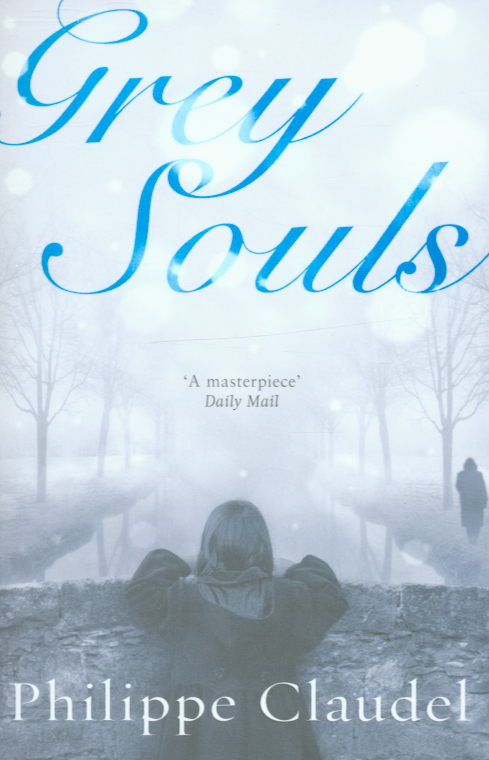
Philippe Claudel: Grey Souls – Les Âmes grises (2003) Literature and War Readalong August 2013

Grey Souls

Philippe Claudel’s Les Âmes grisesGrey Souls is a crime novel set during WWI and a few years later. The narrator whose identity we do not know for a very long time, has decided, some twenty years later,  to write the account of a few tragedies that have happened during the war. He writes for his late wife who died in childbed. He could never let go of his grief and, as he says towards the end of the novel, he never really lived, he merely survived.

In a way, this survival, makes him feel his guilt even more deeply, guilt because he didn’t fight during the war. While so many men died, returned mutilated or went missing, he led a comfortable sheltered life but after his wife died, he didn’t really enjoy it anymore. He’s not the only one however to lead a sheltered life. While the war in the trenches rages and goes on for far longer than anyone suspected, the little town he lives in is spared because there is a factory and the men are needed as workers. And there are the many officials, who are spared as well.

At the beginning and at the heart of the novel lies a murder. An eight year old girl, called Belle de Jour, beautiful as a flower, is found murdered in a canal.

It’s a cold winter morning when the police and officials arrive and the girl’s body lies on a river bank, in the mud. The judge, who has been called to investigate, first eats his breakfast, without being the least bothered by the presence of the corpse. This initial scene sets the tone of the book. It’s grey and bleak. The good people die or despair, the bad go on living their unfeeling lives.

The narrative goes back and forth in time. Bit by bit, the story is unfolded. While Belle de Jour’s murder is at the heart, there are other violent deaths like the suicide of the beautiful school teacher, the narrator’s wife’s death and, much earlier than the story, the premature death of the prosecutor’s young wife.

In the beginning of the book the question “Who killed Belle de Jour?” is important, but once we know who it was the second half concentrates on the “Why?”.  At the time, a murderer was found and executed, but the narrator never believed that he was really the one. Twenty years later. still grieving and full of guilt, he starts another investigation and, this time, he finds the real culprit and his reason.

The book is dismal in tone and topic,  but highly readable and beautiful as well. I liked how the war was blended in as if it colored every aspect of the life. It is as if the novel has two layers, the people’s lives, the tragedies they encounter, the murder and beneath all that the raging war.

I read Belle de Jour’s murder and the way the little girl was discovered as a microscopic description of the war that captured, the ugliness, the absurdity, cruelty and utter senselessness.

The book also contains a profound and melancholic meditation on life and loneliness and how one single tragedy can turn a person into a living shell and lead to crime.

It takes quite a while until the reader understands that more than one murder has been committed in this book.

This was the first novel by Claudel I’ve read, but it will not be the last. It’s not cheerful but it has a strange, arresting beauty that I found wonderful.

Other reviews

Danielle (A Work in Progress)

*******

Grey Souls – Les Âmes grises was the 8th book in the Literature and War Readalong 2013. The next is the WWII novel There’s No Home by Alexander Baron. Discussion starts on Monday 30 September, 2013. Further information on the Literature and War Readalong, including the book blurbs can be found here.

Literature and War Readalong August 30 2013: Grey Souls by Philippe Claudel

Grey Souls

I wanted to read Philippe Claudel since years and looking for a WWI novel I came across his Grey SoulsLes âmes grises. Like most of his other books the novel has been translated into 25 languages and was generally liked by readers and critics. From what I know so far, the war is not predominant in the novel. It’s more like the starting point to a crime which is solved much later. From some of the reviews I got that it’s quite heavy and brooding.

Here is the blurb

This is ostensibly a detective story, about a crime that is committed in 1917, and solved 20 years later. The location is a small town in Northern France. The war is still being fought in the trenches, within sight and sound of the town, but the men of the town have been spared the slaughter because they are needed in the local factory. One freezing cold morning in the dead of winter, a beautiful ten year old girl, one of three daughters of the local innkeeper, is found strangled and dumped in the canal. Suspicion falls on two deserters who are picked up near the town. Their interrogation and sentencing is brutal and swift.

Twenty years later, the narrator, a local policeman, puts together what actually happened. On the night the deserters were arrested and interrogated, he was sitting by the bedside of his dying wife. He believes that justice was not done and wants to set the record straight. But the death of the child was not the only crime committed in the town during those weeks.

The first sentences:

I don’t really know where to start. It’s quite difficult. All this time that has gone by, which words will never bring back, the faces too, and the smiles, the wounds. Still I need to try to say it. Say what’s been bothering me for twenty years. The remorse and the big questions. I have to cut open the mystery with a knife, just like a belly, and sink my hands in, even if that’s not going to change a thing.

The book has been made into a movie but I don’t know whether it’s available in English

http://www.youtube.com/watch?v=CIdRZWdRQDQ

*******

The discussion starts on Friday, 30 August 2013.

Further information on the Literature and War Readalong 2013, including all the book blurbs, can be found here.

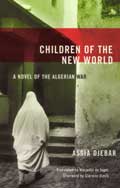
Assia Djebar: Children of the New World – Les enfants du nouveau monde (1977) Literature and War Readalong July 2013

Children of The New World

Assia Djebar’s novel Children of the New World – Les enfants du nouveau monde is set during the Algerian War of Independence or Algerian Revolution which lasted from 1954 – 1962. If you are not familiar with this war wikipedia gives a short overview. It was a so-called decolonization war between France and Algeria. The war was fought in many different ways, guerrilla warfare, maquis fighting, terrorism and extensive use of torture on both sides.

The war in Algeria is still controversial in France. While it is meanwhile called “a war” and not only a “pacification intervention” – or whatever euphemism was chosen at the time – many of the aspects of the war are still not spoken about openly. One of them being the “interrogation techniques”.

It was a complex war that ripped apart the Algerian society. I think Assia Djebar showed this well in her novel. She chose to write Children of the New World as a series of vignettes, each with the name of a protagonist as title. Upon closer inspection we see that these are not individual stories but that each is a piece of a puzzle forming a kaleidoscopic canvas, which is apt and nails the Algerian society of the time. This was a society that resembles a broken pot, still held together at the seams, but the cracks showed and covered it like spiderwebs, ready to burst at any moment.

I have read the one or the other critique of this book stating it wasn’t really about the war, which puzzles me no end. The war is everywhere in this book, in every page. Every relationship is influenced or distorted by it. Neither love nor parenthood, nor friendship, nor anything else is free of the war’s influence.

We don’t see the fighting, that takes place outside of the city, in  the mountains, but the people see burning farms from afar, they see bombs fall and at the opening of the book, one falls on a house in the city, killing and old woman.

The book also shows how hostile this society was and how it was almost impossible to make a difference between enemies and allies. There were so many good and bad people on both sides. Not every Algerian was for the Algerian cause, not every French person was against it and many on both sides were against the use of torture and violence.

I have never read about any war in which torture was used this extensively. This becomes clear in the book too, although, mercifully, we find no descriptions, but we hear of people who don’t survive interrogations, of others who hear them scream in their own cells.

As said, the war is omnipresent in this book but Djebar transcends it and gives us more than just a society at war with itself and its oppressor. It shows a traditional society undergoing change and what this change means, notably for its women. I loved the many different descriptions of women’s lives. The diversity is amazing and in its best parts Djebar’s writing is as detailed as a documentary.

This was Assia Djebars third novel and it’s said that it’s not her best. I suppose that is correct as there are many structural problems. Djebar makes intense use of analepses , still I got the impression there were a lot of time-breaks that were not entirely wanted.

I’m curious and want to read another of her novels some day. She’s an interesting writer, with a raw unpolished force that I found quite refreshing.

For those of you interested in movies on the Algerian war – here’s a list that will also guide you to some of my reviews.

Other reviews

Danielle (A Work in Progress)


*******

Children of the New World – Les enfants du nouveau monde was the seventh book in the Literature and War Readalong 2013. The next is the WWI novel Grey Souls aka Les âmes grises by French writer Philippe Claudel . Discussion starts on Friday 30 August, 2013. Further information on the Literature and War Readalong, including the book blurbs can be found here.

Literature and War Readalong July 29 2013: Children of the New World – Les enfants du nouveau monde by Assia Djebar

Children of The New World

Assia Djebar’s novel Children of the New WorldLes enfants du nouveau monde is the first novel about the war in Algeria in this readalong. Assia Djebar is one of the most important, if not the most important North African writer. She is also a translator, essayist and filmmaker.

I’ve been meaning to read her for years as I got other books by her on my piles and I’m glad to finally get a chance to do so.

She was the first writer from the Maghreb to be elected to the Académie Française in 2005. Djebar is known to be anti-patriarchal and anti-colonial; her novels focus on women’s lives. She writes in French, not in Arabic.

Children of the New World is about the war in Algeria from the point of view of the women.

Here are the first sentences

In the old Arab quarters at the foot of the mountain the whitewashed houses all look alike. Before the city grew larger, this was the only place where affluent families would come to find a bit of cool air, near the b rooks and orchards at the end of spring. Each home is at the end of a cup de sac, where, after wandering through a maze of silent little alleyways, one must stop. All that can be heard is some vague whispering suddenly interrupted by the shrill cries of children, whom the mothers are trying to keep at home, but to no avail. The military guard can show up any moment. Then there is barely enough time to gather the children and muffle their voices behind closed doors.

*******

The discussion starts on Monday, 29 July 2013.

Further information on the Literature and War Readalong 2013, including all the book blurbs, can be found here.

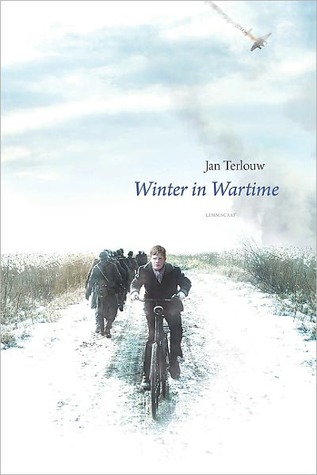
Jan Terlouw: Winter in Wartime – Oorlogswinter (1972) Literature and War Readalong June 2013

Winter in Wartime

Dutch author Jan Terlouw’s award-winning novel Winter in Wartime  (Oorlogswinter), which has been made into a movie, is a book for YA. It tells the story of 15-year old Michiel and is set during the hunger winter, in the Netherlands in 1944.

Michiel lives in a Dutch village with his parents, older sister and younger brother. His father is the mayor of the village. Like the rest of the Netherlands, their village is occupied by the Germans. It’s obvious for everyone that the war will come to an end soon and that the Germans are losing it. However, instead of giving up, they intensify their hostile activities; they search houses, arrest, torture and shoot people.

The village is divided, some are collaborating, some are suspected to collaborate, while others are in the resistance. Michiel’s parents are anti-German; they are good people who try to help those who have less, as much as possible. Every night they open their doors to distant relatives, people on the run, displaced persons, provide shelter and food for one night. Uncle Ben who is in the resistance is one of the regulars.

Michiel has an outsider position. He isn’t really a child anymore but doesn’t seem old enough for resistance work. When Dirk, an older boy who has joined the resistnace, asks him to deliver a letter, should he not return from a mission, Michiel feels honoured.

That same day his father and a group of other people is arrested because someone has killed a German soldier. Some of the men who are arrested will be hanged. When Dirk doesn’t return and Michiel fails to hand over the letter, he opens it and discovers that Dirk has been hiding a wounded British pilot. What should he do now? Who will help him? Is there anyone he can trust? That’s what you will discover if you decide to read Winter in Wartime.

Towards the end of the book (p. 121) Michiel remembers something his father said

Michiel often thought of something his father once said: “In every war dreadful things happen. Don’t think that it is only the Germans who are guilty. The Dutch, the British, the French, every nation has murdered without mercy and perpetrated unbelievable tortures in times of war. That is why, Michiel, you shouldn’t allow yourself to be misled by the romance of war, the romance of heroic deeds, sacrifice, tension and adventure. War means wounds, sadness, torture, prison, hunger, hardship, and injustice. There is nothing romantic about it.”

This short paragraph is central and summarises the theme of the book. The novel looks exactly into this and tests it. While the story confirms that war is horrible, it still shows that heroism is possible. There will always be courageous and kind people in every war, people who will try to stay good and do good.

This is a book for young people and I was very interested to see how WWII would be handled. In all the resistance books and movies torture plays an important role. How would that be handled for children. I’d say Terlouw did a great job. He was explicit but not gruesome. Not for one second we think it may not have been as bad but still he isn’t too explicit.

Books for children and YA always have a message. A lot of that message is captured in the quote above but there is another central theme, which is illustrated too – not every German was bad. No people is bad as a whole.

I think Terlouw’s book is well done, it captures he Netherlands during the winter of 44 very well. The hunger, the masses of  fleeing people, the occupation, the suspicions, all this is well drawn. The tone isn’t depressing as the end of the war is in sight. Horrible things happen still but there is a lot of hope.

I saw the movie a few years ago that’s why I possibly didn’t like the novel as much as I would have if I hadn’t known the story already. It isn’t one of my favourite readalong titles but it’s still well worth reading and, as a children’s book, I’d say, it’s excellent.  Don’t miss it if you’re interested in WWII, occupied Holland, the Dutch resistance, and are looking for all of these topics done in a way that is appropriate for younger readers.

Other reviews

Anna (Diary of an Eccentric)

Danielle (A Work in Progress)

Iris (Iris on Books)

Judith (Reader in the Wilderness)

Movie review

Kevin (The War Movie Buff)

*******

Winter in Wartime was the sixth book in the Literature and War Readalong 2013. The next is the novel is Children of the New World aka Les enfants du nouevau monde on the war in Algeria by Algerian writer Assia Djebar. Discussion starts on Monday 29 July, 2013. Further information on the Literature and War Readalong, including the book blurbs can be found here.
Literature and War Readalong June 28 2013: Winter in Wartime by Jan Terlouw

Winter in Wartime

Two years ago I watched the Dutch resistance movie Winter in Wartime (Oorlogswinter). While it’s not my favourite resistance movie, I liked the story and when I saw it was based on a novel I felt tempted to read it. A review on Iris’ blog during last year’s Dutch Literature Month reminded me of the book. I’m looking forward to this book as it’s the first time that a readalong title is a children’s book or rather a novel for young adults. As Iris states in her review, it is even a classic of Dutch children’s literature.

Jan Terlouw is a Dutch scientist and politician. He has written over 20 books for children.

If you would like to join but are not in the mood to read the novel Winter in Wartime, you could watch the movie instead.

Here are the first sentences

It was dark.

Step by step, one hand groping in front of him, Michiel edged his way along the rough bicycle path that ran parallel to the cart track. In his other hand he carried a cotton bag containing two bottles of milk. “New moon and heavy clouds,” he muttered. “Van Onmen’s farm should be around here somewhere.” He peered to the right, straining his eyes, but could see nothing at all. Next time I’ll refuse to go if they don’t give me the lantern, he thought. Erica should make sure she’s at home by half past seven! I can’t manage this way.

*******

The discussion starts on Friday, 28 June 2013.

Further information on the Literature and War Readalong 2013, including all the book blurbs, can be found here.