Donal Ryan: The Spinning Heart (2012)

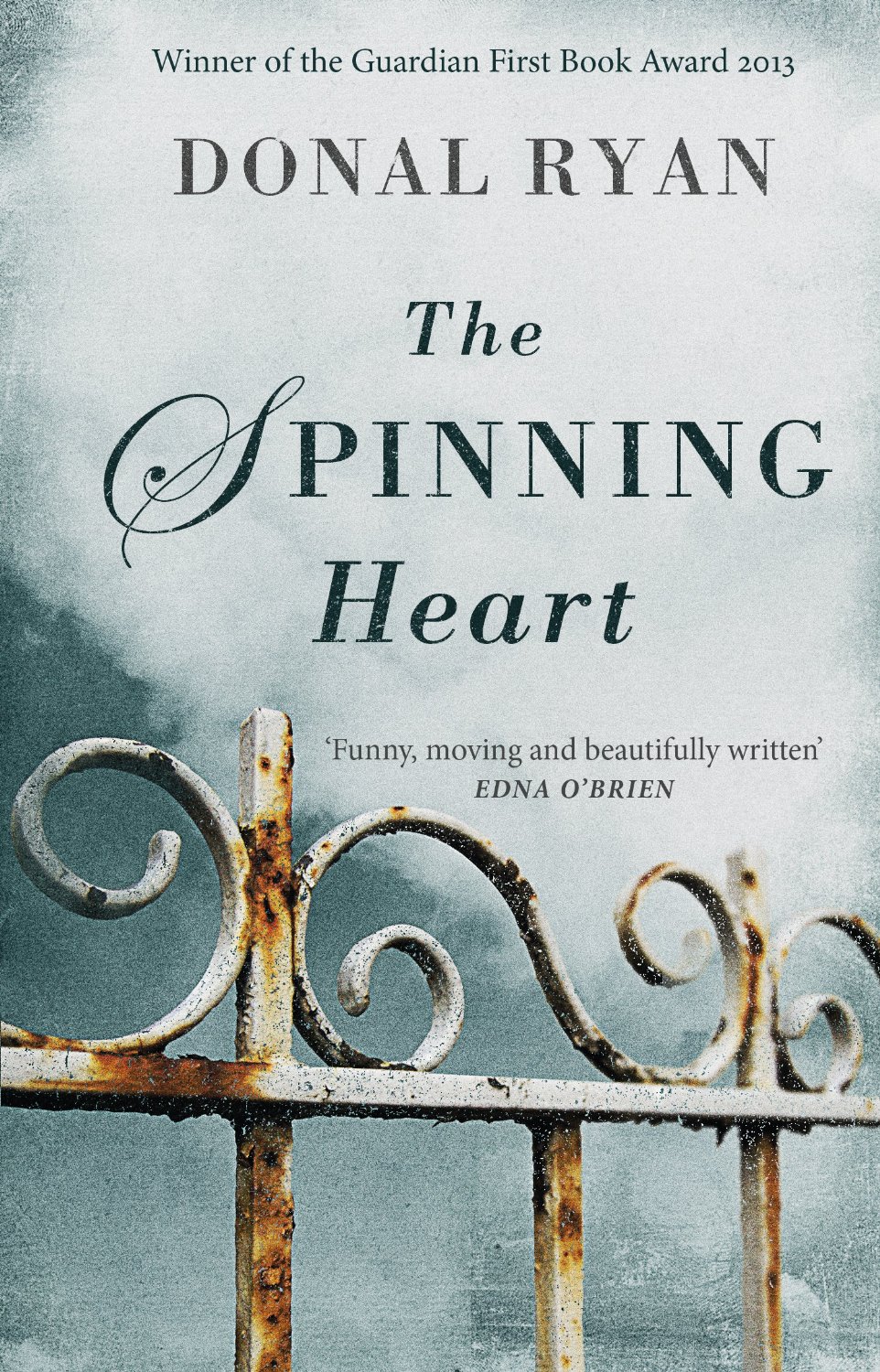
The Spinning Heart

Irish writer Donal Ryan’s first book  The Spinning Heart is less a novel than a chorus. A chorus of 21 voices telling, stating, deploring, accusing and confessing things that are on their mind, things they want to commit or have committed, things they should have done or could have done. While each of them gives us a slice of individual life, in his or her unique voice, using their idiom or vernacular, they are linked because of the recession that has hit them hard. Most of the professional life in this small rural community was tied to the building firm of Pokey Burke who fled the country, leaving his former employees without pension or income. He’s also responsible for a ghost estate, in which one of the narrators, Réaltín, her little boy, and one elderly woman live. The other houses haven’t been finished and Réaltín’s house has a lot of shortcomings too.

The book opens with Bobby’s voice and closes with Triona, Bobby’s wife. In between are the 19 others. Former workers of Pokey, his father and many more. What struck me the most was that every chapter really sounded as if a person was talking to us. The voices are each so intimate and distinctive. Some focus on the present moment and the recession, some go way back. What we read paints an astounding portrait of Irish society, the things that have been the same for decades, like the weight of the Catholic Church, and those that have drastically changed, like the economy. Some voices are shocking, some are heartbreaking, some belong to very young children, some to old people, most to those who have been the most affected by the recession- people between 18 and 60+.

While all these lives have been marked by Pokey and his real estate fraud, there are also two thin plot lines which link all the people: the abduction of Réaltín’s boy and the murder of Bobby’s father. With these to plots the book transcends the economy theme and encompasses more universal topics like family and relationships.

The Spinning Heart is an amazing piece of writing and I’m not surprised Donal Ryan won the guardian First Book Award. Creating 21 distinctive voices is an achievement but to tell 21 touching life stories and to capture a whole country even more so.

Deirdre Madden: Molly Fox’s Birthday (2008)

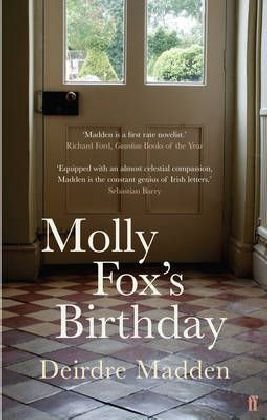
Molly Fox's Birthday

It’s been a while since I’ve read a book by a new-to-me author and felt like reading everything she’s ever written. I have Guy to thank for the discovery of Irish writer Deirdre Madden. When he reviewed her novel Time Present and Time Past (here’s the link) I knew right away this would be a book I’d love to read. When I looked at her other novels Molly Fox’s Birthday tempted me even more.

Molly Fox’s Birthday is set in Dublin and tells about one day in the life of the narrator, a playwright and best friend of Molly Fox. Molly is a much-admired, famous theatre actress. She’s spending some time away from Ireland and she and her friend swap apartments. While the narrator stays in Dublin, Molly will be staying at her apartment in London.

The narrator has just started a new play and tries to overcome a severe case of writers’ block. Instead of writing, she spends the day thinking back on her life and her friendship with Molly and their mutual best friend Andrew. One little thing leads to another, one thought leads to the next. While not a lot happens during that day – the narrator goes shopping, Andrew drops in, a stranger rings the doorbell – we see the richness of a complex life unfold. A life that is as much rooted in Irish history as in the love for theater and acting. The different elements all lead to an in-depth exploration of many other themes: religion, friendship, family, acting, reality, dreams, authenticity.

I liked how she shows the world of the theater from different sides. The side of the playwright, the side of the actor, the view from a fan, and how she draws parallels. Her own brother is a priest and a lot of what he’s doing, when preaching, is acting as well. One strand of thoughts circles around how much any person acts and how much someone can ever know an actor. Until the end of the book, Molly stays an enigma. Just like she hates celebrating her birthday, she hates talking about her feelings and withdraws into her acting if someone comes too close. This doesn’t mean Molly doesn’t reveal herself. Her apartment which is carefully decorated allows a glimpse into her soul.

While the narrator thinks about this, we realize that one of the reasons why Molly, Andrew and the narrator are such close friends, is that they share this reservation. As rich and detailed as their inner lives are, they are not very explicit people and are interested in what is left unsaid, maybe more than in what is said. In the end, when someone like Molly decides to talk – it can always be to reveal something or to hide even more. She may always play a role. But that’s true of many people, only actors are much better at selling the idea of themselves they want others to buy.

It’s hard to do a book like this justice because it’s so complex and multi-layered. And because I loved it so much.

A few quotes may help to give you a better impression.

There are forms of communication that drive people apart, that do nothing other than confirm distance. But there are also instances when no connection seems to be made and yet something profound takes place, and this was just such a moment.

My hunger for the stage at that time was intense in a way I now find somewhat alarming. I watched plays with the kind of voracity with which small children read books; with the same visceral passion, the same complete trust in the imagination which is so difficult to sustain throughout the course of one’s whole life.

Here is one of Molly’s fans telling the narrator why the theater and someone like Molly who brings so much authenticity to the stage is important in her life.

You’re locked into this iron routine, cooking and shopping and cleaning, saying things to people and them saying things back to you, and none of it meaning anything, all of it pointless. Maybe it has to do with getting older, I don’t know, I feel like I’m sleepwalking through the years, but I want to wake up. Reality, you know? Why is it so hard to find? And why do so many people not seem to notice this? Why don’t hey care? Yes, I did go to see The Duchess, and all of this was very much on my mind that particular evening. I was worn down with it all, I felt stultified. And then the play – well, Molly Fox in particular, she was electrifying. All that dullness, that unreality I’m talking about, she blew a whole through it with language, with that voice of hers; i wa like an explosion going of in your soul.

Of course, since this book is the story of one day, set in Dublin, and one of the main protagonists is called Molly, we are reminded of Ulysses. I didn’t try to dig deeper, but the connection seems pretty obvious.

Molly Fox’s Birthday is a wonderful celebration of the interior life, art, theatre, friendship and it’s an exploration of how daily life, despite the struggles, doesn’t have to turn into something dull and devoid of authenticity. There’s always meaning, you just have to look for it.

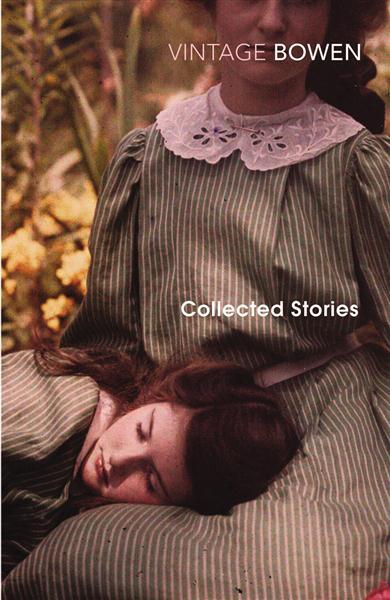
Some Short Stories by Elizabeth Bowen – Mrs Windermere – The Demon Lover – A Day in the Dark

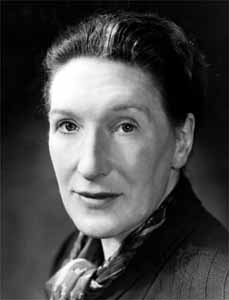
Bowen,_Elizabeth

In the foreword to her Elizabeth Bowen biography, Elizabeth Glendinning names what she thinks are Elizabeth Bowen’s best short stories:

The Disinherited

A Summer Night

Mysterious Kôr

The Happy Autumn Fields

Ivy Gripped the Steps

A Day in the Dark

 Mysterious Kôr is the first story I read by Bowen and it’s really an amazing story. I read and reviewed Summer Night last year. Unlike so many other short stories I’ve read over the course of a year it has stayed with me or, to be more precise, it’s atmosphere and imagery have stayed with me. The story is somewhat blurred by now. For this year’s Irish Short Story Month I decided to read three stories, each belonging to another chapter in the Collected Stories. Mrs Windermere is among the first stories. The Demon Lover is one of the wartime stories and A Day in the Dark is a post-war story.

When you read Bowen you will always find similarities in all of her stories whether she wrote them early in her career or later. The three stories I’ve read are very different but in each you will find lush atmospherical descriptions and a strong emphasis on emotions and mood. There is also an element of mystery in all three of them. A lot is only hinted at, remains a secret. A Day in the Dark, the most complex of these stories adds something new. It has a strong  metafictional element.

Mrs Windermere is the most playful of the three stories. The mystery lies in the character of Mrs Windermere, an elderly independent single woman who meets a young married woman in the streets. They spent some time together in Italy. The young woman is fascinated and intimidated by Mrs Windermere. Mrs Windermere seems to see through people, reads their lives in the palms of their hands. Not only is she very outspoken, she seems to question the way the young woman lives. Why having married if you could have been free? is what she seems to ask. She senses that the young woman’s life is missing something and tempts her to explore something new, maybe have an affair. A very feminist story for its time.

The Demon Lover combines a ghost story with the depiction of war-time London. The result is uncanny. Imagine there is a war and you flee the city, leaving everything behind; your house, your possessions. One afternoon you’re back in London and go to your abandoned house to pick up some things. The house has a ghostly feel, nobody has been there for a long time and it is surrounded by house ruins and other abandoned places. You go from room to room as if you were walking not only through your house but through the life you’ve left behind. And suddenly, someone from you distant past reappears.

After having read The Demon Lover I understand why all of Bowen’s war-time stories set in London are either ghost stories or stories with a ghostly feel. Those abandoned houses exude a great loneliness and seem to be creatures waiting for their life to resume.

The narrator of A Day in the Dark looks back on her teenage years and tells a story that took place one afternoon, a long time ago. She was a young girl, living with her uncle. She has a crush on him and their relationship is very close. It’s never said that they are having an affair but the possibility of it is palpable. On that afternoon she visits a rich woman. She has to give her back magazines her uncle has borrowed. The woman hints at things the young girl doesn’t understand.

It’s a very complex, and multilayered story. The characters are revealed through small hints and descriptions. The way it is written is meta-fictional as the narrator intrudes, points out what could have been described and remembered otherwise.

A Day in the Dark is a very dense and mysterious story. Reading it was like eating an exotic fruit for the first time. It’s nice but so strange that one wonders continuously whether one really likes it and why and tries to put into words how it tastes. It’s one of those short stories you could read again and again and would still have unanswered questions, new possible interpretations. I loved it.

This post is a contribution to Mel’s Irish Short Story Month.

Elizabeth Bowen and Irish Short Story Week

Elizabeth Bowen Collected Stories

I just wanted to let you know that Mel’s Irish Short Story Week is upcoming in March. Because it was such a success in the last couple of years the week has been extended to a whole month and therefore runs from March 1 until March 31 2013.

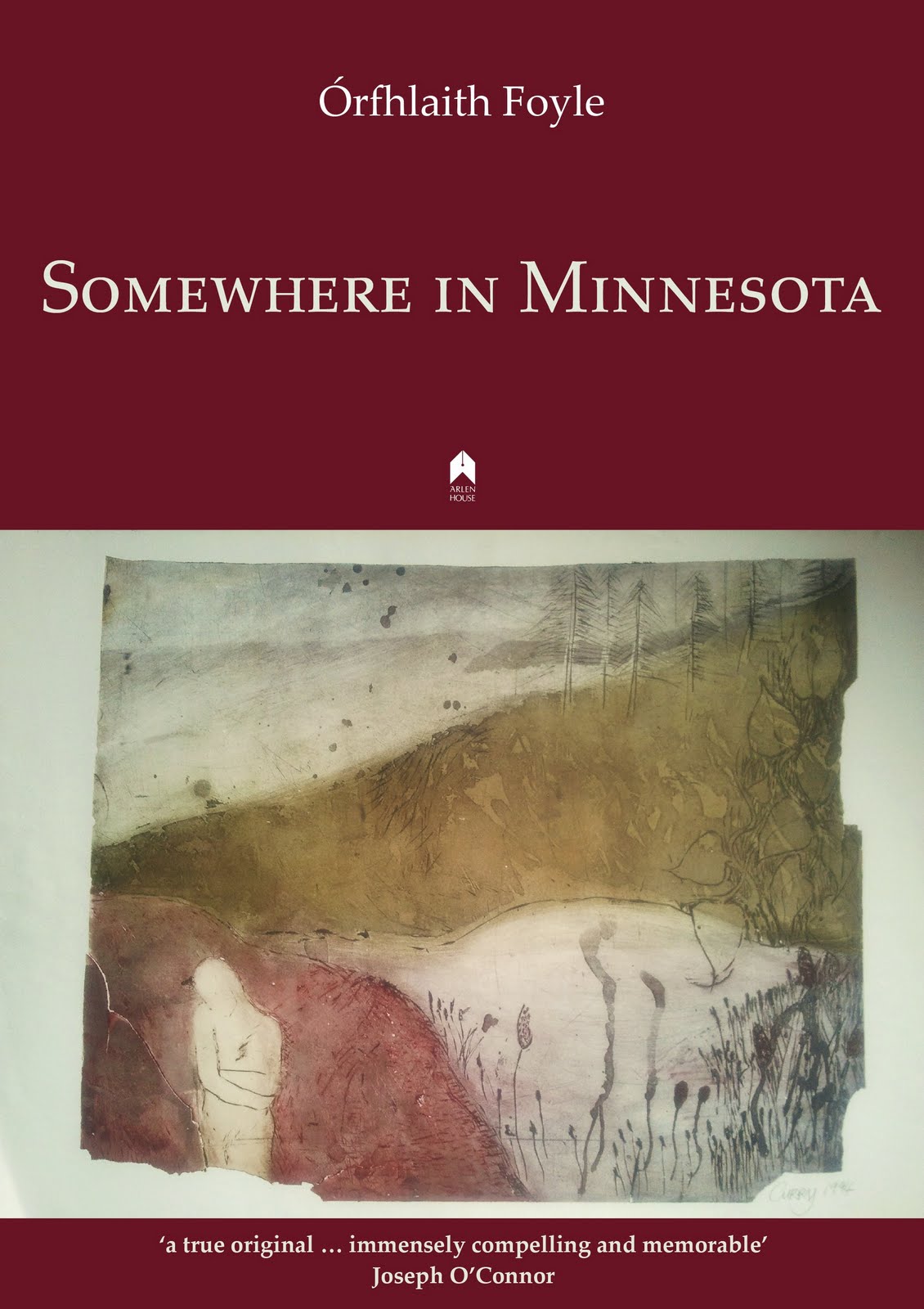
I discovered some great new writers like Órfhlaith Foyle and Kevin Barry last year, but I also rediscovered old favourites like Elizabeth Bowen. I read a few of her short stories and had sworn I would read more. This year I’m planning on reading several of her stories contained in the Collected Stories which seems to be a great collection.

To stay in line with this month’s theme my Literature and War Readalong, which takes place at the end of the month, also features a book by Elizabeth Bowen – The Heat of the Day.

Because I loved the stories I read last year so much I also got her book Love’s Civil War which contains letters and diary entries and Victoria Glendinning’s biography which was recommended by Mel u. I might start the one or the other or even both.

For more details and Irish reading suggestions please visit Mel u at The Reading Life.

Orfhlaith Foyle

Irish Short Story Week March 12 – 22

Just like last year Mel u from The Reading Life is organizing an Irish Short Story Week.

He has already published his tentative plans and some resources for those who want to join. Some of the authors and topics he will review are James Joyce, Lord Dunsany, Elizabeth Bowen, Sheridan LeFanu, Oscar Wilde, Frank O’Connor, Irish fairy tales. I really like his plans, they manage to capture nicely how diverse the topic is. If you are interested in joining and want to know more about Mel u’s plans, you can find them here.

I’m not sure at all what I’m going to read. I have a few collections on my TBR pile and one anthology which looks promising. I know I will not be able to read more than one or two stories but that’s better than nothing, I guess.

Here are a few of the possibilities:

Frank O’ Connor’ s The Genius

James Joyce’s Araby 

Seán O Faoláin’s Innocence

Do you have a favourite Irish Short Story writer?