Prague German Writers – Franz Werfel: Pale-Blue Ink in a Lady’s Hand – A Guest Post by literalab (Michael Stein)

This is the second in the series of guest posts from literalab on Prague German writers. Part I – The introduction – can be found here. 

So, without further ado, and in no particular order, here is the first of what will inevitably be an incomplete list of Prague German writers and some of the books they wrote:

1 – Franz Werfel

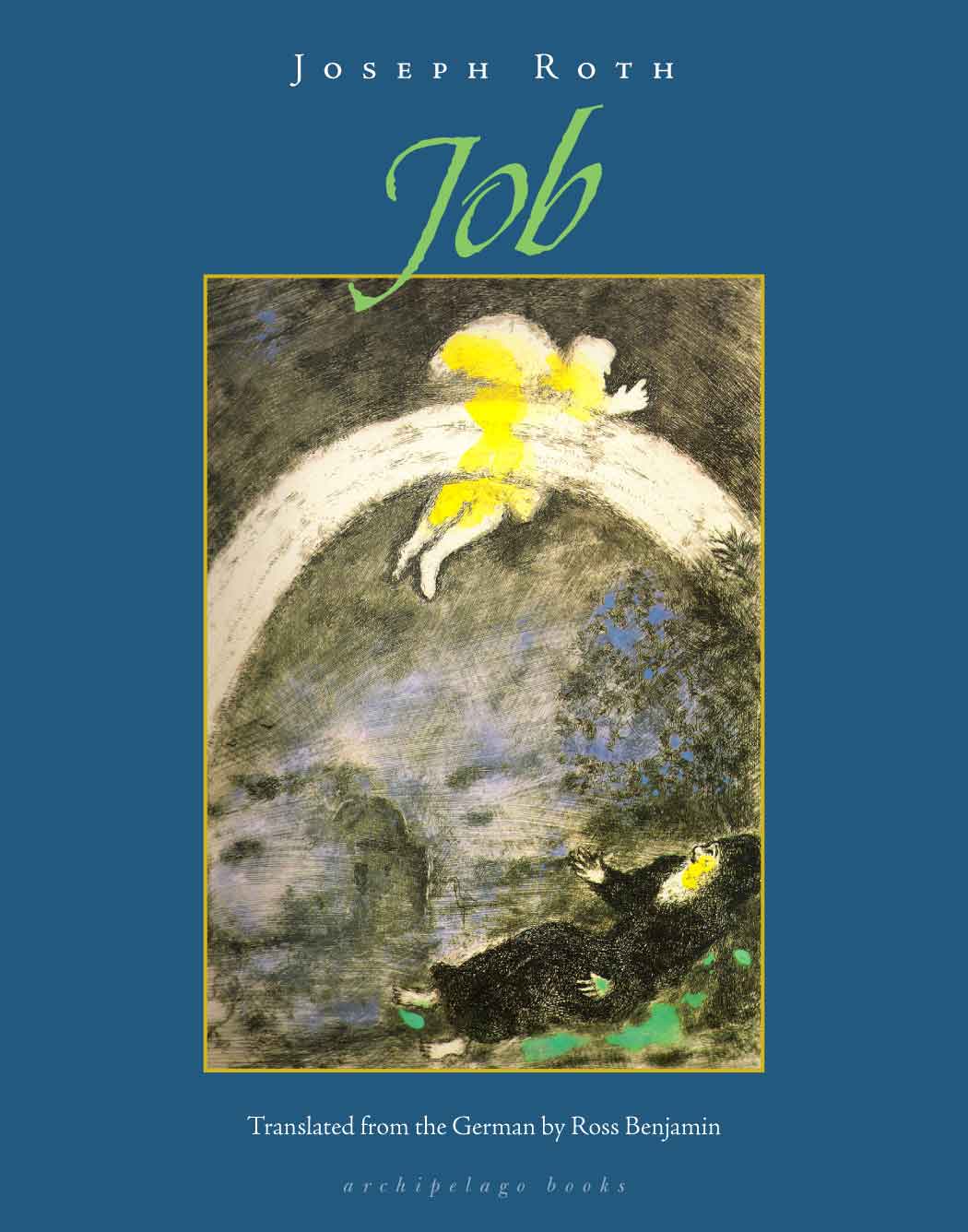
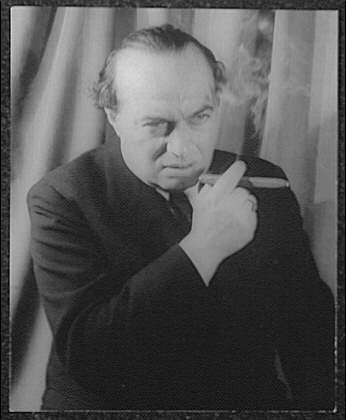
During his lifetime Werfel (1890-1945) was Prague’s leading literary star, the one whose fame allowed him to leave his provincial hometown behind for the intellectual and cultural bright lights of Vienna. Initially famous as a poet and playwright, Werfel’s current revival is based on his prose, specifically his 1933 international bestseller about the Armenian genocide The Forty Days of Musa Dagh and 1941 novella Pale Blue Ink in a Lady’s Hand, both published by Godine in 2012.

Though Musa Dagh had been translated into English and has been reprinted periodically since the 30s it suffered from cuts of up to 25% of the original novel, cuts that weren’t even made to appease Turkish political pressure (though that was present at the time and helped prevent a Hollywood adaptation) but to fit the work for this adaptation that wasn’t made and for the Book-of-the-Month club. The new edition is the first time the novel has appeared in English in its entirety.

I’d like to highlight the lesser-known novella because Werfel is sometimes criticized for writing long and long-winded novels – in other words for being the anti-Kafka, the opposite of the writer who was so sparing of his adjectives and adverbs. Yet Pale Blue Ink is a masterpiece of concision, and with a lot of recent discussion on the value and nature of the novella, it’s a prime example of a literary form (not just a short novel or a long short story) that at its best contains both the sweep of a long novel as well as the kind of precision in dramatic moments or individual lines typical of the best short stories.

The book opens with Austrian bureaucrat Leonidas Tachezy and his rich and beautiful wife, whose life of empty elegance reflects the Vienna of the 30s they live in. Unfortunately, for both the couple and the city, this smooth surface is only an illusion everyone pretends to believe in at a precipitously high cost. For Tachezy it’s a letter from his past that shatters his present life, though to what degree it will break he spends a great amount of effort trying to determine. An affair is one thing, actually not all that uncommon, but as the details of the letter get drawn out and as Tachezy is forced to confront his self-image Werfel subtly shifts the grounds of the book from ballrooms and boudoirs to Gestapo jail cells in a way that the impact is far stronger than if he had confronted the Nazis head-on.

Pale Blue Ink takes place within a single day and possesses a singular intensity in its focus on a letter and the specific long-ago relationship with a Jewish woman it recalls to the protagonist. Yet the novella’s reach is immense, bringing in Tachezy’s past and modest upbringing, Viennese high society, its government bureaucracy and the darkness of neighboring Nazi Germany.

In achieving the economy of the novella Werfel makes powerful use of leitmotifs that recur with particular characters or to drive home certain themes. Tachezy’s wife Amelie is obsessed with retaining her youthful beauty and the descriptions of her eyes become increasingly haunting and elaborate throughout the book. As a student Tachezy inherited a tuxedo from a Jewish fellow boarder who committed suicide, and this tuxedo likewise goes on to carry a dark, symbolic weight.

The best part of Pale Blue Ink is how unbalanced you are kept reading it, not knowing from one moment to the other just what type of story it is – a love story, a psychological portrait, a society novel, an early Holocaust book – and whether the main assumptions of the protagonist (and reader) are true or not.

Thanks a lot, Michael for this review.

The subsequent posts in the series will either be featured on this blog during German Literature Month or on literalab. I’ll add the links in any case. 

Here is part I of the series: Introduction and Werfel and Kafka (literalab)
Prague German Writers: A List – A Guest Post by literalab (Michael Stein)

I’m so pleased to have a few guest posts for you from one of the blogs I admire the most. literalab is my go-to blog for Central and Eastern European fiction. Michael is an American expat living in Prague. He is a journalist and writer and has written for different European and American magazines. His posts have always something completely new to offer. Either because the writers are new to me, or because the angle from which he writes about them is unusual. For German Literature Month he has written a few guest post on Prague German writers. We kick off today with an introduction, tomorrow I’ll feature one of his reviews. You will see, there are far more Prague German writers than Kafka to be discovered or re-discovered. The posts wich will follow are part of a series. I’ll feature a few, the following will be posted on literalab in the upcoming weeks. 

As the number of early 20th century German-language writers such as Joseph Roth and Stefan Zweig get “rediscovered” and belatedly translated into English there is the impression that the deep literary mines of the era might have dried up and all that’s left are the correspondence and diaries of those same writers, or perhaps a new translation of Kafka’s second-grade homework or some of his miscellany that will inevitably come out of the recently litigated manuscript stash in Tel-Aviv.

That impression is, of course, wrong, and one of the sources of the many German-language writers still left to be read, re-published and even translated for the first time happens to be the same source as those contentious manuscripts and the posthumously famous “prophet of the 20th century” who wrote them in the first place – Prague.

Recently, Prague German writers have finally been getting rediscovered to a certain degree, though generally without getting profiled in the New Yorker like Joseph Roth or shredded in the London Review of Books like poor Stefan Zweig (the exception is Ruth Franklin’s New Yorker profile of H.G. Adler, unavailable online.) I have written about a recent exhibition on Prague’s Forgotten German Writers at Readux and a number of the writers I’ll list have been republished or published for the first time in English only this year.

This will be a totally unsystematic list, consisting of writers I love and have read and reread, writers I haven’t read in a long time and some I haven’t gotten around to reading yet at all. I wanted to put them all there to show the variety of Prague’s now vanished literary scene.

These writers suffered from some very stark and evident wrongs – they grew up in an atmosphere of nationalist intolerance, and with many of them Jewish, experienced Czech nationalism at first as harshly, if not more harshly, than its German counterpart. Later, they experienced more severe repression, exile, and privation.

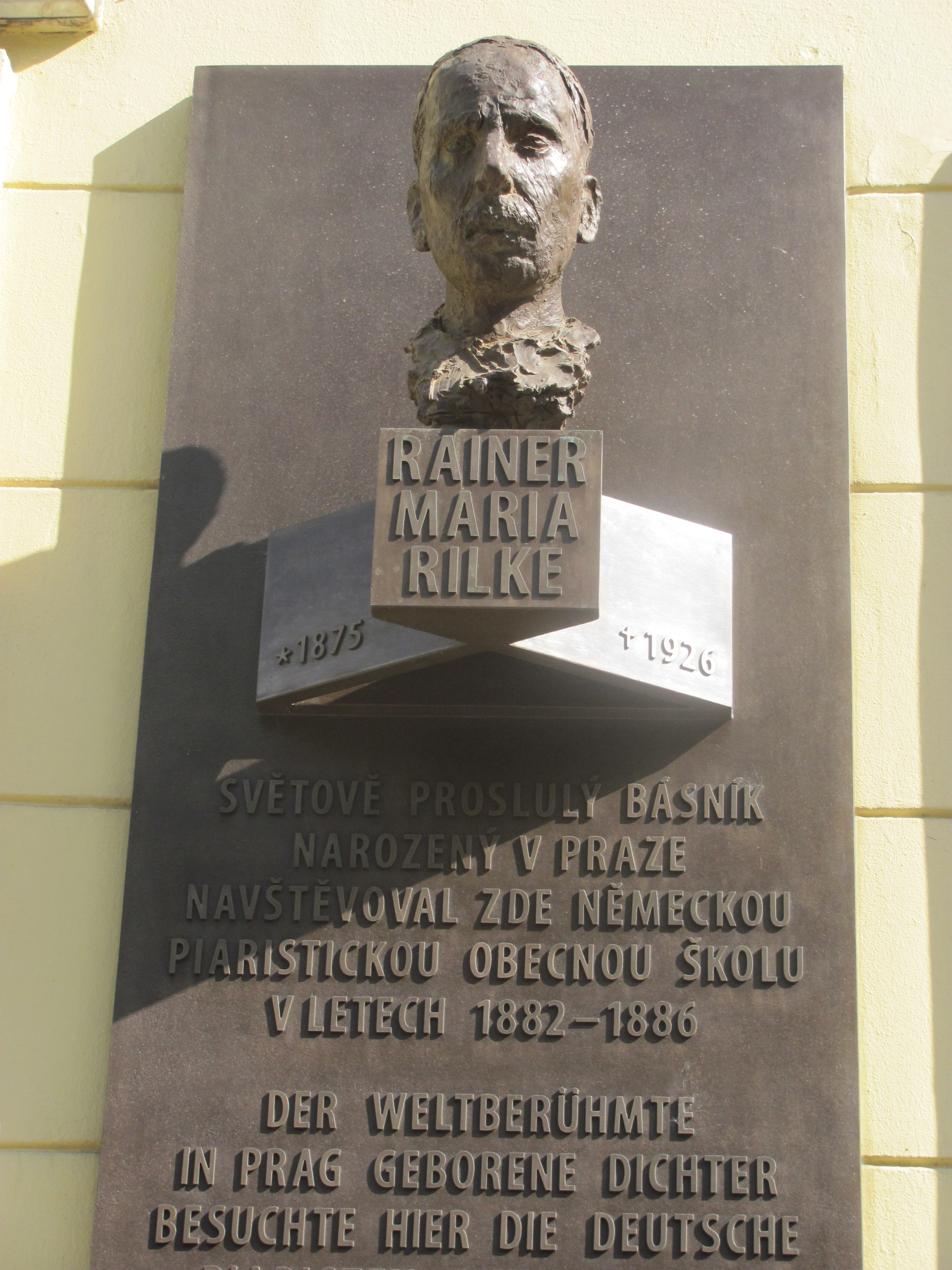
One ironic result of Nazism’s defeat, in combination with the Holocaust, was that their language was erased from their homeland. This meant that Prague German writers became almost unknown in their homeland, and even today putting up a public bust to a world-renowned figure like Rilke took until 2011, seemingly after all the busts of Czech choral directors and dental school founders had found there eternal homes.

Yet perhaps the darkest and most obscuring shadow for this group of writers has been that of their canonized compatriot Kafka. Their work is compared to his (even by people who haven’t read theirs) in a way that is patently unfair and which would kill off any number of other national literatures of the period if their work was put to a similarly unfair test. Kafka’s labyrinths are supposed to be a stand-in for the streets of Prague, so then why read about those actual streets? Well, I can think of any number of reasons, one of which is that Kafka’s labyrinths aren’t a stand-in for the streets of Prague.

Prague offered a fantastic starting point for its writers to go in a multitude of directions, Kafka included, but where he uses a sparse prose style to delve into layers of symbolic meaning, Leo Perutz, for example, makes use of the city’s rich history and myth, whereas writers like H.G. Adler and Hermann Grab ventured into entirely different realms of modernist writing, often being compared to Joyce and Proust respectively.

Thanks a lot, Michael, for this great contribution. Tomorrow I will post the sequel,  the first name on the list of Prague German writers. The list will be continued in the upcoming weeks and will either be featured on this blog or on literalab

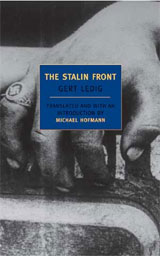
Literature and War Readalong November 30 2012 Meets German Literature Month: The Stalin Front – Die Stalinorgel by Gert Ledig

It is thanks to last’s year’s German Literature Month during which I read Sebald’s On the Natural History of Destruction that I discovered Gert Ledig’s The Stalin Front  –  Die Stalinorgel (1955).

In this novel Ledig depicts the atrocities of the Eastern Front. The fact that he is so explicit about the horrors and destruction is, according to Sebald, the reason why Ledig was forgotten and only rediscovered thanks to Sebald’s lectures and later book.

Here’s what is written about the book on the nyrb site

Gert Ledig (1921–1999) was born in Leipzig and grew up in Vienna. At the age of eighteen he volunteered for the army and was wounded at the battle of Leningrad in 1942. He reworked his experiences during the war in this novel Die Stalinorgel (1955). Sent back home, he trained as a naval engineer and was caught in several air raids. The experience never left him and led to the writing of Vergeltung (Payback) (1956). The novel’s reissue in Germany in 1999 heralded a much publicized rediscovery of the author’s work there.

Here are the first sentences

Prologue

The Lance-Coropral couldn’t turn in his grave because he didn’t have one. Some three versts from Podrova, forty versts south of Leningrad, he had been caught in a salvo of rockets, been thrown up in the air and with severed hands and head dangling, been impaled on the skeletal branches of what once had been a tree.

I hope that some of the participants of this year’s German Literature Month will join us. As you can deduce from the first lines –  this is a very graphic novel.

*******

The discussion starts on Friday, 30 November 2012.

Further information on the Literature and War Readalong 2012, including all the book blurbs, can be found here.

German Literature Month – A Quick Update

Like last year, Lizzy is compiling all the reviews in one big final post which will be a great resource for anyone interested in German literature.

But since part of the appeal of this event is to find new books and new blogs I thought you might be keen to check out what’s happening while the event is still ongoing. That’s why I have set up a German Literature Month 2012 Page where I am collecting all the posts. Today is day 3 of this year’s German Literature Month and we have already 20 posts. That’s so amazing.

Please check out the posts, especially the intro posts are interesting as they contain book lists and reading plans something we all love to see.

Here as a teaser the contributions of the first 2 days (in order of their chronological appearance)

Introduction to GLM (Tony’s Reading List)

Introduction GLM (Obooki’s Obloquy)

The Fury by Paul Heyse (The Reading Life)

Five from the Archive: Contemporary German Literature (Lizzy’s Literary Life)

Brigita and Rock Crystal by Adalbert Stifter (Tony’s Reading List)

German Literature Recommendations II – 89 Shorty Story and Novella Writers You Should Read(Beauty is a Sleeping Cat)

Introduction to GLM (The Little Red Reader Library)

Introduction GLM (A Fiction Habit)

Introduction to GLM (Vishy’s Blog)

Introduction to GLM (AJ Reads)

From the Diary of a Snail by Günter Grass (Winstonsdad’s Blog)

The Journey to the Harz by Heinrich Heine (Obooki’s Obloquy)

Introduction to GLM (Everybookhasasoul)

What not to drink when reading Matthias Politicky (Lizzy’s Literary Life)

Dyning by Arthur Schnitzler (Winstonsdad’s Blog)

Lieutnat Gustl and Fräulein Else by Arthur Schnitzler (Beauty is a Sleeping Cat)

The Collini Case by Ferdinand von Schirach (The Little Red Reader Library)

Introduction to GLM (Tabula Rasa)

German Literature – A Short Introduction by Nicholas Boyle (Vishy’s Blog)

Confusion by Stefan Zweig (His Futile Preoccupations)

It’s not too late to join. You can sign up formally on Lizzy’s blog here or just leave a comment.

If I have missed a post, please let me know.

German Literature Recommendations II – 89 Novella and Short Story Writers You Should Read

First of all, welcome to German Literature Month. I’m sure it will be an exciting journey for all of us. If you participate, please leave comments so that we can visit your blogs and add your posts to a final list. We will most probably not do as many wrap up posts this year but the occasional update will surely appear on the one or the other blog.

Last year I published a post called German Literature Recommendations – 20 German Novels You Should Read. It was based on Marcel Reich-Ranicki’s famous “Der Kanon der deutschen Literatur”. There were many questions about missing authors in the comment sections. Many famous and outstanding writers were not on that list which made it look like an omission but in many cases they were not on that list because Reich-Ranicki considered them better at writing novellas and short stories.

In order to fill the gap left by last year’s post, I have decided to post his list on novellas and short stories. I indicate the authors (over 80 names) and some of their best stories with their German titles. For those who are famous it’s easy to find the English equivalent as it will be in collections, for others it’s more difficult. If you have a particular interest in an author or a story but difficulties to find it in English – or French… Don’t hesitate to send me an e-mail. If it’s available, I’m sure I can find it for you.

The first week of this year’s German Literature Month is dedicated to novellas and short stories, if you still don’t know what to read, I’m sure you will find suggestions on the list.

I’ve already read two, one of them is on the list below, it’s Schnitzler’s Leutnant Gustl, which is available under the same title in English.

For more details on the different weeks, please visit the German Literature Month Announcement.

  • Johann Wolfgang Goethe: Die Sängerin Antonelli; Die wunderlichen Nachbarskinder; Der Mann von funfzig Jahren
  • Friedrich Schiller: Der Verbrecher aus verlorener Ehre
  • Johann Peter Hebel: Der kluge Richter; Eine merkwürdige Abbitte; Kannitverstan; Drei Wünsche; Moses Mendelssohn; Ein teurer Kopf und ein wohlfeiler; Unverhofftes Wiedersehen; Drei Worte; Glimpf geht über Schimpf
  • Jean Paul: Des Feldpredigers Schmelzle Reise nach Flätz
  • Ludwig Tieck: Des Lebens Überfluss
  • E. T. A. Hoffmann: Ritter Gluck; Der Sandmann; Das Fräulein von Scuderi
  • Heinrich von Kleist: Das Erdbeben in Chili; Die Marquise von O…; Michael Kohlhaas; Die Verlobung in St. Domingo; Der Zweikampf; Anekdote aus dem letzten preußischen Krieg
  • Clemens Brentano: Die Schachtel mit der Friedenspuppe; Geschichte vom braven Kasperl und dem schönen Annerl
  • Adelbert von Chamisso: Peter Schlemihl’s wundersame Geschichte
  • Jacob und Wilhelm Grimm: Hänsel und Gretel; Aschenputtel; Rotkäppchen; Die Bremer Stadtmusikanten; Der Gevatter Tod; Dornröschen; Schneewittchen; Rumpelstilzchen
  • Joseph von Eichendorff:
    Das Marmorbild; Aus dem Leben eines Taugenichts; Das Schloss Dürande
  • Franz Grillparzer: Der arme Spielmann
  • Annette von Droste-Hülshoff: Die Judenbuche
  • Jeremias Gotthelf: Die schwarze Spinne
  • Heinrich Heine: Aus den Memoiren des Herren von Schnabelewopski; Florentinische Nächte; Der Rabbi von Bacherach
  • Wilhelm Hauff: Die Geschichte von Kalif Storch; Der Zwerg Nase
  • Eduard Mörike: Das Stuttgarter Hutzelmännlein; Mozart auf der Reise nach Prag
  • Adalbert Stifter: Turmalin
  • Georg Büchner: Lenz
  • Theodor Storm:
    Immensee; Die Söhne des Senators; Hans und Heinz Kirch; Der Schimmelreiter
  • Gottfried Keller: Romeo und Julia auf dem Dorfe; Die drei gerechten Kammacher; Kleider machen Leute; Der Landvogt von Greifensee
  • Theodor Fontane: Schach von Wuthenow; Stine
  • Conrad Ferdinand Meyer: Der Schuss von der Kanzel; Gustav Adolfs Page
  • Marie von Ebner-Eschenbach: Krambambuli
  • Ferdinand von Saar: Schloss Kostenitz
  • Eduard von Keyserling: Die Soldaten-Kersta
  • Arthur Schnitzler: Sterben; Der Ehrentag; Leutnant Gustl; Der Tod des Junggesellen;Fräulein Else; Spiel im Morgengrauen
  • Gerhart Hauptmann: Bahnwärter Thiel
  • Frank Wedekind: Die Schutzimpfung
  • Heinrich Mann: Gretchen
  • Jakob Wassermann: Der Stationschef
  • Hugo von Hofmannsthal: Das Märchen der 672. Nacht
  • Thomas Mann: Der kleine Herr Friedemann; Tristan; Tonio Kröger; Schwere Stunde;Wälsungenblut; Der Tod in Venedig; Unordnung und frühes Leid; Mario und der Zauberer
  • Rainer Maria Rilke: Die Turnstunde
  • Hermann Hesse: Knulp; Klein und Wagner
  • Martin Buber: Abraham und Lot
  • Robert Walser: Sebastian; Ein unartiger Brief
  • Alfred Döblin: Die Ermordung einer Butterblume
  • Robert Musil: Das verzauberte Haus; Tonka
  • Stefan Zweig: Die Weltminute von Waterloo; Schachnovelle
  • Ernst Weiß: Franta Zlin; Die Herznaht
  • Franz Kafka: Das Urteil; Die Verwandlung; Vor dem Gesetz; Ein Bericht für eine Akademie; Ein Landarzt; In der Strafkolonie; Ein Hungerkünstler
  • Lion Feuchtwanger: Höhenflugrekord
  • Egon Erwin Kisch:
    Wie ich erfuhr, daß Redl ein Spion war; Die Himmelfahrt der Galgentoni
  • Ernst Bloch: Fall ins Jetzt
  • Gustav Sack: Im Heu
  • Gottfried Benn: Gehirne
  • Georg Heym: Jonathan
  • Kurt Tucholsky: Rheinsberg
  • Franz Werfel: Der Tod des Kleinbürgers
  • Joseph Roth: April; Stationschef Fallmerayer; Die Legende vom heiligen Trinker
  • Heimito von Doderer: Acht Wutanfälle
  • Carl Zuckmayer: Geschichte von einer Geburt
  • Bertolt Brecht: Der Augsburger Kreidekreis; Der verwundete Sokrates;
    Die unwürdige Greisin
  • Elisabeth Langgässer: Saisonbeginn
  • Anna Seghers: Der Ausflug der toten Mädchen; Post ins Gelobte Land;
    Bauern von Hruschowo
  • Hans Erich Nossack: Der Untergang
  • Marie Luise Kaschnitz: Der Strohhalm; Lange Schatten; April
  • Marieluise Fleißer: Avantgarde
  • Elias Canetti: Die Verleumdung; Die Lust des Esels
  • Wolfgang Koeppen: Schön gekämmte, frisierte Gedanken;
    Ein Kaffeehaus; Jugend
  • Max Frisch:
    Der andorranische Jude; Skizze eines Unglücks; Glück
  • Arno Schmidt: Seelandschaft mit Pocahontas; Die Umsiedler
  • Peter Weiss: Der Schatten des Körpers des Kutschers
  • Wolfgang Hildesheimer: Ich schreibe kein Buch über Kafka;
    Das Ende einer Welt
  • Heinrich Böll: Der Mann mit den Messern; Wiedersehen in der Allee; Wanderer, kommst du nach Spa …; Doktor Murkes gesammeltes Schweigen
  • Wolfdietrich Schnurre: Das Manöver
  • Friedrich Dürrenmatt: Die Panne
  • Wolfgang Borchert: Das Brot
  • Ilse Aichinger: Spiegelgeschichte
  • Franz Fühmann: Das Judenauto; König Ödipus
  • Siegfried Lenz: Der Verzicht; Ein Kriegsende; Ein geretteter Abend
  • Martin Walser: Ein fliehendes Pferd; Selbstporträt als Kriminalroman
  • Günter Grass: Katz und Maus
  • Günter Kunert: Alltägliche Geschichte einer Berliner Straße; Die Waage
  • Christa Wolf: Kein Ort. Nirgends
  • Thomas Bernhard: Die Mütze; Wittgensteins Neffe
  • Gabriele Wohmann: Wiedersehen in Venedig; Sonntag bei den Kreisands
  • Adolf Muschg: Der Ring; Der Zusenn oder das Heimat
  • Uwe Johnson: Jonas zum Beispiel
  • Ulrich Plenzdorf: kein runter kein fern
  • Peter Bichsel: Die Männer; Sein Abend; Der Mann mit dem Gedächtnis
  • Hans Joachim Schädlich:
    Besuch des Kaisers von Russland bei dem Kaiser von Deutschland
  • Jurek Becker: Die beliebteste Familiengeschichte
  • Hermann Burger: Der Orchesterdiener
  • Peter Handke:
    Das Umfallen der Kegel von einer bäuerlichen Kegelbahn
  • Christoph Hein: Der neuere (glücklichere) Kohlhaas
  • Botho Strauß: Die Widmung
  • Christoph Ransmayr: Przemysl

Some Background Information on Jakob Wassermann’s Newly Translated My First Wife

A recent excellent review of Jakob Wassermann’s novel My First Wife (just published by Penguin Classics) by Tom (A Common Reader) led me to hunt for the book in German. You know the feeling, you read a review and you think: “I want to read this now!” or rather not “now” but”NOW”. Only, I couldn’t find the German book. It took me quite a while to figure out which novel this was and only the review in the guardian which mentioned that My First Wife was “carved out” of another novel, solved the mystery.

I have inherited quite a lot of books of my late grandmother and a few of them are by Jakob Wassermann (1873 – 1934), an author widely read and admired until the 50s but then, I would say, slowly forgotten. I wouldn’t know of anyone, not even in Germany or Switzerland, who knows or even read him. What kept me from reading his books is the fact they are substantial. When I read Tom’s review I was pleased to see that there was one shorter novel to be discovered but I was wrong.

My first Wife doesn’t exist in German. The novel is a part of the much longer novel Joseph Kerkhoven’s Third Existence, which is part III of a 1600 pages long trilogy. Part I is The Case Maurizius, Part II Etzel Andergast. The Case Maurizius or Der Fall Maurizius which was published 1928 is considered to be his masterpiece and I hope it will be retranslated soon. It was a great success when it was published, Henry Miller was very fond of it.

According to the blog jakob wasserman, a blog which is entirely dedicated to the German author, many of his novels have been translated but are long out of print.

Judging from Tom’s review, The First Wife works very well as a standalone novel. I’m not going to discuss here whether I think it is legitimate or not to publish a part of a novel, which is part of a trilogy, as a standalone. I just thought I might be able to save other German reader’s the trouble to hunt for something that doesn’t exist in this form in German.

The best news for German readers however is that all of Jakob Wassermann’s novels are available free for the kindle. I’m very tempted to read the part which is called My First Wife in English and have already downloaded Joseph Kerkhovens dritte Existenz.

English readers who are still looking for something to read for German Literature Month may consider My First Wife, it seems a great choice.

Here’s the blurb but don’t hesitate to visit Tom’s blog and read his review.

It is the story of Alexander Herzog, a young writer, who goes to Vienna to escape his debts and a failed love affair. There he is pursued by book-loving Ganna: giddy, girlish, clumsy, eccentric and wild. Dazzled and unnerved by her devotion to him, and attracted to the large dowry offered by her wealthy father, he thinks he can mould Ganna into what he wants. But no-one can control her troubling passions. As their marriage starts to self-destruct, Herzog will discover that Ganna has resources and determination of which he had no idea – and that he can never escape her.

Posthumously published in 1934 and based on the author Jakob Wassermann’s own ruinous marriage, My First Wife bears the unmistakable aura of true and bitter experience. It is a tragic masterpiece that unfolds in shocking detail. Now this story of rare intensity and drama is brought to English readers in a powerful new translation by Michael Hofmann.

Reviews:

‘Like something out of Chekhov – it’s all there, the ennui, the preening etiquette, the intellectual posturing … painfully heartfelt … My First Wife is a devastating indictment of the choices we make out of convenience against our hearts and instincts, and the tragedies that ensue’ Independent

‘You won’t find a more agonising, fascinating literary account of a marriage hitting the rocks’ Mail Online