German Literature Month – Week I Links

What an incredibly successful Week I of German Literature Month this was. 

I think I’ve added all the links but let me know if one has escaped my attention.

Introduction to GLM (Tony’s Reading List)

Introduction GLM (Obooki’s Obloquy)

The Fury by Paul Heyse (The Reading Life)

Five from the Archive: Contemporary German Literature (Lizzy’s Literary Life)

Brigita and Rock Crystal by Adalbert Stifter (Tony’s Reading List)

German Literature Recommendations II – 89 Shorty Story and Novella Writers You Should Read (Beauty is a Sleeping Cat)

Introduction to GLM (The Little Red Reader Library)

Introduction GLM (A Fiction Habit)

Introduction to GLM (Vishy’s Blog)

Introduction to GLM (AJ Reads)

From the Diary of a Snail by Günter Grass (Winstonsdad’s Blog)

The Journey to the Harz by Heinrich Heine (Obooki’s Obloquy)

Introduction to GLM (Everybookhasasoul)

What not to drink when reading Matthias Politicky (Lizzy’s Literary Life)

Dyning by Arthur Schnitzler (Winstonsdad’s Blog)

Lieutnat Gustl and Fräulein Else by Arthur Schnitzler (Beauty is a Sleeping Cat)

The Collini Case by Ferdinand von Schirach (The Little Red Reader Library)

Introduction to GLM (Tabula Rasa)

German Literature – A Short Introduction by Nicholas Boyle (Vishy’s Blog)

Confusion by Stefan Zweig (His Futile Preoccupations)

Maybe This Time by Alois Hotschnig (Winstonsdad’s Blog)

Sea of Ink by Richar Weihe (The Prrish Lantern)

Love and Intrigues by Friedrich Schiller (Tony’s Reading List)

Two Poems Based on Folklore (Tabula Rasa)

Literature and War Readalong – Gert Ledig (Beauty is a Sleeping Cat)

Translation Duel – Death in Venice by Thomas Mann (Lizzy’s Literaray Life)

The Fairy Tale by J.W. von Goethe (A Work in Progress)

The Pigeon by Patrick Süskind (Vishy’s Blog)

Next World Novella by Matthias Politycki (A Fiction Habit)

Prague German Writers: A List – A Guest Post by literalab (Beauty is a Sleeping Cat)

Prague German Writers (literalab)

Goethe’s Hermann and Dorothea and Heinrich Heine’s Germany. A Winter’s Tale (Tony’s Reading List)

Seven Years by Peter Stamm and EIBF report (everybookhasasoul)

The Reader by Bernhard Schlink (Vishy’s Blog)

Prague German Writers – Franzy Werfel’s A Palee-Blue Ink in  a Lady’s Hand – A Guest Post by literalab (Beauty is a Sleeping Cat)

Prague German Witers – Franz Werfel (literalab)

The Golden Pot by E.T.A. Hoffmann (Obooki’s Obloquy)

In Free Fall (aka Dark Matter) by Juli Zeh (Still Life With Books)

The Corrections by Thomas Bernhard (Winstonsdad’s Blog)

This Wednesday is Wunderbar (Lizzy’s Literary Life)
German Literature Month – A Quick Update

Like last year, Lizzy is compiling all the reviews in one big final post which will be a great resource for anyone interested in German literature.

But since part of the appeal of this event is to find new books and new blogs I thought you might be keen to check out what’s happening while the event is still ongoing. That’s why I have set up a German Literature Month 2012 Page where I am collecting all the posts. Today is day 3 of this year’s German Literature Month and we have already 20 posts. That’s so amazing.

Please check out the posts, especially the intro posts are interesting as they contain book lists and reading plans something we all love to see.

Here as a teaser the contributions of the first 2 days (in order of their chronological appearance)

Introduction to GLM (Tony’s Reading List)

Introduction GLM (Obooki’s Obloquy)

The Fury by Paul Heyse (The Reading Life)

Five from the Archive: Contemporary German Literature (Lizzy’s Literary Life)

Brigita and Rock Crystal by Adalbert Stifter (Tony’s Reading List)

German Literature Recommendations II – 89 Shorty Story and Novella Writers You Should Read(Beauty is a Sleeping Cat)

Introduction to GLM (The Little Red Reader Library)

Introduction GLM (A Fiction Habit)

Introduction to GLM (Vishy’s Blog)

Introduction to GLM (AJ Reads)

From the Diary of a Snail by Günter Grass (Winstonsdad’s Blog)

The Journey to the Harz by Heinrich Heine (Obooki’s Obloquy)

Introduction to GLM (Everybookhasasoul)

What not to drink when reading Matthias Politicky (Lizzy’s Literary Life)

Dyning by Arthur Schnitzler (Winstonsdad’s Blog)

Lieutnat Gustl and Fräulein Else by Arthur Schnitzler (Beauty is a Sleeping Cat)

The Collini Case by Ferdinand von Schirach (The Little Red Reader Library)

Introduction to GLM (Tabula Rasa)

German Literature – A Short Introduction by Nicholas Boyle (Vishy’s Blog)

Confusion by Stefan Zweig (His Futile Preoccupations)

It’s not too late to join. You can sign up formally on Lizzy’s blog here or just leave a comment.

If I have missed a post, please let me know.

German Literature Recommendations II – 89 Novella and Short Story Writers You Should Read

First of all, welcome to German Literature Month. I’m sure it will be an exciting journey for all of us. If you participate, please leave comments so that we can visit your blogs and add your posts to a final list. We will most probably not do as many wrap up posts this year but the occasional update will surely appear on the one or the other blog.

Last year I published a post called German Literature Recommendations – 20 German Novels You Should Read. It was based on Marcel Reich-Ranicki’s famous “Der Kanon der deutschen Literatur”. There were many questions about missing authors in the comment sections. Many famous and outstanding writers were not on that list which made it look like an omission but in many cases they were not on that list because Reich-Ranicki considered them better at writing novellas and short stories.

In order to fill the gap left by last year’s post, I have decided to post his list on novellas and short stories. I indicate the authors (over 80 names) and some of their best stories with their German titles. For those who are famous it’s easy to find the English equivalent as it will be in collections, for others it’s more difficult. If you have a particular interest in an author or a story but difficulties to find it in English – or French… Don’t hesitate to send me an e-mail. If it’s available, I’m sure I can find it for you.

The first week of this year’s German Literature Month is dedicated to novellas and short stories, if you still don’t know what to read, I’m sure you will find suggestions on the list.

I’ve already read two, one of them is on the list below, it’s Schnitzler’s Leutnant Gustl, which is available under the same title in English.

For more details on the different weeks, please visit the German Literature Month Announcement.

  • Johann Wolfgang Goethe: Die Sängerin Antonelli; Die wunderlichen Nachbarskinder; Der Mann von funfzig Jahren
  • Friedrich Schiller: Der Verbrecher aus verlorener Ehre
  • Johann Peter Hebel: Der kluge Richter; Eine merkwürdige Abbitte; Kannitverstan; Drei Wünsche; Moses Mendelssohn; Ein teurer Kopf und ein wohlfeiler; Unverhofftes Wiedersehen; Drei Worte; Glimpf geht über Schimpf
  • Jean Paul: Des Feldpredigers Schmelzle Reise nach Flätz
  • Ludwig Tieck: Des Lebens Überfluss
  • E. T. A. Hoffmann: Ritter Gluck; Der Sandmann; Das Fräulein von Scuderi
  • Heinrich von Kleist: Das Erdbeben in Chili; Die Marquise von O…; Michael Kohlhaas; Die Verlobung in St. Domingo; Der Zweikampf; Anekdote aus dem letzten preußischen Krieg
  • Clemens Brentano: Die Schachtel mit der Friedenspuppe; Geschichte vom braven Kasperl und dem schönen Annerl
  • Adelbert von Chamisso: Peter Schlemihl’s wundersame Geschichte
  • Jacob und Wilhelm Grimm: Hänsel und Gretel; Aschenputtel; Rotkäppchen; Die Bremer Stadtmusikanten; Der Gevatter Tod; Dornröschen; Schneewittchen; Rumpelstilzchen
  • Joseph von Eichendorff:
    Das Marmorbild; Aus dem Leben eines Taugenichts; Das Schloss Dürande
  • Franz Grillparzer: Der arme Spielmann
  • Annette von Droste-Hülshoff: Die Judenbuche
  • Jeremias Gotthelf: Die schwarze Spinne
  • Heinrich Heine: Aus den Memoiren des Herren von Schnabelewopski; Florentinische Nächte; Der Rabbi von Bacherach
  • Wilhelm Hauff: Die Geschichte von Kalif Storch; Der Zwerg Nase
  • Eduard Mörike: Das Stuttgarter Hutzelmännlein; Mozart auf der Reise nach Prag
  • Adalbert Stifter: Turmalin
  • Georg Büchner: Lenz
  • Theodor Storm:
    Immensee; Die Söhne des Senators; Hans und Heinz Kirch; Der Schimmelreiter
  • Gottfried Keller: Romeo und Julia auf dem Dorfe; Die drei gerechten Kammacher; Kleider machen Leute; Der Landvogt von Greifensee
  • Theodor Fontane: Schach von Wuthenow; Stine
  • Conrad Ferdinand Meyer: Der Schuss von der Kanzel; Gustav Adolfs Page
  • Marie von Ebner-Eschenbach: Krambambuli
  • Ferdinand von Saar: Schloss Kostenitz
  • Eduard von Keyserling: Die Soldaten-Kersta
  • Arthur Schnitzler: Sterben; Der Ehrentag; Leutnant Gustl; Der Tod des Junggesellen;Fräulein Else; Spiel im Morgengrauen
  • Gerhart Hauptmann: Bahnwärter Thiel
  • Frank Wedekind: Die Schutzimpfung
  • Heinrich Mann: Gretchen
  • Jakob Wassermann: Der Stationschef
  • Hugo von Hofmannsthal: Das Märchen der 672. Nacht
  • Thomas Mann: Der kleine Herr Friedemann; Tristan; Tonio Kröger; Schwere Stunde;Wälsungenblut; Der Tod in Venedig; Unordnung und frühes Leid; Mario und der Zauberer
  • Rainer Maria Rilke: Die Turnstunde
  • Hermann Hesse: Knulp; Klein und Wagner
  • Martin Buber: Abraham und Lot
  • Robert Walser: Sebastian; Ein unartiger Brief
  • Alfred Döblin: Die Ermordung einer Butterblume
  • Robert Musil: Das verzauberte Haus; Tonka
  • Stefan Zweig: Die Weltminute von Waterloo; Schachnovelle
  • Ernst Weiß: Franta Zlin; Die Herznaht
  • Franz Kafka: Das Urteil; Die Verwandlung; Vor dem Gesetz; Ein Bericht für eine Akademie; Ein Landarzt; In der Strafkolonie; Ein Hungerkünstler
  • Lion Feuchtwanger: Höhenflugrekord
  • Egon Erwin Kisch:
    Wie ich erfuhr, daß Redl ein Spion war; Die Himmelfahrt der Galgentoni
  • Ernst Bloch: Fall ins Jetzt
  • Gustav Sack: Im Heu
  • Gottfried Benn: Gehirne
  • Georg Heym: Jonathan
  • Kurt Tucholsky: Rheinsberg
  • Franz Werfel: Der Tod des Kleinbürgers
  • Joseph Roth: April; Stationschef Fallmerayer; Die Legende vom heiligen Trinker
  • Heimito von Doderer: Acht Wutanfälle
  • Carl Zuckmayer: Geschichte von einer Geburt
  • Bertolt Brecht: Der Augsburger Kreidekreis; Der verwundete Sokrates;
    Die unwürdige Greisin
  • Elisabeth Langgässer: Saisonbeginn
  • Anna Seghers: Der Ausflug der toten Mädchen; Post ins Gelobte Land;
    Bauern von Hruschowo
  • Hans Erich Nossack: Der Untergang
  • Marie Luise Kaschnitz: Der Strohhalm; Lange Schatten; April
  • Marieluise Fleißer: Avantgarde
  • Elias Canetti: Die Verleumdung; Die Lust des Esels
  • Wolfgang Koeppen: Schön gekämmte, frisierte Gedanken;
    Ein Kaffeehaus; Jugend
  • Max Frisch:
    Der andorranische Jude; Skizze eines Unglücks; Glück
  • Arno Schmidt: Seelandschaft mit Pocahontas; Die Umsiedler
  • Peter Weiss: Der Schatten des Körpers des Kutschers
  • Wolfgang Hildesheimer: Ich schreibe kein Buch über Kafka;
    Das Ende einer Welt
  • Heinrich Böll: Der Mann mit den Messern; Wiedersehen in der Allee; Wanderer, kommst du nach Spa …; Doktor Murkes gesammeltes Schweigen
  • Wolfdietrich Schnurre: Das Manöver
  • Friedrich Dürrenmatt: Die Panne
  • Wolfgang Borchert: Das Brot
  • Ilse Aichinger: Spiegelgeschichte
  • Franz Fühmann: Das Judenauto; König Ödipus
  • Siegfried Lenz: Der Verzicht; Ein Kriegsende; Ein geretteter Abend
  • Martin Walser: Ein fliehendes Pferd; Selbstporträt als Kriminalroman
  • Günter Grass: Katz und Maus
  • Günter Kunert: Alltägliche Geschichte einer Berliner Straße; Die Waage
  • Christa Wolf: Kein Ort. Nirgends
  • Thomas Bernhard: Die Mütze; Wittgensteins Neffe
  • Gabriele Wohmann: Wiedersehen in Venedig; Sonntag bei den Kreisands
  • Adolf Muschg: Der Ring; Der Zusenn oder das Heimat
  • Uwe Johnson: Jonas zum Beispiel
  • Ulrich Plenzdorf: kein runter kein fern
  • Peter Bichsel: Die Männer; Sein Abend; Der Mann mit dem Gedächtnis
  • Hans Joachim Schädlich:
    Besuch des Kaisers von Russland bei dem Kaiser von Deutschland
  • Jurek Becker: Die beliebteste Familiengeschichte
  • Hermann Burger: Der Orchesterdiener
  • Peter Handke:
    Das Umfallen der Kegel von einer bäuerlichen Kegelbahn
  • Christoph Hein: Der neuere (glücklichere) Kohlhaas
  • Botho Strauß: Die Widmung
  • Christoph Ransmayr: Przemysl

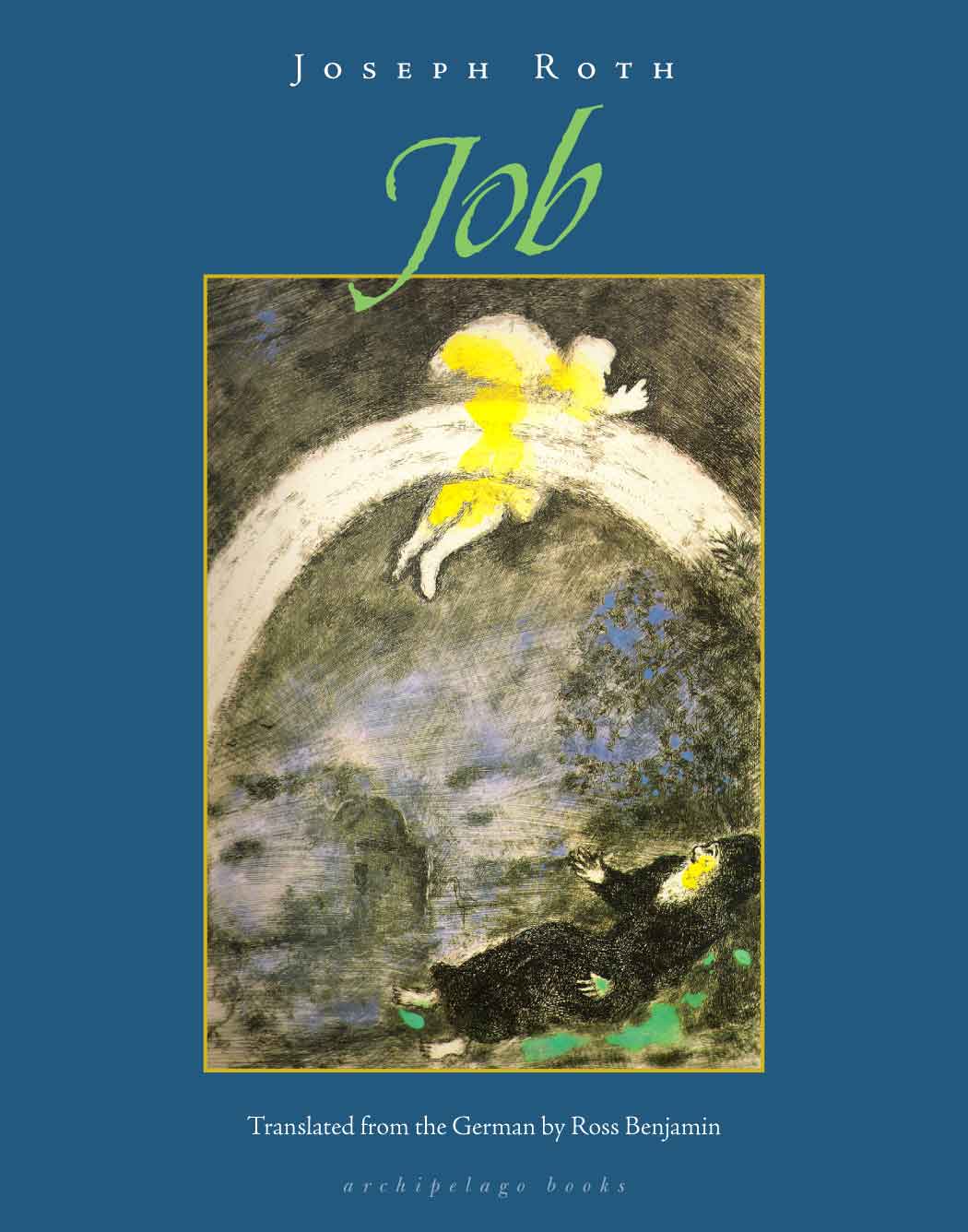
Wednesdays Are Wunderbar – German Literature Month Giveaway – Job by Joseph Roth

Initially we had planned two giveaways for  German Literature Month but now, thanks to the generosity of another editor, there is additional one today.

I’m particularly pleased as this gives me the opportunity to introduce archipelago books who are offering the title for this giveaway. Archipelago books have one of the most interesting catalogs of literature in translation I have seen so far. They offer great titles from all over the world.

I also really love their motto

a not-for-profit literary press dedicated to promoting cross-cultural exchange through international literature in translation

If you don’t know them yet it’s worth having a look at their site. Some of their books are prize winners, also in the category “Best translation”.

For German Literature Month I have the opportunity to give away one copy of one of the classics of Austrian literature, Joseph Roth’s Job.

Job is the tale of Mendel Singer, a pious, destitute Eastern-European Jew and children’s Torah teacher whose faith is tested at every turn. His youngest son seems to be incurably disabled, one of his older sons joins the Russian Army, the other deserts to America, and his daughter is running around with a Cossack. When he flees with his wife and daughter, further blows of fate await him. In this modern fable based on the biblical story of Job, Mendel Singer witnesses the collapse of his world, experiences unbearable suffering and loss, and ultimately gives up hope and curses God, only to be saved by a miraculous reversal of fortune.

As you can see, this is a novel that comes with high praise.

“A beautifully written, and in the end uplifting, parable for an era of upheaval . . . Job, opened to any page, offers something of beauty. . . Ross Benjamin’s excellent new translation gives us both the realism and the poetry.”
The Quarterly Conversation
“The totality of Joseph Roth’s work is no less than a tragédie humaineachieved in the techniques of modern fiction.”
Nadine Gordimer
“Joseph Roth was a permanent novelist. His Job was a worthy precursor of that masterpiece [The Radetzky March] . . . [Job is] both immensely sorrowful and finally strangely hopeful.
Harold Bloom
Jobis more than a novel and legend, it is a pure, perfect poetic work, which is destined to outlast everything that we, his contemporaries, have created and written. In unity of construction, in depth of feeling, in purity, in the musicality of the language, it can scarcely be surpassed.”
Stefan Zweig
“This life of an everyday man moves us as if someone had written of our lives, our longings, our struggles. Roth’s language has the discipline and rigor of German Classicism. A great and harrowing book that no one can resist.”
Ernst Toller
“Job is perfect. . . . a novel as lyric poem.”
Joan Acocella
*******
If you are interested in reading this book, just leave a comment.

The competition is US only. The winner will be announced on Monday October 22 2012.

Wednesdays Are Wunderbar – German Literature Month Giveaway II – The Winners

Busy random org has done its job and here are the winners of the second give away of  German Literature Month.

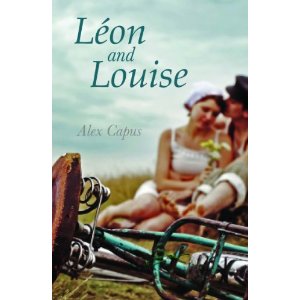
Susanna has won Alex Capus – Léon and Louise 

Judith (Leeswammes’ Blog) has won Daniel Glattauer – Love Virtually

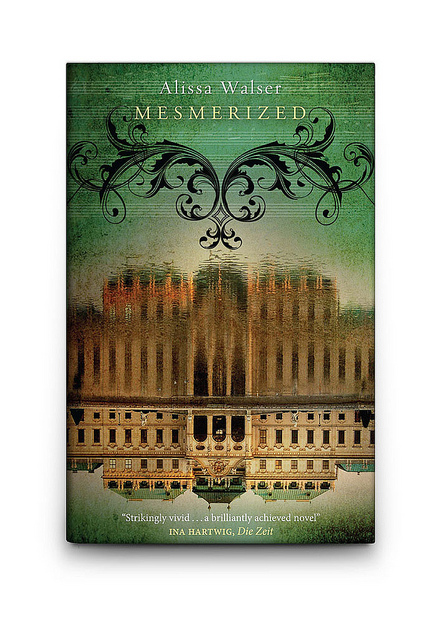
TBM (50 Year Project) has won Alissa Walser – Mesmerized

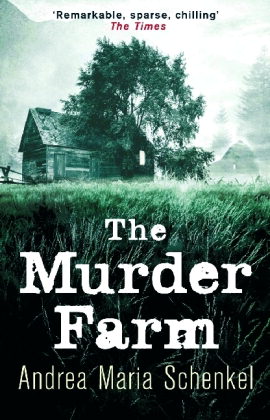
Neer (A Hot Cup of Pleasure) is the winner of Andrea Maria Schenkel – The Murder Farm

Novia (Polychrome Interest) is the winner of The Brothers Grimm – Fairy Tales

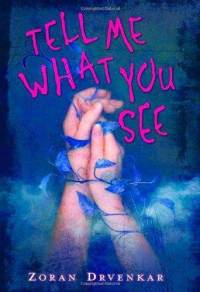
Vishy (Vishy’s Blog) has won Zoran Drvenkar – Tell Me What You See

Happy reading to all of you. Please send me your addresses via beautyisasleepingcat at gmail dot com

Wednesdays Are Wunderbar – German Literature Month Giveaway II

As promised here is the second giveaway of German Literature Month. While the first one was focussing on novellas and literary books, this one combines literary books and genre. Alissa Walser’s novel is clearly historical, it still is a literary novel, the same goes for Léon and Louise and Love Virtually, both are love stories but not pure genre. Things are different when it comes to Andrea Maria Schenkel. Hers is a crime novel, no doubt. One of the most interesting new German genre writers is Zoran Drvenkar who writes a lot of different genres. Thriller, YA, children’s books and many more. The book I’ve chosen is a genre blend which is extremely successful in Germany among adults and young adults alike.

I’d like to thank Haus Publishing for offering Léon and Louise and MacLehose Press for Alissa Walser’s novel Mesmerized. Lizzy is offering Love Virtually and Grimm’s Fairy Tales and I’m contributing The Murder Farm and Tell Me What You See.

I hope the blurbs will help you decide which of the books you would like to win.

Love Story

Alex Capus – Léon and Louise

Summer 1918. The First World War is drawing to a close when Léon Le Gall, a French teenager from Cherbourg who has dropped out of school and left home, first meets and falls in love with Louise Janvier. Severely wounded by a German artillery attack they are separated, both mistakenly believing each other to be dead. Ten years later, while travelling on the Paris Métro, Léon – now married – briefly catches sight of a girl who bears a strong resemblance to Louise, the first love he has never forgotten. He goes in search of her at the insistence of his wife Yvonne. The couple are briefly reunited, but part again with a heavy heart as Louise refuses to destroy Léon’s marriage. And then another war tears them apart. Paris is occupied by the Germans, for whom Léon indirectly works at the headquarters of the Paris CID. Louise, an employee of the Banque de France, is shipped off to French West Africa with the bank’s gold reserves. Narrated by Léon’s grandson, Léon and Louise is the story of an enduring passion that survives the vicissitudes of world history and the passage of time, spanning more than forty years. But it is far more than this. The long-separated lovers are flesh and blood characters vividly captured in complex human relationships and real-life situations: in German-occupied Paris, where Léon wages a lone battle against the abhorrent tasks imposed on him by the SS and his wife fights stubbornly for her family’s survival; and in the wilds of Africa, where Louise confronts the hardships of her primitive environment with courage and humour.

Daniel Glattauer – Love Virtually

It begins by chance: Leo receives emails in error from an unknown woman called Emmi. Being polite he replies, and Emmi writes back. A few brief exchanges are all it takes to spark a mutual interest in each other, and soon Emmi and Leo are sharing their innermost secrets and longings. The erotic tension simmers, and it seems only a matter of time before they will meet in person. But they keep putting off the moment – the prospect both unsettles and excites them. And, after all, Emmi is happily married. Will their feelings for each other survive the test of a real-life encounter?

Historical

Alissa Walser – Mesmerized

Mozart’s Vienna. A crucible for scientific experimentation and courtly intrigue, as Europe’s finest minds vie for imperial favour. In a colourful, chaotic private hospital that echoes with the shrieks of hysterical patients, Franz Anton Mesmer is developing a series of controversial cure-alls for body and mind. When he is asked to help restore the sight of a blind musical prodigy favoured by the Empress herself, he senses that fame, and even immortality, is within his grasp. Mesmer knows that he will have to gain her trust if he is to open her eyes. But at what cost to her fragile talent? And will their intimacy result in scandal?

Crime

Andrea Maria Schenkel – The Murder Farm

A whole family has been murdered with a pickaxe. They were old Danner the farmer, an overbearing patriarch, his put-upon devoutly religious wife, and their daughter Barbara Spangler, whose husband Vincenz left her after fathering her daughter, Marianne. Also murdered was the Danners’ new maidservant, Marie, who was regarded as slightly simple. Despite the brutal nature of the killings and the small village where it has taken place, the police have no leads. Officially the crime is unsolved. And then a former resident returns home… The Murder Farm is an unconventional detective story. The author interweaves testament from the villagers, an oblique view of the murderer, occasional third-person narrative pieces and passages of pious devotion. The narrator leaves the village unaware of the truth, only the reader is able to reach the shattering conclusion.
 

Fairy Tales

The Brothers Grimm – Fairy Tales

Is a collection of well-loved fairytales by the brothers Grimm. Stories include Hansel and Gretel, Tom Thumb, Little Red Riding Hood, Sleeping Beauty, Rumpelstiltskin, Snow White, the Frog Prince, Rapunzel, The Elves and The Show Maker and many more.
 

YA/Horror/Ghost story

Zoran Drvenkar – Tell Me What You See

Berlin. The dead of night. Sixteen-year-old Alissa and her best friend Evelin make their secret Christmas pilgrimage to Alissa’s father’s grave. In the graveyard, Alissa falls through thick snow into an underground crypt. Searching for a way out, she discovers something else: out of the lid of a small coffin coils a strange black plant. Drawn closer, Alissa sees its roots embedded in a young child’s heart. This chance encounter sets off a chain of nightmarish events that throw her life into turmoil. Haunted by angels, stalked by her ex-boyfriend, only with Evelin’s help can Alissa reclaim her sanity and discover the truth about her frightening new gift.
 
*******
If you are interested in any of the books, just leave a comment indicating which one(s) you would like to read.

The competition is open internationally. The winners will be announced on Wednesday October 10 2012.