Peter Stamm: On a Day Like This – An einem Tag wie diesem (2006)

Swiss author Peter Stamm was one of the discoveries of German Literature Month last November. I read and reviewed one of his short story collections In Strange Gardens and was very much looking forward to read one of his novels. I have finally managed to read On a Day Like This – An einem Tag wie diesem.

On a Day Like This tells the story of Andreas, a Swiss teacher who has been living in Paris for twenty years. He goes through the city and his own life like a visitor, never really belonging there nor to anyone. He changes his lovers, sometimes sees more than one woman at the same time. Whenever one of them wants more, he leaves them. He is like a spectator of his own life, someone who doesn’t fully participate. But “on a day like this” things change. He feels even more detached than he used to. His work as a teacher doesn’t make sense anymore. He doesn’t feel at home in Paris, doesn’t like his friends and he is filled by an incredible yearning for his home country and a woman he was once in love with, when he was barely twenty.

The fragile construction that his life has become finally falls apart completely when he goes to see a doctor because of a persistent cough. The doctor sees a shadow on his lung that could be anything, a scar or cancer. Too scared to wait for the result of some tests, Andreas, resigns from his job, sells his apartment and returns to Switzerland to find the woman he once loved.

I thought I knew how this was going to end but luckily I was wrong. It’s not a predictable story and the laconic tone doesn’t leave a lot of room for sentimentality. Like in his short stories, Stamm captures minute details of every day life. The struggle of someone who avoids relationships at any price but is filled with a deep longing to belong somewhere, to find meaning, resonates with us.

You can read this novel without being aware of the intertextuality, without knowing how much references and allusions to other works it contains but it’s still interesting to know them. The title is a reference to Georges Perec’s Un Home qui dort – A Man Asleep. The story of a young man, a bit like Bartleby who withdraws from life and only slowly finds his way back. One could say that Andreas has lived a life like that but has now woken up. Another reference is François Ozon’s movie Le temps qui reste.

But Andreas’ detachment is also reminiscent of Camus’ L’étrangerThe Outsider. Just like Meursault, Andreas doesn’t belong anywhere or to anyone, he is even an outsider in his own life, has never been capable of taking root but unlike Meursault, he wakes up and his life takes a turn.

Reading this novel had something uncanny. Andreas’ coldness is painful and it’s not easy to like him at first, but slowly, Stamm peels off layer after layer and we get a better feeling for his protagonist and why he became the way he was. There is pain and hurt and deep-rooted suspicion of anything “normal”, like families, love, career. Deep down, without knowing it, he was protesting and looking for something out of the ordinary, something more.

Stamm is a great observer, it’s the way he captures brief moments, tiny details, minutiae that make his books so special. There is the beauty of the fleeting moment, right next to the banality of everyday routine. I don’t think that this is his best novel and I preferred his short stories but there were so many wonderful scenes in this book that I still want to read his other novels too.
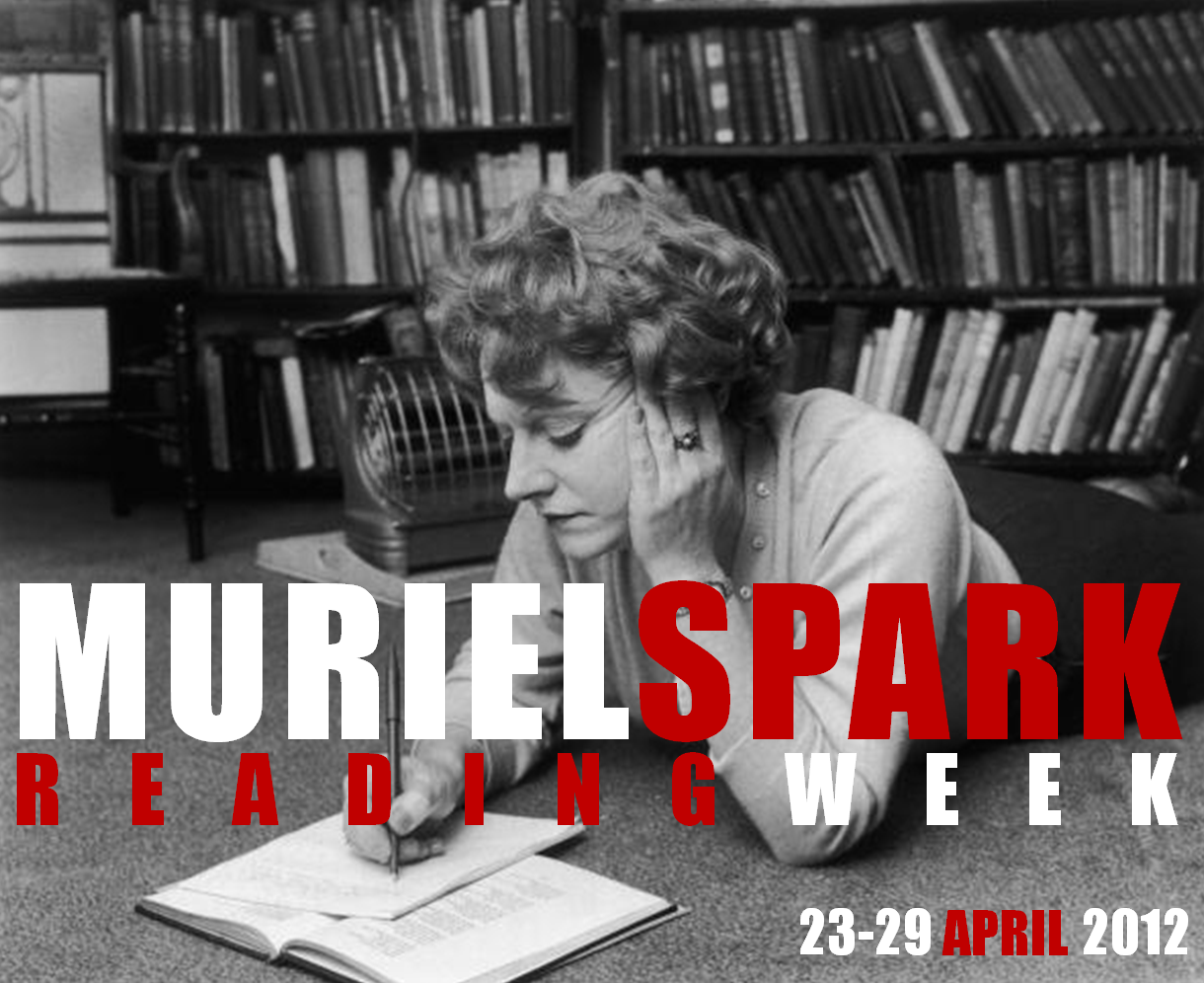
Muriel Spark Week 23 – 29 April 2012

I recently discovered on Danielle’s blog that Simon from Stuck in a Book organizes a Muriel Spark week in April. I have only read two of her novels so far, The Girls of Slender Means and The Prime of Miss Jean Brodie. I liked them both a lot but think I preferred The Girls of Slender Means which is set in London during WWII. It is more touching and has one of the most memorable endings ever. The Prime of Miss Brodie is excellent too and quite funny.

Going over my piles I discovered that I had two unread books by her. Unfortunately not the one that Simon likes best, Loitering with Intent.

The ones I have got are The Go-Away Bird and Other Stories and Territorial Rights which is set in Venice.

Which is your favourite Muriel Spark novel? Will you join as well? Here are the details Muriel Spark Week

On Indirect Translations and L2 Translations

A few years ago, when Haruki Murakami’s novel South of the Border, West of the Sun was translated into German, I was really surprised to find out – after having read it – that it had been translated from the English and not from the Japanese. I hadn’t even checked before buying it as it didn’t occur to me that something like that would ever be done. Since then I’m more careful and if I read a book that has been translated from a language I don’t speak, I buy the version with a direct translation. In the case of Murakami I could have read it in French.

Meanwhile I’ve seen that this is something that is done far more frequently than one would assume. I’m currently reading David Bellos’ excellent Is That a Fish in Your Ear? and found out that he does exactly that in the case of Ismail Kadare’s work which he doesn’t translate from the original Albanian but from the French. As Bellos writes, Kadare is involved in the process of translation. The reason for this indirect translation is the fact that there are no English – Albanian translators.

This brings me to a slightly different topic, also mentioned in Bellos’ book, the so-called L2 translation. Usually translators translate from a foreign language into their native language which is called L1 translation. If it is done the other way around, it is called L2 translation.

I’m my case, being bilingual, I can translate from German to French and vice versa and it will still be a L1 translation but when I translate into English, which I’ve done quite often, it is L2. My question is really, why is that so bad? A native speaker could go over the translation. In Kadare’s case, an Albanian translator could have translated his work into English. Some people are as fluent in a foreign language as in their own, why would they not make good translations, as good or even better than some L1 translators? There are a few writers, like Nabokov, who wrote excellent books in foreign languages which just illustrates that one can write as well in a non-native language. This may be an exception but frankly, not every L1 translator is a born writer and there are really bad L1 translations out there.

Funny enough, L2 translation doesn’t seem to be acceptable. What is done however is double translation. Hiromi Kawakami’s books for example are translated from the Japanese into German by a German and a Japanese duo of translators.

What if there are really no translators for a given language combination? Biblibio commented for example on a review of Kyung-sook Shin’s Please Look After Mother that the Hebrew was translated from the English which doesn’t even seem to be a good translation. What should be done in a case like this? Not translate it at all? My suggestion would be to evaluate different translations in European languages, choose the best and translate from there. If one would choose a completely purist approach there would be no indirect translations and, in this case, that would mean that some readers wouldn’t be able to read Korean books unless they learn the language or are bilingual and read it in another translation.

Of the two options, I think I prefer a L2 translation to an indirect translation.

What do you think? Do you care whether a book is an indirect translation? Do you think it is more problematic to translate indirectly or when a L2 translation is done? Would you rather choose to read it in another language in which you are less fluent but that would at least be a direct translation?

Noam Shpancer: The Good Psychologist (2010)

A witty, absorbing novel on the days and ways of a cognitive behaviour therapist whose life outstrips his theories.

I seem to be drawn to books with psychologists as characters lately. No wonder I picked up The Good Psychologist when I saw it in a book shop. After a few moments of puzzlement I enjoyed it a lot. It’s unusual. One could call it literary non-fiction, if that genre even exists. What puzzled me was that the main character is always just called “the psychologist”. Like some of his patients, he has no name but is referred to via his profession. The other thing that surprised me is that you have a feeling not only to be in the therapy sessions with him but also in class where he teaches his students.  Shpancer, a first-time novelist, is a professor and therapist and both professions are the topic of this book. It is important to know that the specializations of his character are the same he has, namely anxiety disorders and depression. The method is cognitive behavioural therapy. I was completely absorbed by the novel. If you have ever wondered what it is like to be in therapy, this book will show you. If you are interested in psychology, you will enjoy it and should you suffer from anxiety disorders, I think this book may help you or at least show you that there is a possibility to be cured.

Eager therapists, the people-persons who drip with goodwill and sympathy, theirs is a false promise, and theirs is a wounding touch, he will say later in class. A therapist who rushes to help forgets to listen and therefore cannot understand, and therefore cannot see. The eager therapist, the one who is determined to offer salvation, involves himself and seeks his own salvation.The good psychologist keeps his distance and does not involve himself in the results of his work. The right distance allows a deep and clear gaze. The good psychologist reserves the business of closeness for family members and beloved pets and leaves the business of salvation to religious officials and street corner eccentrics.

The Good Psychologist tells the story of a middle-aged, single psychologist who also teaches evening classes. His life is rather lonely but that’s how he wants it to be. He is in love with a woman who is married to a very sick man. They had an affair and because she wasn’t able to conceive from her husband, she asked the psychologist whether he would be willing to let her have his child. After she gets pregnant, she breaks the affair off and doesn’t want to see him anymore. Still they stay in touch professionally and she is the one he turns to when he needs advice with one of his clients.

Tiffany is a stripper who cannot dance anymore. Like most of the people who come for therapy to the psychologist, she has panic attacks. Her biggest fear is that she will never be able to dance again and will not earn enough money to get her child from her abusive husband where the girl stays at the moment.

The chapters alternate between chapters in the therapy room, the class room and at the therapist’s home. We see how he treats with the method of cognitive behavioural therapy, how he teaches his students the principles and how he applies them in his own life.

Tonight we will discuss a common confusion among young therapists, he announces to the class. Mental health – to the extent that there is such a thing as mental  and such a thing as health – is not a destination but a process. It’s about how you drive, not where you’re going. The therapist is like a driving instructor not a chauffeur.

I found this highly fascinating. The psychologist is constantly questioning the “cranky Viennese” (Freud) and introduces other names and concepts. Maybe this sounds very heavy-handed and theoretical but it’s well done. We learn that the biggest difference between psychoanalysis, the way Freud taught it, and CBT, is how different the importance of childhood is perceived. CBT therapists do not think that childhood is that important. They show their clients that it’s their thought processes they have to change. This is illustrated in many different ways and I was more than once amazed or surprised about different insights.

Try this exercise: switch all your daily buts with ands. Jennifer – he turns to her – instead of telling your fiancé, I love you but you’re driving me mad, tell him, I love you and you are driving me mad.

What I loved about this book is the fact that the psychologist never sounds smug. He isn’t a know-it-all. He is a man who struggles in his own life but who is genuinely kind. He does make mistakes and we see how he handles them.

The Good Psychologist is highly readable, informative, fascinating and it introduced me to a fictional character that I would enjoy meeting in real life.

Needless to say that this book is very quotable. Just like in Amor Towles’ The Rules of Civility, there is a great quote on every page. I just picked a very few and hope they give an impression.

Here write this down. The goal of therapy is to provide the client with the tools to nurture and maintain psychological health. We help him practice the correct use of the tools: acceptance of emotions, rational examination of thoughts; to consciously confront erroneous patterns of response and embrace the flow of correct healthy patterns.

Personally I do not think there is one therapy that is right for everyone but this sure sounds like one that makes a lot of sense, at least when it comes to anxiety disorders.

If you do not want to read this novel but are interested in the therapy, here is a site that gives a Mini Introduction to Cognitive Behavioural Therapy (CBT).

Hiromi Kawakami: Manazuru (2006)

Manazuru is the first novel by Hiromi Kawakami that is available in English. She has been one of Japan’s most celebrated novelists since her first short story came out in 1994. I have read another one of her novels a couple of years ago. Many of her books are available in German and in French. (If you love literature in translation, especially Japanese literature, and you are able to read German and/or French, you have much more choice. I have for example read Hotel Iris by Yôko Ogawa, that came out last year in English, in a French translation almost ten years ago.).

The first novel by Hiromi Kawakami that I read is called Herr Nakano und die Frauen (Mr Nakano and the Women.) It’s a wonderful novel. A lot of what I liked in Herr Nakano is present in Manazuru too, still I wonder why they chose this novel to introduce Kawakami to English-speaking readers. Mr Nakano would have been a much better choice as it is much more typical for her writing. There are supernatural or dreamlike elements in Manazuru which are not present in her other books and which reminded me more of Murakami.

Manazuru is not easy to describe. It’s a mysterious book, filled with a dreamlike mood, shifting realities. Something very soft and gentle pervades it.  Still it’s very realistic. The story is told by Kei, a young woman who lives with her daughter and her mother in an apartment in Tokio. The three women live a very peaceful live, they share many intimate moments, cooking and eating together, stitching and knitting. They treat each other kindly but each of them leads her own life, of which the others know nothing. Kei thinks a lot about her relationship to her daughter and how unique it is. How she doesn’t love anyone like her with so much awkwardness. She thinks about what it means to have a child, physically. To feel her emotions because they once shared a body.

Kei’s husband Rei has disappeared ten years ago. Although she has been in a happy relationship with a married man, she has never forgotten her husband. She wonders always where he has gone, why he left or what has happened to him. At the beginning of the novel she decides to travel to Manazuru, a little seaside town where Rei has disappeared. When she arrives she feels a strange presence. A woman follows her, a woman who seems to be a ghost, whose density changes constantly. Sometimes the woman is just a shadow, sometimes Kei can touch her. She thinks this woman knows what happened to Rei.

Kei takes many trips to Manazuru all through the novel. Sometimes with Momo, her daughter, mostly on her own. Whenever she arrives there, she is in a dreamlike state that brings her very close to Rei. During her last trip she finds another village that is like a ghost village. Cranes are sitting on the dilapidated roofs (Manazuru means crane btw..) The houses have been abandoned. She thinks about the fact that an empty house is at first just empty but then, after several years, it gets a life of its own. Ivy will grow inside. Weeds  and many other plants will take over. It’s a bit like Kei herself after Rei abandoned  her. At first there was emptiness and loneliness and then she became someone else.

I liked Manazuru a lot because of its mood and because of the importance of moods. Kei doesn’t so much analyze her feelings or thoughts as describe her moods. They shift ever so lightly, just a little bit. They have the subtlety of scents, the same fleetingness.

What I love in Kawakami’s writing in general is her ability to capture those intimate moments in which hardly anything happens or is said, those moments during which people are sitting together, without talking and it still feels intimate and meaningful.

Hiromi Kawakami is one of the best authors  to start with for someone who isn’t familiar with Japanese writing because she is such a gentle writer. Her books are lovely and even tragic elements are toned down. We know her characters will make it in the end, move on, find meaning and all that stays from a tragic event is a feeling of bitter-sweet regret but no despair.

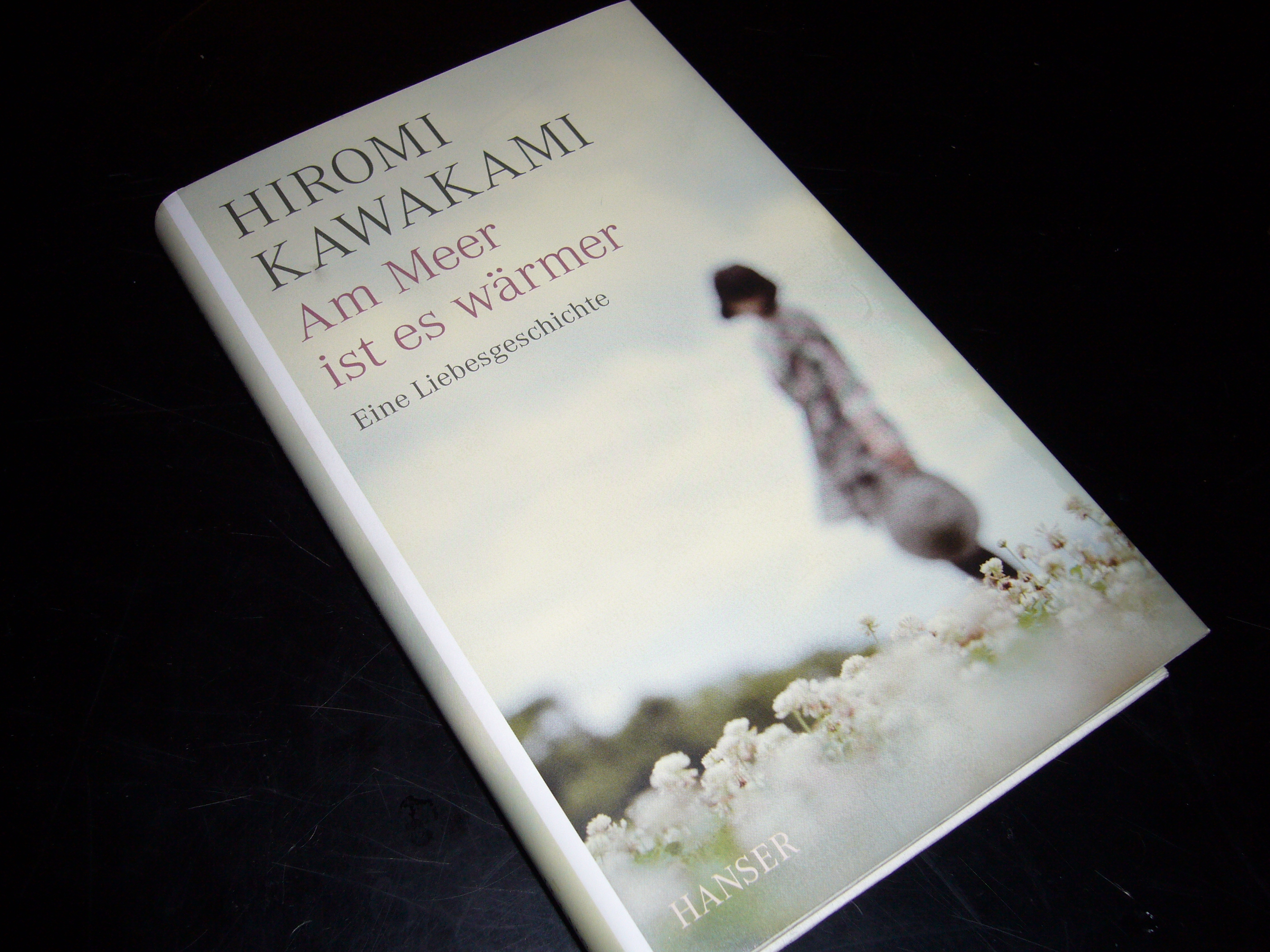
I read the book in German. I really love the cover. The woman is blurred, only the little flowers, (Immortelle, I think) at the bottom of the picture are in focus. It captures the mood of this novel much better than the English one in which the focus is on the woman.

Nina Bawden: The Birds on the Trees (1970)

The expulsion from school of their eldest son shatters the middle-class security of Maggie, a writer, and Charlie, a journalist. Since childhood, Toby has been diffident and self-absorbed, but the threat of drug taking and his refusal (or inability) to discuss his evident unhappiness, disturbs them sufficiently to seek professional help. Veering between private agony and public cheerfulness, Maggie and Charlie struggle to support their son and cope with the reactions- and advice- of friends and relatives. Noted for the acuity with which she reaches into the heart of relationships, Nina Bawden here excels in revealing the painful, intimate truths of a family in crisis. Toby’s situation is explored with great tenderness, while Maggie’s grief and self-recrimination are rigorously, if compassionately, observed. It is a novel that raises fundamental questions about parents and their children, and offers tentative hope but no tidy solutions.

Nina Bawden’s novel The Birds on the Trees was one of the so-called Lost Man Booker titles in 2010. These were books that would have been on the Man Booker short list in 1971 if the dates for the Prize hadn’t been moved. While reading about this, I encountered the expression Hampstead novel, a label I had never heard of before. It seems this label was used to describe a specific type of novel, not only set in Hampstead but focussing on leftist-liberal intellectuals of the middle-class. Margaret Dabble and Iris Murdoch were named as well. When I hear a description like that I have to fight the urge to yawn.  That does sound boring, doesn’t it? In any case, the fact that Bawden was nominated for the Lost Man Booker in 2010, with a novel that was, as critics wrote, so clearly a Hampstead novel, triggered a lot of more or less interesting response in the media and some referred to older articles. One article I read was particularly interesting because it looked at settings in British literature. If you are interested here is the link. The writer argues that to a certain extent you can deduce the themes and topics from the location of a book. It’s highly unlikely that you will find the same topics in a novel located in Peterborough as in a novel set in Wales. This may be very obvious for a British reader but for me it was highly enlightening.

Hampstead novel or not, The Birds on the Trees is the story of a family crisis. The family is an intellectual middle-class family. The mother is a writer, the father a journalist. The book opens in the past, when Toby, the oldest son, is barely five years old and runs away at Christmas. He is an odd little boy. Strangely quiet and polite for his age. The book then fast-forwards 13 years. Toby is 18 and has been expelled from school because of marijuana abuse. He has two younger siblings, 11-year-old Lucy and the 5-year-old Greg. The parents are shocked and horrified and have no clue what to do with their son. For Maggie, the mother, it’s clear, he has to go to Oxford, one way or another. Charlie, the father, would rather give him a break and let him figure out what he would like to do. But these are not the only two people with a strong opinion and some saying in the matter. Aunt Phoebe, the  domineering widowed sister of Charlie, meddles as well. And Maggie’s mother plays an important role too.

The structure and character portraits of this novel is what I liked best. It moves from one person to another, changing from first to third person narrative and gives the point of view and impressions of each character. The voices are very authentic, the dialogue rings true. Through all those inputs we see how much is really going on under the surface and how dysfunctional the family is.

Toby cannot stand it anymore at home after his expulsion and after having stayed at his grandparent’s home for a while, finally moves to London to live with an older friend. It seems he starts to use other drugs and when the parents go and get him, he is on the verge of a nervous breakdown and diagnosed with schizophrenic disorder. Electro shock is the chosen cure. I didn’t like this part of the story at all and had a problem to fully understand why Toby was called mentally ill. He seemed more aloof and detached than genuinely depressed or psychotic.

If Toby’s illness and the horrifying “cure” had been all this novel had to offer, I would have hated it, I’m sure, but there is so much more going on. It isn’t only well written but the different story lines and aspects are thought-provoking and captivating. Maggie, the mother, is by far the least appealing character. After a while she started to really get on my nerves. There is an instance in which she discusses with her husband whether it is OK to take the things that happen and turn them into a novel. This is a very important moment that could easily be missed. If I hadn’t done some research I wouldn’t have known that Nina Bawden told the story of her own family. Her son suffered from mental illness, abused drugs and finally killed himself in 1982. This may explain to some degree why the book is so flawed and at the same time so interesting. It seems as if she was in writing it, trying to answer the question of responsibility and at the same time imagining a positive outcome.

One of the core themes that I found to be extremely well executed is favouritism. Toby was the first child and remained, even after the others were born, very obviously the favourite. Although his little sister loves him, she and her younger brother start to believe that they might have been adopted. It seems the only explanation why Toby is always the center of attention.

While the end of the book and the description of the mental illness aren’t convincing, I still enjoyed this novel because it manages to capture insecurity and conflicting emotions at the heart of families so well. Some of the character portraits are great. With a few exceptions, there is hardly a conflict-free relationship in this family and the book illustrates them all. Depending on who talks to whom, the interaction triggers different aspects in the personality of the characters. One person who is quite insufferable in contact with someone may be quite charming the moment he or she speaks to someone else. Often people show only one part of their personality to someone and keep another part for someone else. Through the interior monologues and dialogues all the facets of the characters are wonderfully well shown. Maybe, as some journalists argued, the book didn’t deserve the Man Booker, being too flawed and too Hampsteadish, true enough, still I thought it was a great read.

Does anyone know Nina Bawden? Has she written other books that are worth reading?

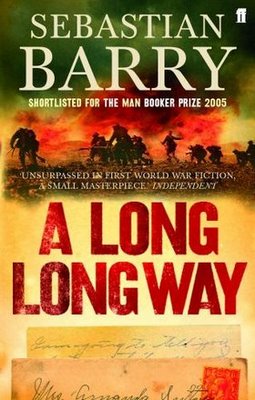
Literature and War Readalong February 27 2012: A Long Long Way by Sebastian Barry

In last year’s readalong we also read a WWI novel from the Irish perspective. It was one of my favourites and since I’m fond of Irish literature, I thought it would be great to add another one this year. I wanted to read Sebastian Barry’s novel A Long Long Way since Danielle (A Work in Progress) first mentioned it. WWI has a special meaning for the Irish. They were neutral during WWII, so, clearly, WWI has another importance. There were reasons why they remained neutral during the second World war which are tied to their own history. While some men, like the character Willie Dunne in this novel, fought for the Allies, other forces in the home country were about to erupt and would lead to the Easter Rising. WWI, the Irish War of Independence, followed by the Irish Civil War, cost the Irish too many lives for them to risk being dragged into WWII as well. I’m certainly simplifying but in a nutshell this was one of the reasons.

Some of what I just mentioned is the topic of Barry’s novel.

Here are the first sentences

He was born in the dying days.

It was the withering end of 1896. He was called William after the long-dead Orange King, because his father took an interest in such distant matters. On top of that, an old great-uncle, William Cullen, was yet living in Wicklow, across the mountains as they used to say, where his father himself had been reared.

I have read Sebastian Barry’s award-winning The Secret Scripture three years ago and I was one of a very few who didn’t like it. It had nothing to do with the writing as such which is great and one of the reasons why A Long Long Way was shortlisted for the Man Booker Prize in 2005. The reasons why I didn’t like it were timing and implausibility. I had just read The Vanishing Act of Esme Lennox before and the theme is the same, only I liked O’Farrell’s novel much better as it didn’t rely on implausible coincidences. Despite this unfortunate encounter I’m really looking forward to A Long Long Way and hope that some of you will join me.

Have you read Sebastian Barry?

*******

The discussion starts on Monday, 27 February 2012.

Further information on the Literature and War Readalong 2012, including all the book blurbs, can be found here.