Charlotte Wood: The Submerged Cathedral (2004)

Australian author Charlotte Wood’s lyrical novel The Submerged Cathedral caught me unawares. Reading it felt at times like daydreaming. It has a hypnotic and very gentle quality that isn’t easy to put into words. It is highly symbolical and complex but still down to earth. The voice and choice of themes are so unusual, I’m really glad I discovered it on Kim’s blog last year (here).

The novel has four parts, each dedicated to a year – 1963, 1964, 1975, 1984 – covering twenty years in the lives of Jocelyn and Martin.

In part I Jocelyn and Martin meet and fall deeply in love. It’s the 60s and concubinage is far from being accepted. Jocelyn who already turned down one man, doesn’t want to get married but she wants to live with Martin. When they meet she is working as a copy editor and proofreading the manuscript of The Complete Illustrated Encyclopedia of Australia. The parts which speak the most to Jocelyn are those dedicated to the flora of Australia. The beauty and mystery of all these plants that are unique to this part of the world are a major theme. While reading about them Jocelyn becomes aware of them and decides she would love to create a garden, a garden unlike the English garden her mother used to have. Hers should be a garden with Australian plants only.

Martin is a doctor, a doctor who is much more of a healer than a surgeon. He can almost feel what is wrong with people before they tell him and knows what they need to recover. He is very taken with Jocelyn and her idea and wants to help her build the garden.

The time they spend together in his house is idyllic. They sit on the porch, talk about their plans, go swimming. It’s peaceful and harmonious until the day Ellen, Jocelyn’s older sister, announces she will come back to Australia. She has been living in London with her husband and her daughter. Her husband’s violence is driving her away.

Why the strong and courageous Jocelyn who doesn’t even fear to be a social outcast, lets her sister take over her life and dictate her every move, is hard to understand for anyone who has never been entangled in a dysfunctional family system. I know what this is like and although I read with shock how the beauty is crushed and the relationship between Martin and Jocelyn is put to a test it doesn’t pass, I could relate. It made me gasp and infuriated me but I felt that Jocelyn couldn’t act any other way under those circumstances. At the end of part I a tragedy happens after which Jocelyn leaves Martin.

The next three parts of the novel follow them in their journey from grief to healing and beyond. Jocelyn chooses to follow Ellen to London. Martin joins a convent. All through the novel the themes of love, religion, nature and gardens are undergoing different variations.

What I liked so much about this book is the way it is written. It has the capacity to draw you in. It speaks to your emotions much more than your intellect. I felt like a spectator who was captivated and then became part of the story because Charlotte Wood really shows everything, she doesn’t tell a lot. We don’t only think that Ellen’s sister is destructive, abusive and a liar, we experience it. This is amazingly artful. It’s also never said why Martin joins a convent but we learn to understand. The same goes for the description of the Australian flora and Jocelyn’s urge to create a garden that guides and haunts her until she finally gets the opportunity to follow her dream.

I would love to visit Australia because it is so unique, because it has landscapes and plants and animals that you find nowhere else in the world. If you share this fascination, you will love this book. It is a hymn to the beauty of that continent but it is also a hymn to love. Pure unconditional love. Last but not least it has  a religious theme that is as important as the nature element. The gardens of the Bible are mentioned and alluded to, Eden and Gethsemane. Antonement and pilgrimage are other key themes. While Martin tries to make sense as a recluse, Jocelyn is living like a pilgrim.

The Submerged Cathedral is a very subtle novel, very alluring and despite its gentleness very powerful. It seems to have been created in a timeless zone.

Part III in which Jocelyn travels through Europe with a garden architect has the appeal of a travel novel. They stay in France and Spain and while visiting Parque Güell in Barcelona, Jocelyn has a vision. The title The Submerged Cathedral refers to Debussy’s La cathedral engloutie. Seeing Gaudí’s Sagrada Familia reminds her of this piece of music. When she sees Gaudí’s church, everything is tied together; her idea of an Australian garden, the organic forms of Gaudí’s work, the dryness of the Spanish earth. Her journey is fulfilled and she returns to Australia.

I liked this book a lot. It’s beautiful and heartbreaking. Several tragedies happen between these pages that each made me put the book aside for a while. But there were equally passages of great beauty that also made me put the book aside. I wanted those pages to linger just a little while longer.

I would like to read more of Charlotte Wood’s books but they are not available outside of Australia at the moment. Animal People sounded like a novel I would love. Here is the link to her website if you’d like to explore.

The Submerged Cathedral is my second contribution to the Aussie Author Challenge 2012.

Here is a wonderful and very subtle analysis of the novel which I found on Nike Sulway’s blog Lost for Words: The Submerged Cathedral.

Dutch Literature Month and Beryl Bainbridge Week in June

If it hadn’t been for Iris’ Dutch Literature Month last year, maybe Lizzy and I wouldn’t even have thought of organizing a German Literature Month. Who knows, in any case I enjoyed Dutch Literature Month last year and I’m glad Iris is hosting it again in June. Needless to say that I am joining. Details can be found here.

I have a few plans for this year.

One book I would like to read is Hedwig’s Journey by Frederik van Eeden. I’ve got a copy from Holland Park Press and it sounded very good. The first translation has been published in 1902. This edition is a revised new translation.

Sample passages and a long description of the book can be found on the editor’s page. Here’s what makes me want to read it.

Outwardly, Hedwig is a typical girl growing up in a well-to-do family in a sleepy provincial town. Inwardly, she feels things very deeply and has a strong sense of self, and can all of a sudden feel very depressed.
‘It was the afternoon, between four and five o’clock, that she recalled with most dislike; …, and the worst of all the first day of the week in the middle of winter.’

The second possibility is The Tea Lords by Hella Haasse. Iris will host a readalong of this classic and although I don’t think I will join, I wanted to let you know, just in case you might be interested. Here is the blurb:

Rudolf leaves his comfortable origins in Delft by ship for Java to help run the family’s estates there. He moves from plantation to plantation, attempting to understand the ways of the local peoples, their version of Islam and their relationship to their land. On a visit to the capital, Jakarta, he falls in love with a teenage girl, Jenny, who he courts surreptitiously via his sister, with grave consequences for the reality of their relationships. Eventually they marry, and make a hard colonist-couple’s life theirs, bear, lose and raise children, before Jenny on her visit to the home country discovers all the comforts of which she has been deprived in Java. Back at the plantation homestead, as the back-breaking work of establishing and maintaining business takes its toll on Rudolf, Jenny becomes estranged from him, and the bitter resentments of relatives eat at her until a terrible solution is achieved.

I have many other books on my piles. I might read another Cees Nooteboom this year, I still have a few I haven’t read yet.

If you are looking for suggestions for Dutch Literature Month here is a post I did last year Dutch Literature Recommendations.

*******

There is another event I wanted to make you aware of and that is Beryl Bainbridge Week hosted by Gaskella from June 18 – 24. I already left a hasty comment saying I will be too busy to join but I have still got three unread copies which makes me think I can’t let this week pass without attempting to read at least one. I discovered Beryl Bainbridge last year on Guy’s blog and read The Dressmaker which I found excellent. The three books I still got on my piles are

The Bottle Factory Outing

An Awfully Big Adventure

The Girl in the Polka Dot Dress

How about you? Do you have your Dutch Literature choices ready? Are you in for Beryl Bainbridge Week?

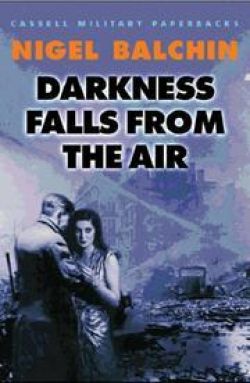
Literature and War Readalong May 28 2012: Darkness Falls From the Air by Nigel Balchin

I had never heard of Nigel Balchin before reading a few intriguing reviews on Guy’s blog (herehere and here). When I looked him up and saw he wrote a novel – Darkness Falls From the Air – which is called the “classic novel of the London Blitz” and written during the Blitz in 1942, I was keen on including it this year. Balchin seems one of those authors hardly anyone knows anymore but those who rediscover him are usually enthusiastic. It even seems that he is Patrick McGrath’s favourite novelist.

After having read about the bombing of Coventry written by a contemporary writer it will be interesting to see how someone handles the Blitz who has actually experienced it.

Here are the first sentences

I stopped at about seven. There was too much stuff on my desk to have a chance of getting clear that night, and I was tired of it. I felt pretty guilty coming downstairs, and had to tell myself  that this was the first time this week that I had stopped before eight.

Two French officers were just coming in the front door as I went out, and I did the bowing and waving act that I always do to them. It struck me as odd that they should still be around – unless they had decided to stay on in England and fight with us.

*******

The discussion starts on Monday, 28 May 2012.

Further information on the Literature and War Readalong 2012, including all the book blurbs, can be found here.

Horace McCoy: They Shoot Horses, Don’t They? (1935) or The Hunger Games of the Great Depression?

The whole of last week I was looking for something to read that would grab me. I’ve read a few very good but very similar novels lately and was longing for something different. When I read Guy’s review of McCoy’s novel They Shoot Horses, Don’t They? I thought, that’s it, that’s what I want to read. Thanks to the kindle I could start right away. I’ve watched the movie when I was a teenager and although I was very impressed, I never read the book. Now that I have, I wonder why I didn’t read it any earlier. It’s great. It reminded me of another depression era book which has also been made into a movie, James M. Cain’s The Postman Always Rings Twice.

They Shoot Horses, Don’t They? is as powerful as I was expecting it to be. It’s written in the form of a testimony. A man is accused of murder. He doesn’t deny it but he wouldn’t exactly call it murder. He thinks he did the person he shot a favour. The court asks him to justify what he did and that’s why he tells his story.

Why he shot someone and why he thinks it was a favour is told in flash backs. Robert and Gloria are both luckless actors who can’t make it in Hollywood. Not even as extras, no matter how hard they try. One from Texas, the other from Arkansas, they both were hoping that Hollywood would make their dreams come true. They are very poor and hardly have enough money to buy food. When Gloria tells Robert about a dance marathon, he is first reluctant but then joins her and they sign up. These marathons were really held in those times. It’s hard to imagine nowadays but people signed up to dance for 900 and more hours straight. They were allowed to rest for fifteen minutes after one and half hours but that was all the rest they got. After a while they didn’t really dance but they had to keep moving all the time. The marathon was over when only one last couple was left.

Many  couples sign up together with Robert and Gloria, 50% already don’t make it through week one. Because the public is easily bored the organizers have to spice up things a bit and come up with additional ideas, like the derbies. Every evening the couples have to speed around the dance floor. The last couple is disqualified.

The drama during the marathon is intense. Fights break out, people collapse, the exhaustion is hard to picture, still many go on dancing after 800 hours.

There is a lot to like in this novel. The dialogue is spot on and highly effective. It captures the different colorful characters very well. What really impressed me are the two main characters Robert and Gloria. Especially Gloria. Robert and Gloria are such opposites despite the fact that they are in a very similar situation when they meet. Their mental state is so different. While Robert is hopeful, Gloria is one of the darkest characters one could imagine.

“Sometimes I’m sorry I ever met you, ” I said. “I don’t like to say a thing like that, but it’s the truth. Before I met you I didn’t know what it was to be around gloomy people.”

We crowded behind the starting lines with the other couples.

“I’m tired of living and I’m afraid of dying.” Gloria said.

Gloria is one of those people who are too far gone. I’ve met people like that in my life. You just knew, they had passed the point of no return, they were too self-destructive, no influence was going to save them. And, as one character says to Robert in the novel, it is dangerous to be in their company. They are like a maelstrom, the moment you’re in it they swallow you and drag you down.

They Shoot Horses, Don’t They? is an unflinching account of how far people are driven by poverty. And how others are willing to exploit this poverty for fun and entertainment. Only one couple can win the 1000$, the others hardly get anything. But nobody is really interested in the winners, people want to see the other couples fail. The more spectacular the failure, the better.

While it wasn’t surprising that this reminded me of another depression era book I was in no way expecting to find anything that would remind me of The Hunger Games. The writing cannot be compared, They Shoot Horses, Don’t They is excellent but there are still a lot of striking similarities that made me think. I was wondering whether Suzanne Collins was consciously using it or if it was just a coincidence. After finishing the book I googled the titles together and saw that I’m not the first to spot the similarities. Amy from My Friend Amy has also written about it as you can see here and so have others.

In both books, poor people are exploited for fun. While the role of the respective government is different, the outcome is similar. In The Hunger Games the people are forced to participate, while they sign up in McCoys novel. In both instances to see others fail, watch them struggle, makes the success of the show. In both books couples or people who are liked will get sponsors who will pay for things that will help them. Food and medicine in The Hunger Games, clothes in McCoy’s books.  In both novels food plays a prominent role. In They Shoot Horses, Don’t They? they are fed during the breaks and eat more than usual. In The Hunger Games the dinners and lunches in the Capitol are described in great detail. Ultimately hunge, is a key theme in both books. In both books there are fake marriages/romances. Couples agree to get married or to pretend to be in love in order to make the games more interesting. And in both books the show doesn’t end as expected, in both something goes wrong. Last but not least, killing and murder is another key theme in both novels.

What is completely different is the psychological dimension. The Hunger Games isn’t very psychological but They Shoot Horses, Dont They? is. The charcaters, even the secondary ones, are captivating and feel realistic.

It would be interesting to analyze these books in more depth and to compare some of the depression era books with the wave of dystopian novels we have and what it means in terms of the perception of economic crisis.

Have you read this or other books from the Depression era? What do you know about the similarities with The Hunger Games. Is it a pure coincidence?

I wasn’t aware but I’ve downloaded an Open Road Media title. They have just released this and Kiss Tomorrow Goodbye as you can see here.

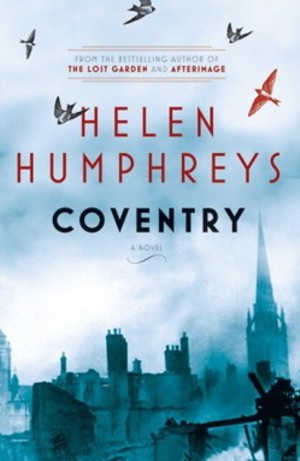
Helen Humphreys: Coventry (2008) Literature and War Readalong April 2012

Helen Humphrey’s novel Coventry starts with a woman and a young man standing on Coventry cathedral, on November 14, 1942. Harriet and Jeremy are fire fighters. It’s an eerie night, almost beautiful.

The moon is full and bright and the ground below the cathedral is white with frost. Harriet has never seen anything so beautiful. The ground glitters like the sea and smells of earthy cold.

This is the night in which Coventry cathedral will be bombed and most of the city destroyed. But when the bombs start falling and even after most of the destruction, Harriet still sees beauty.

The leaves have burnt black on the trees. The limbs are twisted and full of clothes, caught there like strange birds in the upper branches. The clothes must have blown up there from a bomb blast.

Harriet remembers the morning of November 14. How beautiful it was, all sun, and only a little wind to remind her of autumn. It was a thursday, early closing. She had gone round to the shops before lunch, and she had felt lucky because she was first in line at the butcher’s and got sausages.

Until this evening Harriet didn’t feel touched by the war. She is disappointed by it but not devastated. She will not, as she believes, suffer like she did in the last war when she lost the man she loved.

After the brief initial chapter, the novel moves back to 1914. A young Harriet sees her husband off to war. The very same morning, after returning from the train station, she meets Maeve, and lives a moment of intense friendship with the young woman. Harriet will not see her husband again. He goes missing in the trenches. And until the night of November 1940, she will not see Maeve again either.

Unbeknownst to all of them, the young man on the roof with Harriet, is Maeve’s son. The story of the two women’s lives will unfold during the novel, interwoven with the story of this tragic night in which the three fight in parallel and together, for their survival.

Harriet has never loved again and Maeve who left Coventry shortly after having met Harriet, gets pregnant. She doesn’t even know which one of the slodiers she was seeing is the father.

Most of the chapters focus on Harriet and Jeremy who flee from the burning cathedral, roam the streets, hide in shelters, run from the bombs and burning debris. They are looking for Maeve and their houses, anxious to discover how much they might have lost. The destruction is incredible, the sight of so many dead people is terrible but it’s even more harrowing to hear voices coming out from underneath demolished houses and not be able to help, to stand by and hear them suffocate. There are many descriptions of people whose life is snatched away within a second. One moment they are talking, shaving, walking, the next moment they are gone.

Coventry is a lyrical novel, written by a poet, telling the story of a poet who is trying to make sense. Since the tragic loss of her young husband, Harriet has written condensed descriptions. They shield her from emotion, give sense. That’s what she will do in the future as well. After the terrible night in which Coventry is destroyed, she will become a poet.

While Harriet paints with words, Maeve captures everything that has happened with her pencil. Already when they met in 1914 she was drawing constantly.

I’m in two minds about this book. It’s an intense description of what it meant to be in a city undergoing such massive destruction. This is well captured, at the same time, the addition of descriptions like the ones above, hold the horrors at arm’s length. I’m interested in the depiction and description of war. How do you put it into words, how do speak about the unspeakable? I think this was one of Helen Humphrey’s intentions, to show how a poet would write and feel about this horrible night. That’s why, more than a book about Coventry’s ordeal, this was for me a book about the birth of a poet. And that’s precisely what troubles me. I’ve read other books by Helen Humphreys and liked them, but in this case I feel the writing is too lyrical and esthetic for its topic. And there is the coincidence at the heart of the story, the fact that the young man Harriet spends the night with is Maeve’s son. Unfortunately I really don’t do well with this type of coincidence.

Coventry is a beautifully written book, the novel of a stylist but some rough edges would have given it a whole other dimension that would have been more appropriate for the subject. Still, and this may seem paradoxical, it is a book I would like to read again, if only for its language. Maybe I’m not doing it justice, maybe I’m just not used to someone describing war in such a lyrical way and depicting people who are so caught in their inner lives that they seem ultimately untouched by the collective experience of destruction.

I’m very curious to see what others thought.

Other reviews

Additionally to his review Tony has written an interesting post on his hometown Coventry and the Coventry Cathedral. It’s well worth reading.

Anna (Diary of an Eccentric)

Danielle (A Work in Progress)

TBM (50 Year Project)

Tony (Tony’s Reading List)

*******

Coventry was the fourth book in the Literature and War Readalong 2012. The next one will be Nigel Balchin’s Darkness Falls From the Air. Discussion starts on Monday May 28, 2012.

Tracy Chevalier: Remarkable Creatures (2009)

On the windswept, fossil-strewn beaches of the English coast, Mary Anning learns that she has a unique gift: “the eye” to spot fossils no one else can see. When she uncovers an unusual fossilized skeleton in the cliffs near her home, she sets the religious authorities on edge, the townspeople to gossip, and the scientific world alight. After struggling through cold storms, landslips, and other natural threats, her challenges only grow when she falls in love with an impossible man.

l often say I don’t like historical (genre) novels but I will not say this anymore. I may not pick them up frequently but when I do I often enjoy them. Even more so when they open a door to a world that fascinates me and of which I didn’t know a lot. Tracy Chevalier’s book Remarkable Creatures was exactly one of those books.

In the early 19th century the little working-class girl Mary Anning helps her family make a living with “curies” – curiosities – she finds on the beaches of Lyme Regis. Uneducated as she is, she doesn’t know a lot about fossils, she only knows that the rich people who come to stay at Lyme Regis give her money for her finds. Elizabeth Philpot who has moved to Lyme Regis with her two sisters is equally attracted by fossils. She is an unmarried woman who due to her unpleasing looks and the lack of money has no chance of ever finding a husband. When she meets Mary she is immediately aware that the girl has a gift. Where others see only stones and rubble, little Mary spots fossils. The two become friends and Elizabeth mentors the girl and helps her to sell her finds to a good price. When Mary makes a revolutionary discovery, the fossilized skeleton of an Ichthyosaurus, it is Elizabeth who fights for Mary’s right to be rewarded and acknowledged as the finder.

The book tells the life story of these two women in alternating first person narratives. It desribes their struggles, their failure at finding love and their fight for recognition. This is a time in which the idea of evolution, the fact that there once have been species that are now extinct, is thought to be blasphemous and heretic. And it’s even more problematic to acknowledge that women could contribute to science. Mary Anning’s discoveries are “remarkable” to some and shocking to many others.

This idea was too radical for most to contemplate. Even I, who considered myself open-minded, was a little shocked to be thinking it, for it implied that God did not plan out what He would do with all of the animals He created. If He was willing to sit back and let creatures die out, what did that mean for us? Were we going to die out too? Looking at that skull with its huge, ringed eyes, I felt as if I were standing on the edge of a cliff.

I was completely captivated by this story. The descriptions are so well done. Tracy Chevalier has a gift to bring the past to life. I already noticed that when I read Girl With a Pearl Earring. The period detail seems extremely well done. I have always been fascinated by fossils and delighted when I found some but I never bothered to read much about them. I had never heard of Mary Anning before and loved to be introduced to this amazing woman and her story.

I expected something slightly different though. I thought this would be a novel about a friendship which it is to a certain extent only not the type I had in mind. I’m obviously used to modern-day friendships with the emphasis on discussion and soul-baring. There is none of this in this book. Their friendship is expressed in silent company, not conversation. More than anything else, these two women form a little support group. Both have not been treated kindly by society and could be called outcasts. Elizabeth maybe less than Mary but still to some extent as well. Both are trapped by their respective class and their gender and if it hadn’t been for the fossils and their attachment to each other, they would have lived sad and lonely lives.

The melancholy mood and the evocative descriptions of the setting, the beaches of Lyme Regis, the weather, the danger of being killed in a landslip fascinated me even more than the story of these two women. The cover of the book captures some of this very well. A lonely rather rough-looking beach and two figures completely absorbed by what they see.

I’ve read that others found the book to be flat or lacking. It wasn’t any of this for me. I liked it a great deal and would highly recommend it to those who like Tracy Chevalier’s books.

Have you read this or other books by Tracy Chevalier? Which is your favourite?

Here is the link to Tracy Chevalier’s blog and a video in which you can see the beaches and listen to her talk about the creation of the book and why she chose to tell this story. It’s quite fascinating.

The book is part of a readalong hosted by Emma (Book Around the Corner). Unfortunately the book didn’t work for her. You can find her impressions here.

Muriel Spark: Territorial Rights (1979)

I have been looking forward to Muriel Spark Week hosted by Simon from Stuck in a Book  and Harriet from Harriet Devine’s Blog. I liked both of the Muriel Spark novels I’ve read so far,  The Girls of Slender Means and The Prime of Miss Jean Brodie. It was about time to read another one. Territorial Rights had been on my piles for a while and that’s why I decided to read it.

Sadly this book did not work for me and if it hadn’t been for Muriel Spark Week  – and if I was not a notorious book-finisher – this would have been a DNF for me. But first things first.

Territorial Right is set in Venice and as a Venice novel it is remarkably well done. I was there, I saw the streets, the canals, the piazzas, the palazzi, the churches, the street cafés and the back gardens. I enjoyed the descriptions a lot.

Now take this setting and throw in a motley crew of people, all magically coming to Venice at the same time. They know each other either from Paris, England or Bulgaria. They do not only know each other but they are all connected and even fleeing from each other only to bump into each other in Venice. Hmmmm. Add a dark secret that is hidden by two elderly women owning one of the local pensions, murmur of political machinations, drug dealers, an unfaithful husband, an elderly  woman wo likes young men, a Bulgarian artist in exile who jumps in the canal because she finds out she has been in bed with a Jew, a rich art dealer who is in love with a young man who disappears while his father abandons his lover for his sons ex-lover…

All is resolved in the end. Nothing was as it seemd at first. We find out what was hidden in the garden and get to know the past and the future of each character. Does it sound quirky? It sure was.

I think there is a lot going on in this novel that mirrors unresolved conflicts in Spark’s life and I’m sure from what little I have read after finishing the book that it would be interesting to analyze it in the light of this. Little incidents like the girl jumping into the canal to clean herself after having had sex with a Jew are meaningful when you know Muriel Spark had a falling out with her son because he was an Orthodox Jew and she a devout Catholic (as read on Wikipedia).

Since this is a very well written book, I can see how it could appeal to someone else. It’s a must for those who love novels set in Venice.

I hope others have been more successful in their book choices. Despite not having liked this, I will certainly read another of her novels soon.

Has anyone read Territorial Rights? Did you like it?