
I’m pleased to announce the winner of Joseph Roth’s novel Job which we are giving away courtesy of archipelago books.
The winner is Scott W.
Congratulations, Scott, please send me your address via beautyisasleepingcat at gmail dot com
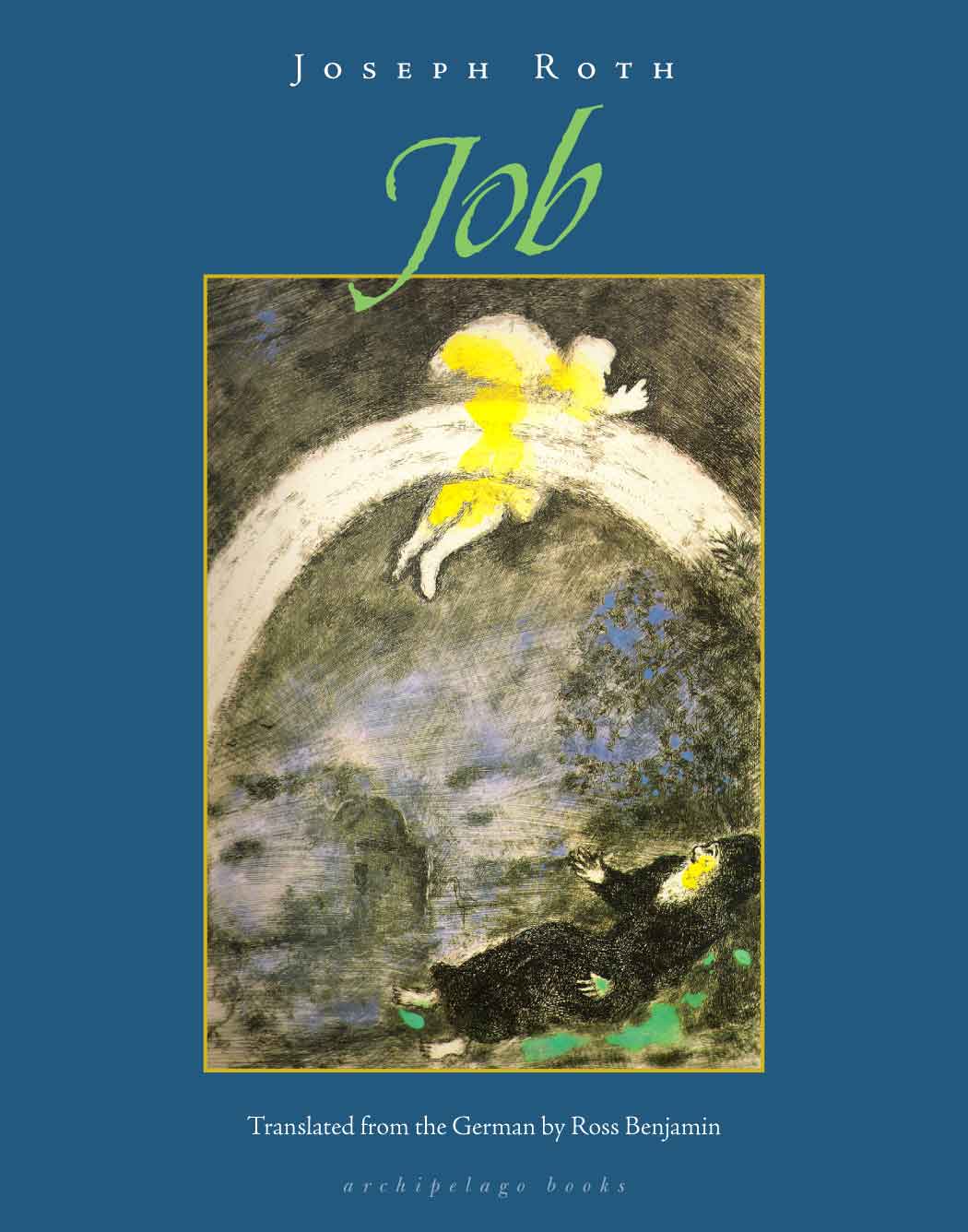

I’m pleased to announce the winner of Joseph Roth’s novel Job which we are giving away courtesy of archipelago books.
The winner is Scott W.
Congratulations, Scott, please send me your address via beautyisasleepingcat at gmail dot com

Last week I wrote about chapters 4 – 6 of Neil Gaiman’s The Graveyard Book, this week we have read the final chapters 7 and 8.
It was obvious that the man Jack would be back and also that he would be part of the final episodes. What wasn’t entirely clear but was revealed in the final chapters was why he was after Bod’s family. This is where The Graveyard Book turns almost into a Greek tragedy. In order to prevent something that is predicted, the man Jack commits a crime but, as is the case in the Greek tragedies, fails and the murder itself sets in motion his own undoing. Ironic really.
The final confrontation with the man Jack was something I expected and I wasn’t too surprised, still there are many surprises in the final chapters. I was wondering from the beginning how the book would end in terms of Bod’s development and future. Would he forever stay with his ghost family and friends? Would he start to follow Silas on his trips? Would Miss Lupescu show him how to become like her?All these were possibilities and I was keen on finding out which solution Gaiman had chosen. The end isn’t exactly like I expected it. I thought it was almost a bit sad. I know, I’m allowed to, as this is a readalong post, still, I don’t feel like spoiling the book, so I won’t say more.
There is something I like about Neil Gaiman’s books and stories and that is that he often provides a lot of information on how he his novels and stories came to be, what inspired him, where he wrote them.
As I said in my first post, The Graveyard Book is strongly influenced by The Jungle Book but one of the very first inspirations came, as he writes, from watching his then two year-old son riding his tricycle between the graves of a cemetery. He finally started the book with chapter four and if his daughter hadn’t wanted to know what would happen next, he would have stopped there. Tori Amos is one of the people he mentions in the Acknowledgment section. He also adds some lines from her song Graveyard. I can only assume it inspired him too. It’s a very short piece. You can listen to it on YouTube.
I’m not sure which will be my next Gaiman. I guess either Coraline or American Gods.
I read The Graveyard Book for Carl’s readalong which is part of R.I.P. VII. If you want to read what other’s thought, don’t miss visiting Carl’s blog for the other reviews.
Initially we had planned two giveaways for German Literature Month but now, thanks to the generosity of another editor, there is additional one today.
I’m particularly pleased as this gives me the opportunity to introduce archipelago books who are offering the title for this giveaway. Archipelago books have one of the most interesting catalogs of literature in translation I have seen so far. They offer great titles from all over the world.
I also really love their motto
a not-for-profit literary press dedicated to promoting cross-cultural exchange through international literature in translation
If you don’t know them yet it’s worth having a look at their site. Some of their books are prize winners, also in the category “Best translation”.
For German Literature Month I have the opportunity to give away one copy of one of the classics of Austrian literature, Joseph Roth’s Job.
Job is the tale of Mendel Singer, a pious, destitute Eastern-European Jew and children’s Torah teacher whose faith is tested at every turn. His youngest son seems to be incurably disabled, one of his older sons joins the Russian Army, the other deserts to America, and his daughter is running around with a Cossack. When he flees with his wife and daughter, further blows of fate await him. In this modern fable based on the biblical story of Job, Mendel Singer witnesses the collapse of his world, experiences unbearable suffering and loss, and ultimately gives up hope and curses God, only to be saved by a miraculous reversal of fortune.
As you can see, this is a novel that comes with high praise.
“A beautifully written, and in the end uplifting, parable for an era of upheaval . . . Job, opened to any page, offers something of beauty. . . Ross Benjamin’s excellent new translation gives us both the realism and the poetry.”
—The Quarterly Conversation“The totality of Joseph Roth’s work is no less than a tragédie humaineachieved in the techniques of modern fiction.”
—Nadine Gordimer“Joseph Roth was a permanent novelist. His Job was a worthy precursor of that masterpiece [The Radetzky March] . . . [Job is] both immensely sorrowful and finally strangely hopeful.”
—Harold Bloom“Jobis more than a novel and legend, it is a pure, perfect poetic work, which is destined to outlast everything that we, his contemporaries, have created and written. In unity of construction, in depth of feeling, in purity, in the musicality of the language, it can scarcely be surpassed.”
—Stefan Zweig“This life of an everyday man moves us as if someone had written of our lives, our longings, our struggles. Roth’s language has the discipline and rigor of German Classicism. A great and harrowing book that no one can resist.”
—Ernst Toller“Job is perfect. . . . a novel as lyric poem.”
—Joan Acocella
The competition is US only. The winner will be announced on Monday October 22 2012.

Last week I wrote about chapters 1 -3 of Neil Gaiman’s The Graveyard Book, this week we have read chapters 4 – 6.
I’m glad to report that I’m still enjoying the book a lot. The structure is less episodic now, some elements return and we already know that the man Jack who killed Bod’s whole family is still around and hasn’t given up. Bod meets new people in these chapters and one of the most important is a witch. She may be one of my favourite characters and the relationship between the two is quite touching. But there is more. The story of the witch illustrates that there is a very interesting historical dimension to this book which could be overread but it’s present and very well done. The witch is in a part of the graveyard where people lie who have no gravestones, because they were suicides or otherwise cast out by the church. In a place in which gravestones play such a prominent role, to be without one, is like being bereft of your identity. The witch is very sad about this fact and Bod, who is a truly goodhearted little boy, tries to buy her a tombstone. Unfortunately this very nice thought brings not only a lot of trouble but at the end of the whole undertaking, the man Jack is informed that the little baby he couldn’t kill has turned into a boy and is still alive.
An element which didn’t strike me at first is how the many inhabitants of the graveyard are often presented. Gaiman gives us the inscriptions of their headstones like in this example “Majella Godspeed, Spinster of his Parish, 1791 – 1870, Lost to All but Memory”. When you’ve read half a dozen of these the effect is quite uncanny. It looks as if all that is left of us is our name, our dates, and -when we are lucky – an inscription that is poetical and wise and not one that is unintentionally funny.
In these chapters Bod gets into trouble more than once and what is sad is the fact that it is always when he tries to help others. But we do also discover another side of Bod. He has truly become a person who is able to move between the living and the dead and to use their respective talents. One of the scenes I enjoyed the most is when he uses his skills to haunt two particularly nasty children.
I’m looking forward to reading the rest now which will probably be this afternoon. It’s cool outside and rainy, the perfect weather for a book like this.
I’m reading The Graveyard Book for Carl’s readalong which is part of R.I.P. VII. If you want to read other’s thoughts, don’t miss visiting Carl’s blog for the other reviews.

Tight and disturbing, Loving Roger begins with a dead body and a chilling question. Why has nice, ordinary, affectionate Anna picked up her kitchen knife and murdered the man she insists she loves?…This brief novel is a mordantly illuminating essay on the way love contains the seeds of vindictiveness and hatred.
A while back in a discussion Max from Pechorin’s Journal mentioned Loving Roger as an excellent example for a book that explored the reasons for a murder rather than having us guess who did it. I was intrigued and since I had liked Tim Parks’ Rapids I got Loving Roger a while ago. I had totally forgotten about the book until last week when I was hunting for a short novel or novella.
The narrator of the story is Anna and here is how the book begins
Roger lay on my new blue rug in the corner by the television and the lamp that seemed it always had the funny orange bubbles rising in it that he hated. But I went to work as usual. I made myself the regular cheese and ham sandwich and took the baby up to Mrs Duckworth for the day and she didn’t notice anything odd about me, I dont’ think.
What a beginning. To pack such a lot of information in three sentences, grab the reader’s interest and start right in the middle of the story is masterful.
After this intense beginning, Anna rewinds and tells the story from its start; how she met Roger, how they started to have an affair, how she got pregnant and how she killed him. The story she tells is quite disturbing. At first because the way she describes Roger makes him look like a total bastard and we don’t understand why she stays with him. He works as executive in the company in which Anna has a job as a secretary. Most of the senior men in the company treat the young women shabbily. They think they are not only simple but simple-minded girls. While Roger hopes that this is just a temporary job before he will become a famous writer and sees himself as something better, in the way he treats Anna he is just as average and shabby as the other men. He believes she is below him and tells her so. But she is attractive and sexy and so they start their secret affair. Anna tells a lot of shocking details of their affair in a very candid voice. She describes how condescending Roger is, how he is ashamed of her, how he lies and betrays. But then, after a while, she adds bits and pieces of her own family history, tells how much her parents loved her late brother Brian, how she doesn’t count at all, and that is when we begin to understand that not only is she a unrealiable narrator but that she has serious issues of her own.
The further the novel progresses, the more it is like watching a train crash. What she tells about the way Roger treats her, his pompous monologues, the diary she finds in which he analyses his feeling and confesses his infidelity, added to her constant repeating of how much she loves him, is unsettling.
Although the novel seems to start with the end, that is actually not the case. The book offers a final twist that is quite unexpected. It’s one of those surprising endings which alone make the book worth reading. However, that’s not the only thing Loving Roger offers. Tim Parks writes with extreme accuracy. There is an episode in which Anna and Roger bathe in the middle of the night in a river in Cambridge and when they come out of the water Anna struggles to put on her clothes. This is such a small detail but the way he describes it, how the clothes get stuck on her wet body, was so well observed.
The central story of Anna and Roger is a story of passion and obsession and it’s not always clear who is the victim. A lesser author would have left it at that but Parks manages, in just a few pages, to paint not only the story of an obsession but of a very dysfunctional family too. The way Anna is treated by her parents is awful. Her brother was always the favourite, they didn’t even pretend otherwise and after his death, she is even less important. Strangely, I didn’t feel much for her, nor for Roger, I felt for their little child. Just imagine, what I life he will have.
I really enjoyed this slim novel. It’s admirably well written. It reminded me a bit of Jenn Ashworth’s A Kind of Intimacy or some of Ruth Rendell’s books although Tim Parks isn’t a crime writer.
Has anyone read this too or another Tim Parks novel? He has a new one out The Server which sounds interesting as well. I have his non-fiction account Teach Us To Sit Still on my TBR pile.
Busy random org has done its job and here are the winners of the second give away of German Literature Month.
Susanna has won Alex Capus – Léon and Louise

Judith (Leeswammes’ Blog) has won Daniel Glattauer – Love Virtually
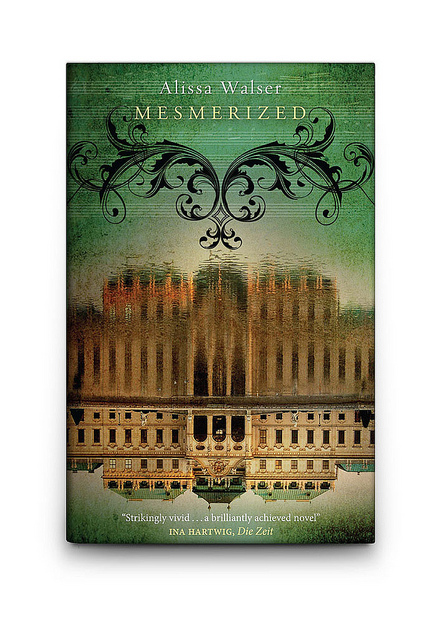
TBM (50 Year Project) has won Alissa Walser – Mesmerized
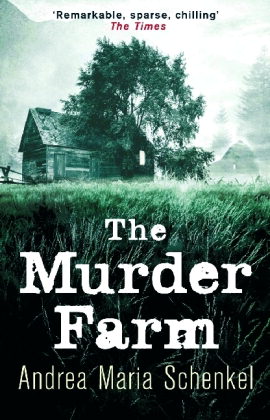
Neer (A Hot Cup of Pleasure) is the winner of Andrea Maria Schenkel – The Murder Farm
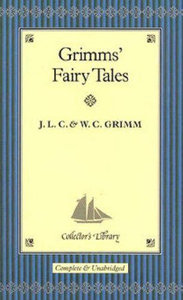
Novia (Polychrome Interest) is the winner of The Brothers Grimm – Fairy Tales
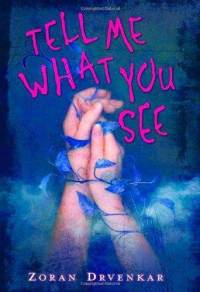
Vishy (Vishy’s Blog) has won Zoran Drvenkar – Tell Me What You See

There was a hand in the darkness, and it held a knife.
The knife had a handle of polished black bone, and a blade finer and sharper than any razor. If it sliced you, you might not even know you had been cut, not immediately.
From the very first lines we are drawn into the story of the little boy Nobody Owens and the man Jack who kills his whole family at the beginning of Gaiman’s novel The Graveyard Book. We don’t know why the man Jack kills the little boy’s family, all we know is that he isn’t happy he didn’t get the little boy as well. While he was killing Nobody’s parents and brother, the baby escapes through the door, down a hill and into the graveyard.
Mrs and Mr Owens see the little boy and Mrs Owens, although she is a ghost, feels an intense, until now unfulfilled longing and wants to keep the baby for herself. At first there is debate. The other ghosts are not sure it is a good idea. How will she feed him? How will she take care of him? But when the man Jack arrives at the graveyard door and they become aware the baby is in great danger, they agree to protect him and keep him in the graveyard. Luckily Silas, who isn’t really a ghost but no real human either, can move between their and our world and is capable to provide food for the little boy.
In the subsequent chapters the boy who the ghosts have baptised Nobody Owens is introduced to the ways of the living and the dead. He learns to read and write, is taught history and other things, makes friends with a little girl, is abducted by ghouls.
The story as such, which is inspired by Kipling’s The Jungle Book, is not that special but the way it is told is fantastic. More than a writer Gaiman is a story-teller. He is a very musical writer with an ear for language and it’s not surprising his books work well as audio books. The sentences have a hypnotic quality, they draw you in, captivate you by their sound and their meaning alike.
What I thought was particularly great is that we know the man Jack will turn up again. We know his story isn’t over. And we don’t want it to be over. We want to find out why he killed Nobody’s family and what he will do to access the graveyard. The inhabitants of the cemetery may not be corporeal but they still have power. They were able to protect Nobody once, will they be capable to do it again?
I can’t tell you how much I like this novel. It’s wonderful, it feels as if Gaiman when he writes is connected to the very source of story telling itself. In an introduction to a short story collection Gaiman wrote that he thinks the only proof a story is well written is when the readers ask the question “What happened next?”. Gaiman certainly achieved this and much more.
I’ve bought The Graveyard Book a couple of years ago but never read it. I’m so glad it is part of this year’s R.I.P. hosted by Carl. 38 people have signed up to read along. If you want to read what other’s thought of the first 3 chapters, don’t miss visiting Carl’s blog for the other reviews.

 Beauty is a Sleeping Cat