Dickens in December- Giveaway – The Dickens Dictionary

dickens-f

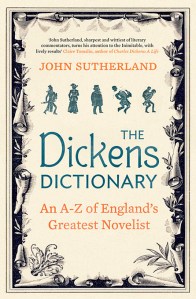
Earlier this year I reviewed John Sutherland’s The Dickens Dictionary and it was this book which started the whole idea of Dickens in December. That’s why we are particularly pleased that Icon Books have offered us two copies  of the Dictionary for our first giveaway. We are giving a way one book per blog.

I really like this book, it’s informative, interesting and contains a lot of illustrations. Here is the blurb

For fans old and new, a fascinating tour through Charles Dickens’ novels in the hands of a master critic.
Oliver Twist … Great Expectations … David Copperfield – all contain a riotous fictional world that still leaves and breathes for readers the world over today.But how much do we really know about Charles Dickens’ dazzling imagination, which has brought this all into being?
To celebrate the bicentenary of the birth of Dickens – 2012 – Victorian literature expert John Sutherland has created a gloriously wide-ranging alphabetical companion to Dickens’ novels, excavating the hidden links between his characters, themes, and preoccupations, and the minutiae of his endlessly inventive wordplay.
Covering America, Bastards, Childhood, Christmas, Empire, Fog, Larks, London, Madness, Murder, Orphans, Pubs, Punishment, Smells, Spontaneous Combustion and Zoo to name but a few – John Sutherland gives us a uniquely personal guide to Charles Dickens’ books.

If you’d like to win a copy of this book, just leave a comment. If you want to improve your chances of winning you can leave a comment on this and one on Delia’s blog. That way your name will  be in both draws but you can only win once.

The giveaway is open internationally. The winners will be announced on Tuesday 11 December.
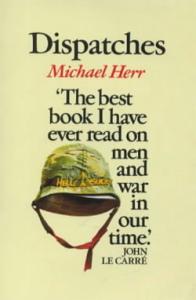
Literature and War Readalong December 28 2012: Dispatches by Michael Herr

https://beautyisasleepingcat.com/wp-content/uploads/2011/11/dispatches.jpg

Dispatches is a book I wanted to read  ever since it has been mentioned in the comments of other posts and after having read Tim O’Brien’s astonishing The Things They Carried. It’s the only book on the Vietnam war we are reading this year and I’m very keen on finding out how it will compare to O’Brien’s masterpiece.

Herr was a front-line reporter in the Vietnam war and has participated in the writing of movie scripts like Apocalypse Now and Platoon.

Here are the first sentences

There was a map of Vietnam on the wall of my apartment in Saigon and some nights, coming back late to the city, I’d lie out on my bed and look at it, too tired to do anything more than just get my boots off. That map was a marvel, especially now, that it wasn’t real anymore. For one thing it was very old. It had been left there years before by another tenant, probably a Fenchman, since the map had been made in Paris.

*******

The discussion starts on Friday, 28 December 2012.

Further information on the Literature and War Readalong 2012, including all the book blurbs, can be found here.

Dickens in December Begins Today

It’s already December and time that we start reading our Dickens novels and watch some movies based on his books. The detailed plan of this month can be found in the Introductory and Sing up Post. I’m co-hosting this event together with Delia (Postcards from Asia). Don’t miss to visit her blog as well.

The most important date to keep in mind is December 21 as that is the date for our A Christmas Carol readalong.

I have already started Great Expectations and really like it so far.

I will re-watch the movie Great Expectations (1998) starring Gwyneth Paltrow as I loved it but I would also like to watch one of the many versions of A Christmas Carol. The one from 1935 can been watched on YouTube.

Do you have a favorite movie version of A Christmas Carol? Let me know. I have a hard time choosing the one I should see.

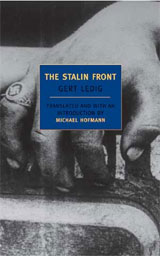
Gert Ledig: The Stalin Front – Die Stalinorgel (1955) Literature and War Readalong Meets German Literature Month November 2012

The Stalin Front is one of the most unsparingly honest accounts of the Eastern Front. It’s accurate and graphic in its depiction of the horrors of the battle field. The wounds, the cold, the fear and the utter uselessness of it all is captured in spare prose. It’s hard to find another novel which is as explicitly anti-war as this book. Interestingly it is exactly this unpolitical but strong anti-war statement for which Ledig would be criticized later. In his book there are no beastly Nazis or inhuman Russians, but living, breathing, suffering humans, some German, some Russian. At the end of the day, it’s not important. What is important is to show that war is awful, that it saves nobody, literally rips apart the “good” and the “bad” alike and turns each party into a suffering mess.

Ledig chose a rather impersonal way to tell his story. Most of the people in this novel have no name – with the exception of the Russian officers – but are introduced with their ranks. This makes it easier to follow them and also helps to keep the story at arm’s length at first. Later in the story, with little remarks here and there, which reveal the men’s unique stories and characters, we start to see them not only as ranks but as individuals. There is for example the Major whose every hope is crushed when he is informed that his wife and only child have died.

The central story, set during two days, somewhere near Stalingrad, focuses on the defense of a hill. This is a totally futile and senseless thing to do. The Germans can’t keep the hill, their lines have been broken through by the Russian tanks but the orders are clear; they have to stay. The losses on both sides are equally heavy, morales are low everywhere.

I was afraid The Stalin Front would be hard to read but it wasn’t. It was a surprisingly quick read and although it is very graphic it was bearable because Ledig isn’t a manipulative writer. It’s much more as if he had painted with words and I was often reminded of the work of Anselm Kiefer.

Ledig’s book was successful when it came out but soon forgotten because it was considered too dark, too bleak. There is no hope in this book, no heroic figures, there isn’t even right or wrong, just suffering and futility. The absurdity is underlined by small things. Seeing the tanks approach and knowing there would be certain death, many of the men try to escape. Some cross the line and flee to the Russians, others desert or simply look for an outpost which is farther away from the front line. Doing this without explicit order is like deserting. Although everything collapses, the hill is lost, most of the men will die, the high command gives stupid orders like fighting to the last moment and has people who try to save their lives courtmartialled.

The Stalin Front has been compared to All Quiet on the Western Front and I agree, it is equally good but even less sentimental as Ledig chose to have more than a handful of main characters and did not just focus on one person. This makes identification more difficult but I was glad for that. It may sound weird but I really liked this book. I think it’s important and should be much more widely read. No matter what reasons contribute to starting it, ultimately, war is ugly for all the parties involved. The Stalin Front exemplifies this eloquently and forcefully.

Other reviews

Danielle (A Work in Progress)

Lizzy (Lizzy’s Literary Life)

Richard (Caravana de recuerdos)

Rise (in lieu of a field guide) – not part of the readalong per se but worth reading all the same.

*******

The Stalin Front was the eleventh book in the Literature and War Readalong 2012. The next one will be Michael Herr’s Dispatches. Discussion starts on Friday 28 December, 2012.

German Literature Month – Week IV Links

Another amazing week for German Literature Month. The final wrap up post is due in a week or so as Lizzy has decided to extend the month. 

All those of you still want to contribute or finish a book, feel free to do so and join her. There will be a final wrap-up post and a link list next week as well.

Undine by Friedrich de la Motte Fouqué (A Work in Progress)

Grimm Readathon 2012: Meet me at Hanau (Lizzy’s Literary Life)

No Place on Earth by Christa Wolf (Tony’s Reading List)

Unformed Landscape by Peter Stamm (Vishy’s Blog)

Dream Story by Arthur Schnitzler (Tales from the Reading Room)

The Story of the Hard Nut by E.T.A. Hoffmann (The Reading Life)

Grimm Readathon from Hauna to Kassel (Lizzy’s Literary Life)

My First Wife by Jakob Wassermann (Gaskella)

Demian by Hermann Hesse (Babbling Books)

Grimm Readathon: From kassel to Fürstenberg (Lizzy’s Literary Life)

Brenner and God by Wolf Haas (His Futile Preoccupations)

Ich sehe was, was Du nicht siehst by Birgit Vanderbeke (Tony’s Reading List)

The Weekend by Berhard Schlink (Vishy’s Blog)

Grimm Readathon: From Fürstenberg to Bremen (Lizzy’s Literary Life)

The Tale of the Honest Caspar and Fair Annie by Clemens Brentano (A Work in Progress)

Crime & Guilt by Ferdinand von Schirach (A Fiction Habit)

After Midnight by Irmgard Keun (chasing bawa)

Berlin Alexanderplatz by Alfred Döblin (Tony’s Reading List)

Grimm Readathon 2012 Meets Book Week Scotland (Lizzy’s Literary Life)

Wonderful, Wonderful Times by Elfriede Jelinek (St. Orberose)

Schnitzler and Stoppard collaborate (Wuthering Expectations)

Forbidden – Ostracized – Banned German Women Writers Under National Socialism (Beauty is a Sleeping Cat)

The Hunger Angel by Herta Müller (Winstonsdad’s Blog)

Amerika by Franz Kafka (A Hot Cup of Pleasure)

Sci-Fi Stories by German Authors (Slightly Cultural, Most Thoughtful and Inevitably Irrelevant)

The Pharmacist by Ingrid Noll (A Work in Progress)

Another Schnitzler – Stoppard Play (Wuthering Expectations)

Siddharta by Hermann Hesse (Tabula Rasa)

The Gordian Knot by Bernhard Schlink (Winstonsdad’s Blog)

This Wednesday is Wunderbar GLM extension (Lizzy’s Literary Life)

The Reader by Bernard Schlink (Iris on Books)

Ray Bradbury: Fahrenheit 451 (1953) Folio Society Edition

Yes, I know, it’s November and I should be reading German literature but…. After having read Bradbury’s The Halloween Tree in October I was so in the mood to read Fahrenheit 451 which was one of the few famous Bradbury novels I hadn’t read so far. What a coincidence that Jackie reviewed it a few weeks later. While she wasn’t too keen on the book I was still very tempted to read it right away and luckily someone saw my comment and a few days later I had a stunning Folio Society edition in my letterbox. It’s my first Folio Society book and it will not be my last. I love the nice paper and the illustrations by Sam Weber.

And the book? It’s not what I had expected. It’s so different from The Halloween Tree which is rich in descriptions and warm atmosphere. But I loved it anyway. It’s such a strange book, reading it felt a bit like walking around in a surreal dream.

Fahrenheit 451 is set in a dystopian future in which books are forbidden. If anyone is in possession of books, the firemen come to his home at night and burn it down. The job of the firemen in this novel is not to extinguish fire but to start it. They are feared but that doesn’t mean people let go of their books easily.

Montag is a fireman who secretly hides a few books. He doesn’t even read them and why he keeps them isn’t clear. It is something in his unconscious that pushes him to act this way. One evening when he returns home he meets Clarisse, a young girl. She is like nobody else he knows; she speaks with him, sees him, shows interest. What she tells him of her family is most unusual too. They sit together in the evenings and talk. Meeting her changes Montag in subtle ways and when she disappears he changes even more.

The society depicted in Fahrenheit 451 is a society in which real relationships are substituted by fake ones with people who are projected on walls in the living rooms of the houses. Giant TV screens replace real life, real experiences. It’s like a collective trance. Montag’s wife spends more time in front of those screens than she spends with her husband.

“Stuff your eyes with wonder, ” he said, “live as if you’d drop dead in ten seconds. See the world. It’s more fantastic than any dream made or paid for in factories. Ask no guarantees, ask for no security, there never was such an animal. and if there were, it would be related to the great sloth which hangs upside down in a tree all day every day, sleeping its life away. To hell with that, ” he said, “shake the tree and knock the great sloth down on his ass.”

I liked this book a lot for many reasons. I liked the haunting atmosphere and the images it created.  I also liked some of the characters like Clarisse. And there are other amazing elements. Most of the novel takes place at night, the people of this society are all isolated from each other, nobody shares anything, still they feel strongly but live life vicariously through the people on the screens. I’m not much of a TV watcher but I’ve heard people talk about things they saw on TV, series or reality TV, which made me think they were talking about real people. Depicting a society like this was very perceptive in 1953.

Fahrenheit 451 is not my favourite Bradbury but it’s an amazing book, one that is really worth reading.

Thanks again to the Folio Society for this lovely book.

German Literature Month – Week III Links

The enthusiasm for  German Literature Month is still amazing.

I think I’ve added all the links but let me know if one has escaped my attention.

Schnitzler’s Substitue for the Talking Cure (Wutherin Expectations)

Meet the Translator Sally-Ann Spencer (Lizzy’s Literary Life)

Hotel Savoy by Joseph Roth (Tony’s Reading List)

Schlink Week – Links (Reader in the Wilderness)

A Schlink Link – A Key to Understanding (Reader in the Wilderness)

Night Games – Schnitzler Stretches Out (Wuthering Expectations)

Tell me What You See by Zoran Drvenkar (Beauty is a Sleeping Cat)

The Dream Story by Arthur Schnitzler (Wuthering Expectations)

The Swarm by Frank Schätzing and The Sweetness of Life by Paulus Hochgatterer (Farm Lane Books)

Summerhouse, Later by Judith Hermann (Tony’s Reading List)

Seven Years by Peter Stamm (Tony’s Book World)

Tell Me What You See by Zoran Drvenkar (Vishy’s Blog)

Talking of Romance… (Lizzy’s Literary Life)

Being German, Writing Fiction and the Holocaust (Reader in the Wilderness)

Final Words About Bernhard Schlink Week (Reader in the Wilderness)

Fräulein Else by Arthur Schnitzler (A Work in Progress)

Man of Straw by Heinrich Mann (His Futile Preoccupations)

Grimm’s Fairy Tales Day by Day (Read, Ramble)

Bunker by Andrea Maria Schenkel (Beauty is a Sleeping Cat)

Love Virtually by Daniel Glattauer (The Little Reader Library)

The Collini Case by Ferdinand von Schirach (Vishy’s Blog)

Winters in the South by Norbert Gstrein (Winstonsdad’s Blog)

Mesmerized by Allissa Walser (50 Year Project)

Der Elfenbeinturm by Herbert W. Franke (Slightly Cultural, Most Thoughtful and Inevitably Irrelevant)

The Poetry of Trakl (Wuthering Expectations)

Zbinden’s Progress by Christoph Simon (everybookhasasoul)

This Wednesday is Wunderbar (Lizzy’s Literary Life)

Salzburg in Trakl’s Poems (Wuthering Expectations)

 All Roads Lead to Berlin (Tony’s Reading List)