Rilke’s Letters to a Young Poet (1903-1908) and Romain Rolland on Rilke (1941)

Drawn by some sympathetic note in one of his poems, young people often wrote to Rilke with their problems and hopes. From 1903 to 1908 Rilke wrote a series of remarkable responses to a young would-be poet, on poetry and on surviving as a sensitive observer in a harsh world. An accompanying chronicle of Rilke’s life shows what he was experiencing in his own relationship to life and work when he wrote these letters.

Rilke’s Letters to a Young Poet or Briefe an einen jungen Dichter are very famous. I often heard people mention them. So far I had only managed to read The Notebooks of Malte Laurids Brigge, his only novel, and Rilke’s poems. He has always been one of my favourite poets and I was quite thrilled when the first Rilke Projekt CD came out in Germany. German actors and singer’s recite his poems to music that has been especially composed for the project. Meanwhile there are at least two or three other CDs out.

I’ve been reading the book you can see below Briefe an einen jungen Dichter which also contains the Letters to a Young Woman and an essay by Romain Rolland on Rilke.

The essay fascinated me even more than the letters.

Romain Rolland and Rilke were living within walking distance from each other in Paris, Rilke in the Rue Campagne-Première 17 and Romain Rolland on the Boulevard Montparnasse 162. For years they were living close to each other without knowing each other. They were introduced by Stefan Zweig. To read the names of all their mutual friends with whom they met regularly is quite amazing. Stefan Zweig, André Gide, Emile Verhaeren, Auguste Rodin, are but a few. Rilke and Rodin were very close friends and it’s interesting to read how different the two were. Rolland also mentions what an unhappy childhood Rilke had. From 10 to 16 he was at a very strict Military Academy and one can imagine how horrible this rigid discipline must have been for someone so sensitive.

Rolland and Rilke met before WWI and when the war broke out, Rolland left for Switzerland and lived in Geneva while Rilke left for Germany and was finally drafted in 1916. This is something I had either forgotten or didn’t know. Luckily Rilke didn’t have to fight and was working in an archive instead but he lost all his belongings which had remained in his apartment in Paris. His things were confiscated and auctioned, everything, including his manuscripts. What a nightmare. Gide tried to help but it was too late. Nothing was returned to the owner.

After the war Rilke came to live in Switzerland as well, not far from where Romain Rolland stayed. Most of the time Rilke lived at the Château de Muzot.

By that time Rilke’s health had deteriorated considerably and he had to stay frequently at the sanatorium Valmont where he also died. Only shortly before he died it was discovered that he had suffered from some very rare form of leukaemia.

Reading the letters with all this in mind, was quite touching.

A young aspiring poet had written to Rilke asking for advice and over the years Rilke would guide him with his letters. The idea of art and the artist that Rilke describes in his letters is so far from what we see nowadays.

Rilke’s idea of an artist is almost religious and deeply spiritual. First, he advises the young poet, he must try to find out whether being a writer is really his deepest wish. Only if he isn’t able to exist without creating, he should pursue this career. Everything else isn’t true to the soul and will only achieve to produce things devoid of meaning.

Art is good when born of necessity.

He also tells him that loneliness and solitude must be endured. They will transform the soul and lay bare its depth and truth. Most people look for an easy way of life but that isn’t the way of the soul. The soul strives for the difficult and serious.

In one of the first letters he tells the young man to read the novelist that is closest to his, Rilke’s, heart, Jens Peter Jacobsen. I have read Jacobsen’s Niels Lyhne when I was very young, shortly after reading The Notebooks of Malte Laurids Brigge, and I can confirm that it is deeply moving and engaging.

The artist described by Rilke is a pure being of the utmost integrity. This isn’t the realm of creative writing schools and MFA’s (I don’t want to criticize these at all. Our time is a different one). The art created by a being who is capable to endure loneliness and dive into the abyss of the soul or embrace the beauty of inspiration, has a deeply spiritual dimension.

I liked the gentleness of Rilke’s tone, how each and every single word is chosen carefully and especially for the one receiving the letter.

It is interesting to read what he writes about criticism and how to live with being criticized.

The advice he gives in his letters is true and precious but I was, once more, astonished, how much Rilke’s German is different form the one written and spoken nowadays. German isn’t a language that is supervised by a body of language authority like French. The German from only a few decades back sounds quite different from the one in use now.

Rilke is a deeply emotional man and so is his writing. There isn’t the tiniest trace of irony or sarcasm which is a deliberate choice. Rilke writes that a young aspiring poet must stay away from irony as he must explore things that are very serious and deep. Irony will, according to Rilke, never reach the deepest layers of the soul.

Another interesting aspect was what he said about love and men and women. Love, like loneliness, must be endured, he states, it is the most difficult thing in the world. He further says that he doesn’t think that men and women are all that different and that he thinks that women sadly are not yet fully accepted as human beings and that is not how it should be. They should be able to be whole and independent without the need of a man.

It made me a bit sad to read the letters, the world in which they have been written, is long gone, and our values have so much deteriorated.
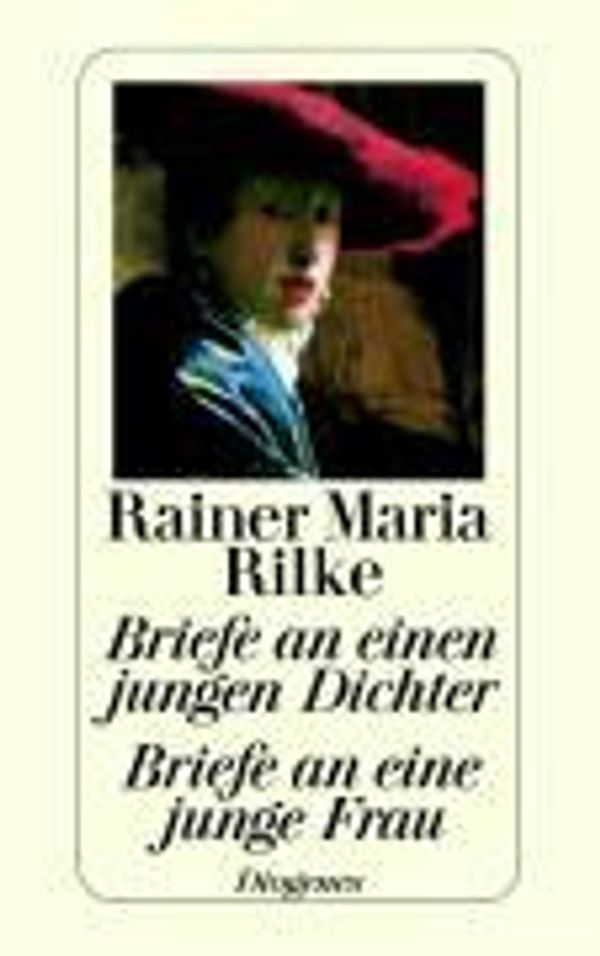
Rainer M. Rilke: Briefe an einen jungen Dichter - Briefe an eine junge Frau, Buch

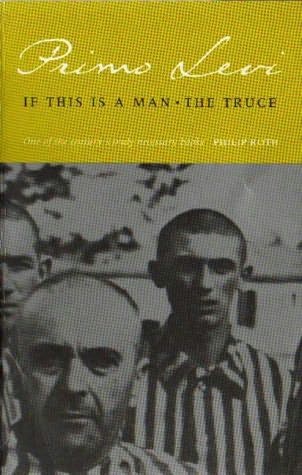
Primo Levi: If This is a Man or Survival in Auschwitz – Se questo è un uomo (1947) Literature and War Readalong June 2011

Survival in Auschwitz is a mostly straightforward narrative, beginning with Primo Levi’s deportation from Turin, Italy, to the concentration camp Auschwitz in Poland in 1943. Levi, then a 25-year-old chemist, spent 10 months in the camp. Even Levi’s most graphic descriptions of the horrors he witnessed and endured there are marked by a restraint and wit that not only gives readers access to his experience, but confronts them with it in stark ethical and emotional terms.

Survival in Auschwitz or If This is a Man was difficult to read and the images it created will haunt me for a long time. Additionally I watched Alain Resnais’ Nuit et Brouillard – Night and Fog which intensified the reading experience.

Primo Levi was part of the Italian resistance when he was captured by Fascist militia in the winter of 1943. After hearing that he is Jewish, the militia hand him over to the Nazis and he is deported to Auschwitz. It’s towards the end of the war and despite Auschwitz being an extermination camp, as they needed many people to work there, they didn’t kill as many as before which is one of the reasons why Levi survived.

Stepping off the train, the people who have been captured, are divided, sometimes arbitrarily, sometimes depending on their strength and fitness. Those who are sent to another direction than Primo Levi will take a shower and we all know what that means. The others who are kept alive, have to strip, wait in the cold for hours and are finally shaved, tattooed and stripped of their old identity. 174517 is the number that is tattooed into Primo Levi’s arm. The numbers, that are like a bar code, tell the other prisoners a lot. They can deduce where the people come from, how long they have been at the Lager. Some numbers are famous, for example the lower numbers of the first ones to arrive from Polish Ghettos. Three years after their arrival some are still alive.

Levi describes their arrival in great detail. He also tells in great detail how everything ends, how after long days of bombardment, and when it becomes obvious that the Russians are not far, the Germans abandon the camp. They leave the weakest and the sick people, like Primo Levi, behind, the others are taken along and probably shot on the way. What a struggle it was for those left behind to survive. There was no more heating and it was icy cold outside, they had no more food, no more blankets, just dirt, debris, corpses and sick and dying people.

Flanked by these two long chapters – the arrival and the end – we get to read a succession of shorter chapters that describe every aspect of the life in a concentration camp. How they are fed, always just a little bit to keep them alive, but never enough to stop the hunger. How they sleep, two men on a small bed of 70cm together. They wake all night because their bladders are weak and the others wake them, it is cold, they have nightmares. He describes what clothes they wear, how dirty and torn they are, the work they do, which is mostly forced labour of the most strenuous kind. They are always cold, hungry and extremely tired. The only time they can recuperate a little bit is when they fall ill. But falling ill is dangerous as well, should they fall too ill, they will be exterminated.

What we read is horrible and shocking but what disturbed me the most is what he wrote about the increasing inhumanity of the prisoners. People turned into monsters under these conditions. They had hardly anything and tried to take advantage, they stole and cheated and did everything for the sake of a tiny little piece of bread, some small advantage over others. Give a man a few privileges under the condition to supervise, punish and abuse others and he will do it. This trait of human nature was cunningly exploited by the Nazi’s. Levi picks a few examples and describes them in more detail than others. It’s amazing what people would do to save themselves.

There are a few men who are kind or manage to stay kind but they are not numerous at all. Levi is lucky, there is one Italian a non-Jewish prisoner, better off than he is, who helps him.

Survival in Auschwitz is impressive for many reasons. It is one of the most precious and detailed testimonies and so well written. One can really understand what it must have been like.

I have written in the introductory post that my edition is French. At the end of the book is an annex of 25 pages in which Primo Levi answers eight questions. These are questions he was often asked when he presented the book, in schools or elsewhere. Some of these questions were on my mind as well while I was reading.

I’m just going to pick those that interested me personally the most.

Did Primo Levi go back to Auschwitz after the war? Yes, he did. In the 60s but it left him surprisingly unfazed as most of the barracks he had been in did not exist anymore and large portions of the rest were transformed into a museum. It was very hard for him to see Birkenau, where the crematorium was although he wasn’t there during the war. That part was like he remembered the Lager, mud, dirt, debris.

Why was there no uprising? Levi tried to answer the question as good as he could. When they arrived, they could have done it but as they didn’t know what was going on they didn’t try. Later there were uprisings but always by political prisoners, not by Jews, which is understandable. The Jews were treated far more badly and therefore much weaker and most were not political people, they had no idea how to resist.

Was there a difference between Soviet Gulags and the German Lager? Yes, the Soviets didn’t want to exterminate the prisoners and although they were awful too – forced labour, bad conditions – it wasn’t as brutal.

The last question was by far the most fascinating. Someone asked Levi, who he would be if he hadn’t been in Auschwitz. Of course, he stated, this was a philosophical question and he added, that the only thing he knew for sure was, that without Auschwitz he wouldn’t have become a writer. The experience in the Lager triggered the urge to write. He started to write in Auschwitz and as soon as he was back, wrote this book pretty much in one go. Without Auschwitz he would have stayed a simple chemist.

This last question and some passages in the book seem to indicate how it was possible that Primo Levi survived, why he had the mental force that was needed. He wrote that he always had an interest in human psychology and that he was fascinated to watch the people and what happened around him. This also helped him to still recognize those around him as humans, although they had been stripped of everything.

It’s a difficult and depressing book but I was touched by Levi’s humanity and his voice and I know I will read more of him. A while back I watched Francesco Rosi’s movie La Tregua aka The Truce based on Primo Levi’s novel. It tells the story of his odyssey back home from the Lager to Italy. Primo Levi’s part is played by John Turturro. If you want to get a good feeling for the man Levi, this is a great starting point. It manages to convey how he became a writer. I will certainly read the book.

I’m interested to know what others thought about this book. Was it too hard to read? Did you also think that he managed incredibly well to make us feel and understand what he went through?

Other reviews

Introduction by Danielle (A Work in Progress)

*****

Survival in Auschwitz was the sixth book in the Literature and War Readalong. The next one will be Marguerite Duras’ Hiroshima mon Amour. Discussion starts on Friday July 29, 2011 .

Kat Banyard: The Equality Illusion (2010)

Women apparently have never had it so good. In today’s supposedly post-feminist world, cosmetic surgery is seen as empowering, lap dancing as a sexually liberating career, and the lack of women from boardroom a result of women’s free choices. In The Equality Illusion, campaigner Kat Banyard argues passionately and articulately that feminism continues to be one of the most urgent and relevant social justice campaigns today.

Kat Banyard’s The Equality Illusion: The Truth about Men and Women Today takes an unflinching look at what it means to be a woman today and, due to the fact that Banyard is British, especially in the UK .

Still, whether you are an Afghan woman fighting for girl’s rights of literacy or an American doctor performing late stage abortions, you have one thing in common: you lead a dangerous life and might end up being killed. Both things happened.  The first happened in Afghanistan in 2006, the second in the US in 2009. They illustrate the illusion of equality and show what a global phenomenon it is.

Banyard structured the book like a day in a woman’s life and tied each part to a topic. Getting up – beauty myths, going to work – sexual harassment and the opposite of equal opportunity, coming home – domestic violence and unwanted pregnancies, evening out- lap dancing clubs, porn industry and prostitution… This structure works very well.

The key topics are beauty and looks, equal opportunity at work, poverty, literacy, the sex industry, domestic violence, abuse, relationships and children. Banyard looks at everyday life and how it is lived and not so much at the ideas beneath it all. There is an introdcutory chapter on false assumptions about gender but it is quite short.

To say the least, I was shocked about a lot of the data and statistics and saddened by most of the individual stories. Whoever said that feminism wasn’t needed anymore or that we were by now equal?

Women are to this day among the poorest of the world. In some African countries little girls do not go to school because they are raped on the way. In the UK some girls have bad grades because there is constant sexual harassment at school and all the teachers do is saying “boys will be boys”. In some countries girls are forbidden to learn to write and read.

Humiliating and degrading girls serves to highlight just how masculine boys really are. And so, sexist bullying and sexual harassment are an integral part of daily school life for many girls. (p.67)

What women have to face at work isn’t much better. Cases of all forms of sexual harassment are frequent. Women with children do not have a lot of chances to make a career, especially not, when, as seems to be the case, men do not help enough when it comes to child rearing. Payment is still not equal at all and this stems to a large part from the fact that many jobs performed by women are considered to be less valuable and are paid less.

Legislation can create the illusion that equality has been achieved. But just because it is officially illegal to pay women less than men for equal work, to sack them for being pregnant, or to sexually harass them, it doesn’t mean theses things don’t go on. There is a huge gulf between policy and practice, and much current legislation – particularly around equal pay – lacks real bite. In a society where women still do the majority of unpaid caring, rigid workplace structures and the long-hours culture mean they pay a huge penalty for doing so. (p.101)

There is a trend, especially in the UK to normalize the porn industry. According to the interviews in this book, there is no such thing as “elegant lap dancing clubs”. Sooner or later all the women are harassed and coerced into having sex. Prostitution may be a choice but only because the women have not much to lose. They have often been abused as children, are very poor, have no education or just had no idea what they were getting into. “At work” they face brutality and violence on top of the degrading activity of selling their bodies.

I think the way society has glorified prostitution is very sad. I believe young women all over the world are becoming more curious (about going into prostitution) due to the positive light that is shown on this horrid profession. (p.145)

Domestic violence is extremely wide-spread, rape is on the up and many perpetrators are never convicted and if they are the punishment is ludicrous.

What bothers me personally the most in my personal life are two things. One is something I’m facing at work- there is no such a thing as equal treatment and the other is something I see happen, namely the overwhelming presence of the influence of the porn industry. Porn practices, fashion and looks seem to become normalized to the extent where you can find “sexy” underwear and clothes for little girls at the supermarket.

Compared to all this it may seem futile to debate whether all the pink toys for girls are really an issue or not but when you dig deeper, you just see that it is one of the symptoms of gender inequality. And it’s everywhere.

What I truly liked about the book, is that Kat Banyard offers hope. Her last chapter and the appendix are entirely dedicated to grassroot activism which is extremely important work and she offers a list of resources. She clearly shows how important feminism still is, that you can achieve something if you want to, it doesn’t need to be anything big and that your dedication may inspire others to follow your example. Last but not least she underlines that feminism also needs the contribution of men and they will ultimately also benefit from equality.

l read about this book on Still Life with Books. I’m really glad I read it and would love to hear from anyone who has read this or any of the other new/old publications. My first thought when I saw these new books was “But that has been done before….” Yes, it has, but apparently most of it has been forgotten. And we need books that back up the topics with actual data or the books get dismissed as being outdated.

I hope I might finally get to Cordelia Fine’s Delusions of Gender next.

Literature and War Readalong June 24 2011: If This is A Man aka Se questo è un uomo by Primo Levi

This month is moving very fast and the next readalong is on the 24th already. It might be good to get started if you want to join in.

Primo Levi is a writer that has been on my mind for years. I knew his story, had read about him. I have read other’s accounts of their incarceration in concentration camps. I have read excerpts of Levi’s work but never got around to read his most famous book, the autobiographical account of his incarceration in the extermination camp Auschwitz.

He was on my mind for this and because he committed suicide so late in life. Because he seems to be such a perfect example of survivor’s guilt.

I dreaded to read his account, I know it won’t be cheerful but I always wanted to read it, wanted to explore his life, to understand why he couldn’t live with the guilt of being one of a very few survivors.

Despite the sadness and the horrors he describes there is beauty in his books as he is not only a witness of dreadful times but also an accomplished writer.

Primo Levi’s book is the only nonfiction book in this readalong.

I’m reading the French translation Si c’est un homme.

Siri Hustvedt: The Shaking Woman or A History of My Nerves (2010)

While speaking at a memorial event for her father, the novelist Siri Hustvedt suffered a violent seizure from the neck down. Was it triggered by nerves, emotion – or something else entirely? In this profoundly thought-provoking and revealing book, Hustvedt takes the reader on her journey through psychiatry, philosophy, neuroscience and medical history in search of a diagnosis. Conveying the often frightening mysteries of illness, she illuminates the perenially mysterious connection between mind and body and what we mean by ‘I’

Siri Hustvedt is one of my favourite writers. Whenever she has a new novel out I’m likely to buy and read it. I’m a bit behind as I haven’t read Sorrows of an American and The Summer Without Men yet. Until now I haven’t read any of her essays but was planning on doing it and when I saw The Shaking Woman or The History of my Nerves in a bookshop I bought and read it immediately.

Whether someone likes this book or not depends a lot on the expectations. Many readers where disappointed to find a blend. The Shaking Woman is halfway between essay and memoir, very dense, hardly anecdotal but highly informative and thought-provoking.

“Nerves” is such an interesting term and topic. I recently watched the movie Housewife, 49 based on the diaries that a 49-year-old housewife wrote during WWII. She is  depressed and, as she says, “nervous” or has problems with her “nerves”. I also seem to remember distinctly Mrs Bennett in Pride and Prejudice exclaiming on and on “My poor nerves”. By using the word we may mean quite a lot of things and this is precisely what Siri Hustvedt hints at too.

During a speech for her late father Siri Hustvedt started to shake violently from chin down. She continued to speak and the shaking wasn’t in any way audible, it didn’t affect her capability to speak in any way. She says she didn’t even feel nervous or anxious before the speech. If this had happened only once she might not have felt tempted to undergo so many tests and read such a lot about various topics. But it did happen again and from what I understood still happens to this day.

Everybody with a chronic disease can feel with Siri Hustvedt and her struggle to make sense of what happens. It’s the nature of many chronic diseases that are somewhere on the borderline between physical and psychological to be hard to diagnose and even harder to treat.  These are some of the topics she writes about. But she doesn’t only write about the different tests and treatments she undergoes, she looks for a deeper meaning. What does it mean when you say “I’m ill”? Who is this “I”? What does it mean when you say you are physically ill? Is your mind not part of your body?

Who are we anyway? What do I actually know about myself? My symptom has taken me from the Greeks to the present day, in and out of theories and thoughts that are built on various ways of seeing the world. What is body and what is mind? Is each of us a singular being or a plural one? How do we remember things and how do we forget them? Tracking my pathology turns out to be an adventure in the history of experience and perception.

She thinks for a long time that what she has is a convulsion disorder and therefore we hear a lot about the history of hysteria, its early treatment and what has become of it now. She parallels hysteria and shell-shock and wonders why both terms are now out of fashion.

One of the doctors she consults tells her she has a panic disorder and she also reads a lot about this.

But it wouldn’t be Siri Hustvedt if she stopped there. She goes far beyond her illness and so, in the end, this book is less about a symptom than about the mind as a whole. She also writes at length about migraine and different ways of perceiving the world. About memory and imagination.

When I read a novel, I see it, and later, I remember the images I invented for the book. Some of these images are borrowed from intimate places in my own life. Others, I suspect, are taken from movies or pictures in books and paintings I’ve seen.

She also writes about mysticism, Merleau-Ponty, Simone de Beauvoir, Freud and mixes all kind of views and theories.

At the end she has explored numerous things but still doesn’t know what she really has.

The Shaking Woman describes one woman’s intellectual journey that starts with a symptom and ends with an exploration of all sorts of disciplines, theories and views on consciousness. It seems as if the inconspicuous sounding word “nerves” was a little door that Hustvedt opened to enter a huge, huge landscape. I’m glad I took the journey with her.

Susan Hill: Howards End is on the Landing (2009) A Bookish Memoir

Early one autumn afternoon in pursuit of an elusive book on her shelves, Susan Hill encountered dozens of others that she had never read, or forgotten she owned, or wanted to read for a second time. The discovery inspired her to embark on a year-long voyage through her books, forsaking new purchases in order to get to know her own collection again. A book which is left on a shelf for a decade is a dead thing, but it is also a chrysalis, packed with the potential to burst into new life. Wandering through her house that day, Hill’s eyes were opened to how much of that life was stored in her home, neglected for years. Howard’s End is on the Landing charts the journey of one of the nation’s most accomplished authors as she revisits the conversations, libraries and bookshelves of the past that have informed a lifetime of reading and writing.

I can’t tell you exactly how long it took to read this book. An evening? Two? Certainly not longer. I devoured it. What is more fascinating to read than a bookish memoir? And written by a writer. On top of that Howards End is on the Landing also contains some information on Strange Meeting, the first book I chose for my Literature and War Readalong.

Shouldn’t we all stop buying books from time to time and first read what is at hand, on our own shelves? This is exactly what Susan Hill did for a whole year. During this year she discovered and rediscovered a lot of books and writers, was reminded of many memories that are linked to books and writing and chose her own personal canon of 40 books.

It is an extremely interesting and entertaining and at times frankly puzzling book. Susan Hill doesn’t read Canadian or Australian literature. Why not? Too foreign. She thinks Joyce, Proust and a few others are unreadable. Are they? There were bits and pieces of information like this that did surprise me. But she is honest. She isn’t pretending for one second. It is obvious that this is the book of a reader, it is nothing like Francine Prose’s outstanding Reading Like a Writer, it is only about personal choices and tastes. There are whole chapters dedicated to her favourite female writers: Barbara Pym, Anita Brookner, Virginia Woolf, Penelope Fitzgerald and Iris Murdoch.  She has met quite many of the writers she mentions and tells anecdotes that are interesting too.

One whole chapter is dedicated to diaries, another one to picture books, one to things that fall out of books, another one is dedicated to annotations in books and  she muses over short stories (not her favourite form).

Sebald gets a whole chapter which surprised me after what she said about Proust and Joyce and others. I’m glad I am already reading his Austerlitz or I would have to rush and get one of his books. She really makes him sound appealing. I agree with her, there is no writer like Sebald.

His subject matter is extraordinary, unpredictable and odd – he seems to collect the unusual and be interested in the outlandish, but, through his eyes, even the ordinary and prosaic becomes somehow strange. Everything he sees, everywhere he goes, every person he meets, all are filtered through some curious lens of his own devising.

Something that I liked is her evaluating some of the classics and giving advice with which one of their novels one should start. One should read Hardy’s The Mayor of Casterbridge and not start with Tess of the d’Urbervilles or Jude the Obscure. Sounds sensible.

If she had two choose among the ghost stories she knows, she would choose M.R. James’ O Whistle and I’ll Come to You and Edith Wharton’s  Mr Jones. Given that it’s a genre in which she excels, I take her word for it.

When it comes to short stories in general she likes John McGahern, William Trevor and Katherine Mansfield.

Travel books are also covered and here it is Patrick Leigh Fermor who gets a special mention. He is also mentioned in her chapter on editing books, something she has also been doing for quite a while. Fermor is one of her authors.

One chapter I enjoyed particularly was the one on diaries. I would have liked to start all the books mentioned right away and have never heard of some the authors she loves to read and reread. Namely the Reverend Francis Kilvert and Frances Partridge. But she also loves Virginia Woolf’s A Writer’s Diary and, surprisingly (as she doesn’t like his novels at all), The Journal of Sir Walter Scott.

All in all I highly recommend this book. It’s very colloquial and reading it feels like talking to a good friend about the books and stories he or she likes. I found a lot of books I’m looking forward to reading now, especially those that are waiting on my shelves. In this sense it is an inspiring book that put me in the mood to concentrate more on the books I already have and not acquire so many news ones.

Out of the list of 40 novels she indicates, I chose to reproduce a list of the novels written by women that she thinks to be among the best. I chose only the women because a) they are not as numerous and b) I would like to read more female authors this year and c) you should still have a reason to read her memoir.

I read and reviewed Carson McCullers and read To the Lighthouse as I have read all the novels by Virginia Woolf (except Voyage Out). The Rector’s Daughter and The Blue Flower are those I am most curious about.

Which ones of these novels do you know and like?

The Ballad of the Sad Café by Carson McCullers

The Last September by Elizabeth Bowen

Middlemarch by George Eliott

The Blue Flower by Penelope Fitzgerald

To the Lightouse by Virginia Woolf

The House of Mirth by Edith Wharton

The Rector’s Daughter by F.M Mayor

The Pursuit of Love by Nancy Mitford

The Bell by Iris Murdoch

Family and Friends by Anita Brookner

The Finn Family Moomintroll by Tove Jansson

David Gilmour: The Film Club (2007) A Touching Memoir of a Father and His Teenage Son Watching Their Way Through Cinema History

It was an unconventional deal: Jesse could leave school, sleep all day, not work, not pay rent – but he had to watch three films a week … of his father’s choosing. Week by week, side by side, father and son watch the world’s best (and occasionally worst) films – from True Romance to Chungking Express, A Hard Day’s Night to Rosemary’s Baby, Showgirls to La Dolce Vita. The films get them talking – about girls, music, heartbreak, work, drugs, money, love, friendship – and they open doors to a young man’s interior life at a time when parents are normally shut out. Gradually, the son develops from a chaotic teenager into a self-assured young adult, but as the film club moves towards its bittersweet and inevitable conclusion, Jesse makes a decision which surprises even his father… The Film Club is a book that goes straight to the heart. Honest, unsparing and poignant, it is the true story of one man’s attempt to chart a course for his beloved son’s rocky passage into adulthood.

David Gilmour’s The Film Club was one of the few books that I bought following a recommendation in a book shop. You know those corners where the staff piles up the books they read during the year and liked a lot? Well, this was on one of them. It is not only a memoir – the non fiction genre I like best – but a book that speaks extensively about movies. It isn’t a literary masterpiece, it is no The Liar’s Club or The Glass Castle, but it is very, very entertaining and quite touching. Gilmour is very outspoken when it comes to feelings. He writes as easily about joy as about anxieties.

Picking movies for people is a risky business. In a way it is as revealing as writing someone a letter. It shows how you think, it shows what moves you, sometimes it can even show how you think the world sees you.

When Gilmour’s teenage son starts to show an alarming disinterest in school, Gilmour decides to let him leave school under one condition, namely watching three movies per week with his father. Three movies that his father chooses, of course. It’s an experiment and when they start Gilmour is as uncertain about the outcome as the reader.

Gilmour, a novelist and journalist, has come to a major turning point in his own life. He is out of work and desperately trying to get little TV assignments here and there. Being out of work, panics him, on the other hand it gives him a lot of time to spend with his son. Knowing very well that the boy isn’t going to stay with him forever he cherishes every moment. No wonder the book is full of nostalgia and has a very bitter-sweet tone.

I return to old movies not just to watch them again but in the hope that I’ll feel the way I did when I first saw them; not just about movies either, but about everything

During the three years that follow Gilmour’s idea of letting his son drop out of school, he shows him the greatest of filmmaking there is. They watch movies by periods, by schools, by themes, by countries. I think he lists at least some 80 movies including some from the French nouvelle vague, the New Hollywood movement, Japanese film making, Western, Horror, Comedies… The first few choices are far from succesful as Jesse, Gilmour’s son, finds them unbearably boring. He has no clue how to watch a French movie for example, doesn’t know which are crucial scenes to look out for in a Hitchcock film. Normally before showing the movie to his son, Gilmour will give some background information, a lot of it was very enlightening. He explains to him why certain actors are better than others, that the best of them are even great when they don’t even say a word, he shows him special camera angles, indicates pieces of dialogue. It takes a year until Jesse starts to see and enjoy the movies they are watching and develops a taste of his own. He loves Chungking Express.

True Romance has a eight- or nine minute encounter between Dennis Hopper and Christopher Walken that may well be, for me, the best stand-alone scene in film. (….) Christopher Walken announcing “I am the Antichrist”.

But this book isn’t only about movies. The movies also serve as basis for discussions about everything. And life goes on. Gilmour struggles to find a job, Jesse falls in love twice and both times end in disaster. The second heart-break is so intense, you have to be really hardened to not be reminded of something similar in your own life.

Showgirls,” I said to Jesse, “is something of a cinematic oddity, a guilty pleasure without a single good performance.”

It is obvious that the experiment described in the book helps them both. Jesse finds perspective. After living as a rap musician for a while, he takes a completely new direction and David Gilmour writes this book. The relationship between these two is unique. So much honesty, trust and friendship between a father and a son is wonderful. Not every parent has the chance to spend as much time with his kid, that is for sure, but every parent has certainly spent enchanted moments with his/her child and will be touched by this story. For us film lovers it’s a great way to remind us how many movies there are still to discover, how many to watch again and in how many different ways we can watch them.

Here’s a video in which they talk about the book.

David and Jesse Gilmour talk about The Film Club