
This week is genre week and I knew from the beginning that I wanted to write about poems. I’ve read two collections that came out recently in English. One was written by Lutz Seiler, the other one by Uljana Wolf.
To be honest, I find it extremely difficult to review poetry collections and will need more time to do so.
In the meantime, I thought I’d share two older poems with you. I like to learn poems by heart and these are two of my favourites. They are perfect choices for the autumn season. Both poems are mournful and rich in imagery.
I hope you’ll like them.
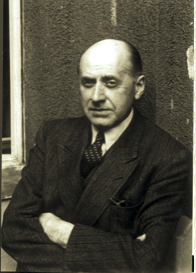
Gottfried Benn – Asters/Astern (1935)
Asters
Asters—sweltering days
old adjuration/curse,
the gods hold the balance
for an uncertain hour.
Once more the golden flocks
of heaven, the light, the trim—
what is the ancient process
hatching under its dying wings?
Once more the yearned-for,
the intoxication, the rose of you—
summer leaned in the doorway
watching the swallows—
one more presentiment
where certainty is not hard to come by:
wing tips brush the face of the waters,
swallows sip speed and night.
(translated by Michael Hofmann)
Astern
Astern – schwälende Tage,
alte Beschwörung, Bann,
die Götter halten die Waage
eine zögernde Stunde an.
Noch einmal die goldenen Herden,
der Himmel, das Licht, der Flor,
was brütet das alte Werden
unter den sterbenden Flügeln vor?
Noch einmal das Ersehnte,
den Rausch, der Rosen Du –
der Sommer stand und lehnte
und sah den Schwalben zu,
Noch einmal ein Vermuten,
wo längst Gewißheit wacht:
Die Schwalben streifen die Fluten
Und trinken Fahrt und Nacht.
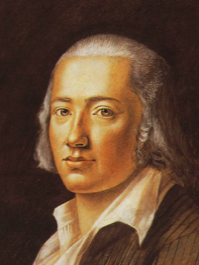
Friedrich Hölderlin – Hälfte des Lebens/Half of Life (1804)
Mit gelben Birnen hänget
Und voll mit wilden Rosen
Das Land in den See,
Ihr holden Schwäne,
Und trunken von Küssen
Tunkt ihr das Haupt
Ins heilignüchterne Wasser.
Weh mir, wo nehm ich, wenn
Es Winter ist, die Blumen, und wo
Den Sonnenschein,
Und Schatten der Erde?
Die Mauern stehn
Sprachlos und kalt, im Winde
Klirren die Fahnen.
Half of Life
With its yellow pears
And wild roses everywhere
The shore hangs into the lake,
O gracious swans,
And drunk with kisses
You dip your heads
In the sobering holy water.
Ah, where will I find
Flowers, come winter,
And where the sunshine
And shade of the earth ?
Walls stand cold
And speechless, in the wind
The wheathervanes creak.
 Beauty is a Sleeping Cat
That’s my favourite Hölderlin poem and I’ve been reciting it every autumn without fail since I was about 12. Clearly, I was always an ’emo’ 😂😂
I have a very Goth streak – so there you go. Kindred spirits 😂
Thank you for sharing these, they’re lovely!
My pleasure. Aren’t they just perfect for these days?
That Hölderlin poem reads rather differently (but perhaps closer to the original structurally) in the Michael Hamburger translation I have.
I understand how difficult it can be to write about poetry as a non-poet as I always worry I am not in the necessary arcane understanding. But I prefer to review translations where I am reading through the medium of an attentive translator (and trusting their approach) than reviewing English language poetry where I feel like I am responding to the form in its naked state, if that makes sense.
It’s not a bad translation but I would have changed a few things.
I know exactly what you mean and that is one of the problems I have because I read it in the original German and focus a lot on the language. In the case of Seiler’s Pitch & Glitch I’d almost write about entirely different poems. The way he uses language has layers upon layers. A lot was lost in the translation.
Translating poetry is very different to translating prose fiction as the translator is often faced with two very different approaches – and whichever is chosen, someone will be unhappy 😉
I couldn’t agree more. That’s why I think it’s entirely useful to have different translations of the same poems.
This is also where a translator’s note is helpful, to appreciate the decisions made/approach taken.
Absolutely. But I don’t really see it all that often.
It is, perhaps, more common with translations of living poets (who may have considerable contact with their translators), first appearances in English, or poets like Trakl who have been translated so often from so many angles with attendant controversies.
Wonderful! Thank you for sharing Caroline.
You’re welcome. I’m glad you like them.
Absolutely gorgeous poems! Thanks so much for sharing.
My pleasure. I’m glad you liked them.