
On Iris Hanika’s Tanzen auf Beton (Dancing on Concrete) (2013)

Tanzen auf Beton

I avoid reviewing books which haven’t been translated and this led to the somewhat more problematic development of my not reading them anymore. Since some of you have commented that you’d be interested anyway I will  post a bit more frequently on not (yet) translated books in the future.

Iris Hanika is a German writer who has received several important prizes for her books. So far none has been translated. I bought one of her novels a while ago but when a friend told me about  Tanzen auf Beton (Dancing on Concrete), which has just been published in Germany, I thought, I’d like to read it. As much as I like British and American novels, occasionally I want something more edgy, less polished, raw even. Hanika’s fragmented “novel” was exactly that: raw and edgy.

It already starts with the subtitle which calls this book “Another report from the endless analysis”. Still, the book is called “novel”. After having finished it, I’m not sure why. Easier to sell?

What is edgy and raw in the book is not only the writing and the fact that it is fragmented but that Hanika presents herself naked, with all her vulnerabilities. She analyses the total failure of an affair which lasted years, decades even. Despite the fact that being with this man turned her into a moron (as she thinks) who wasn’t able to talk, made her dependent and begging for sex which wasn’t even good or satisfying, she couldn’t stop seeing him.

This whole misery is almost spat out at first, not like a confession, more like an attempt at putting into words what happened and in doing so making sense. It’s an attempt that took a long time and would never have been achieved without the help of psychoanalysis. As Hanika admits freely in interviews, she’d like to help people see that psychoanalysis can help, it can help uncover hidden truths and move towards a being less neurotic, healthier. She has even written an introduction to psychoanalysis together with her analyst.

I personally don’t believe psychoanalysis is that useful, (psychotherapy certainly is but there are many approaches). A so-called talking cure, is not for everyone. Hanika tries to show that for her this was a good approach. (Seeing the outcome, I’m not entirely convinced this is true).

What was interesting was that she did not only find meaning and a new way to live through psychoanalysis but also through writing, travelling, Russian literature and heavy metal. A peculiar mix but when she writes about these things, how much joy for example a trip through Russia brings, how much she loves to read the Russian authors, the joy is infectious. It makes you want to grab all of your Russian novels and book a trip to St Petersburg. (Her praise of Ministry and other metal bands was somewhat less infectious).

What was it that turned Hanika into a woman who needs a man, feels incomplete without one but is at the same time not capable of having a real relationship and always ends up in degrading affairs with married men? Yes, a lack of self-esteem, but that does come from somewhere. Since it’s not that likely this book will be translated I can allow myself to write spoilers and will tell you what was uncovered. First she came from a family in which women were not valued and then, at the age of 13, she had the traumatizing experience of being almost raped. It’s interesting that her therapist isn’t accepting this as sole reason but digs deeper and what is truly shocking is that nobody spoke with the young Iris about what happened to her. Nobody tried to find out whether the man was caught. It was a topic that was never mentioned. As if what had happened to her had not been important as she was not important. As she correctly writes – the shame is for the victims. Not only is this hurtful but it made her feel utterly alone.

All this is told in fragments; bits of storytelling follow small essays, short observations follow longer reflections.

Happiness, love, sex, getting older, music, psychoanalysis, Russia, violence against women…. The topics are endless, the way she writes is fresh and new, the tone is sometimes humorous, sometimes sad, often laconic and surprising. Quite refreshing to be honest but I can’t say I really liked it. I felt pity for her, for the way she over-analyzes everything but then again, I liked the way she could be so enthusiastic. I certainly wish her well and think it was a courageous book to write. The only thing I found a bit astonishing was that she never thought of the guy’s wife. (I am tempted to be sarcastic here – psychoanalysis, in this case, seems to have turned someone into a person who feels better but not necessarily a better person.)

There are a lot of reviews from critics available already, and they are all raving. I’m going to read her novel Treffen sich zwei (When Two Meet) soon. I’d like to see how she writes when she writes a “real” novel. Treffen sich zwei has been translated into French (Une fois deux) and Spanish (Un encuentro de dos), her prize-winning novel Das Eigentliche was translated into Italian (L’essenziale) and has a good chance of being translated into English as well as it received a prestigious prize.

Literature and War Readalong Februay 28 2013: The Flowers of War – Jingling Shisan Chai by Geling Yan

The Flowers of War

It has been a while since I’ve last read a Chinese novel. Over the years it has become a literature I have learned to appreciate a lot and it was about time to return to it. Geling Yan is a well-known novelist in China. She has written short stories, scripts, essays and novels. Many of her books have been made into movies. The Flowers of War – Jingling Shisan Chai is no exception. The Flowers of War is based on one of the most horrible events which have taken place during war-time – the notorious Nanking/Nanjing Massacre in which Japanese troops slaughtered Chinese civilians. It has been estimated that 250.000 to 300.000 people have been killed. It is sometimes also called The Rape of Nanking. The story of this book is narrated from the point of view of Shujuan a 13 year-old schoolgirl. Together with a group of other girls she hides in the compound of an American church.

Here are the first sentences

Shujuan woke with a start. The next thing she knew, she was standing beside her bed. At first she thought it was the absence of gunfire that had woken her. The artillery that had been thundering for days had suddenly fallen silent.

For those who can’t get the book or do prefer to watch the movie, feel free to review the film starring Christian Bale.

http://www.youtube.com/watch?v=MV5rw3oTJMw

*******

The discussion starts on Thursday, 28 February 2013.

Further information on the Literature and War Readalong 2013, including all the book blurbs, can be found here.

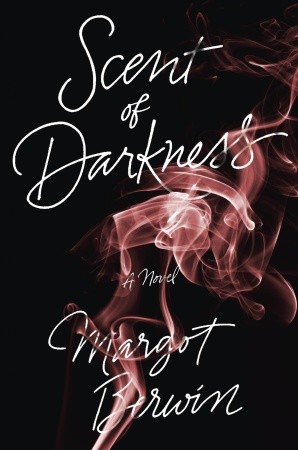
Margot Berwin: Scent of Darkness (2013)

Scent-of-Darkness-by-Margot-Berwin

In her best-selling debut, Hothouse Flower and the Nine Plants of Desire, Margot Berwin brought us to the rain forests of Mexico—to a land of shamans, spirit animals, and snake charmers—in the search for nine rare and valuable plants. Now, with her hotly anticipated second novel, Berwin takes us somewhere darker: deep into the bayous of Louisiana, to a world of fortune-tellers, soothsayers, and potent elixirs. Scent of Darkness is a magical, seductive story about the power of scent, and about what happens when a perfume renders a young woman irresistible.

Margot Berwin’s novel Scent of Darkness is her second book. It just came out in the US and I’m glad Random House offered me a copy as I hadn’t even heard of the author before and the description sounded extremely appealing. Her first novel Hothouse Flower and the Nine Plants of Desire was a huge success and has been translated into 19 languages. I certainly want to read this now as well. Scent of Darkness reminded me a bit of  Sarah Addison Allen’s Garden Spells.

Scent of Darkness is pure escapism, a very sensual book that evokes the magic of perfumes and scents. I really like novels about perfumes but that wouldn’t have made me love the book. What I loved is that it is set in New Orleans. I’m aware that it’s the New Orleans tourists have in mind, and maybe quite different from the real city which is also one – if not the one – with the highest crime rate in the US. I guess there is more to New Orleans than Victorian houses with lace-patterned ironwork balconies, the French Quarter, cemeteries, hoodoo, bayous and Marie Laveau. But that’s the New Orleans that my imagination craves for and which has been captured so well by Anne Rice. So I couldn’t help loving the descriptions in Scent of Darkness, no matter how clichéd they may be.

Evangeline grew up with her mother in New York. They get along but are not close. She is close to her grand-mother Louise who is originally from Louisiana. Louise is an aromata, a master of scent-making and perfumer. At the beginning of the novel, Louise dies and leaves Evangeline her house and a small vial with a special scent, created just for her. Only it comes with a warning. If Evangeline opens the vial, her life will change completely.

Of course she opens it and it does not only alter her life but transforms the girl as well. Evangeline is an average looking girl but as soon as she wears the scent, everyone is attracted to her. Men, women and animals, follow her and want a piece of her. That’s very unsettling but also wonderful because the newly acquired scent helps her to seduce the good-looking Gabriel. She later follows him to his hometown New Orleans.

In New Orleans it becomes obvious that she has to find out what exactly was in the scent Louise has created for her and why she did it. As soon as they are in New Orleans, things get out of hand. Fortune-tellers predict tragedy, a talentless painter want’s to incorporate her into his paintings and all sorts of other things happen.

I loved two-thirds of the book but towards the end, I must say, she lost me to some extent, because it got quite weird and a bit icky. Berwin’s first novel had 400 pages and this one has only 220. My assumption is that she had to rush this book and that’s unfortunate because it had a lot more potential. I still loved it, I just didn’t find the ending and the secret behind the scent satisfying or logical but that’s maybe also a matter of personal taste.

Scent of Darkness is more than just a book about scent, it is also an exploration of beauty and attraction. Evangeline is not a beautiful woman but the scent makes her beautiful and attractive. It makes others long and yearn for her. All of a sudden, through her grandmother’s perfume, she possesses what all the other characters in the novel have in abundance – great attractiveness. She comes to hate her newly acquired desirability because she feels, people don’t lover her for herself. On the other hand, does she love the men around her for themselves, when what attracted her in the first place is their physical beauty?

If you like very colorful, evocative and descriptive books, magical realism, New Orleans, scents and a great atmosphere, then this is for you. Another great element were some stunning sentences, full of wisdom that made me think more than once “Wow, yes, that’s true”. Unfortunately I was so engrossed in the descriptions of New Orleans, I forgot to take notes or highlight any passages.

Has anyone read Hothouse Flower?

Thanks again to Random House for the review copy.