Daniel Vigne’s Le Retour de Martin Guerre – The Return of Martin Guerre (1982)

I watched a lot of movies with Gérard Depardieu. Not always because I wanted to, often because he was automatically cast in each and every bigger French production. Still, there are a few I haven’t seen yet and The Return of Martin Guerre or Le Retour de MartinGuerre was one of them. I thought it might be a good choice for Book Bath‘s and Thyme for Tea‘s event Paris In July and so I watched it last week.

There are a lot of things I liked about this movie that is based on a true story that happened in France in the 16th century. The cinematography is stunning, the music by Michel Portal is really great, Depardieu is good and the lovely Nathalie Baye is wonderful. Last but not least I found out when watching this that the US movie Sommersby with Richard Gere and Jodie Foster is a remake of The Return of Martin Guerre.

In a medieval little village in France two young people get married. One couldn’t say that they get along well. The boy, Martin Guerre, is not exactly a good or tender husband, on the very contrary. It seems that married life is just too much for him. One day he runs off and doesn’t come back anymore.

Nine years later, a grown man arrives in the village and is enthusiastically greeted as Martin Guerre by everyone. Finally the runaway has returned to wife and family. Everybody recognizes him, welcomes him and he knows them all as well. He knows each and every little detail of their past life. Still they are aware that he has changed a lot. He tells them that he has been at war these past nine years and that he has seen a lot of awful things. Maybe war has made him a better man? He is joyful, easy-going and very gentle with his wife. The relationship they have is completely different from what they had before. They enjoy each other’s company and are very much in love. Others are affected by this happiness as well. It seems that the return of Martin Guerre changed everybody’s life for the better. Soon there will be a second child and things would be perfect if Martin did not decide to ask his uncle for money.

From this moment on, things change drastically. People start to say that he is not Martin Guerre. He is dragged into court but declared innocent. As soon as he is out there are new accusations and new proofs. The movie turns into a court room drama. He is acquitted again and accused once more.

Knowing that this is a true story and seeing the outcome is quite heartbreaking. It is also shown how great the influence of the Church is and how superstitions arise. At one point there is talk of the devil and of black magic. People really do not know whether it is him or not, everybody is confused.

Vigne’s movie is highly watchable and I liked especially how the music, the pictures and the story go hand in hand and complete each other.

I’m sorry for this blurred trailer. On top of that I couldn’t find the one with the English subtitles but the movie is available with English subtitles. At least you can hear a bit of Portal’s music.


Frank Herbert Readalong: Dune (1965) Book I Dune

It’s time for the first Dune readalong post. The readalong is hosted by Carl V from Stainless Steel Droppings, Kailana from The Written World and The Little Red Reviewer.

It’s a bit different from other readalongs I have participated in so far, as we are all sent questions to answer. I like this different approach and will dedicate the whole post to those questions and not summarize anything at all. I think some of the answers should suffice to help potential readers decide whether or not they want to embark on the Dune journey as well. This week’s questions have been sent by Carl V. Don’t forget to head over to his site and check out the links for the answers of the others.

1.  What, if any, preconceived ideas did you have before you started reading Dune and how has the first section measured up to those preconceptions?

I will keep this answer quite short as part of this question will be answered when I answer question 5.

I had not a lot of preconceived ideas regarding the story. I knew that it was called an epic but I had never read a summary and so pretty much the whole story came as a surprise. I had preconceived ideas regarding the form. I had read that it was compared to Lord of the Rings, I never thought this meant that the story was similar but that I would find engaging, fluent writing. That is not what Dune is like at all. I found it very unwieldy so far.

2.  What did you think about the plot device of the early revelation that Yueh was to be the traitor?

This type of revelation doesn’t always work well but here it added to the feeling of threat. Knowing more than the main protagonists made me feel closer to them. A bit as if you knew friends are in danger and you wanted to warn them. Despite the fact that we know he is a traitor, we do not know everything yet and the outcome of the whole episode remains surprising.

3.  What was your favorite part of this first section?  Which character(s) do you find most interesting and why?

I really liked the description of the planet and the over-importance of water. I couldn’t help and find it prophetic. When Herbert wrote this, our planet wasn’t as polluted as it is now and, if we believe what certain experts say, the importance of water might sooner look like it is described in Dune, than we would like.

Another uncanny element is the use of Arabic sounding or genuinely Arabic names and concepts. There is talk of a jihad and the emperor’s name is Shaddam…

The scene in the wet-plant conservatory was one of my favourite ones. I liked the description a lot and also the way lady Jessica finds a hidden message. It is one of the rare scenes in the book with hardly any dialogue (see answer 5).

I find all the Bene Gesserit characters extremely interesting. The mental training they undergo, how they master themselves and others is fascinating. The Lady Jessica is a favourite but I also like Paul, her son, a great deal.

I also liked the idea of “spice” a lot. Something that enlightens and can make you dependent at the same time.

There were a few almost scary elements which I appreciated as well. Those sandworms could also be used in a horror story to great effect.

4.  Did the revelation about the Harkonnen surprise you? Why or why not? Thoughts.

It did surprise me to a certain extent but I wasn’t sufficiently interested in that part. The conspiracy, the treachery, that was not what interested me the most. I liked other elements better. I am not often reading for suspense, I like well-drawn characters, descriptions, settings and scenes.

5.  Finally, please share some overall thoughts on this first section of the book.  Are you finding it difficult to follow? Easy to understand? Engaging? Boring?  Just share what you are thinking thus far.

The writing in Dune is as dry as the planet Arrakis. I did find the beginning extremely difficult to follow because of the concepts and words that you had to look up constantly in the glossary at the back of the book. It gets easier after a few pages.

The biggest problem I had was the story telling itself. I’m sorry to have to say this but I think Frank Herbert cannot write. I don’t think “show but don’t tell” is something you have to follow religiously when writing literary fiction but it is needed in genre fiction. Dune is probably the most extreme example of genre fiction to disregard this advice. This is all tell and hardly any show. The first part consist to 80% of dialogue. And even the thoughts are rendered in “direct speech mode”. Whenever he described something, I came up for air and also enjoyed parts of it. More scenes and less dialogue would have made me like it more.

I am very honestly, disappointed in this book so far. If the story telling was half as good as the concepts, ideas and characters, this could have been terrific. I will still go on reading, hoping for a change of style in part II. So far… It’s a bit of a chore.

What Ever Happened to Josipovici’s Editor? or How the Disenchantment of the World Became the Divestment of the World

Datei:Klee, Angelus novus.png

A monolingual proofreader or editor isn’t always the best solution as the example of What Ever Happened to Modernism? nicely illustrates.

Let me put one thing straight right away, I have, so far, only read 16 pages of Josipovici’s What Ever Happened to Modernism? and had to frown already more than once. I think that someone who, in the early pages, mentions fellow critic’s books, labelling them as “dreadful”, should be a bit more careful when exposing his own train of thought and how he chooses to underline his theory.

To quote or not to quote? is not the key question. Crucial is how you do it.  In the original language and offering a translation? Or the translation only?

I did not understand why Josipovici does in some cases quote the English translation followed by the original or in other cases followed only by bits of the original and sometimes only the translation. Let’s presume he has his reasons, that I didn’t get and let’s leave it at that but when I come upon a key expression like Max Weber’s “disenchantment of the world” and find the German original expression – in brackets – rendered as Die Entziehung der Welt and not, as it should say correctly, Die Entzauberung der Welt (p. 11), then something must have gone really wrong. There are only two explanations. Josipovicis’ editor doesn’t speak German or he himself doesn’t speak German. If the latter is the case, I have a few additional problems.

How could that happen? How could die “Entzauberung” become die “Entziehung”? The first means “disenchantment” and is the correct term used by Max Weber while the other signifies “divestment”. I think, this is embarrassing. Maybe Josipovici’s book is not dreadful but his German sure is. Entziehung isn’t even a proper noun but a noun that has been built by adding the affix -ung to a verb (entziehen – Entziehung), unlike Entzug. “Entziehen” also signifies “to withdraw”.

Additionally I’m still thinking about his definition of modernism. Modernism, as he writes, should neither be seen as a period nor a style but rather as art that makes its production one of its key themes (yes, I do simplify), self-conscious art that reflects itself, so-called metafiction.  I thought that was the definition of postmodernism. To make something clear here, the term metafiction isn’t used (he is talking about art in general anyway), Josipovici is very accessible, not a complicated writer at all. He is neither a Blanchot, Derrida nor a Barthes. No, the way he writes is very Anglo-Saxon. Funny that.

To be honest, I am,  among other things, a linguist with a fondness of Freudian slips and that is why I will finish Josipovici’s book. I appreciate things that make me laugh.

On a more generous note, I would say that, early on, Josipovici has, unconsciously and through a lapse, revealed what he really wanted to write about which isn’t the disenchantment but the divestment of the world. Or rather the divestment of literature. I do agree with his subconscious. I think, literature doesn’t suffer so much from being too modernist or not modernist enough but because it buys too much into consumerism.

By the way, I’m not a native English speaker and I didn’t have a proofreader. Mistakes and lapses are entirely my own.

Datei:Ohne Titel, um 1892.jpg

Sarah Gardner Borden: Games to Play After Dark (2011)

An unsparingly honest portrait of one marriage’s devolution into train wreck. Borden covers it all—from the resentments that build over childcare to the sex that’s no longer fun. Reading Games to Play After Dark is as intimate an experience as reading someone’s diary.

It is hard to believe that Games to Play After Dark is Sarah Gardner Borden’s first novel. The topic, a marriage that falls apart, may not be the most original, the young mother who tries to combine the demands of her children and her husband and her personal needs, isn’t new but how she describes it, the details she evokes, the way she looks at what has been swept under the carpet and the bed and what is hidden in the closets is extremely well done.

There have been a few similar books in recent years. Rebecca Miller’s The Private Lives of Pippa Lee, Rachel Cusk’s Arlington Park and Ayelet Waldman’s Love and Other Impossible Pursuits (see my review) are a few I have read. Many recent thrillers and crime novels also explore marriage and family life. One of the distiguishing traits of this novel is that Borden looks at sexuality in a detailed way and handles the topic explicitly. The games that are played after dark, are indeed of specifically sexual nature. More than any other recent writer of domestic disasters, Borden shows human beings as sexual beings, initiating with the discovery of sexuality by young people and leading to the sexuality of adults in- and outside of marriage.

Kate and Colin meet at a party, fall in love and get married soon after. The first years are intense and enjoyable but the moment the sexual attraction diminishes, things get complicated.

She became finicky about sex, wanting it only occasionally. Her body began to feel like a recently tidied room that she didn’t want Colin to mess up.

After the first child the marriage gets really awry. Kate has a hard time to cope and Colin, who is on a career path, doesn’t help much. The discussions and disputes that follow are some of the best bits of writing in this novel. A second child seems a good idea at first, after all, they want to be a “real family” and that is, according to Kate and their friends, only possible with a second child. After the second child is born, Kate doesn’t want any physical intimacy from Colin anymore. Her need of tenderness and proximity is covered by her daughters. She loves to lie in bed with them, feel their warm bodies.

But there is also decidedly more house work with a second child and the second daughter, on top of that, is a horrible brat. A child from hell. Scenes like the one below are all too frequent.

How much longer could she continue, could she stand it: the serving, the directing, the resulting absurd sense of abuse, the constant tiny negotiations of space? On the landing as Kate dropped the stuff and bent to collect her keys from her purse, Robin kicked her in the behind.

The older the girls get, the uglier the marriage turns. Although they try hard, they go to see a therapist, they try “date nights” and “family dinner”, things always go wrong. Kate and Colin fight constantly and more than once they both display violent behaviour. It is obvious Kate cannot take it much longer. She desperately tries to find a way out and the first path she chooses, is the well-known one of the affair. This is the only bad story line Borden told, not so much because she chose to have Kate start an affair (after all this seems more than common) but because it doesn’t seem plausible. In any case, the affair doesn’t last very long, and Kate will have to find another way out.

It’s a well-told book, I loved reading it and was captivated. I also appreciated that Borden seems to say, that not every marriage has to turn out like this, having children doesn’t need to be like this but there are combinations of people and circumstances that seem doomed from the start. Kate’s character and her past prepared the ground for this disastrous marriage. And Kate, when thinking back and remembering the beginning when they just got married wonders:

She had no idea if at that point things could have gone one way or the other, or if only one way, this way, had been available.

It is obvious that it isn’t only Colin’s fault, things go wrong, although, during their disputes, we think it is. The reasons lie much deeper and we see some of it in an early passage.

She could see that doing what he wanted was compelling for both of them, and that to interfere would interfere with the sexual chemistry that served as foundation for their bond. “Okay,” she said. “I don’t care where I am, ” she said, “so long as we’re together.” But later that night, doubt moved in her.

Kate doesn’t know herself and has not learned to analyze her feelings which is a bad foundation for a marriage. She had a complicated relationship with her father, which we get to know in flashbacks all through the novel.

Sexual attraction, sexuality and intimacy are core themes in Games to Play After Dark . The way they are described indicates clearly that they are no games but, on the contrary, powerful forces that need to be handled with care or they will constantly influence, interfere and fire back.

I’m very interested to see where Sarah Gardner Borden will go after such a promising debut novel.

Literature and War Readalong July 29 2011: Hiroshima Mon Amour by Marguerite Duras or Alain Resnais’ Hiroshima Mon Amour

This month’s readalong is a bit special as you have the possibility to either read the book by Marguerite Duras or watch Alain Resnais’ movie. I will read the book and watch the movie. I’m not sure whether I’ll do a combined post or rather two. I suppose, I will combine it. The movie is very beautiful but it is a good idea to read the book first, it will make watching the movie easier. I’m not sure how well they managed the subtitles.

Hiroshima Mon Amour is far more than a love story, it is also a haunting, poetical look at the horror of Hiroshima and the devastation created by the bomb.

The movie is one of the great classics of French cinema. Resnais started with documentaries (Night and Fog or Nuit et Brouillard is one of them), Hiroshima Mon Amour was his first feature film.

I don’t know whether anyone has noticed but I skipped last month’s wrap up. I did that deliberately as I found that three posts per month on the same book are a bit of an overload, especially when I am the only one posting. Should there be months with more posting participants I might do it again.

Here is a scene from the movie with English subtitles.

Zabou Breitman’s Je l’aimais – Someone I Loved (2009) The Movie Based on Anna Gavalda’s Novel

I wasn’t aware of this movie until I read about it on Guy Savage’s second blog Phoenix Cinema. I liked Anna Gavalda’s short story collection I Wish Someone Were Waiting For Me Somewhere (Je voudrais que quelqu’un m’attende quelque part) and her subsequent novel Someone I Loved (Je l’aimais) a great deal and was looking forward to watch the movie.

Zabou Breitman’s Je l’aimais or Someone I Loved is a very subtle, touching movie and the main actors are amazing, all three of them.

At the beginning we don’t really know what happened. Pierre (Daniel Auteuil), Chloë’s father-in-law, drives her and her two kids to their holiday house, near Annecy. It’s quite cold, the mountains look bleak, there is a constant drizzle and the young woman is crying during the whole trip. At the same time she emanates a fierceness. She seems desperate, wounded and angry at the same time. Florence Loiret Caille plays the wounded woman with such intensity, it’s painful to watch, we forget that it is a movie and think that we are really watching someone in distress and pain.

Once arrived in the little house, the girls start watching TV non-stop, Chloë cries and Pierre tries to take care of them. For a while, it works more or less, they hardly talk, keep politely distant but then Chloë has a break out and shouts and screams and tells Pierre she can’t take it any longer, these polite silences, the way how in their family they always remain silent, never talk and that this silence is precisely the reason why she never saw it coming. She never even expected that her husband had a mistress, she wasn’t prepared to be left like this, without forewarning.

This outburst, the honesty and directness move Pierre and he starts to talk. First he tells Chloë about his brother who died very young after having served in Indochina and later he tells her that he also had an affair.

We see the story of the love of his life in flashbacks, we watch how he meets Mathilde (an excellent Marie-Josée Croze) in Hong Kong on a business trip, how he falls in love head over heels, how they continue seeing each other for years in different places, Hong Kong, Paris, anywhere in the world. He tells Chloë of his extreme happiness, how well they felt together until the day Mathilde asked him what would become of them. From that moment on things got complicated.

Despite a loveless marriage Pierre cannot break free. There is his wife, the children, his reputation, the house, the holiday house, his habits, his way of life. He would have liked to go on like they did forever, meeting Mathilde whenever possible, but not changing his routine. For a while Mathilde accepts this but one day she cannot take it any longer and Pierre must make a decision.

It is easy to judge Pierre and I guess everyone who watches this movie at a certain moment will judge him. But after a while one starts to understand and one also understands why he told Chloë his story. He doesn’t want her to keep back his son. He doesn’t want his son to be a coward and to destroy two lives.

Je l’aimais is a great example of what French cinema has to offer. Actors who are so excellent, they let you experience what the characters they portray go through. The three people come across as so vulnerable and naked, it’s quite amazing. The camera seems glued to their faces and they fill the screen at any moment, every gesture, every facial expression is meaningful.

I couldn’t find an English trailer and had to attach the French one but there are subtitled versions of the movie available.

Je l’aimais is my first contribution to Book Bath‘s and Thyme for Tea‘s event Paris In July.

I decided to do a weekly French cinema post on Sunday starting today until the end of the month.

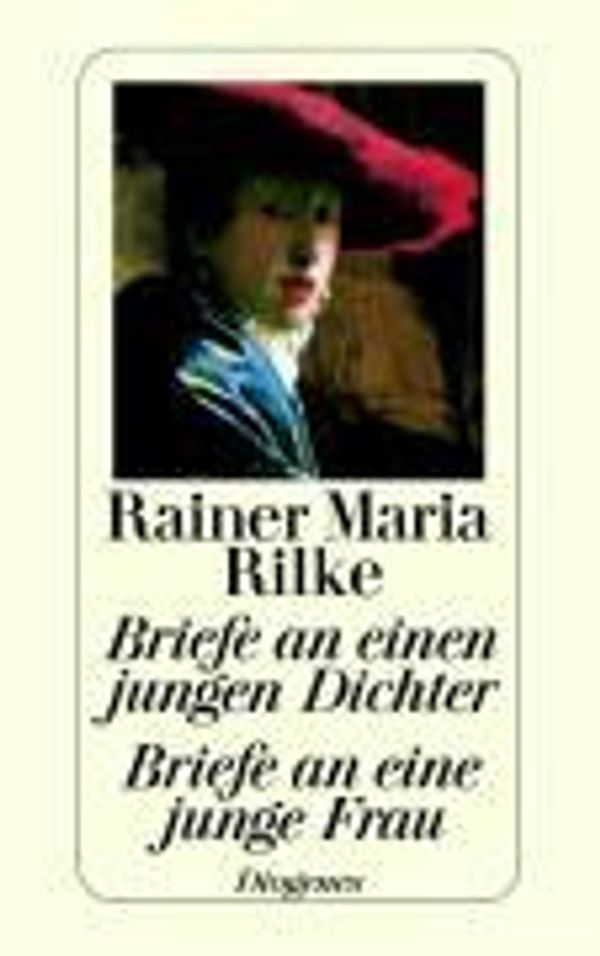
Rilke’s Letters to a Young Poet (1903-1908) and Romain Rolland on Rilke (1941)

Drawn by some sympathetic note in one of his poems, young people often wrote to Rilke with their problems and hopes. From 1903 to 1908 Rilke wrote a series of remarkable responses to a young would-be poet, on poetry and on surviving as a sensitive observer in a harsh world. An accompanying chronicle of Rilke’s life shows what he was experiencing in his own relationship to life and work when he wrote these letters.

Rilke’s Letters to a Young Poet or Briefe an einen jungen Dichter are very famous. I often heard people mention them. So far I had only managed to read The Notebooks of Malte Laurids Brigge, his only novel, and Rilke’s poems. He has always been one of my favourite poets and I was quite thrilled when the first Rilke Projekt CD came out in Germany. German actors and singer’s recite his poems to music that has been especially composed for the project. Meanwhile there are at least two or three other CDs out.

I’ve been reading the book you can see below Briefe an einen jungen Dichter which also contains the Letters to a Young Woman and an essay by Romain Rolland on Rilke.

The essay fascinated me even more than the letters.

Romain Rolland and Rilke were living within walking distance from each other in Paris, Rilke in the Rue Campagne-Première 17 and Romain Rolland on the Boulevard Montparnasse 162. For years they were living close to each other without knowing each other. They were introduced by Stefan Zweig. To read the names of all their mutual friends with whom they met regularly is quite amazing. Stefan Zweig, André Gide, Emile Verhaeren, Auguste Rodin, are but a few. Rilke and Rodin were very close friends and it’s interesting to read how different the two were. Rolland also mentions what an unhappy childhood Rilke had. From 10 to 16 he was at a very strict Military Academy and one can imagine how horrible this rigid discipline must have been for someone so sensitive.

Rolland and Rilke met before WWI and when the war broke out, Rolland left for Switzerland and lived in Geneva while Rilke left for Germany and was finally drafted in 1916. This is something I had either forgotten or didn’t know. Luckily Rilke didn’t have to fight and was working in an archive instead but he lost all his belongings which had remained in his apartment in Paris. His things were confiscated and auctioned, everything, including his manuscripts. What a nightmare. Gide tried to help but it was too late. Nothing was returned to the owner.

After the war Rilke came to live in Switzerland as well, not far from where Romain Rolland stayed. Most of the time Rilke lived at the Château de Muzot.

By that time Rilke’s health had deteriorated considerably and he had to stay frequently at the sanatorium Valmont where he also died. Only shortly before he died it was discovered that he had suffered from some very rare form of leukaemia.

Reading the letters with all this in mind, was quite touching.

A young aspiring poet had written to Rilke asking for advice and over the years Rilke would guide him with his letters. The idea of art and the artist that Rilke describes in his letters is so far from what we see nowadays.

Rilke’s idea of an artist is almost religious and deeply spiritual. First, he advises the young poet, he must try to find out whether being a writer is really his deepest wish. Only if he isn’t able to exist without creating, he should pursue this career. Everything else isn’t true to the soul and will only achieve to produce things devoid of meaning.

Art is good when born of necessity.

He also tells him that loneliness and solitude must be endured. They will transform the soul and lay bare its depth and truth. Most people look for an easy way of life but that isn’t the way of the soul. The soul strives for the difficult and serious.

In one of the first letters he tells the young man to read the novelist that is closest to his, Rilke’s, heart, Jens Peter Jacobsen. I have read Jacobsen’s Niels Lyhne when I was very young, shortly after reading The Notebooks of Malte Laurids Brigge, and I can confirm that it is deeply moving and engaging.

The artist described by Rilke is a pure being of the utmost integrity. This isn’t the realm of creative writing schools and MFA’s (I don’t want to criticize these at all. Our time is a different one). The art created by a being who is capable to endure loneliness and dive into the abyss of the soul or embrace the beauty of inspiration, has a deeply spiritual dimension.

I liked the gentleness of Rilke’s tone, how each and every single word is chosen carefully and especially for the one receiving the letter.

It is interesting to read what he writes about criticism and how to live with being criticized.

The advice he gives in his letters is true and precious but I was, once more, astonished, how much Rilke’s German is different form the one written and spoken nowadays. German isn’t a language that is supervised by a body of language authority like French. The German from only a few decades back sounds quite different from the one in use now.

Rilke is a deeply emotional man and so is his writing. There isn’t the tiniest trace of irony or sarcasm which is a deliberate choice. Rilke writes that a young aspiring poet must stay away from irony as he must explore things that are very serious and deep. Irony will, according to Rilke, never reach the deepest layers of the soul.

Another interesting aspect was what he said about love and men and women. Love, like loneliness, must be endured, he states, it is the most difficult thing in the world. He further says that he doesn’t think that men and women are all that different and that he thinks that women sadly are not yet fully accepted as human beings and that is not how it should be. They should be able to be whole and independent without the need of a man.

It made me a bit sad to read the letters, the world in which they have been written, is long gone, and our values have so much deteriorated.

Rainer M. Rilke: Briefe an einen jungen Dichter - Briefe an eine junge Frau, Buch