Tim Parks: Loving Roger (1986)

Tight and disturbing, Loving Roger begins with a dead body and a chilling question. Why has nice, ordinary, affectionate Anna picked up her kitchen knife and murdered the man she insists she loves?…This brief novel is a mordantly illuminating essay on the way love contains the seeds of vindictiveness and hatred.

A while back in a discussion Max from Pechorin’s Journal mentioned Loving Roger as an excellent example for a book that explored the reasons for a murder rather than having us guess who did it. I was intrigued and since I had liked Tim Parks’ Rapids I got Loving Roger a while ago. I had totally forgotten about the book until last week when I was hunting for a short novel or novella.

The narrator of the story is Anna and here is how the book begins

Roger lay on my new blue rug in the corner by the television and the lamp that seemed it always had the funny orange bubbles rising in it that he hated. But I went to work as usual. I made myself the regular cheese and ham sandwich and took the baby up to Mrs Duckworth for the day and she didn’t notice anything odd about me, I dont’ think.

What a beginning. To pack such a lot of information in three sentences, grab the reader’s interest and start right in the middle of the story is masterful.

After this intense beginning, Anna rewinds and tells the story from its start; how she met Roger, how they started to have an affair, how she got pregnant and how she killed him. The story she tells is quite disturbing. At first because the way she describes Roger makes him look like a total bastard and we don’t understand why she stays with him. He works as executive in the company in which Anna has a job as a secretary. Most of the senior men in the company treat the young women shabbily. They think they are not only simple but simple-minded girls. While Roger hopes that this is just a temporary job before he will become a famous writer and sees himself as something better, in the way he treats Anna he is just as average and shabby as the other men. He believes she is below him and tells her so. But she is attractive and sexy and so they start their secret affair. Anna tells a lot of shocking details of their affair in a very candid voice. She describes how condescending Roger is, how he is ashamed of her, how he lies and betrays. But then, after a while, she adds bits and pieces of her own family history, tells how much her parents loved her late brother Brian, how she doesn’t count at all, and that is when we begin to understand that not only is she a unrealiable narrator but that she has serious issues of her own.

The further the novel progresses, the more it is like watching a train crash. What she tells about the way Roger treats her, his pompous monologues, the diary she finds in which he analyses his feeling and confesses his infidelity, added to her constant repeating of how much she loves him, is unsettling.

Although the novel seems to start with the end, that is actually not the case. The book offers a final twist that is quite unexpected. It’s one of those surprising endings which alone make the book worth reading. However, that’s not the only thing Loving Roger offers. Tim Parks writes with extreme accuracy. There is an episode in which Anna and Roger bathe in the middle of the night in a river in Cambridge and when they come out of the water Anna struggles to put on her clothes. This is such a small detail but the way he describes it, how the clothes get stuck on her wet body, was so well observed.

The central story of Anna and Roger is a story of passion and obsession and it’s not always clear who is the victim. A lesser author would have left it at that but Parks manages, in just a few pages, to paint not only the story of an obsession but of a very dysfunctional family too. The way Anna is treated by her parents is awful. Her brother was always the favourite, they didn’t even pretend otherwise and after his death, she is even less important. Strangely, I didn’t feel much for her, nor for Roger, I felt for their little child. Just imagine, what I life he will have.

I really enjoyed this slim novel. It’s admirably well written. It reminded me a bit of Jenn Ashworth’s A Kind of Intimacy or some of Ruth Rendell’s books although Tim Parks isn’t a crime writer.

Has anyone read this too or another Tim Parks novel? He has a new one out The Server which sounds interesting as well. I have his non-fiction account Teach Us To Sit Still on my TBR pile.
Wednesdays Are Wunderbar – German Literature Month Giveaway II – The Winners

Busy random org has done its job and here are the winners of the second give away of  German Literature Month.

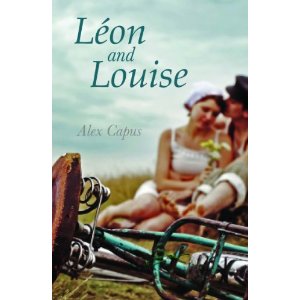
Susanna has won Alex Capus – Léon and Louise 

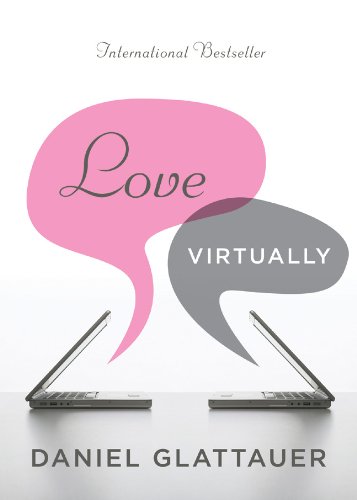
Judith (Leeswammes’ Blog) has won Daniel Glattauer – Love Virtually

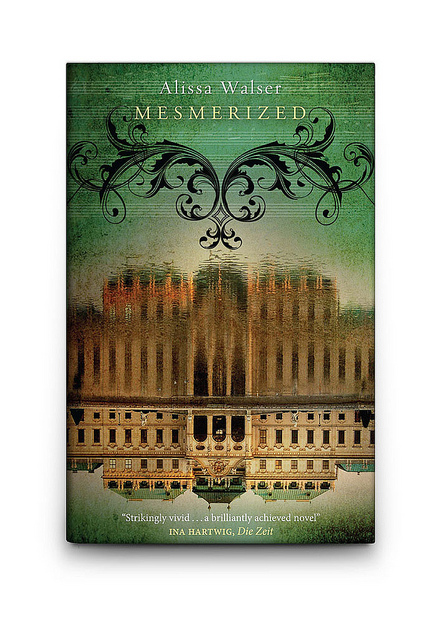
TBM (50 Year Project) has won Alissa Walser – Mesmerized

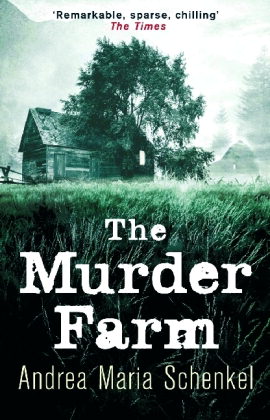
Neer (A Hot Cup of Pleasure) is the winner of Andrea Maria Schenkel – The Murder Farm

Novia (Polychrome Interest) is the winner of The Brothers Grimm – Fairy Tales

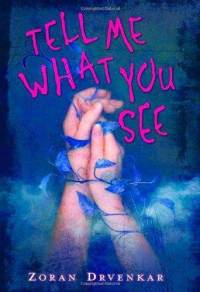
Vishy (Vishy’s Blog) has won Zoran Drvenkar – Tell Me What You See

Happy reading to all of you. Please send me your addresses via beautyisasleepingcat at gmail dot com

Neil Gaiman – The Graveyard Book (2008) Readalong Part I

There was a hand in the darkness, and it held a knife.

The knife had a handle of polished black bone, and a blade finer and sharper than any razor. If it sliced you, you might not even know you had been cut, not immediately.

From the very first lines we are drawn into the story of the little boy Nobody Owens and the man Jack who kills his whole family at the beginning of Gaiman’s novel The Graveyard Book.  We don’t know why the man Jack kills the little boy’s family, all we know is that he isn’t happy he didn’t get the little boy as well. While he was killing Nobody’s parents and brother, the baby escapes through the door, down a hill and into the graveyard.

Mrs and Mr Owens see the little boy and Mrs Owens, although she is a ghost, feels an intense, until now unfulfilled longing  and wants to keep the baby for herself. At first there is debate. The other ghosts are not sure it is a good idea. How will she feed him? How will she take care of him? But when the man Jack arrives at the graveyard door and they become aware the baby is in great danger, they agree to protect him and keep him in the graveyard. Luckily Silas, who isn’t really a ghost but no real human either, can move between their and our world and is capable to provide food for the little boy.

In the subsequent chapters the boy who the ghosts have baptised Nobody Owens is introduced to the ways of the living and the dead. He learns to read and write, is taught history and other things, makes friends with a little girl, is abducted by ghouls.

The story as such, which is inspired by Kipling’s The Jungle Book, is not that special but the way it is told is fantastic. More than a writer Gaiman is a story-teller. He is a very musical writer with an ear for language and it’s not surprising his books work well as audio books. The sentences have a hypnotic quality, they draw you in, captivate you by their sound and their meaning alike.

What I thought was particularly great is that we know the man Jack will turn up again. We know his story isn’t over. And we don’t want it to be over. We want to find out why he killed Nobody’s family and what he will do to access the graveyard. The inhabitants of the cemetery may not be corporeal but they still have power. They were able to protect Nobody once, will they be capable to do it again?

I can’t tell you how much I like this novel. It’s wonderful, it feels as if Gaiman when he writes is connected to the very source of story telling itself. In an introduction to a short story collection Gaiman wrote that he thinks the only proof a story is well written is when the readers ask the question “What happened next?”. Gaiman certainly achieved this and much more.

I’ve bought The Graveyard Book a couple of years ago but never read it. I’m so glad it is part of this year’s R.I.P. hosted by Carl. 38 people have signed up to read along. If you want to read what other’s thought of the first 3 chapters, don’t miss visiting Carl’s blog for the other reviews.

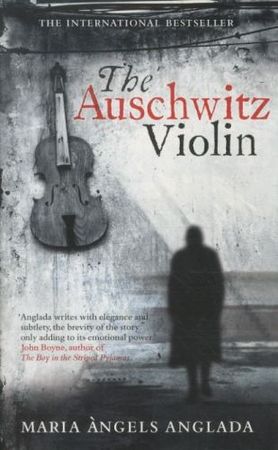
Literature and War Readalong October 2012: The Auschwitz Violin – El Violi` d`Auschwitz by Maria Àngels Anglada

Maria Àngels Anglada who died in 1999 was considered to be one of the most important Catalan writers of the 20th Century. She won many prizes and was widely read. The Auschwitz Violin – El Violi`d`Auschwitz was translated a year ago and when I saw it in a book shop I thought it’s a perfect choice. It’s slim, seems well written and tells the story of a musician and his struggle to stay human during his imprisonment in Auschwitz.

Here are the first sentences

December 1991

I always have trouble falling asleep after I perform at a concert. It keeps playing in my mind, like a tape going round and round. I was more keyed up than usual because this concert had been special: it marked the two hundredth anniversary of Mozart’s death. The recital was held in Krakow, a city of wonderful musicians, in a makeshift auditorium in the bellissima Casa Veneciana.

*******

The discussion starts on Monday, 29 October 2012.

Further information on the Literature and War Readalong 2012, including all the book blurbs, can be found here.

Wednesdays Are Wunderbar – German Literature Month Giveaway II

As promised here is the second giveaway of German Literature Month. While the first one was focussing on novellas and literary books, this one combines literary books and genre. Alissa Walser’s novel is clearly historical, it still is a literary novel, the same goes for Léon and Louise and Love Virtually, both are love stories but not pure genre. Things are different when it comes to Andrea Maria Schenkel. Hers is a crime novel, no doubt. One of the most interesting new German genre writers is Zoran Drvenkar who writes a lot of different genres. Thriller, YA, children’s books and many more. The book I’ve chosen is a genre blend which is extremely successful in Germany among adults and young adults alike.

I’d like to thank Haus Publishing for offering Léon and Louise and MacLehose Press for Alissa Walser’s novel Mesmerized. Lizzy is offering Love Virtually and Grimm’s Fairy Tales and I’m contributing The Murder Farm and Tell Me What You See.

I hope the blurbs will help you decide which of the books you would like to win.

Love Story

Alex Capus – Léon and Louise

Summer 1918. The First World War is drawing to a close when Léon Le Gall, a French teenager from Cherbourg who has dropped out of school and left home, first meets and falls in love with Louise Janvier. Severely wounded by a German artillery attack they are separated, both mistakenly believing each other to be dead. Ten years later, while travelling on the Paris Métro, Léon – now married – briefly catches sight of a girl who bears a strong resemblance to Louise, the first love he has never forgotten. He goes in search of her at the insistence of his wife Yvonne. The couple are briefly reunited, but part again with a heavy heart as Louise refuses to destroy Léon’s marriage. And then another war tears them apart. Paris is occupied by the Germans, for whom Léon indirectly works at the headquarters of the Paris CID. Louise, an employee of the Banque de France, is shipped off to French West Africa with the bank’s gold reserves. Narrated by Léon’s grandson, Léon and Louise is the story of an enduring passion that survives the vicissitudes of world history and the passage of time, spanning more than forty years. But it is far more than this. The long-separated lovers are flesh and blood characters vividly captured in complex human relationships and real-life situations: in German-occupied Paris, where Léon wages a lone battle against the abhorrent tasks imposed on him by the SS and his wife fights stubbornly for her family’s survival; and in the wilds of Africa, where Louise confronts the hardships of her primitive environment with courage and humour.

Daniel Glattauer – Love Virtually

It begins by chance: Leo receives emails in error from an unknown woman called Emmi. Being polite he replies, and Emmi writes back. A few brief exchanges are all it takes to spark a mutual interest in each other, and soon Emmi and Leo are sharing their innermost secrets and longings. The erotic tension simmers, and it seems only a matter of time before they will meet in person. But they keep putting off the moment – the prospect both unsettles and excites them. And, after all, Emmi is happily married. Will their feelings for each other survive the test of a real-life encounter?

Historical

Alissa Walser – Mesmerized

Mozart’s Vienna. A crucible for scientific experimentation and courtly intrigue, as Europe’s finest minds vie for imperial favour. In a colourful, chaotic private hospital that echoes with the shrieks of hysterical patients, Franz Anton Mesmer is developing a series of controversial cure-alls for body and mind. When he is asked to help restore the sight of a blind musical prodigy favoured by the Empress herself, he senses that fame, and even immortality, is within his grasp. Mesmer knows that he will have to gain her trust if he is to open her eyes. But at what cost to her fragile talent? And will their intimacy result in scandal?

Crime

Andrea Maria Schenkel – The Murder Farm

A whole family has been murdered with a pickaxe. They were old Danner the farmer, an overbearing patriarch, his put-upon devoutly religious wife, and their daughter Barbara Spangler, whose husband Vincenz left her after fathering her daughter, Marianne. Also murdered was the Danners’ new maidservant, Marie, who was regarded as slightly simple. Despite the brutal nature of the killings and the small village where it has taken place, the police have no leads. Officially the crime is unsolved. And then a former resident returns home… The Murder Farm is an unconventional detective story. The author interweaves testament from the villagers, an oblique view of the murderer, occasional third-person narrative pieces and passages of pious devotion. The narrator leaves the village unaware of the truth, only the reader is able to reach the shattering conclusion.
 

Fairy Tales

The Brothers Grimm – Fairy Tales

Is a collection of well-loved fairytales by the brothers Grimm. Stories include Hansel and Gretel, Tom Thumb, Little Red Riding Hood, Sleeping Beauty, Rumpelstiltskin, Snow White, the Frog Prince, Rapunzel, The Elves and The Show Maker and many more.
 

YA/Horror/Ghost story

Zoran Drvenkar – Tell Me What You See

Berlin. The dead of night. Sixteen-year-old Alissa and her best friend Evelin make their secret Christmas pilgrimage to Alissa’s father’s grave. In the graveyard, Alissa falls through thick snow into an underground crypt. Searching for a way out, she discovers something else: out of the lid of a small coffin coils a strange black plant. Drawn closer, Alissa sees its roots embedded in a young child’s heart. This chance encounter sets off a chain of nightmarish events that throw her life into turmoil. Haunted by angels, stalked by her ex-boyfriend, only with Evelin’s help can Alissa reclaim her sanity and discover the truth about her frightening new gift.
 
*******
If you are interested in any of the books, just leave a comment indicating which one(s) you would like to read.

The competition is open internationally. The winners will be announced on Wednesday October 10 2012.


Patricia A. McKillip: Solstice Wood (2006)

No stranger to the realms of myth and magic, World Fantasy Award-winning author Patricia A. McKillip presents her first contemporary fantasy in many years-a tale of the tangled lives mere mortals lead, when they turn their eyes from the beauty and mystery that lie just outside of the everyday…

Patricia A. McKillip is one of the most renowned fantasy writers and rightly so as she combines great stories with refined writing. Last year I’ve read her Winter Rose and was quite enchanted by its mysteriously poetic qualities. Winter Rose is a typical fantasy novel regarding the setting. It depicts a time long gone and a pre-industrialized society. When I found out that she had not only written a sequel but that she had set it  in modern times, something she normally doesn’t, I was very curious to read it. Solstice Wood takes place many decades, even centuries after Winter Rose and apart from the setting and some elements, I’d say the two books do not have a lot in common. The style is very different and you could say, they really are stand-alones with a few common traits.

Sylvia grows up with her grandmother. Her mother has died when she was still little and she doesn’t know who her father is. When she finds out that she is half fey, she flees from Lynn Hall and settles in a big city where she becomes a book shop owner. She never wants to return as there is one thing her grandmother hates and tries to keep at bay and that are fairies. When she gets a call informing her of the death of her grandfather she is very reluctant but eventually gives in and flies back home for the funeral. Her aunt and her cousin Tyler are there, as are her grandmothers’ brother and her grandmother Iris.

She feels like a stranger but at the same time she is happy she gets to see her friends again. She would never have left them if it hadn’t been for her secret an only now she becomes aware how much she missed them. Still Sylvia is really anxious and wants to fly back right after the funeral but strange things happen. It seems that the dark wood forces, guided by the queen of the fairies, are about to break loose. Her grandmother, together with a dozen other women, is part of a fiber guild. The magical quilt they are crocheting has the power to keep the two worlds well separated. When Tyler is suddenly replaced by a changeling and the women find out the web of their quilt is about to unravel and the worlds are merging, it’s about time, everyone gets active. For some of them that means entering the Otherworld. The big question is whether they will all survive and if they will, whether they will admit that some of them, not only Sylvia, are not just humans.

I liked Solstice Wood, it’s well written and the way McKillip describes how the worlds merge is interesting. I enjoyed the idea of the fiber guild. What worked very well too is that you can interpret the world of the fairies as anything which feels strange and unfamiliar. The book offers an interesting variation on the themes of prejudice and bias. The more the worlds touch, the more the people get to know the other side, the less it’s frightening. In the end it’s all a matter of being open.

I liked to read a contemporary fantasy novel by McKillip. It’s a lovely and quick read, no big suspense or anything, much more a family story with a fantasy touch.